

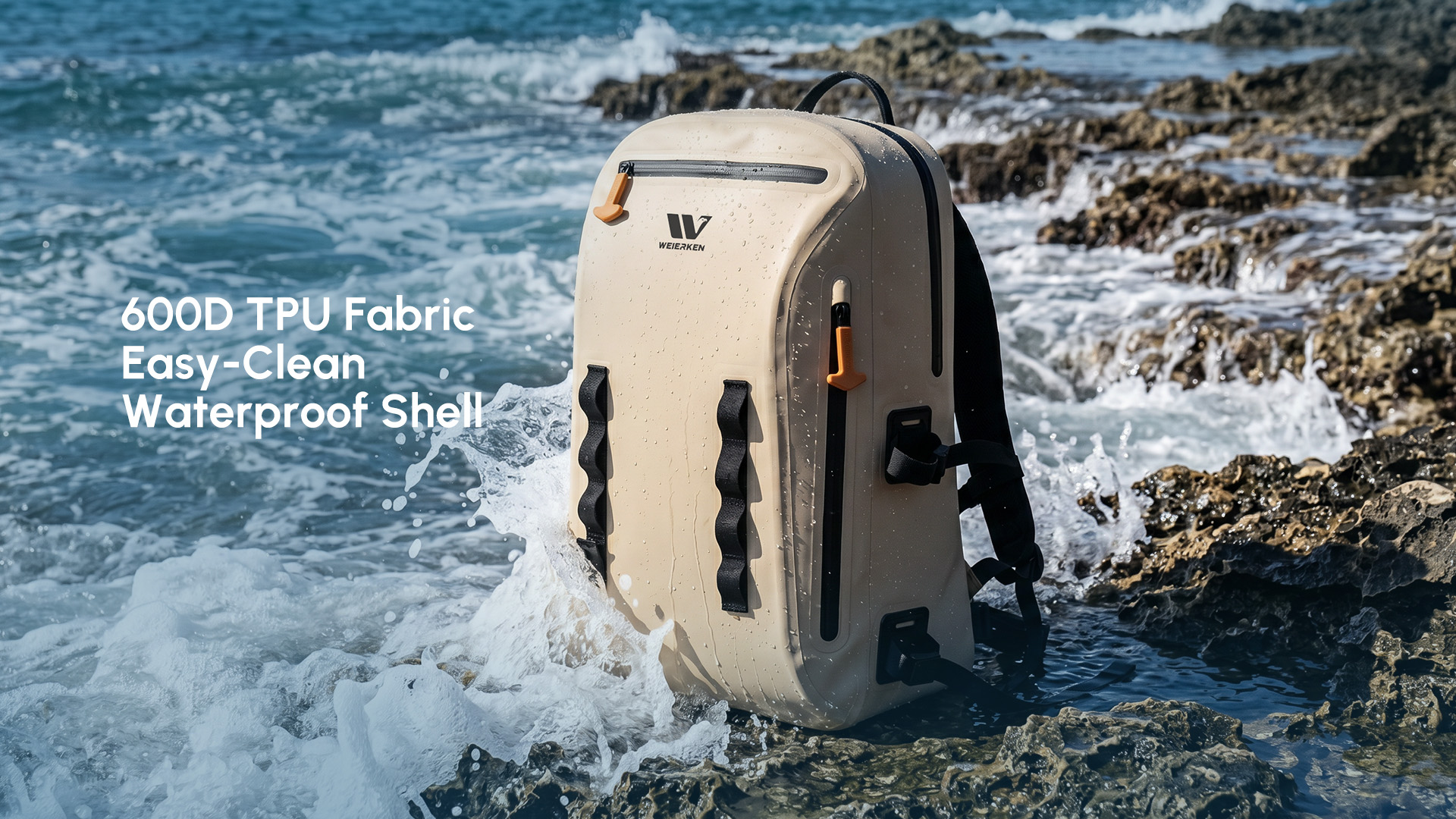
If you manage procurement for sailing accessories, yacht equipment, or marine OEM/ODM projects, you already know the frustration. Stitched waterproof bags look fine on a shelf. But put them on a deck under salt spray, UV, and constant motion—and those tiny needle holes become open doors for moisture. Capillary action along the thread pulls water inward over time. That ruins electronics, flares, and logbooks. This is not a quality control issue. It is a physical limitation of sewing.
Weierken approaches this problem differently. We build custom sailing dry bag solutions with industrial-grade PVC tarpaulin and full RF welding. No stitches. No needle paths. No capillary wicking. Our focus stays on one thing: delivering a reliable waterproof seal that holds up in real ocean conditions. This article walks through the technology, supply chain strengths, and collaborative process that make Weierken a dependable partner for brands and distributors worldwide.
Technical Core: PVC Tarpaulin and RF Welding
Material Foundation: Marine-Grade PVC Tarpaulin
We start with high-density polyester scrim as the reinforcement layer. This scrim is sandwiched between two PVC paste resin coatings. The logic is straightforward. The fabric provides tear strength. The PVC delivers airtightness and chemical resistance. This combination performs well in demanding marine environments.
Key performance attributes include:
Salt spray resistance: PVC shows natural passivation against seawater chlorides and sulfates. TPU or EVA often develop surface cracks and hydrolysis after prolonged salt exposure. PVC remains stable.
UV aging resistance: Our formulation includes benzotriazole UV absorbers and hindered amine light stabilizers. After 1,500 hours of QUV testing (ASTM G154 Cycle 1, 0.89 W/m² at 340nm), the breaking strength retention stays at or above 85%. That translates to a service life of 5 to 8 years on tropical routes.
Wide temperature flexibility: The glass transition temperature (Tg) stays below -40°C. Folding and flexing in high-latitude winters will not cause cracking or stiffening.
RF Welding vs. Heat Sealing: A Critical Distinction
Many procurement professionals ask about the real difference between heat sealing and RF welding. The answer lies in the melting mechanism, not just the equipment.
Heat sealing uses an external heating bar to transfer thermal energy through the material. This creates a lag effect. Temperature distribution often becomes uneven, especially at corner overlaps or multi-layer sections. The result can be weak spots or over-melted zones.
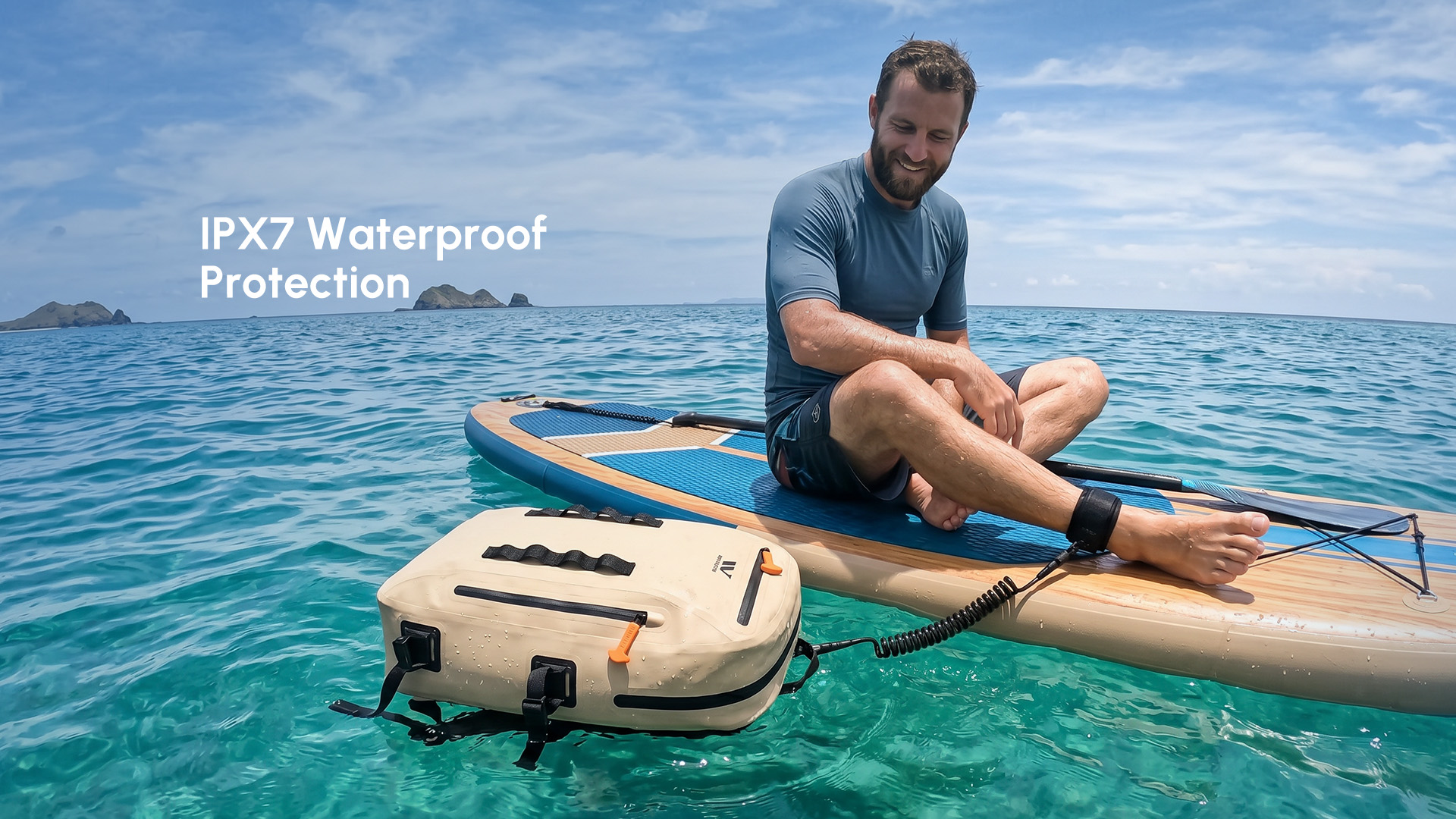
RF welding operates at 13.56 MHz. The high-frequency field causes dipole rotation in the PVC molecular chains, generating friction heat internally. This self-limiting fusion happens from the inside out. The weld zone becomes homogeneous with the base material. Lap shear strength (ASTM D3163) consistently reaches 6.5 MPa or higher. Heat-sealed samples typically average 3.8 to 4.2 MPa under the same test conditions. The welded seam is 100% continuous at the molecular level—no pinholes, no capillary channels, and no stress concentration points.
We run a negative pressure test at -0.06 MPa for 30 seconds on each production batch. The allowable pressure drop stays under 0.002 MPa. This ensures that sensitive electronics inside the bag remain protected during deck submersion or heavy rain.
Supply Chain Capabilities: Reliable Delivery as a Competitive Advantage
Strong technical performance loses value if deliveries slip. Weierken operates a multi-factory system spanning China and Cambodia. This structure provides five distinct advantages for buyers.
| Advantage | Our Approach | Value for You |
|---|---|---|
| Stable lead times | Multi-country production coordination | Protects your sales schedules from regional disruptions |
| Tariff optimization | Cambodia facility with preferential trade agreements | Lowers total landed cost and improves pricing margins |
| High quality standards | Strict QC procedures, 99.5% first-pass yield | Reduces returns and warranty claims |
| DDP door-to-door service | Handles shipping, customs clearance, and duties | Works like local procurement, reducing cross-border risk |
| Regulatory compliance | BSCI, GRS, REACH, SEDEX, rPET, ISO 9001 available | Supports your brand's sustainability and social responsibility claims |
This setup allows us to serve as a custom sailing dry bag manufacturer with true global reach. You get consistency, compliance, and cost control without managing multiple vendor relationships.
Market-Driven Product Development: From Order-Taking to Active Collaboration
We understand that B2B customers need more than manufacturing. You need faster time-to-market and lower development risk. Weierken's R&D structure supports these goals directly.
Our in-house design team monitors end-user trends continuously. We bring forward product concepts that align with emerging needs. And we offer professional input throughout your project cycle. This reduces the guesswork and speeds up the validation phase.
Rapid prototyping is another core capability. Our precision sample shop delivers prototypes in 3 to 7 days for delivery bags, and 12 to 30 days for outdoor-oriented dry bags. Quick iterations mean fewer revision cycles and faster production startup.
We also take on technical challenges. Material selection, structural design, hardware integration, and process optimization are all handled in-house. You avoid the delays and miscommunication that come with outsourcing these steps to separate vendors.
Two decades of experience in the outdoor and delivery bag space give us practical knowledge of what works and what fails in the field. This background helps us propose proven solutions rather than experimental ones.
Long-Term Brand Partnership: More Than a Supplier
Procurement decisions are about more than price and product specifications. They depend on collaboration and trust. Weierken operates with three commitments that reshape the supplier-buyer dynamic.
First, we function as an extension of your team. We participate in product decisions, share brand-ready assets, and point out common design pitfalls early. This prevents wasted resources later and keeps your project on track.
Second, we prioritize clear and efficient communication. Our team speaks fluent English and has managed international projects for over twenty years. We understand cultural differences and practical workflows. This minimizes misinterpretation and keeps production moving forward.
Third, we apply structured project management from day one. We set clear milestones, maintain standardized documentation, and define responsibilities. You stay informed at every stage. There are no hidden surprises or last-minute coordination issues.
Long-Tail Keywords and Industry Terminology
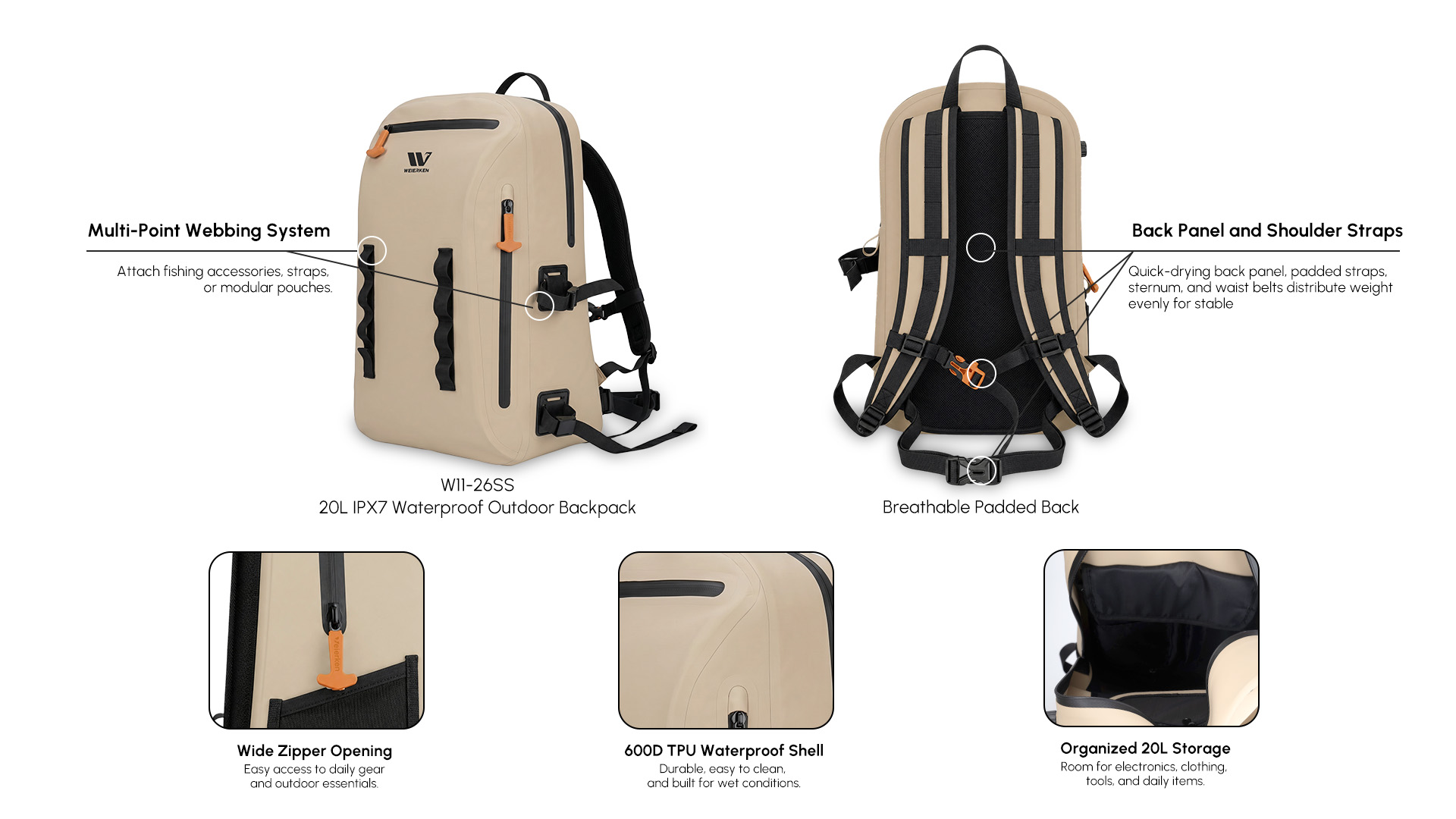
If you are searching for a specialized partner, you might use terms like marine dry bag OEM, PVC tarpaulin waterproof bag supplier, or RF welded sailing dry sack factory. You might look for custom sailing dry bag manufacturer with low MOQ or bulk order dry bag producer with DDP shipping. These are not just search phrases—they reflect genuine procurement requirements. Weierken fits these needs directly. Our RF welding process eliminates the leak paths found in stitched alternatives. Our global factory network supports orders from sample quantities to full container loads.
The True Cost Perspective
In B2B sourcing, the real cost equals unit price divided by (service life times failure rate). A lower-priced bag that fails halfway through a season costs more in returns, replacement logistics, and customer dissatisfaction. Weierken delivers a waterproof enclosure system validated under extreme conditions. Our foreign order complaint rate has remained below 0.3% for three consecutive years. The industry average stands at 2.1%.
Frequently Asked Questions
Q1: What minimum order quantity (MOQ) do you require for custom sailing dry bags?
Our standard MOQ starts at 500 pieces for fully customized designs. This includes custom size, color, hardware, and branding. For sample orders or minor modifications, we can accommodate smaller quantities. Contact us with your specific needs and we will propose flexible options.
Q2: What customization options are available beyond size and color?
We offer a wide range of custom features. You can select closure systems (roll-top, zipper, Velcro), hardware materials (plastic, aluminum, stainless steel), valve types, webbing, and handle designs. We can also integrate brand logos using screen printing, heat transfer, or embossing. Our design team can assist in refining your concept for manufacturability and performance.
Q3: How does RF welding compare to heat sealing for marine applications?
RF welding creates a homogeneous molecular bond without needles or external heat inconsistency. The weld is stronger, more flexible, and completely resistant to capillary water ingress. Heat-sealed joints often fail at the interface due to temperature variation. RF welding is the preferred method for high-stakes marine environments where reliability is critical.
Q4: Can you provide sample bags for testing before bulk production?
Yes. We encourage sample evaluation. Samples are available with a standard lead time of 7 to 15 days depending on complexity. We also provide material test reports, RF weld cross-section analysis, and custom structural design proposals. This ensures you have all the data you need before placing a production order.
Q5: What is the typical lead time for a full container order?
Production lead time ranges from 30 to 45 days after sample approval and material procurement. We coordinate with our China and Cambodia facilities to balance capacity and optimize shipping schedules. We will also provide a detailed timeline during the order confirmation phase.
Q6: Do you handle compliance certifications like REACH or BSCI?
Yes. We hold BSCI, GRS, REACH, SEDEX, rPET, and ISO 9001 certifications. We can align with the specific compliance requirements of your target markets. Please specify your needs during the inquiry stage so we can provide the relevant documentation.
Q7: Is DDP shipping available for my country?
We offer DDP shipping to most major markets. Our logistics team manages ocean freight, customs clearance, and duty payments. You receive your order at your designated warehouse with minimal administrative involvement. This reduces cross-border complexity and lets you focus on sales and distribution.
Final Word
A waterproof dry bag is not an accessory. It is a protective barrier for mission-critical gear. Weierken builds each custom sailing dry bag as a complete waterproofing system. We combine material science, RF welding precision, and supply chain resilience to deliver consistent results.
We invite you to explore a partnership. We provide free sample evaluations, material property reports, and welded joint analysis. We will also propose structural solutions tailored to your specific use case. Start the conversation with a simple requirements list. Let us discuss your next order.