

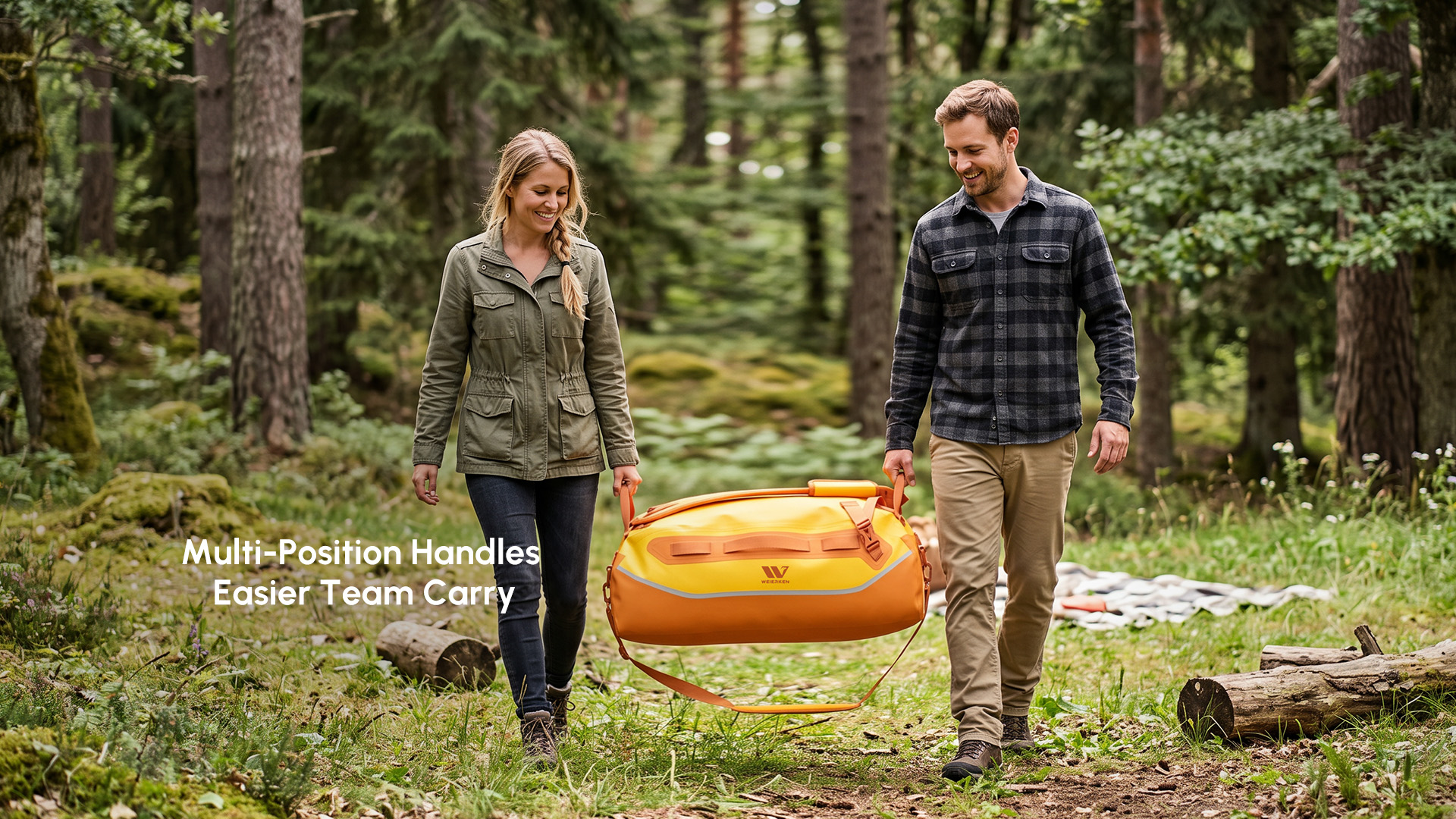
Outdoor gear markets face a dramatic shift heading into 2026. Retailers and direct-to-consumer (DTC) brands can no longer rely on generic catalog items. Modern campers demand durable, environmentally conscious, and technically sophisticated gear storage.
For outdoor product managers, sourcing reliable private label camping gear bags requires deep insight into technical textiles and modern assembly methods. Established manufacturers like Weierken lead this transition by blending heavy-duty functionality with strict global compliance.
This guide analyzes the critical material upgrades, structural engineering innovations, and factory requirements defining the next generation of outdoor equipment carriers.
1. Market Shifts in Private Label Camping Gear Bags for 2026
The outdoor equipment market is moving away from disposable, entry-level products. Buyers now scrutinize production origins, material life cycles, and versatility before purchasing.
1.1 Buyer Personas Demand Sustainable Modularity
Modern outdoor enthusiasts look for multi-use solutions. Instead of buying five single-purpose bags, consumers invest in modular systems that adapt to multiple environments.
Product developers must satisfy three primary buyer expectations:
- Verified Sustainability: Shoppers reject greenwashing. They require clear certifications like GRS (Global Recycled Standard) and Bluesign.
- Weight-to-Strength Efficiency: Campers want lighter base weights without sacrificing abrasion resistance.
- Intuitive Organization: Storage systems must provide fast access to cook sets, electronics, and technical apparel.
1.2 Micro-Adventures Spur Multi-Role Pack Utility
Shorter, more frequent outdoor trips have transformed product usage. A camping gear duffel must transition effortlessly from a vehicle roof rack to a weekend campsite or a rough boat deck.
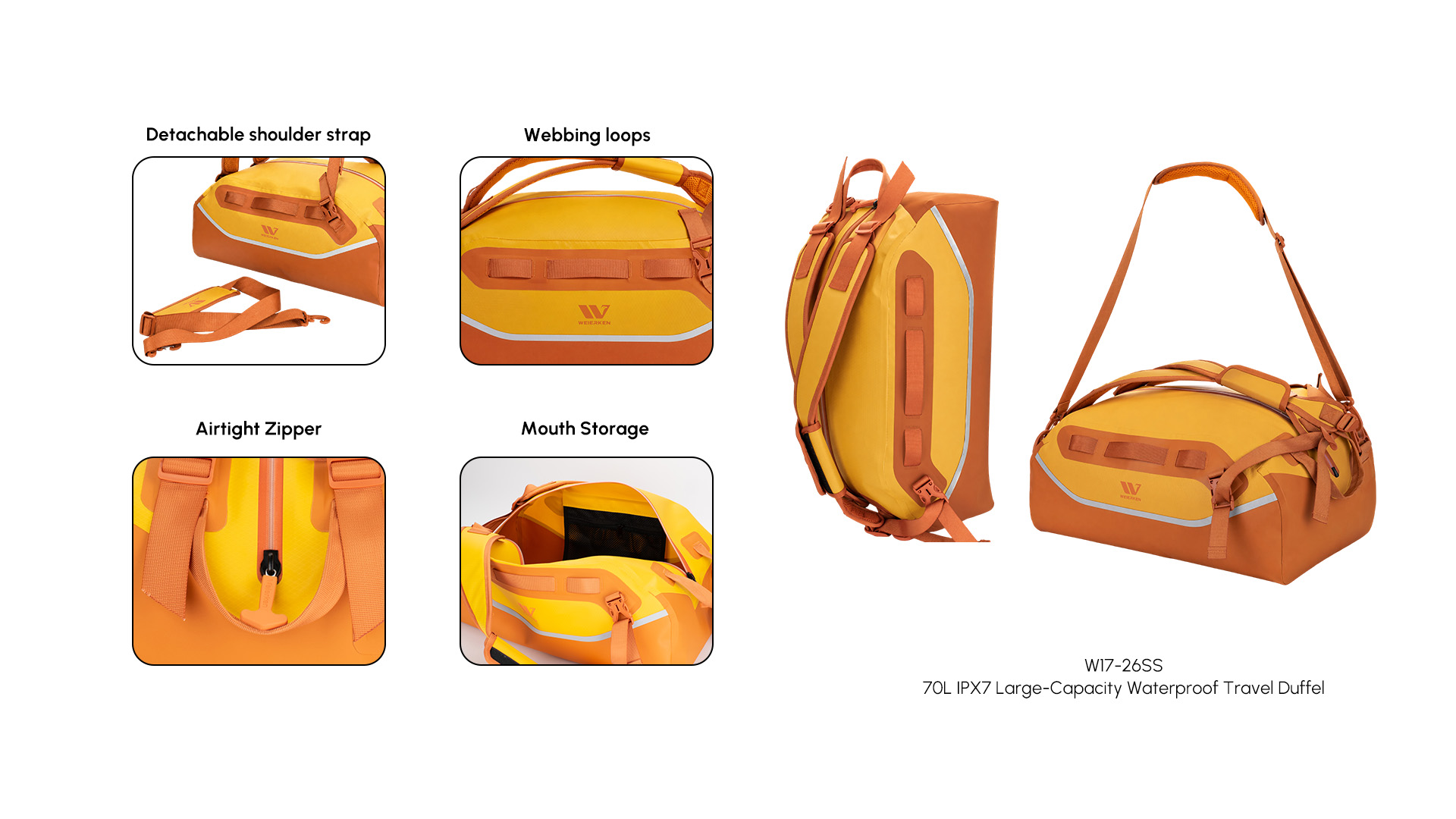
Because of this, wholesale camping storage bags now feature hideaway shoulder straps, integrated vehicle tie-downs, and dirt-resistant outer coatings. Product lines that solve multiple problems yield higher margins and lower return rates for brands.
2. Breakthrough Materials Dominating 2026 Gear Manufacturing
Material selection defines the performance threshold of your outdoor line. Recent developments in high-tenacity yarns, circular synthetics, and plant-based coatings give brands a strong competitive edge.
2.1 Circular and Bio-Based Performance Fabrics
Recycled polyester (RPET) and recycled nylon (Nylon 6 and 6,6) are now industry baselines. Premium private label camping gear bags now implement circular textiles derived from post-consumer industrial waste.
Bio-based polyurethane (TPU) films derived from non-food agricultural feedstocks are replacing conventional petroleum liners. These bio-films provide identical tear resistance and tensile strength while significantly reducing production emissions.
2.2 UHMWPE and High-Tensile Technical Fibers
Ultra-High Molecular Weight Polyethylene (UHMWPE) is no longer reserved exclusively for high-end mountaineering. Streamlined processing now allows custom camping gear bags to incorporate UHMWPE ripstop grids into high-wear zones.
Key advantages of UHMWPE integration include:
- Fifteen times the strength-to-weight ratio of commercial grade steel.
- Superior UV stability, preventing fiber degradation during long sun exposure.
- Exceptional resistance to sharp tent poles, stakes, and camp kitchen tools.
2.3 Non-Toxic Weatherproofing: PFC-Free DWR and Recyclable TPU
Global environmental regulations, including US state-level bans and EU REACH updates, require the elimination of per- and polyfluoroalkyl substances (PFAS). Top-tier brands have completely switched to PFC-free Durable Water Repellent (DWR) chemistries.
These silicone- and wax-based finishes match traditional water-beading performance while passing strict laboratory compliance tests. When laminated with recyclable TPU layers, the resulting fabric remains waterproof, flexible in sub-zero weather, and fully compliant with 2026 regulations.
| Material Type | Tear Resistance | Waterproof Capacity | Production Cost | Eco-Score |
|---|---|---|---|---|
| 600D Recycled PET | Moderate | Medium (PU Coated) | Low | Good (GRS Certified) |
| Cordura Eco Recycled Nylon | Very High | High (PFC-Free DWR) | Medium-High | High (Bluesign Approved) |
| UHMWPE Composite Ripstop | Extreme | Superior (Hydrostatic >20,000mm) | High | High (Long Lifecycle) |
| Bio-Based TPU Laminates | High | Impermeable (Submersible) | Medium | Superior (Plant Feedstock) |
3. Advanced Manufacturing Methods and Structural Design
Advanced textiles require matching assembly technologies. Stitching needles puncture technical fabrics, creating leak points that water and moisture exploit under heavy rain.
3.1 Seamless Construction: High-Frequency (RF) Welding
Radio Frequency (RF) and ultrasonic welding fuse synthetic fabrics together at a molecular level. The process uses electromagnetic energy to melt and join polymer surfaces, eliminating needle perforations entirely.
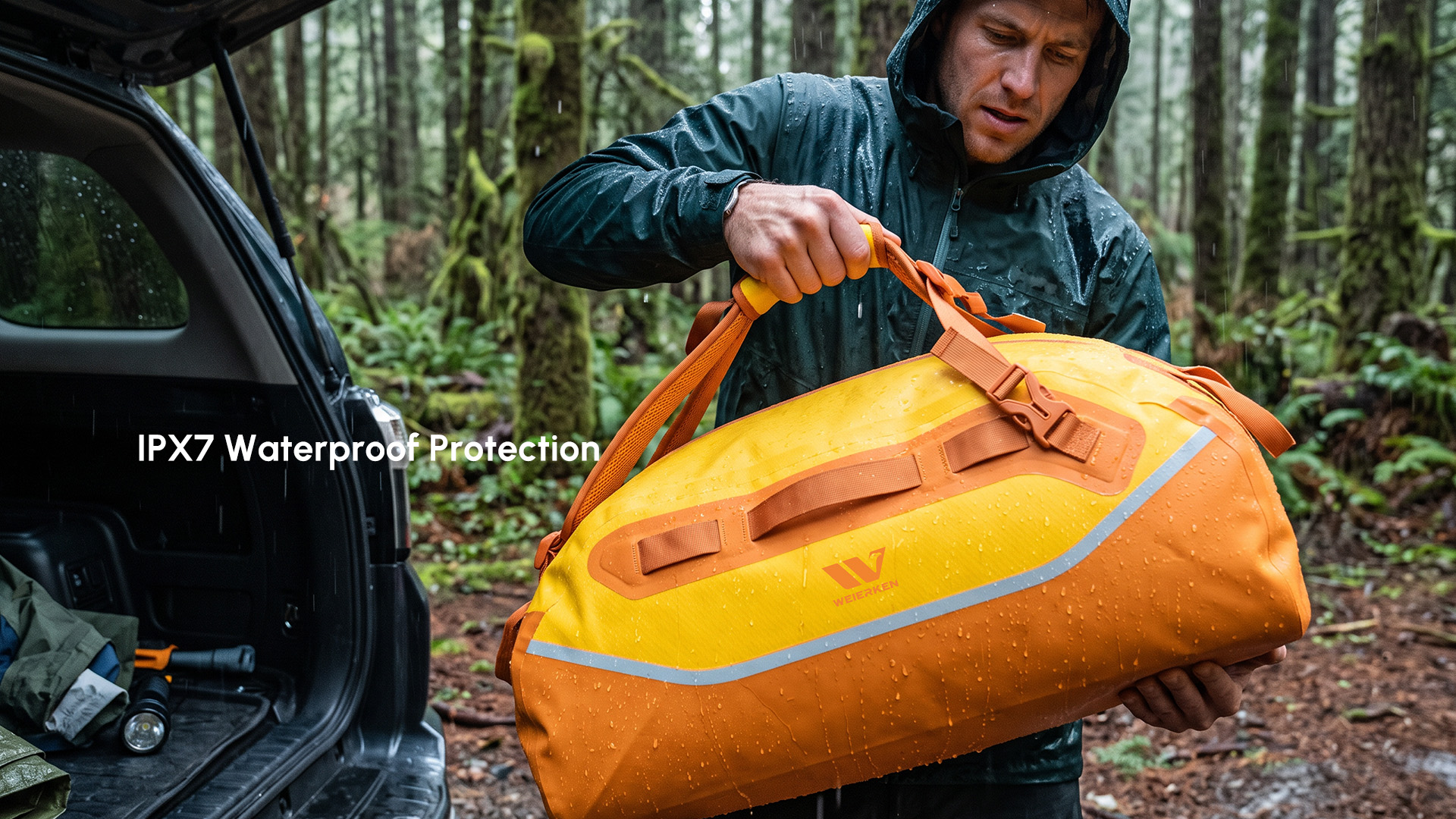
Manufacturers like Weierken utilize high-frequency presses to manufacture gear haulers achieving true IPX7 ratings. These bags withstand complete temporary submersion, keeping contents dry inside river rafts, open truck beds, and flooded campsites.
3.2 Modular Hardware and Load-Bearing Architecture
Carrying heavy outdoor equipment over rough terrain demands intelligent load support. High-grade OEM outdoor bags now feature internal aluminum stays combined with perforated EVA foam back panels.
Key modular elements include:
- Laser-Cut Hypalon MOLLE Panels: Enables users to securely strap external fuel canisters, axe sheaths, or medical kits.
- Fidlock Magnetic Hardware: Accelerates opening and closing, even when wearing thick winter gloves.
- Interchangeable Dividers: Padded internal dividers protect power stations and cast-iron cookware, then fold flat when not in use.
3.3 Smart Utility: Power Routing and Tracker Sleeves
Campers frequently carry off-grid power solutions, communication hubs, and valuable navigation electronics. Smart outdoor bags now integrate dedicated routing ports for solar blanket inputs and heavy-duty portable power banks.
Additionally, modern gear lines feature hidden, weather-sealed neoprene sleeves engineered for GPS tracking tags such as Apple AirTags or Tile units. This smart detail gives outdoor consumers peace of mind when checking valuable gear onto commercial flights or leaving camp unattended.
4. Strategic Sourcing: Building Your Private Label Line
Developing successful white label camping backpacks and storage solutions requires an organized sourcing roadmap. Choosing the right production partner protects your company from quality drift, supply snarls, and costly import fines.
4.1 Auditing OEM/ODM Capabilities and Certifications
Before issuing requests for quotation (RFQs), audit your factory candidates thoroughly. Do not rely solely on digital sales collateral. Request proof of raw material supply chain custody.
Essential factory qualifications include:
- ISO 9001 certified quality control management systems.
- Current GRS and OEKO-TEX Standard 100 transaction certificates for recycled textiles.
- In-house hydrostatic head, tensile pull, and zipper-abrasion testing instruments.
4.2 Customization Depth Versus Order Volumes (MOQ)
Every brand balances custom design goals with working capital limits. Understanding the tiers of private label customization helps align development budgets:
Tier 1: Standard White Label (MOQ ~300-500 units)
Applies
custom branding, custom zipper pulls, and standard factory colorways to existing
bag platforms. This approach gets your product to market rapidly with minimal
tooling investments.
Tier 2: Semi-Custom Configuration (MOQ ~500-1,000
units)
Modifies pocket layouts, upgrades exterior face fabrics
(e.g., swapping standard nylon for bio-TPU), and introduces bespoke brand
hardware colors.
Tier 3: Full Custom ODM Development (MOQ ~1,000+
units)
Requires proprietary 3D patterns, dedicated injection molds
for handles and footings, and completely custom fabric weaving runs.
4.3 Rapid Prototyping and Quality Verification
Work only with manufacturing teams that turn 2D CAD files into functional 3D patterns within 7 to 10 days. Once physical samples arrive, test them rigorously.
Expose sample bags to continuous load tests, salt spray exposure, and sub-zero bend cycles. Verifying physical durability before committing to mass production saves thousands of dollars in potential warranty claims.
5. Frequently Asked Questions (FAQs)
Q1: What is the typical lead time for custom camping gear
bags?
A1: Initial sample prototyping takes 10 to 15 days depending
on tooling complexity. Mass manufacturing usually requires 45 to 60 days
following sample sign-off and raw material lab approvals.
Q2: How do 2026 PFAS regulations impact the export of waterproof
camping gear?
A2: European Union regulations and multiple US states
prohibit fabrics containing deliberately added PFAS chemistry. Importers must
provide certified lab documentation showing that DWR coatings and waterproof
liners are entirely fluorine-free.
Q3: Which fabric offers the highest durability for heavy gear
duffels?
A3: Cordura-grade recycled Nylon 6,6 with an ultra-high
tear strength rating, reinforced with UHMWPE grids, delivers the best
durability. It resists puncturing from sharp corners better than conventional
polyester.
Q4: What makes RF welding superior to standard stitching for camping
gear bags?
A4: Stitched seams leave physical needle punctures that
require hand-applied chemical seam-seal tapes, which degrade over time. RF
welding bonds thermoplastic coatings seamlessly, yielding fully waterproof,
airtight joints that never delaminate.
Q5: Can our brand implement proprietary colors on private label
bags?
A5: Yes. Factories can match Pantone references precisely.
Custom fabric dyeing runs typically require an order volume of roughly 1,000 to
1,500 meters of raw textile, which can span multiple bag SKUs.
6. Next Steps for Outdoor Gear Brands
Success in the outdoor storage sector requires blending forward-thinking materials with precise factory execution. Brands that deliver certified green fabrics, genuine waterproof protection, and rugged hardware gain long-term market share.
Whether you want to upgrade your current product line or build a brand-new technical collection from scratch, partner with a factory that understands international technical standards. Weierken provides end-to-end design, rapid sampling, and certified manufacturing for modern outdoor brands worldwide.
Contact our engineering team today to review your tech packs, request material swatches, and receive a competitive manufacturing quote for your next production run.