

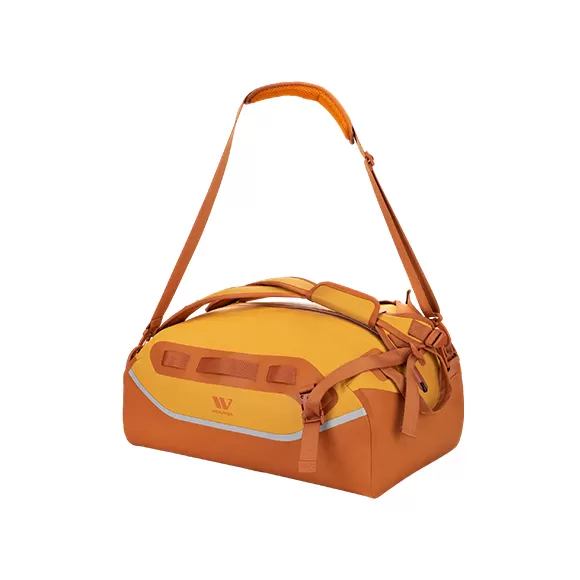
Basic water resistance no longer satisfies serious outdoor consumers. Campers now demand true submersion-grade duffel bags that protect sleeping bags, electronics, and down apparel from torrential downpours, river crossings, and roof-rack road spray.
For outdoor product managers and sourcing directors, finding a dependable waterproof duffel supplier for camping brands has become complex. Evolving global chemical bans, rising shipping costs, and technical manufacturing requirements demand deeper supplier evaluation.
Specialized OEM partners like Weierken help outdoor labels overcome these hurdles by engineering heavy-duty gear built to international environmental and waterproof standards. This article details the essential benchmarks for auditing your manufacturing partners.
1. The 2026 Waterproof Standard: Sealing Technologies & Machinery
Stitching a bag and applying seam tape worked in the past. Today, demanding camping environments require advanced bonding techniques that eliminate needle punctures entirely.
1.1 Stitching vs. Radio Frequency (RF) Welding & Ultrasonic Bonding
Traditional sewn bags fail under sustained hydrostatic pressure. Needles pierce fabrics, creating thousands of micro-apertures that eventually weep water when strained. While seam tape covers these holes, environmental shifts, UV exposure, and pack compression degrade tape adhesives quickly.
Look for a waterproof duffel supplier for camping brands that houses automated Radio Frequency (RF) welding and high-frequency hot air bonding lines. RF welding uses electromagnetic energy to melt and fuse thermoplastic polyurethane (TPU) coatings at the molecular level.
- Molecular Weld Strength: Welded seams create a continuous material sheet that resists peeling during sub-zero conditions.
- Reduced Manual Variance: Automated CNC welding jigs eliminate human errors along structural curves and base corners.
- Weight Optimization: Eliminating thick seam tapes and heavy thread reduces the bag's tare weight.
1.2 Ingress Protection (IPX) Capabilities
Clear waterproof classification prevents consumer disappointment and high return rates. A proficient factory must show engineering proficiency across defined ingress protection metrics:
- IPX6 (Heavy Water Spray): Withstands high-pressure sea spray, river rapids, and heavy monsoon rains. Ideal for general campsite duffels.
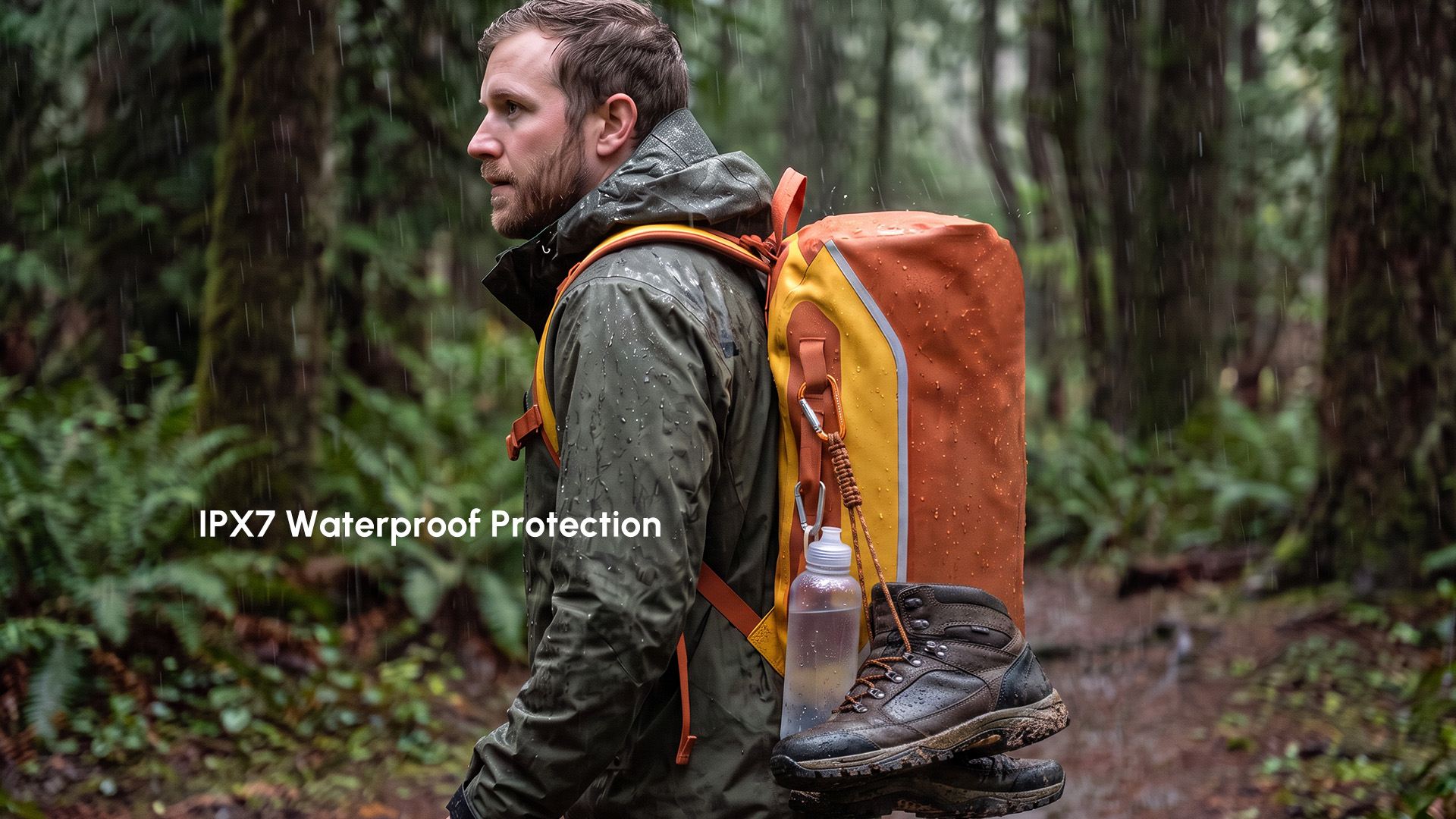
- IPX7 (Temporary Immersion): Withstands submersion up to 1 meter for 30 minutes without leaking. Essential for canoe portage and open trailer hauling.
- IPX8 (Continuous Deep Submersion): Requires full pressure-tight seals for extreme overlanding, packrafting, and tactical expeditions.
Ask prospective vendors for certified IPX testing laboratory test reports rather than self-made marketing claims.
1.3 Airtight Zipper Integration Expertise
The zipper remains the most common failure point on any waterproof duffel. Integrating mechanical airtight zippers (like TIZIP or YKK AquaSeal) requires specialized tooling and adhesive recipes.
Examine the zipper dock and end-stops closely during factory audits. A premier factory welds targeted TPU reinforcement patches around the zipper garage, preventing micro-tears when users pull the track under maximum load.
2. Material Excellence & 2026 Sustainability Regulations
Textile sourcing can make or break your brand's distribution plans. Strict regional regulations demand cleaner, stronger raw materials across supply chains.
2.1 The Non-Negotiable: 100% PFAS/PFC-Free Waterproofing
European Union REACH restrictions and North American state laws now ban intentionally added per- and polyfluoroalkyl substances (PFAS). You can no longer import outdoor bags treated with traditional fluorochemical water repellents.
Your waterproof duffel supplier for camping brands must source certified non-fluorinated Durable Water Repellent (PFC-free DWR) finishes. They must verify through third-party lab documentation that coatings, webbings, and zipper cords remain fluorine-free.
2.2 TPU vs. Traditional PVC: The Shift to Circular Durability
Polyvinyl Chloride (PVC) tarpaulin was the historic standard for budget dry duffels. However, PVC contains harmful phthalate plasticizers that crack in cold weather, leach toxic chemicals, and resist recycling.
Modern camping lines utilize thermoplastic polyurethane (TPU) laminated onto high-tenacity recycled nylon or polyester. Consider these distinct advantages:
- Thermal Range: Quality TPU stays pliable down to -30 degrees Celsius, whereas PVC stiffens and cracks.
- Abrasion Resistance: TPU resists dragging across sharp shale, rock edges, and roof bars far better than PVC.
- Lower Density: TPU delivers higher tensile strength at roughly 30% lower fabric weight.
2.3 Verified Eco-Certifications (GRS, Bluesign, OEKO-TEX 100)
Green claims require rigorous third-party auditing. Verify that your factory holds active Global Recycled Standard (GRS) scope certificates for post-consumer recycled fabrics (RPET and recycled nylon).
Insist on Bluesign-approved or OEKO-TEX Standard 100 certified laminates. These certifications confirm that textile mills eliminate hazardous chemical compounds from wastewater discharges and production facilities.
3. Customization Depth, Engineering & Rapid Prototyping
A capable custom manufacturing partner acts as an extension of your product design department, turning complex concepts into repeatable production runs.
3.1 Tech Pack Interpretation & 3D Prototyping Speed
Speed to market is essential. Top factories convert your technical tech packs and 2D sketches into digital 3D virtual patterns quickly to identify stress points before cutting roll goods.
OEM factories like Weierken typically finalize physical golden samples within 10 to 14 business days. Fast sample turnaround allows outdoor brands to execute field trials and secure dealer pre-orders ahead of retail buying cycles.
3.2 Modular Hardware & Hardware Tooling
Generic hardware causes high failure rates under freezing wilderness conditions. Check if your prospective supplier can design and source dedicated tooling for custom parts:
- Integrated Purge Valves: Spring-loaded pressure release valves that purge trapped air, compressing the duffel flat on car racks.
- Laser-Cut Hypalon Anchor Points: Clean anchor patches for modular MOLLE systems and exterior gear lashes.
- Magnetic Fasteners: Glove-friendly buckle systems (such as Fidlock-compatible hardware) that clip effortlessly in cold conditions.
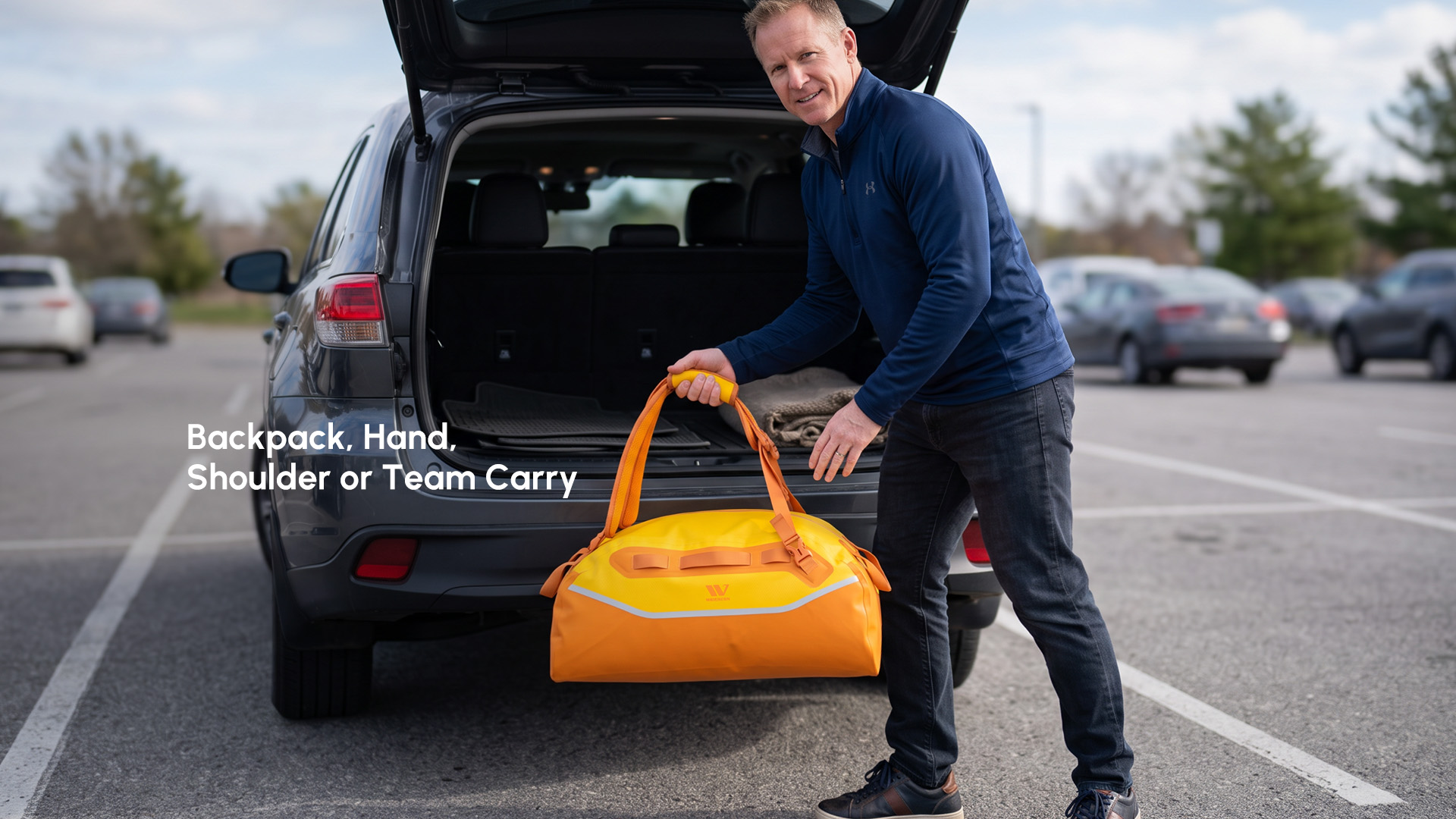
- Ergonomic Harnesses: Removable EVA foam backpack straps contoured specifically to redistribute heavy pack loads.
4. Factory Quality Assurance (QA) & Lab Testing Protocols
You cannot afford customer claims involving water-damaged tents, expensive down sleeping bags, or flooded mobile cameras. True waterproof manufacturers maintain dedicated testing facilities.
4.1 In-House Testing Equipment Verification
Demand a live video walkthrough or on-site audit of the vendor's internal quality lab. A qualified waterproof duffel supplier for camping brands must maintain these testing machines:
- Hydrostatic Head Tester: Measures fabric and welded seam resistance up to 20,000mm+ water column pressure.
- Constant Load Tensile Tester: Pull-tests welded carry handles, tie-down D-rings, and shoulder harness anchor patches.
- Martindale Abrasion Machine: Validates wear resistance on base panels against gravel and rough textures.
- Salt-Spray Testing Chamber: Verifies corrosion resistance on metal buckles, zipper sliders, and rivets.
4.2 Inflation & Submersion Quality Checks
Batch sampling is insufficient for airtight, submersible duffels. The best factories implement 100% inline leak testing on finished waterproof duffel models.
Inspectors inflate every bag via the purge valve or zipper dock, hold it at 1.5 to 2.0 PSI for 30 minutes, and monitor pressure decay sensors. They then dip units into clear water tanks to confirm zero air bubble discharge.
5. Commercial Viability: MOQs, Lead Times, and Ethical Audits
Engineering excellence must match realistic business parameters. Supply chain breakdowns destroy seasonal retail delivery windows.
5.1 Flexible MOQs vs. Scale Production Capacity
Emerging DTC outdoor brands require lower Minimum Order Quantities (MOQs) to test seasonal colorways without tying up working capital. However, established brands need large monthly capacity during peak inventory runs.
Look for suppliers that offer tiered MOQ terms: 300 to 500 units for new technical models, coupled with floor capacity to scale to 50,000 units monthly during production peaks.
5.2 Social Compliance & Supply Chain Transparency
Modern consumers boycott brands associated with unsafe labor environments. Protect your brand reputation by verifying social accountability credentials:
- BSCI (Business Social Compliance Initiative): Confirms fair remuneration, workplace health, and reasonable working hours.
- Sedex SMETA Audits: Evaluates labor standards, workplace health and safety, environmental practices, and business ethics.
- ISO 9001 Certification: Confirms consistent quality
management protocols throughout the facility.
6. Quick Evaluation Checklist: Rating Your Prospective Duffel Supplier
Use this evaluation matrix to assess prospective manufacturing partners before signing contracts or wiring deposit funds.
| Evaluation Category | Critical Capability Indicator | Target Standard (2026) | Weight |
|---|---|---|---|
| Sealing Machinery | High-frequency RF welding lines & automated laser cutting | Zero stitched needle holes on main shell | 25% |
| Material Compliance | Certified TPU laminates and PFC-free water repellency | 100% PFAS-free (GRS / Bluesign verified) | 20% |
| Testing Protocols | Pressure decay testing and submersion tanks | 100% inline air decay testing for airtight lines | 20% |
| Prototyping Speed | Full 3D modeling and physical sample builds | Golden sample delivered within 10-14 days | 15% |
| Ethical Auditing | Third-party social and workplace audits | Current BSCI or Sedex SMETA valid reports | 10% |
| Commercial Terms | Clear MOQ flexibility and seasonal lead time control | 45-60 day production cycle with 300-500 MOQ | 10% |
5 Core Criteria to Vet a Waterproof Duffel Supplier:
- Welding Capabilities: Fully owned RF and ultrasonic bonding machinery, rather than outsourced sewing.
- Chemical Compliance: Active test reports verifying 0% PFAS content and GRS-certified recycled TPU.
- Hermetic Seal QA: 100% pressure-decay and underwater submersion testing on every airtight piece.
- Fast Prototyping: Dedicated sample rooms capable of delivering revisions in under two weeks.
- Social Accountability: Valid BSCI or SMETA factory audits protecting your retail brand reputation.
7. Frequently Asked Questions (FAQs)
Q1: What is the main difference between an airtight duffel and a
weather-resistant duffel?
A1: Weather-resistant duffels use standard
sewn seams and water-repellent zippers to block light rain. Airtight duffels
utilize RF-welded seams, impermeable TPU fabrics, and specialized pressure
zippers that can be submerged under water without leaking.
Q2: Why are camping brands replacing PVC with TPU for waterproof
bags?
A2: TPU is lighter, remains pliable in freezing winter
temperatures, resists punctures and oil better, and avoids toxic plasticizers.
TPU also aligns with international environmental standards, while PVC faces
growing regulatory bans.
Q3: How do factories verify that an airtight duffel bag does not
leak?
A3: Professional factories perform pressure decay tests by
inflating the bag to a set PSI and checking for pressure drops over time. They
also perform water immersion bubble checks to verify complete hermetic
seals.
Q4: What is the standard Minimum Order Quantity (MOQ) for custom
waterproof camping duffels?
A4: Most professional factories set
initial MOQs between 300 and 500 units per colorway for standard configurations.
Completely custom fabric weaves or custom hardware molds may require 1,000
units.
Q5: How does a factory demonstrate that its fabrics are truly
PFAS-free?
A5: The factory must supply recent test reports from
accredited third-party laboratories (like SGS, TÜV, or Intertek) demonstrating
Total Organic Fluorine (TOF) levels below regulatory thresholds.
8. Conclusion & Next Steps for Camping Brands
Low production prices mean little if seam tape delaminates in camp or gear arrives soaked inside a customer's vehicle. Choosing the right waterproof duffel supplier for camping brands protects your margin, reduces expensive warranty claims, and preserves buyer trust.
Focus on verified welding technology, strict non-toxic material compliance, and meticulous inline testing rather than cut-rate quotes. Professional manufacturing partners like Weierken provide technical competence, consistent quality assurance, and sustainable materials to grow your brand.
Ready to build your next high-performance outdoor pack collection? Contact our engineering team today to request material swatches, review your tech pack, and receive a competitive manufacturing quote.