

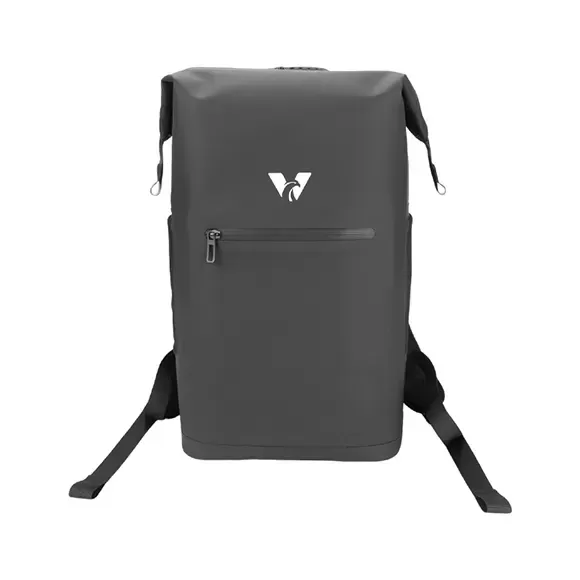
Outdoor enthusiasts expect more from their gear than ever before. Hikers, anglers, and kayakers want hands-free mobility without compromising ice retention. This shift has driven massive demand for technical soft-sided cooler backpacks. Yet, bringing one of these products to market is far more complex than making a standard school bag or travel pack.
A high-performance cooler pack merges two very different manufacturing disciplines: precision textile assembly and hermetic thermoplastic sealing. You must combine heavy structural fabrics, thick closed-cell insulation, high-frequency (RF) welding, and airtight hardware. A tiny mistake in seam geometry leads to leaks down the user’s back or premature ice melting.
Scaling a concept requires a structured engineering roadmap. Partnering with an experienced outdoor cooler backpack OEM like Weierken bridges the gap between creative industrial design and reliable factory execution. Here are the five essential steps to take your cooler backpack from initial sketch to mass production without costly trial and error.
Step 1: Concept Engineering and Tech Pack Development (DFM)
Many brands start with striking artistic sketches that look great in presentations but fail on the factory floor. The first step in any successful OEM engagement is Design for Manufacturing (DFM). You must convert aesthetic concepts into an actionable, production-ready tech pack.
An effective tech pack establishes structural boundaries before anyone touches raw fabric:
- Internal Volume and Capacity: Standardize whether the cavity holds 20L, 30L, or a 36-can payload with a 1:1 ice-to-beverage ratio.
- Target Tare Weight: Balance structural rigidity against carrying comfort. A bare pack should not exceed 1.8 to 2.5 kg.
- Ergonomic Suspension: Cooler packs carry heavy, sloshing loads. Integrate contoured S-curve shoulder straps, breathable perforated EVA back panels, and load-bearing hip belts.
- Structural Reinforcement: Pinpoint critical stress areas. Anchor points for handles and shoulder straps require heavy box-x stitching and welded bar-tacks to withstand 25 kg of pull force.
During the DFM phase, engineers evaluate the curvature of every seam. High-frequency welding horns cannot bond sharp, tight angles cleanly. Smoothing these seam transitions prevents thermal leak points and weak structural welds during production.
Step 2: Core Thermal and Waterproof Material Engineering
Your choice of materials directly determines durability, cold retention, and environmental compliance. A professional outdoor cooler backpack OEM builds a bill of materials (BOM) capable of withstanding rough outdoor environments.
Outer Shell vs. Inner Liner Architecture
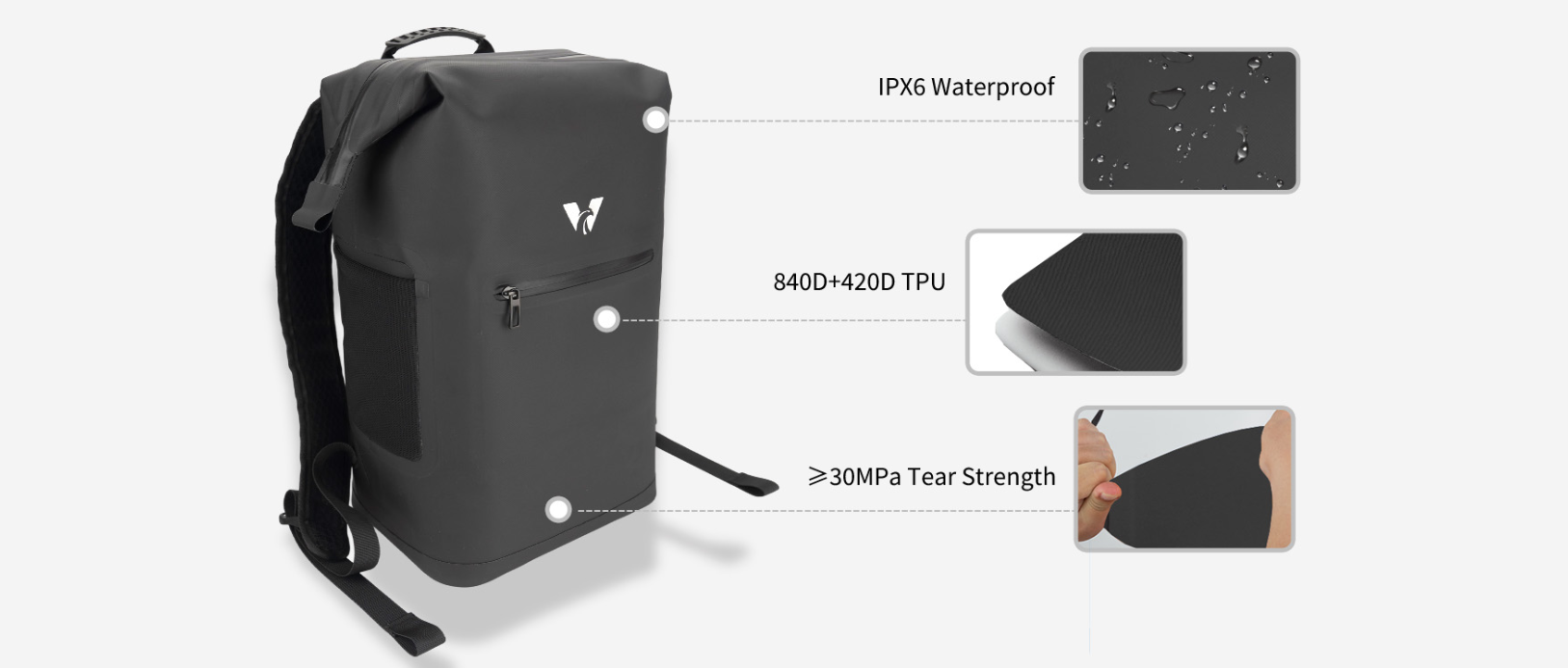
The exterior shell must resist abrasive rocks, gravel, and branches. Most commercial designs use 600D to 840D high-tenacity nylon or polyester coated on both sides with thermoplastic polyurethane (TPU). TPU resists UV degradation, stays flexible in freezing temperatures, and creates an impermeable barrier against water.
For the internal lining, food-grade TPU or heavy-gauge PEVA is non-negotiable. The liner directly contacts food, drinks, and ice melt. It must resist punctures from sharp can tabs, clean easily, and prevent mildew growth.
Thermal Core Selection
Open-cell sponge foam has no place in a technical cooler bag. It collapses under load, absorbs moisture, and loses its thermal resistance. Commercial-grade builds require high-density closed-cell foam, typically NBR (nitrile rubber) or cross-linked closed-cell EVA, at thicknesses between 15mm and 25mm.
Closed-cell foam traps microscopic air pockets within solid cellular walls. This structure maintains insulation value even when folded or compressed, giving quality packs their 48-to-72-hour ice retention capability.
Sealing Hardware and Accessories
The zipper is the most common point of thermal failure. High-end builds use airtight, tooth-locked zippers coated with polyether TPU. These zippers maintain a pressurized air seal that prevents meltwater leaks when the backpack tips over. For hardware, use corrosion-resistant acetal buckles, such as Duraflex, alongside integrated stainless-steel bottle openers.
Sustainability and Global Compliance
Modern consumers demand sustainable gear. Leading manufacturers now source Global Recycled Standard (GRS) certified rPET for outer shells and lining fabrics. Ensure all materials comply with REACH, RoHS, and Prop 65 chemical regulations to prevent commercial delays in North America and the EU.
Step 3: Precision Prototyping and Rigorous Lab Testing
Prototyping reveals whether your design holds up under real-world conditions. A dedicated custom cooler backpack prototype program takes 12 to 30 days. This window gives toolmakers time to mill prototype welding dies, laser-cut pattern pieces, and build a working unit.
Once built, an insulated cooler backpack manufacturer must put the prototype through strict functional lab tests:
- Submerged Positive-Pressure Leak Test: Technicians pressurize the backpack with air to 3.0–3.5 PSI, then submerge it completely in a water tank. A steady stream of bubbles reveals a leaking seam or faulty zipper stop immediately.
- Thermal Decay Chamber Testing (ASTM Standards): Technicians pack the cooler with a 1:1 ratio of commercial ice cubes to payload and place it in a temperature-controlled chamber at 38°C (100°F). Calibrated sensors track internal air and water temperatures every hour to verify ice-retention claims.
- Dynamic Shock and Drop Testing: The pack is loaded with 15 to 20 kg of steel weights and mounted onto an automated tensile machine. The machine drops and jerks the shoulder straps through 5,000 cycles to confirm that seams and buckles hold up under stress.
Prototypes rarely pass every test on the first try. Top manufacturers like Weierken refine weld times, boost die pressures, and adjust seam allowances across two or three sample rounds before approving the build for production tooling.
Step 4: Tooling Development, PP Samples, and Pilot Runs
With a working prototype approved, production shifts to tooling and manufacturing prep. Moving to mass output requires custom-milled high-frequency tooling.
Specialized copper or aluminum welding dies must match the exact contours of the backpack’s perimeter, bottom tub, and zipper tracks. Toolmakers often use a compression-molded EVA bottom tub. Molding the base as a single solid piece eliminates needle holes and creates an abrasion-resistant, self-standing foundation for the pack.
Before launching mass assembly, the factory produces a formal Pre-Production (PP) sample. The brand and factory check this final unit against critical standards:
- Precise Pantone color matches across fabric lots, webbings, and zipper pulls.
- Consistent pull resistance and smooth teeth engagement on the airtight zipper.
- Sharp, clean debossing, screen printing, or RF-welded logo applications.
- Clear, complete sewn-in legal labels, tracking tags, and retail hangtags.
Once the PP sample is signed off, the factory runs a pilot batch of 100 to 200 units. This trial run lets production line managers spot assembly bottlenecks, calculate exact operator cycle times, and refine standard operating procedures (SOPs) before full-scale manufacturing begins.
Step 5: Mass Production, Full QC, and Dual-Hub Delivery
True manufacturing quality comes from consistent line discipline. A dependable leakproof soft cooler backpack factory relies on multi-stage Quality Control (QC) gates to stop defects before products leave the facility:
- IQC (Incoming Quality Control): Technicians inspect bulk TPU fabric rolls for coating thickness, pull strength, and color consistency. They also pressure-test zipper batches.
- IPQC (In-Process Quality Control): Line inspectors check high-frequency welding machines every hour, verifying heat cycle times, pressure levels, and peel strengths.
- FQC (Final Quality Control): Before packaging, workers inflate every finished pack to verify airtight seam integrity.
- OQC (Outgoing Quality Control): Quality teams pull random production samples for final checks using AQL 1.5/4.0 standards before cartons are sealed.
This disciplined quality framework helps top factories maintain a 99.5% first-pass inspection yield, protecting your brand from negative customer reviews and product returns.
Dual-Hub Production and Tariff Strategy
Modern supply chains require geographical flexibility. Forward-thinking brands partner with suppliers that run dual manufacturing hubs. Sourcing development, high-end tooling, and custom raw materials through an R&D hub in China keeps innovation fast. Moving bulk assembly to a sister facility in Cambodia bypasses steep import duties in the US and Europe.
Finally, your manufacturing partner should manage complete DDP (Delivered Duty Paid) shipping. They handle export customs, ocean freight, port operations, and customs entry, delivering packaged inventory straight to your fulfillment center door.
Procurement Checklist: 5 Pitfalls to Avoid
When selecting your production partner, watch out for these common manufacturing mistakes:
- Standard Stitched Liners: Avoid factories that offer to sew and tape the inner cooler liner. Taped needle holes will eventually leak under the weight of shifting ice and water. Demand high-frequency welded seams.
- Unverified Recycled Fabrics: Always demand Global Recycled Standard (GRS) transaction certificates. Some vendors use virgin polyester while charging higher prices for recycled materials.
- Ignoring Zipper Lubrication: Airtight zippers generate heavy friction. Confirm your factory packs each cooler with food-grade silicone zipper lubricant and clear maintenance instructions.
- Weak Shoulder Strap Anchor Points: A full 30-can cooler pack weighs over 15 kg. If the strap anchors rely only on single-layer shell fabrics, they will rip free. Ensure the design anchors through the main structural seams with internal reinforcement webbing.
- Unclear Landed Cost Quotes: Always verify what a price
quote covers. FOB quotes leave you vulnerable to fluctuating ocean freight and
customs charges. A reliable partner can quote stable DDP terms to lock in your
profit margins.
Frequently Asked Questions
Q1: What is the typical MOQ for an outdoor cooler backpack OEM project?
A1: Custom cooler packs usually require an initial minimum order quantity (MOQ) of 500 to 1,000 units per colorway. This minimum stems from raw material mills, which require custom dye runs and specialized TPU coatings for heavy 840D fabrics. However, flexible manufacturers often accept smaller pilot runs during the first production cycle.
Q2: How does a soft-sided cooler backpack achieve 48+ hours of ice retention?
A2: Long ice retention relies on three design factors: 20mm to 25mm of dense, closed-cell NBR/EVA foam that stops conductive heat transfer; an airtight zipper that seals out ambient air; and reflective inner liners that bounce radiant heat away from the cold compartment.
Q3: How much can an OEM with a Cambodia factory save on import tariffs?
A3: Sourcing from Cambodia helps US and European brands legally avoid Section 301 tariffs on Chinese goods, which often reach 25% or higher on technical bags. Depending on product classification, this strategy can save brands 10% to 20% on total landed costs.
Q4: Why do airtight zippers require special maintenance and lubrication?
A4: Airtight, waterproof zippers use dense urethane tracks that interlock tightly to block water and air molecules. Without regular lubrication, this friction strains the slider, pulls teeth out of alignment, and tears the surrounding TPU fabric. Applying silicone lubricant keeps the zipper operating smoothly over years of use.
Q5: How do we verify that the inner lining is genuinely food-contact safe?
A5: Ask your factory for third-party lab test reports from agencies like SGS, TUV, or Intertek. The lining material should pass FDA 21 CFR 177.2600 tests for North America or LFGB tests for Europe, confirming it will not leach plasticizers, heavy metals, or toxic compounds into food and ice.
Start Your Cooler Backpack Production with Weierken
Scaling a technical cooler backpack takes more than just a creative design. It requires strict material testing, custom tooling, and dependable factory lines. Working with a dedicated outdoor cooler backpack OEM helps you bypass common design mistakes, cut product return rates, and hit your target delivery dates.
Weierken combines 20 years of thermal bag engineering with flexible, dual-hub production in China and Cambodia. Our manufacturing teams turn complex technical concepts into rugged, market-ready gear built to last. Contact our engineering team today to review your tech pack, schedule a prototype build, and request a detailed DDP manufacturing quote.