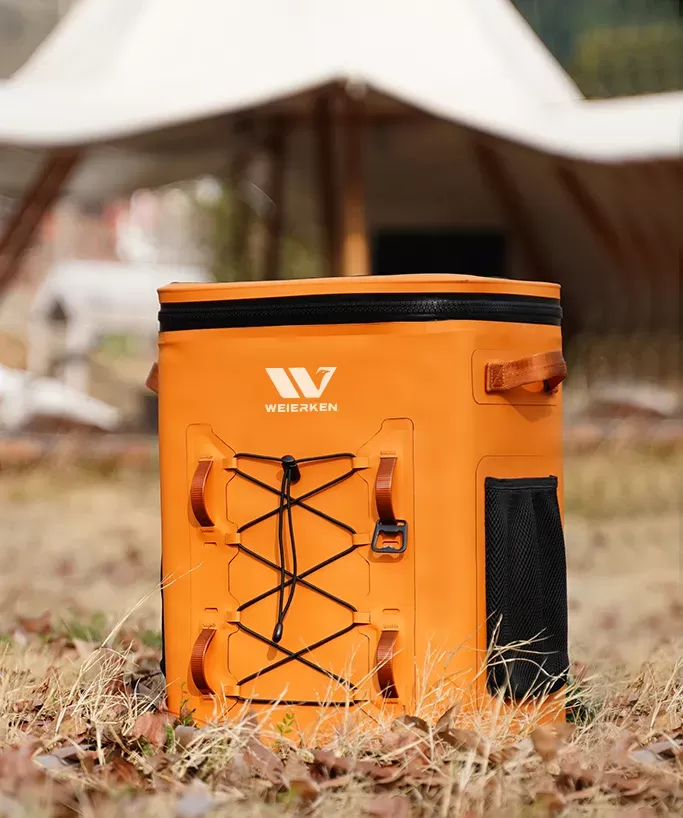

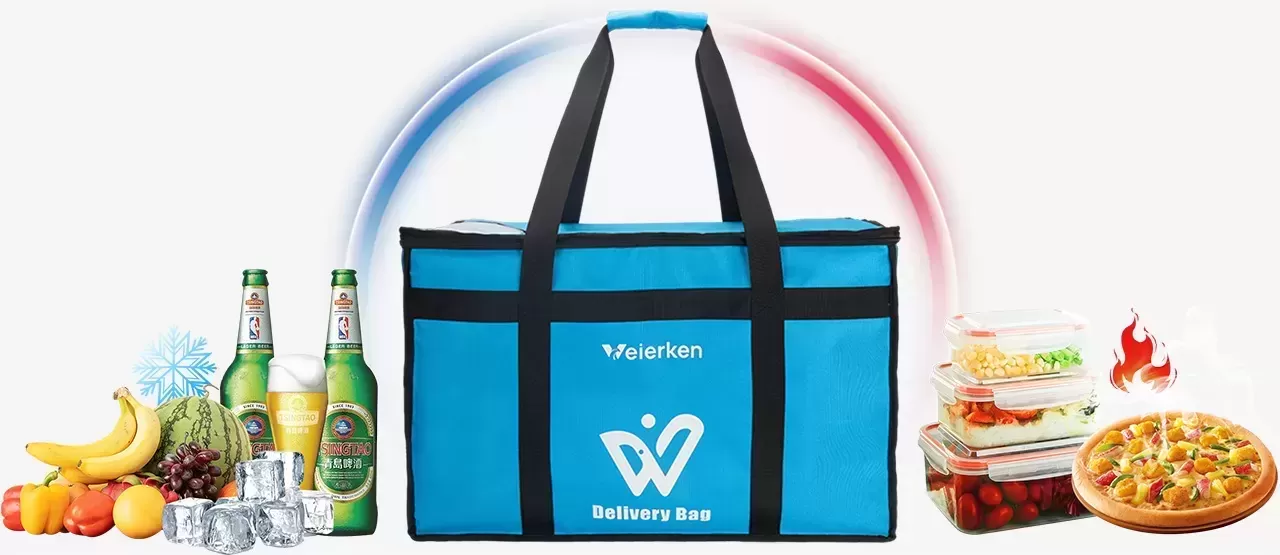
Last-mile logistics in the cold chain sector present constant operational challenges. Temperature fluctuations during transit can lead to spoiled dairy, melted frozen foods, and dissatisfied customers. For businesses managing fresh food logistics, standard off-the-shelf bags rarely suffice. Every delivery fleet operates with different vehicles, route lengths, and regional climates.
To address these challenges, partnering with an experienced grocery delivery bag maker like weierken can provide a significant advantage. Rather than simply supplying basic containers, a professional manufacturer acts as a technical partner. They design specific solutions tailored to your logistics model, helping to maintain product quality from the fulfillment center to the customer's doorstep.
Below, we look at three custom solutions that a specialized grocery delivery bag maker offers to solve cold chain difficulties and manage your operational costs.
1. Multi-Temperature Zone Design for Diverse Delivery Requirements
Modern grocery delivery services rarely handle just one type of product. A single delivery run might include deep-frozen meats, chilled yogurt, and room-temperature bakery items. Placing these goods in the same undivided compartment often leads to spoiled items or condensation damage. A specialized grocery delivery bag maker addresses this by designing high-performance multi-temperature delivery bags.
These specialized bags utilize advanced thermal engineering to keep different zones isolated within a single bag. Manufacturers achieve this through precise material selection and structural design:
Reflective Aluminum Foil: This material serves as the interior lining to block radiant heat transfer, keeping internal temperatures stable.
Expanded Polyethylene (EPE) Foam: Standard foam layers offer basic insulation, but custom manufacturers can vary the thickness (from 5mm to 15mm) depending on your target transit times.
Extruded Polystyrene (XPS) and Vacuum Insulation Panels (VIP): For long-distance transport, these premium materials offer high thermal resistance without adding excessive weight.
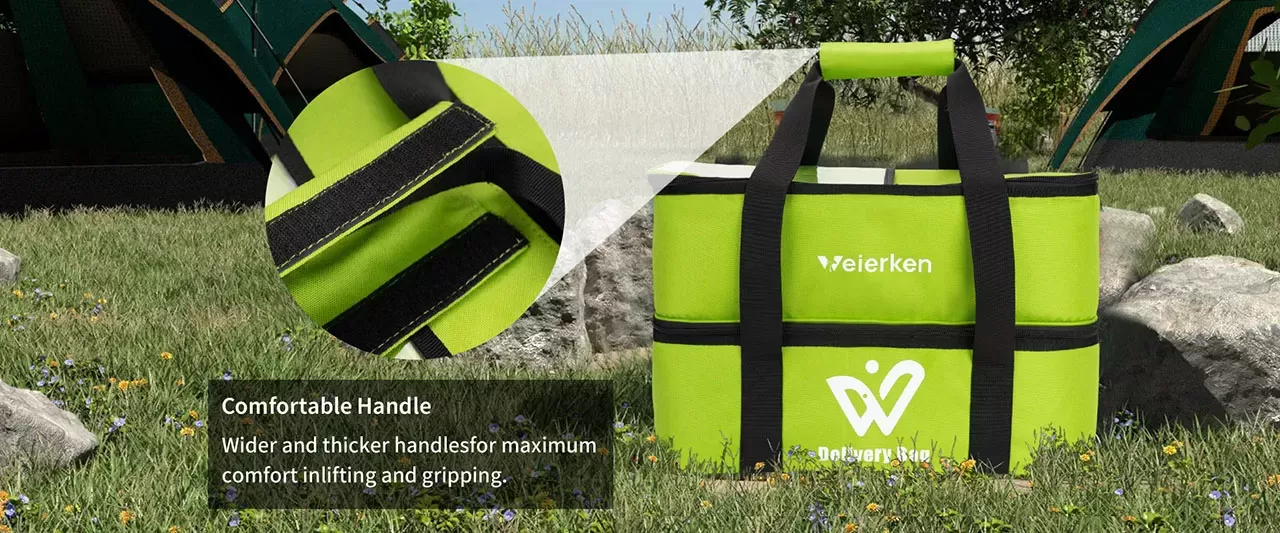
Adjustable Insulated Dividers: These movable walls feature heavy-duty hook-and-loop fasteners, allowing delivery drivers to change compartment sizes based on daily order volumes.
For B2B buyers, deploying multi-temperature delivery bags brings clear financial benefits. Drivers can complete mixed-temperature orders in a single run. This reduces the number of trips required, lowers fuel costs, and improves overall fleet utilization.
By working with a knowledgeable manufacturer like weierken, you can test different material combinations to find the right balance between thermal performance and unit cost.
2. Structural Customization to Match Fleet Vehicles and Workflows
Delivery personnel work under tight schedules and handle heavy daily workloads. If a delivery bag does not fit their vehicle or is difficult to open, deliveries slow down. This delay can lead to temperature loss. A professional grocery delivery bag maker designs the outer structure of the bags to match your delivery vehicles and daily routines.
Whether your fleet relies on electric bicycles, motorcycles, three-wheelers, or vans, custom bag designs help ensure a secure and stable fit:
Vehicle-Specific Mounts: Customized baseboards, heavy-duty straps, and quick-release metal buckles secure the bags to vehicle racks, reducing movement during transit.
Ergonomic Backpack Conversions: When drivers must carry orders up stairs, adjustable padded shoulder straps and chest buckles help distribute weight comfortably.
Reinforced Load-Bearing Frames: Lightweight fiberglass or plastic frames prevent the bag from sagging or collapsing, protecting delicate food items underneath.
In addition to vehicle compatibility, a custom grocery delivery bag maker optimizes the bag's closures to speed up loading and unloading. Adding side-opening magnetic flaps or heavy-duty dual zippers allows drivers to retrieve items quickly. This minimizes the time the bag remains open, helping to preserve the internal temperature.
These small design choices directly impact your daily operations. Saving thirty seconds per stop adds up to significant time saved across a large fleet. This efficiency allows your business to handle more orders per shift without needing extra staff.
3. Food-Grade, Durable, and Easy-to-Clean Materials
Daily deliveries expose bags to spills, road dust, and frequent handling. If a delivery bag absorbs liquids or odors, it soon becomes unusable due to hygiene concerns. A reliable grocery delivery bag maker sources specific materials that meet food safety standards while remaining durable enough for daily use.
Selecting the right materials helps ensure compliance and extends the usable life of your reusable grocery thermal bags:
TPU and Leak-Proof PVC Linings: Thermoplastic Polyurethane (TPU) is non-toxic, food-safe, and highly resistant to grease and water. Seams are high-frequency welded to contain spills and prevent liquids from leaking into the insulation foam.
Antimicrobial Coatings: Special inner coatings help prevent bacterial growth and mold, keeping the bag hygienic even when handling damp or condensation-heavy items.
Abrasion-Resistant Outer Fabrics: High-density Oxford fabrics (such as 1680D polyester) with water-resistant coatings protect the bag from tears, scuffs, and harsh weather.
These durable material choices help lower the long-term cost of ownership for B2B buyers. While cheaper, off-the-shelf bags may save money initially, they often need replacement after just a few months of heavy use. Choosing well-made, custom insulated delivery bags from a dedicated manufacturer like weierken helps ensure your equipment remains in service longer, reducing the need for frequent replacements.
Additionally, smooth interior linings are easy to wipe down and sanitize at the end of each shift. This helps your team maintain high hygiene standards with minimal effort.
Choosing a Manufacturing Partner
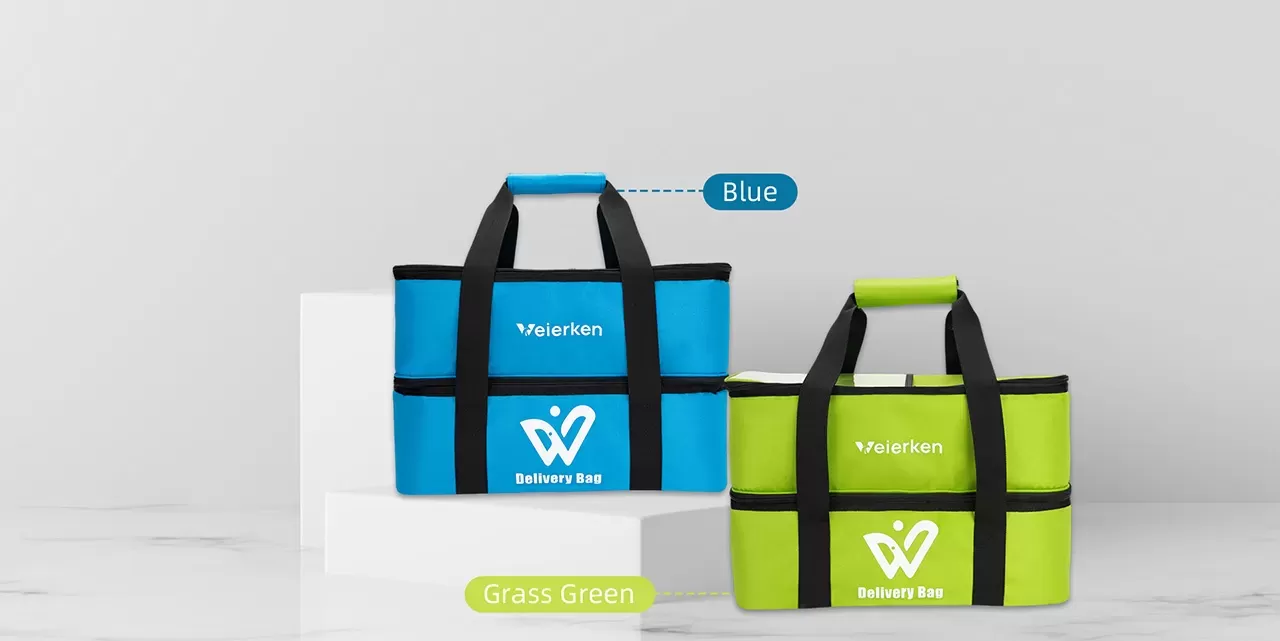
Succeeding in last-mile cold chain logistics requires more than just standard carrying cases. It requires specialized equipment designed for your specific business needs. From multi-temperature compartments to custom vehicle mounts and food-safe, durable linings, a dedicated grocery delivery bag maker provides the practical solutions your fleet needs to operate efficiently.
By choosing a manufacturing partner like weierken, you can access tailored designs that help lower product spoilage, improve driver efficiency, and manage your long-term equipment costs. Investing in custom-designed equipment helps protect your inventory and support your delivery team on every run.
If you want to improve your cold chain logistics, we are ready to help. Contact our team today to discuss your delivery requirements, request a quote, or arrange for custom prototype samples designed for your business.
Frequently Asked Questions
Q1: What is the typical lead time for custom insulated delivery bags?
Lead times vary depending on the complexity of your design and the order volume. Typically, the sample development stage takes 7 to 10 days. Once the sample is approved, bulk production generally takes between 30 and 45 days. It is best to discuss your timeline with your manufacturer early in the planning process.
Q2: Can we purchase cold chain delivery bags wholesale with our company branding?
Yes. A professional manufacturer can print your brand logo, corporate colors, and reflective safety strips onto the bags. High-quality screen printing or heat-transfer printing helps ensure your branding remains visible and durable, even after exposure to sun and rain.
Q3: How do we determine the best insulation thickness for our delivery times?
The right insulation thickness depends on your average delivery times and local climate. For quick deliveries under 30 minutes, 5mm to 8mm of EPE foam is usually sufficient. For longer routes lasting 1 to 2 hours, manufacturers generally recommend 10mm to 15mm of high-density foam or specialized vacuum panels to maintain the required temperatures.
Q4: Are the interior linings of these bags easy to clean and sanitize?
Yes. By using heat-sealed TPU or PVC linings, the interior surfaces are completely waterproof and smooth. This design prevents liquids from seeping into the seams, allowing delivery teams to easily wipe down, spray, and sanitize the interior surfaces between shifts.
Q5: Can a single bag carry frozen and hot foods at the same time?
Yes, through the use of insulated multi-temperature zones. By using thick, removable thermal dividers, a single bag can be split into separate compartments. This keeps hot foods warm and frozen items cold in their respective zones without heat transferring between them.
Q6: What is the minimum order quantity (MOQ) for custom bag designs?
Minimum order quantities depend on the specific materials and customization required. For standard custom designs, the MOQ typically ranges from 100 to 500 units. Please reach out to our team with your specific requirements, and we will work to find a solution that fits your fleet's needs.