
Scaling a regional bakery brand from three boutique shops to fifteen or fifty commercial outlets changes your operational math. Early on, buying stock packaging from regional distributors makes sense. You order small volumes, accept generic sizes, and absorb the markup.
That procurement model breaks down quickly as your footprint expands. Third-party brokers insert substantial markups into your supply line while offering zero control over production runs or quality tolerances.
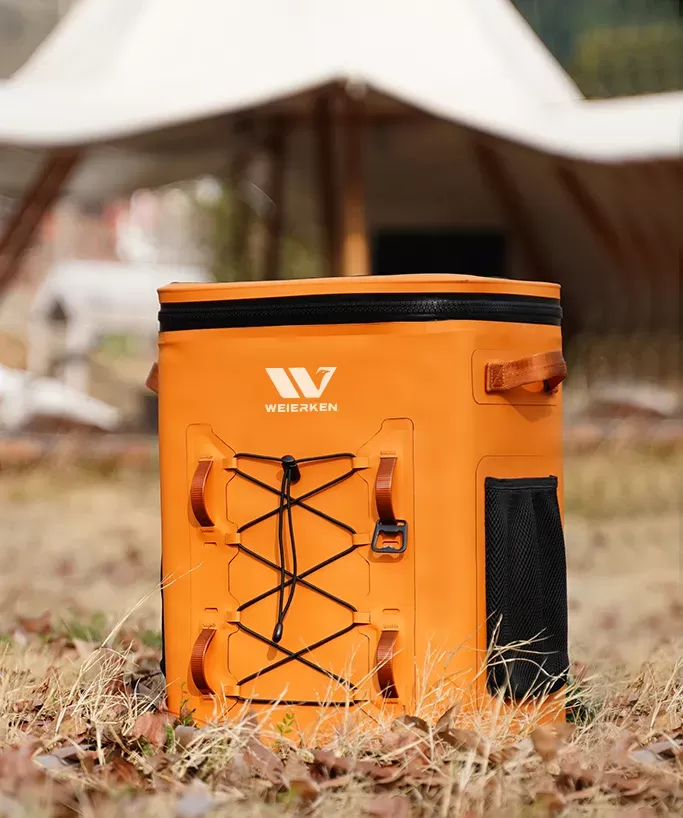
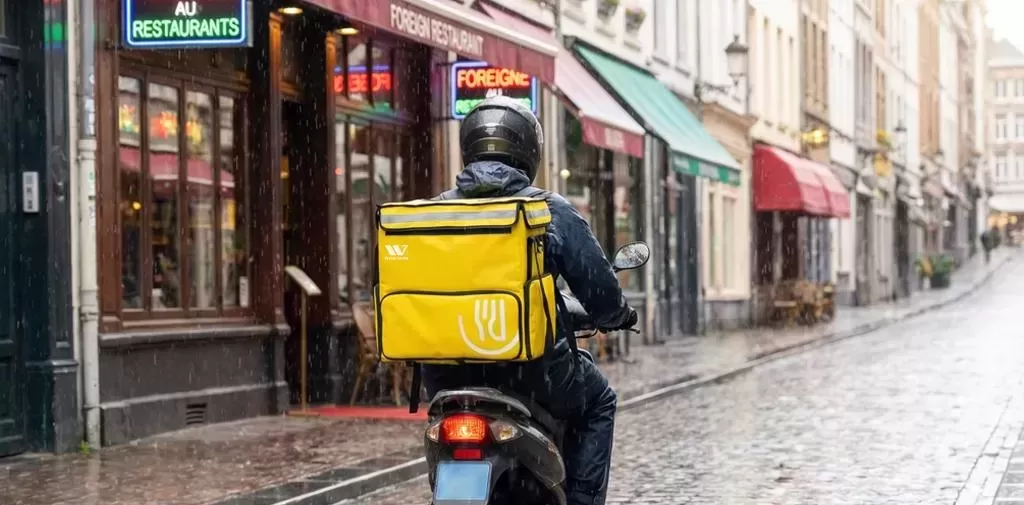
When third-party couriers mishandle delicate buttercream or multi-tiered chiffon cakes, generic packaging cannot protect your product. Multi-unit operators need purpose-built branded delivery bags for dessert shops that preserve food temperature and presentation.
Switching to a direct Original Equipment Manufacturer (OEM) like Weierken shifts packaging from a recurring overhead expense into a scalable brand asset. Here are the three primary operational advantages of sourcing bulk cake delivery bags for bakery chains directly from the factory floor.
1. Significant Cost Reduction and Volumetric Optimization
The traditional packaging distribution model adds layers of hidden cost. Raw material mills sell to converters, converters sell to exporters, brokers sell to domestic distributors, and distributors sell to your bakery chain. Each intermediary extracts a 15% to 30% margin.
Bypassing this broker network delivers immediate financial and logistical benefits to your bottom line.
Eliminating Distributor Markups
Working directly with an OEM eliminates intermediary commissions entirely. The resulting 20% to 35% cost savings can either improve your store-level operating margins or fund better packaging substrates.
Instead of settling for flimsy 80gsm paper bags that tear under moisture, your procurement team can invest in 140gsm tear-resistant kraft lined with dense thermal foil—all while reducing overall unit expenditure.
Tiered Pricing for Full-Container Loads
OEM factories run on volume and machine efficiency. When placing bulk orders across quarterly or annual contracts, procurement teams gain access to tiered manufacturing rates unavailable to middle-tier buyers.
Palletized Shipments: Buying in full pallet quantities minimizes handling labor and unit-level packing costs at the factory.
Full Container Loads (FCL): Ordering 20-foot or 40-foot containers reduces ocean and overland freight rates per piece to fractions of a cent.
Material Hedging: Direct manufacturers purchase virgin paper pulp and aluminum composite rolls in bulk, buffering your business against raw material price spikes.
CBM and Flat-Pack Engineering
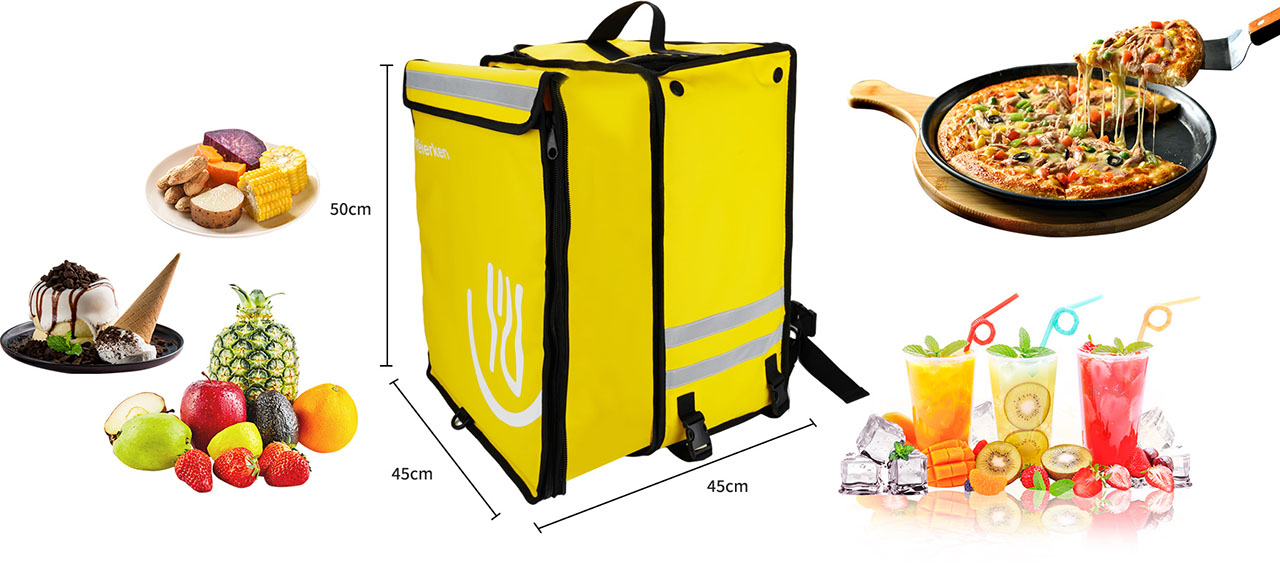
Logistics costs do not depend solely on deadweight; they depend heavily on cubic meter (CBM) volume. Generic cake boxes and pre-assembled bags consume valuable container and warehouse space, forcing you to pay to transport empty air.
OEM packaging engineers design custom flat-pack structures with precision pre-creasing. These custom folds collapse completely flat without compromising the structural integrity of the paper or inner foam cores. Optimizing bag geometry can improve container loading density by up to 25%, sharply cutting freight costs across your distribution network.
2. Custom Engineering and Multi-Store Brand Consistency
Generic, stock delivery bags rarely match proprietary bakery containers. If an 8-inch cake box slides around inside an oversized bag, decorative fruit slips, meringue cracks, and piped buttercream smears against the box walls during scooter transit.
Direct OEM production allows you to build packaging around your specific bakery containers rather than forcing your products into off-the-shelf sizes.
Custom Dielines and Tailored Bottom Gussets
An experienced bakery chain packaging supplier engineers bespoke dielines matched to your product dimensions. Whether your stores sell 4-inch bento cakes, standard 8-inch celebration cakes, or tall multi-layer creations, the bag can be tailored to match.
Snug Interior Dimensions: Custom square bases hold cake boards firmly in place, stopping lateral sliding during delivery.
Reinforced Cardboard Bases: Integrating a rigid 350gsm to 450gsm white cardboard bottom insert prevents center sagging, keeping cakes perfectly flat.
Load-Bearing Handles: Factory-attached flat woven handles with cross-stitch thermal bonding distribute weight evenly, supporting loads over 5kg without tearing.
Strict Color Accuracy Across Store Networks
Brand identity relies on consistency. If your signature pastel pink looks salmon in one store and violet in another, brand equity erodes. Distributors source identical stock numbers from different sub-contractors, resulting in severe color drift between production lots.
OEM production facilities employ automated flexographic and rotogravure printing lines running calibrated Pantone Matching Systems (PMS). Manufacturers like Weierken measure print accuracy using spectrophotometers to enforce a Delta E value below 2.0.
This strict color control ensures your packaging looks uniform across fifty or five hundred stores nationwide, regardless of production timing.
Functional Add-Ons and Food-Safe Barriers
Direct factory partnerships let you select every component of your packaging specification. You can customize functional details to solve specific kitchen and delivery challenges:
Eco-Friendly PLA Coatings: Replace conventional PE plastic films with biodegradable poly-lactic acid derived from plant starches to block butter grease while meeting corporate sustainability goals.
Thermal Foam Liners: Laminate 2mm Expanded Polyethylene (EPE) foam directly to interior aluminum foil, maintaining internal temperatures below 8°C (46°F) for up to two hours.
Integrated Closures: Add peel-and-seal tamper-evident adhesive strips or magnetic button closures to protect orders from courier tampering.
3. Supply Chain Resilience and Rigorous Compliance
Bakery chains generate up to 40% of their annual gift and delivery revenue during concentrated holiday windows: Mother's Day, Valentine's Day, Thanksgiving, and Christmas. If your packaging distributor runs out of stock during these critical peaks, your off-premise sales stall.
Direct partnerships with an OEM factory eliminate supply intermediaries, giving your operations team full visibility into raw material supplies and production schedules.
Blanket Orders and JIT Warehousing
Working directly with a manufacturing partner enables blanket purchase orders (BPOs). You can commit to annual purchase volumes to lock in low pricing, while the factory schedules production around your rolling sales forecasts.
The OEM produces bags in cost-efficient, high-volume production runs and holds safety stock at strategic points. Batches ship via Just-In-Time (JIT) schedules directly to your regional distribution centers, preventing stockouts during peak holiday rushes while conserving store backroom space.
End-to-End Regulatory Compliance
Food contact packaging faces strict legal requirements. Distributors often provide outdated, third-party test certificates that fail to satisfy corporate auditors or local health authorities.
Reputable OEM manufacturers maintain fully traceable quality management systems and provide valid testing documentation directly from accredited laboratories:
FDA 21 CFR Compliance: Guarantees that internal barrier coatings, printing inks, and adhesives emit no harmful volatiles or chemical leachates into food chambers.
EU Regulation (EC) No 1935/2004: Confirms material safety for direct and indirect food contact across European markets.
FSC Certification: Verifies that all virgin kraft pulp traces back to responsibly managed, sustainable commercial forests.
BRCGS Packaging Standards: Demonstrates that the manufacturing facility operates under clean, pharmaceutical-grade hygienic conditions.
How to Audit an OEM Packaging Factory
Transitioning to factory-direct sourcing requires proper supplier validation. Not all packaging converters can support the demanding volumes and delivery timelines of expanding commercial bakeries.
When auditing potential manufacturing partners for bulk cake delivery bags for bakery chains, assess these critical capabilities:
1. Automated Daily Production Capacity
Verify that the factory owns modern, automated roll-fed bag-making machinery rather than relying on manual assembly lines. Inquire about daily unit output per line and review current factory capacity utilization. Your projected order volume should consume no more than 25% of their total line throughput to leave room for emergency reorders.
2. Prototyping Speed and Dieline Engineering
A capable OEM should offer in-house structural design support. Request physical structural samples and unprinted 3D cad-cut mockups. The factory design team should turn around custom dielines within 48 to 72 hours, allowing your culinary team to test real pastry boxes for fit and stability immediately.
3. In-House Quality Assurance Testing
Ask to inspect their quality testing laboratory. Reliable manufacturers perform standardized structural and thermal testing before dispatching finished goods:
Handle Tensile Testing: Measures the maximum vertical force handles can sustain before glue joints or paper fibers fail.
Drop Impact Tests: Evaluates corner and bottom-seam burst strength by dropping fully loaded bags from carrier heights.
Thermal Dissipation Profiling: Uses thermal data loggers to measure internal temperature changes over a 180-minute delivery cycle under controlled ambient heat.
Frequently Asked Questions
Q1: Why bypass regional packaging distributors when ordering bulk cake delivery bags?
A1: Buying directly from an OEM removes distributor markups of 20% to 35%, gives you full control over bag sizing and materials, enforces tight color consistency across stores, and eliminates middleman inventory delays during peak sales periods.
Q2: What is the standard production lead time when working directly with an OEM?
A2: Initial orders require 3 to 4 weeks for tooling, dieline proofing, plate making, and production. Repeat blanket orders running on existing plates typically ship within 10 to 14 days, supported by agreed-upon raw material safety stock.
Q3: How do custom dielines reduce in-transit cake damage rates?
A3: Custom dielines match the bag's bottom gusset precisely to your cake box footprint. This snug fit, paired with a rigid 400gsm cardboard baseboard, prevents boxes from sliding, tilting, or collapsing during transport.
Q4: What color standard guarantees print consistency across different production batches?
A4: Professional manufacturers use the Pantone Matching System (PMS) and monitor print runs using spectrophotometers. They keep color variance below a Delta E of 2.0, ensuring your packaging looks consistent across all stores and production runs throughout the year.
Q5: How do blanket purchase orders protect bakery chains from holiday stockouts?
A5: A blanket order reserves factory raw materials and production capacity for your projected annual packaging needs. The factory manufactures your custom bags according to rolling forecasts, keeping safety stock ready for immediate release ahead of major holidays.
Q6: Can an OEM factory combine eco-friendly materials with thermal insulation?
A6: Yes. Modern factories can laminate FSC-certified recycled or virgin kraft paper with plant-based PLA grease barriers and water-repellent thermal paper-bubble linings. This construction provides dependable cold insulation while reducing plastic use compared to standard metallic foil bags.
Secure Your Packaging Supply Chain
When operating a multi-unit bakery business, packaging is central to product quality, customer retention, and brand presentation. Treating delivery bags as generic consumables purchased from local brokers exposes your business to inflated costs, damaged products, and unpredictable holiday shortages.
Partnering directly with a dedicated manufacturer gives your business lower unit costs, custom-engineered product safety, and dependable supply continuity. Investing in tailored, durable bulk cake delivery bags for bakery chains protects your pastries in transit and reinforces your premium brand in every customer's home.
Weierken manufactures high-performance insulated and structural packaging for expanding bakery chains and specialty food brands worldwide. Contact our engineering team today to review your current packaging dielines, schedule a factory audit, or request a complete OEM sample kit.