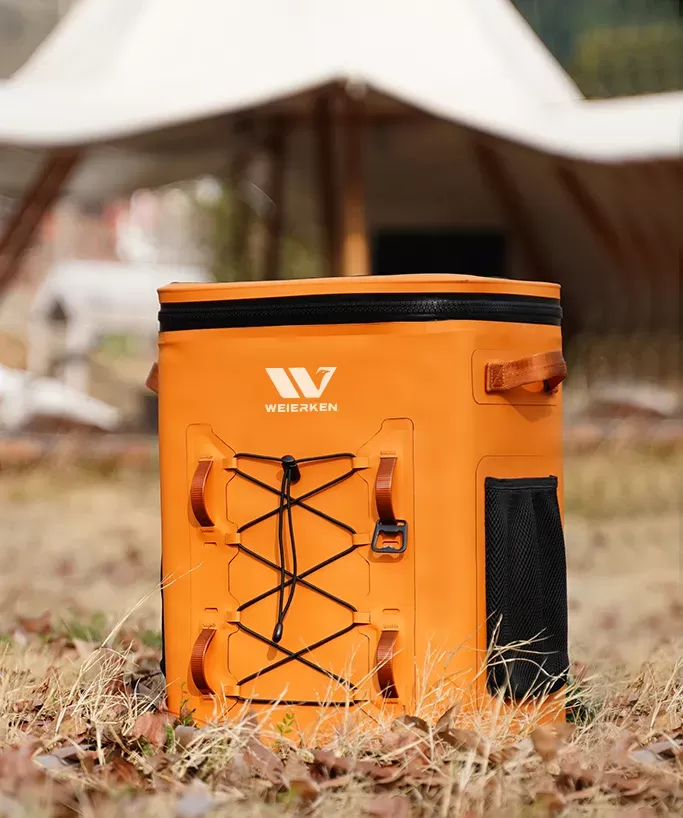

Ice cream is the most temperamental food product in the modern on-demand delivery sector. Unlike hot pizza or room-temperature groceries, ice cream requires a continuous sub-zero environment. You must keep it at or below -18°C (-0.4°F) from your fulfillment hub right to the customer's doorstep. A temperature shift of just three degrees ruins the mouthfeel, triggers recrystallization, and turns an artisan gelato into a soupy mess.
When deliveries fail, businesses do not just lose the price of a frozen pint. They suffer chargebacks, tainted customer reviews, and potential health code violations. Sourcing your gear from a professional ice cream delivery bag manufacturer—rather than an off-the-shelf distributor or middleman—is the most effective way to secure cold-chain stability. Working directly with specialized factories like Weierken gives enterprise logistics managers and ghost kitchens complete control over technical specs, fabric grade, and thermal retention performance.
Middlemen and trading companies mark up prices while hiding critical production limits. A dedicated ice cream delivery bag manufacturer, by contrast, gives you clear visibility into raw material specifications, batch testing data, and custom engineering options. Here are the top seven criteria procurement specialists must assess before signing a contract with a manufacturing partner.
1. Advanced Thermal Insulation Tech and Holding Time Verification
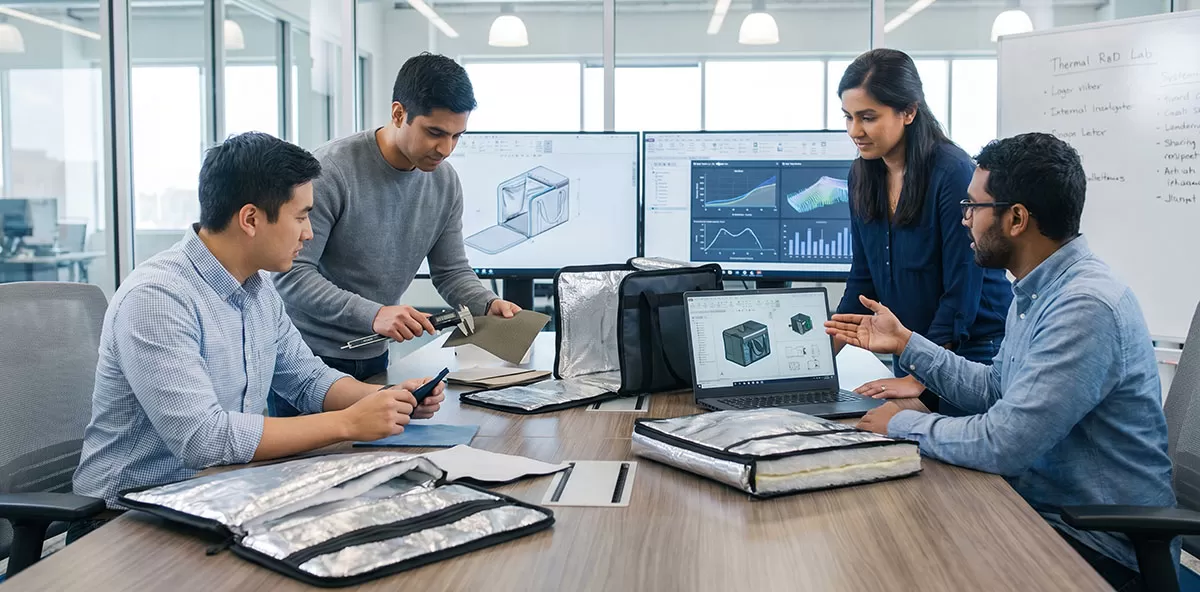
The core of any thermal bag is its composite insulation core. A generic cooler bag with 5mm standard foam will fail an ice cream transport run within thirty minutes. You need a cold chain delivery bag factory that engineers multi-layer insulation systems specifically calibrated for negative temperatures.
Evaluate whether the factory utilizes these core structural layers:
Radiant Heat Barriers: High-purity aluminum foil or metallized PET film that reflects external radiant heat away from the cold zone.
Closed-Cell Core Foam: High-density EPE (Expanded Polyethylene) or EVA foam ranging from 10mm to 25mm thick. Closed-cell structures trap air in pockets, preventing thermal bridges.
Vacuum Insulation Panels (VIP): For ultra-long delivery routes exceeding two hours, top-tier manufacturers integrate VIP boards. These deliver thermal resistance up to ten times higher than standard foam of equal thickness.
Ask the ice cream delivery bag manufacturer for verified thermal chamber test data. Can their bags maintain -18°C for 60 to 180 minutes under a 35°C (95°F) ambient exterior environment? Furthermore, check if their internal structures accommodate dry ice pellets (-78.5°C) or phase change materials (PCMs) rated for frozen goods. An experienced factory designs integrated pockets or ceiling sleeves so that sub-zero cooling agents distribute air evenly throughout the interior chamber.
2. Seam Sealing and Leak-Proof Craftsmanship
Traditional needle-and-thread stitching creates micro-punctures. In a thermal delivery bag, every single needle hole allows frigid air to escape and warm, humid air to enter. This warm air condenses instantly, creating water buildup inside the lining and degrading the insulation foam over time.
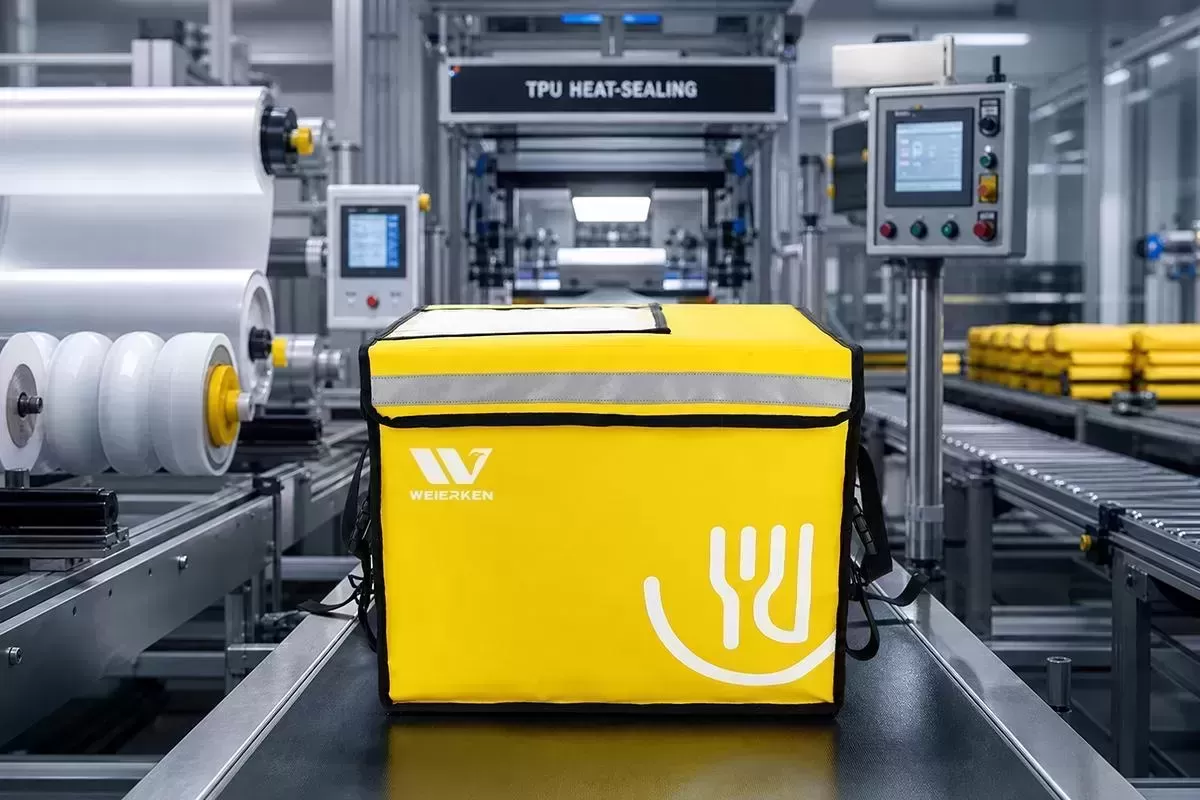
Look for an ice cream delivery bag manufacturer that uses high-frequency radio frequency (RF) welding or ultrasonic heat-sealing technology. Seamless thermal welding melts the thermoplastic edges together under pressure, creating a hermetic, 100% leak-proof bond. If ice cream melts or cold packs sweat, fluids stay contained inside the liner without seeping into the core foam.
Pay close attention to zipper construction. Ordinary nylon coil zippers are notorious failure points for cold air loss. High-performance commercial ice cream delivery bags require:
Rubber-coated waterproof zippers with tight teeth engagement.
Airtight, pressure-resistant TPU zippers for premium applications.
Internal insulated storm flaps (zipper baffles) that cover the teeth on the inside, preventing heat transfer through the zipper track.
3. OEM/ODM Capabilities and Rapid Prototyping
Your delivery fleet acts as a rolling billboard. Generic black courier bags waste valuable brand impressions. You need an ice cream delivery bag manufacturer with robust OEM (Original Equipment Manufacturer) and ODM (Original Design Manufacturer) capabilities to tailor bags to your exact operational workflow.
A capable engineering partner like Weierken helps logistics teams move from concept sketches to physical prototypes within three to five business days. During the design phase, evaluate the factory's structural customization options:
Internal Divider Systems: Sturdy, insulated partitions that separate dry ice bricks from direct contact with paper packaging to prevent freezer burn or crushing.
Stabilization Straps: Heavy-duty velcro or buckled webbing to anchor pint containers and prevent tipping during motorcycle or bicycle transport.
Ergonomic Mounting Solutions: Reinforced exterior eyelets, rack-mounting straps, or padded backpack harnesses built for multi-drop courier comfort.
Branding Applications: Industrial silk-screen printing, heat-transfer logos, and high-visibility reflective bands that survive continuous friction and weather exposure.
If a supplier only sells fixed-dimension stock items without an internal engineering team, they are likely a reseller rather than a true custom thermal delivery bags for ice cream manufacturer.
4. Commercial-Grade Durability and Hygiene Standards
Consumer cooler bags handle light weekend picnics. Commercial food couriers throw bags onto asphalt, pack them into delivery crates, and ride through rainstorms twelve hours a day. Sourcing fragile materials leads to torn straps, cracked liners, and costly field replacements within months.
Demand industrial-grade outer textiles from your ice cream delivery bag manufacturer. The gold standards include:
500D to 1680D TPU/PVC Tarpaulin: Completely waterproof, puncture-resistant, and scratch-proof fabrics that resist oil, grease, and dirt.
Heavy Oxford Nylon with PU Coating: Balances light tare weight with high tear strength for courier backpacks.
Reinforced Stress Points: Bar-tack stitching at handle junctions, cross-stitched box-X patterns on shoulder straps, and molded rubber bottom feet to stop floor abrasion.
Hygiene is equally non-negotiable. Frozen dairy spills encourage bacterial growth and sour odors if absorbed by porous fabrics. Ensure the interior liner uses commercial-grade aluminum foil or food-grade TPU film with antimicrobial treatments. The interior must be 100% wipe-clean, allowing riders to sanitize the bag with standard disinfectant sprays between delivery runs without degrading the material.
5. Food-Grade Compliance and Global Certifications
Exporting to markets across North America, Europe, and Australasia requires strict adherence to consumer safety and chemical regulations. If your ice cream delivery bag manufacturer uses uncertified linings, customs authorities can impound your shipment, or local regulators can pull your products from the road.
Verify that your manufacturing candidate holds active, verifiable certifications:
FDA & LFGB Compliance: Confirms that the inner liner materials are food-contact safe and will not leach toxic plasticizers, lead, or odors into the packaging environment.
RoHS & REACH: Guarantees that the outer fabrics, zippers, foams, and adhesives are free from hazardous substances such as phthalates, heavy metals, and persistent organic pollutants.
ISO 9001 Certification: Proves that the production facility implements standardized quality control systems across fabric inspection, cutting, welding, and final packing.
Always request recent third-party test reports issued by independent laboratories like SGS, TÜV, or Intertek. Legitimate suppliers readily provide batch-specific documentation.
6. Production Capacity, Scalability, and Lead Times
Ice cream sales track seasonal spikes. When summer temperatures climb, delivery volumes double or triple. If your supplier cannot scale output or runs out of raw materials during your peak demand period, your fleet operations will grind to a halt.
Assess the physical footprint of the cold chain delivery bag factory. Inquire directly about their metrics:
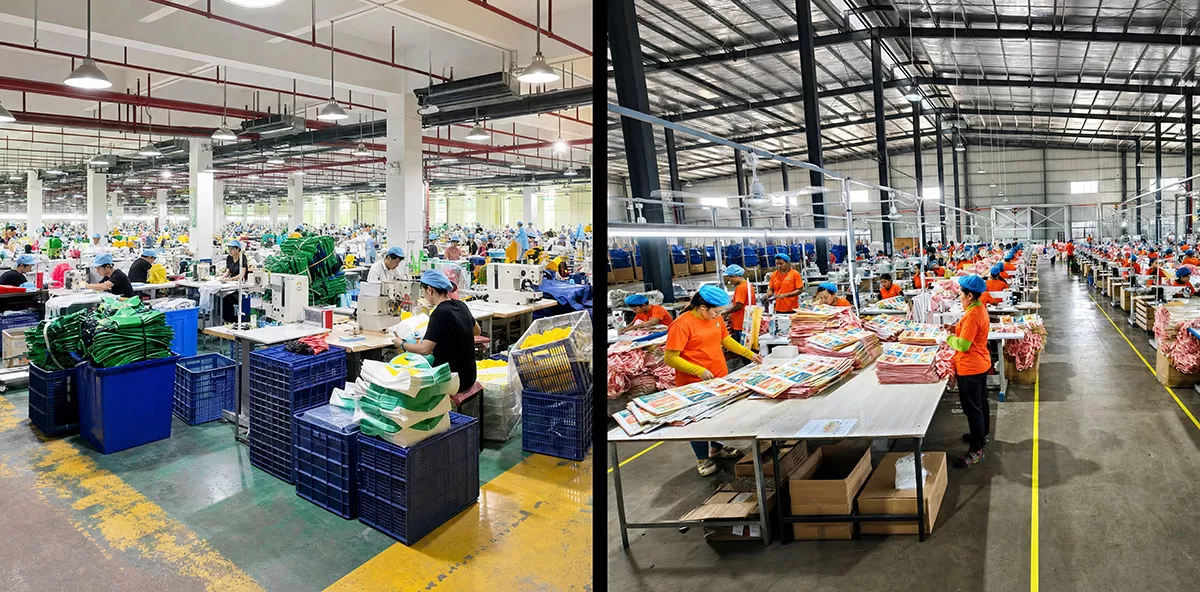
Monthly Output Capacity: Can the factory reliably output 20,000 to 50,000+ units per month across automated cutting and sewing lines?
Flexible Minimum Order Quantities (MOQ): Does the manufacturer support tiered purchasing—allowing smaller trial runs (e.g., 500 units) for field validation before full-scale commercial runs (5,000+ units)?
Lead Time Predictability: What is their standard cycle time from deposit to finished goods? A dependable manufacturer maintains a 25 to 35-day production window for bulk wholesale insulated food delivery bags, even in peak seasons.
Ask how the factory mitigates raw material shortages. Tier-one manufacturers maintain strategic reserves of closed-cell foam, high-grade tarpaulin, and thermal linings to buffer against upstream supply chain shocks.
7. End-to-End Supply Chain and DDP Logistics Support
A competitive factory price per bag means little if international logistics, port fees, and customs duties wipe out your margins. An inexperienced manufacturer often quotes an attractive FOB (Free on Board) price, leaving your logistics team to deal with booking containers, terminal handling charges, customs bonds, and inland freight.
Select an ice cream delivery bag manufacturer with established worldwide export accounts. They should offer full DDP (Delivered Duty Paid) shipping solutions for key logistics hubs in the United States, Canada, the United Kingdom, the EU, and Australia.
A comprehensive export service profile includes:
Coordinated sea freight (FCL and LCL) for high-volume, cost-effective inventory staging.
Air freight services for urgent prototype testing and rapid mid-season stock replenishment.
Accurate Harmonized System (HS) code classification to prevent customs delays or penalty tariffs upon port arrival.
Optimized carton packaging and palletization designs that minimize empty cubic space, lowering your total cost per unit during sea transit.
Comparison Matrix: Sourcing Directly vs. Trading Companies
To help visualize why selecting an authentic manufacturing partner is critical, review the operational differences below:
Thermal Engineering Support: Direct manufacturers provide custom insulation layer stacks and thermal lab test data; trading companies offer standard generic spec sheets with no lab verification.
Tooling and Prototyping: Direct manufacturers produce physical samples within 3 to 5 days; trading companies require 2 to 3 weeks due to third-party delays.
Unit Cost (Total Cost of Ownership): Direct manufacturers offer lower factory-gate pricing with no middleman markup; trading companies add 15% to 35% broker margins.
Quality Assurance: Direct manufacturers run in-line inspections on RF welding, pull strength, and seam integrity; trading companies inspect only finished boxes before dispatch.
Frequently Asked Questions (FAQ)
Q1: How long can a commercial ice cream delivery bag maintain
-18°C?
A1: Under typical ambient summer conditions (30°C to 35°C),
an engineered bag utilizing high-density EPE or VIP insulation combined with PCM
cold packs or dry ice maintains -18°C for 2 to 4 hours. Without auxiliary
refrigerants, high-grade passive thermal bags protect frozen goods for roughly
45 to 60 minutes before internal temperatures drift above optimal storage
limits.
Q2: Will dry ice damage the interior lining of an insulated delivery
bag?
A2: Standard low-grade PVC or vinyl liners become brittle,
crack, and delaminate when exposed to direct dry ice temperatures (-78.5°C). An
experienced ice cream delivery bag manufacturer uses cold-crack-resistant TPU
fabrics, heavy-duty aluminum foils, and protective internal separator pockets.
These features isolate the dry ice, preventing direct fabric contact and
stopping low-temperature embrittlement.
Q3: What is the typical lead time for custom OEM prototyping and bulk
production?
A3: Custom OEM prototyping generally takes 3 to 7
working days, depending on whether specialized tooling dies or custom color
fabrics are needed. Following prototype sign-off, bulk manufacturing takes
roughly 25 to 35 business days. Sea shipping adds an additional 15 to 30 days
depending on the final destination port.
Q4: What is the standard Minimum Order Quantity (MOQ) for
custom-branded bags?
A4: For custom colorways, silk-screen logos,
and specific sizing, industrial bag factories usually establish an MOQ of 500 to
1,000 units. For fully bespoke designs requiring dedicated injection molds or
non-standard hardware, MOQs can reach 2,000 units. Some manufacturers accept
lower pilot batch sizes for initial fleet validation trials.
Q5: How do I sanitize commercial ice cream bags without degrading the
insulation?
A5: Never machine-wash or submerge commercial thermal
bags in water, as moisture can penetrate the foam core through seams. Clean the
bag by wiping down the exterior and interior surfaces using warm water, a mild
antibacterial detergent, and a soft microfiber cloth. Let the bag air dry
completely in an open, inverted position before closing the zipper for
storage.
Equip Your Fleet with Verified Thermal Protection
Choosing your manufacturing partner is an investment in your company's operational uptime, delivery range, and brand reputation. Skimping on insulation tech or seam sealing leads to melted inventory, lost delivery riders, and churned accounts. By auditing thermal performance, RF welding capabilities, fabric durability, and export credentials, you lock in long-term supply chain security.
Weierken engineers and manufactures custom, commercial-grade thermal containment solutions for fast-growing food brands, cold-chain couriers, and on-demand platforms around the world. Whether you need motorcycle-mounted frozen delivery boxes, airtight thermal courier backpacks, or custom-branded gelato bags, our technical team works to protect your payload down to the last mile.
Ready to eliminate melting issues across your fleet? Contact our engineering team today to request a custom product sample, discuss your thermal retention targets, and receive an itemized manufacturing quote.