

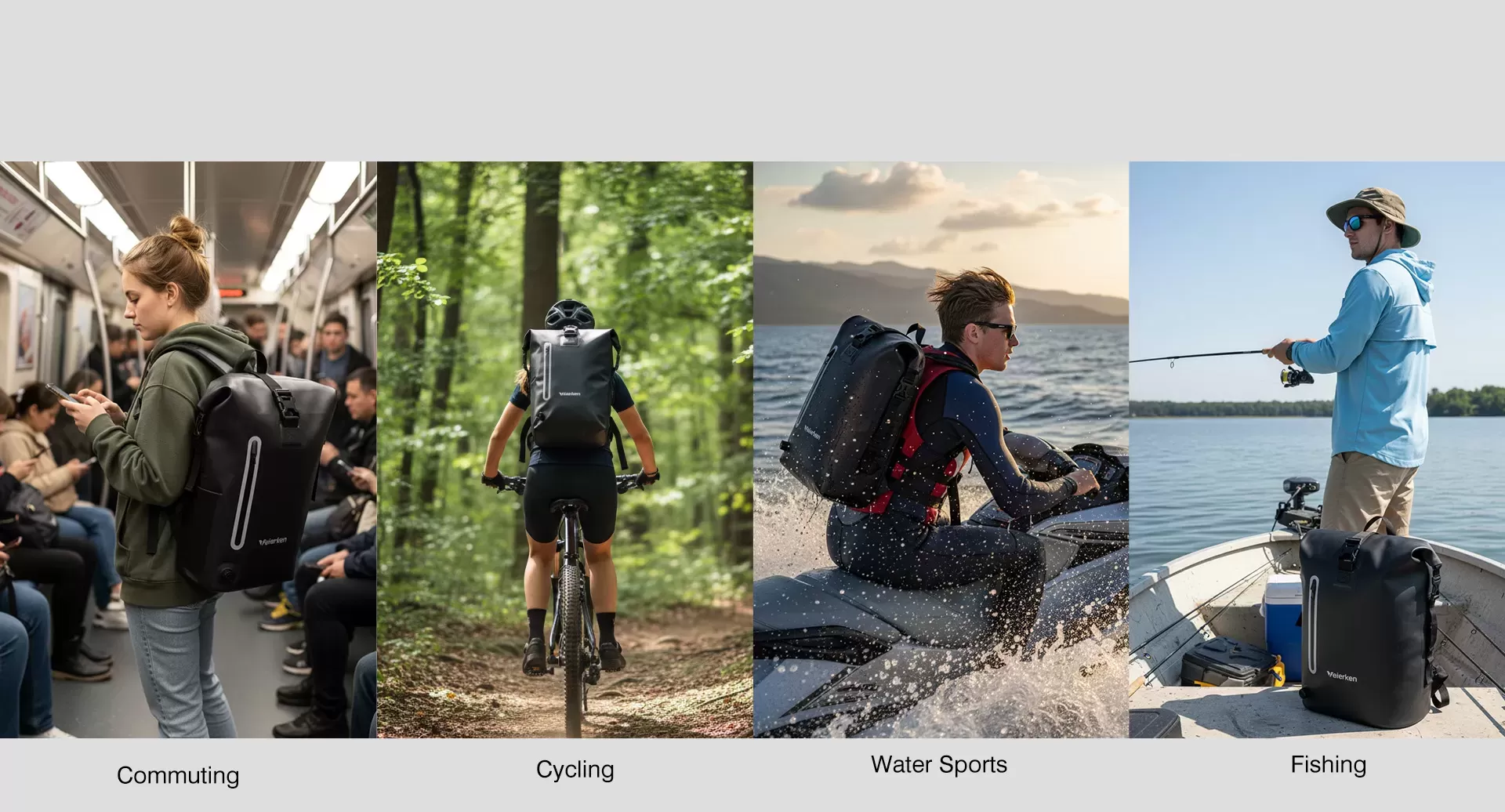
Commercial rafting and paddlesports subject gear to extreme friction, UV exposure, and constant water pressure. For outdoor brands, choosing the right raw material is the most critical decision in the product development cycle.
When sourcing from rafting bag manufacturers, brands often struggle to balance material costs, product lifespan, and international chemical regulations. Selecting the wrong fabric can lead to delamination, seam failures, or customs clearance issues in strict markets.
Weierken works closely with international brands to navigate these material choices. As an experienced custom dry bag factory, we know that fabric selection directly dictates your manufacturing costs and market positioning. This guide analyzes the three primary fabric options for waterproof rafting bag OEM projects to help you make an informed decision.
1. PVC Tarpaulin: Cost-Effective and Classically Durable
PVC (Polyvinyl Chloride) tarpaulin remains the industry standard for commercial rafting gear. This fabric features a high-tenacity polyester base mesh laminated on both sides with liquid PVC paste.
Common Specifications
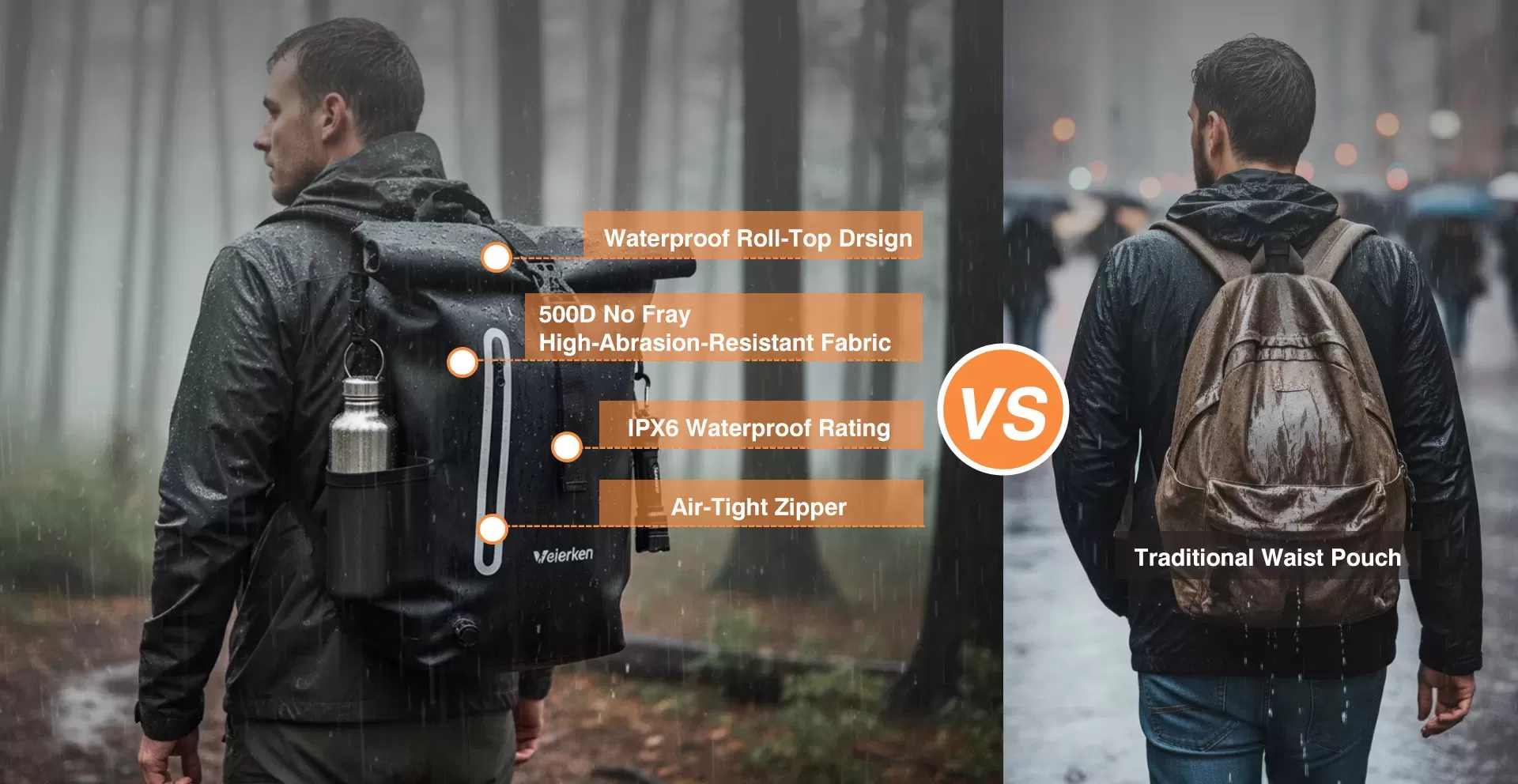
Most commercial-grade dry bags utilize a 500D PVC tarpaulin dry bag specification. For heavy-duty applications, such as white-water rafting deck bags, manufacturers often upgrade the base cloth to 1000D (Denier).
Key Material Characteristics
Excellent Tensile Strength: The internal polyester mesh prevents the fabric from stretching under heavy loads.
High Abrasion Resistance: The thick PVC coating protects the inner fibers from scrapes against rocks and sand.
Optimal Welding Compatibility: PVC melts reliably under high-frequency electromagnetic fields, creating hermetic seams.
OEM Selection Advice
For brands targeting the high-volume recreational market or outfitter fleet rentals, PVC is highly practical. It offers excellent durability at a accessible price point. This allows rafting bag manufacturers to keep unit costs manageable for retail buyers.
However, PVC has notable limitations. It is heavy, and it tends to stiffen and crack in sub-zero temperatures. Additionally, standard PVC contains phthalates. If you plan to sell in the EU, you must request REACH-compliant, phthalate-free PVC from your custom dry bag factory, which carries a slight cost premium.
2. TPU Laminated Fabric: Lightweight, Flexible, and Eco-Friendly
TPU (Thermoplastic Polyurethane) laminated fabric represents a modern alternative to traditional PVC. Instead of a heavy paste coating, a thin, flexible TPU film is bonded to a nylon or polyester base fabric using heat and pressure.
Common Specifications
This material typically pairs a lighter base fabric, such as 70D, 210D, or 420D nylon, with a single-sided or double-sided TPU lamination layer.
Key Material Characteristics
High Strength-to-Weight Ratio: TPU dry bags weigh up to 50% less than PVC bags of the same volume.
Low-Temperature Flexibility: TPU remains soft and pliable in temperatures as low as -30°C.
Environmental Compliance: TPU is biodegradable over extended periods and does not leach harmful toxins into water.
OEM Selection Advice
When comparing a TPU vs PVC dry bag, the choice usually comes down to brand positioning and target use cases. If your brand targets backpackers, paddleboarders, or eco-conscious outdoor enthusiasts, TPU is the logical choice.
As an eco-friendly waterproof fabric, TPU easily passes strict global chemical standards, including EU REACH and RoHS. This simplifies compliance for international distribution. However, raw material costs for TPU are significantly higher than PVC. Processing also requires precise temperature controls to avoid delamination during production at our Weierken facility.
3. TPU-Coated Ripstop Nylon: Extreme Durability for Professional Expeditions
For professional whitewater expeditions and search-and-rescue teams, gear failure is not an option. TPU-coated ripstop nylon represents the pinnacle of industrial-grade protection in the water sports sector.
Common Specifications
This category utilizes heavy-duty base materials, such as 420D or 840D Cordura nylon. These high-density fibers are coated with thick, abrasion-resistant TPU layers on one or both sides.
Key Material Characteristics
Extreme Tear Resistance: The ripstop weave stops small punctures from spreading into catastrophic tears under pressure.
Puncture Resistance: High-density nylon fibers deflect sharp river rocks and rigging hardware.
Reliable Adhesion: Premium TPU coatings bond deeply with nylon fibers, virtually eliminating the risk of coating peel.
OEM Selection Advice
This material serves the heavy duty rafting gear wholesale market. It is built for professional guides, military applications, and remote multi-day expeditions. The high-denier nylon combined with TPU provides maximum security against rugged environments.
The main trade-offs are financial and logistical. This fabric is expensive, and sourcing it often requires longer lead times. Additionally, because the material is thick and stiff, rafting bag manufacturers must use specialized welding dies and slow down assembly lines to ensure perfectly sealed corners.
Key Technical Evaluations for B2B Buyers
Choosing the right fabric is only half the battle. When auditing a waterproof rafting bag OEM partner, you must evaluate how they process these materials. Below are three technical indicators to discuss with your manufacturing partner.
High-Frequency Welding Capabilities
Stitching creates needle holes that leak under pressure. High-quality dry bags rely entirely on high-frequency (HF) welding. Ensure your manufacturer utilizes automated HF welding machines with custom-machined brass tooling. This ensures the welded seams match or exceed the tear strength of the raw fabric itself.
Hardware Integration
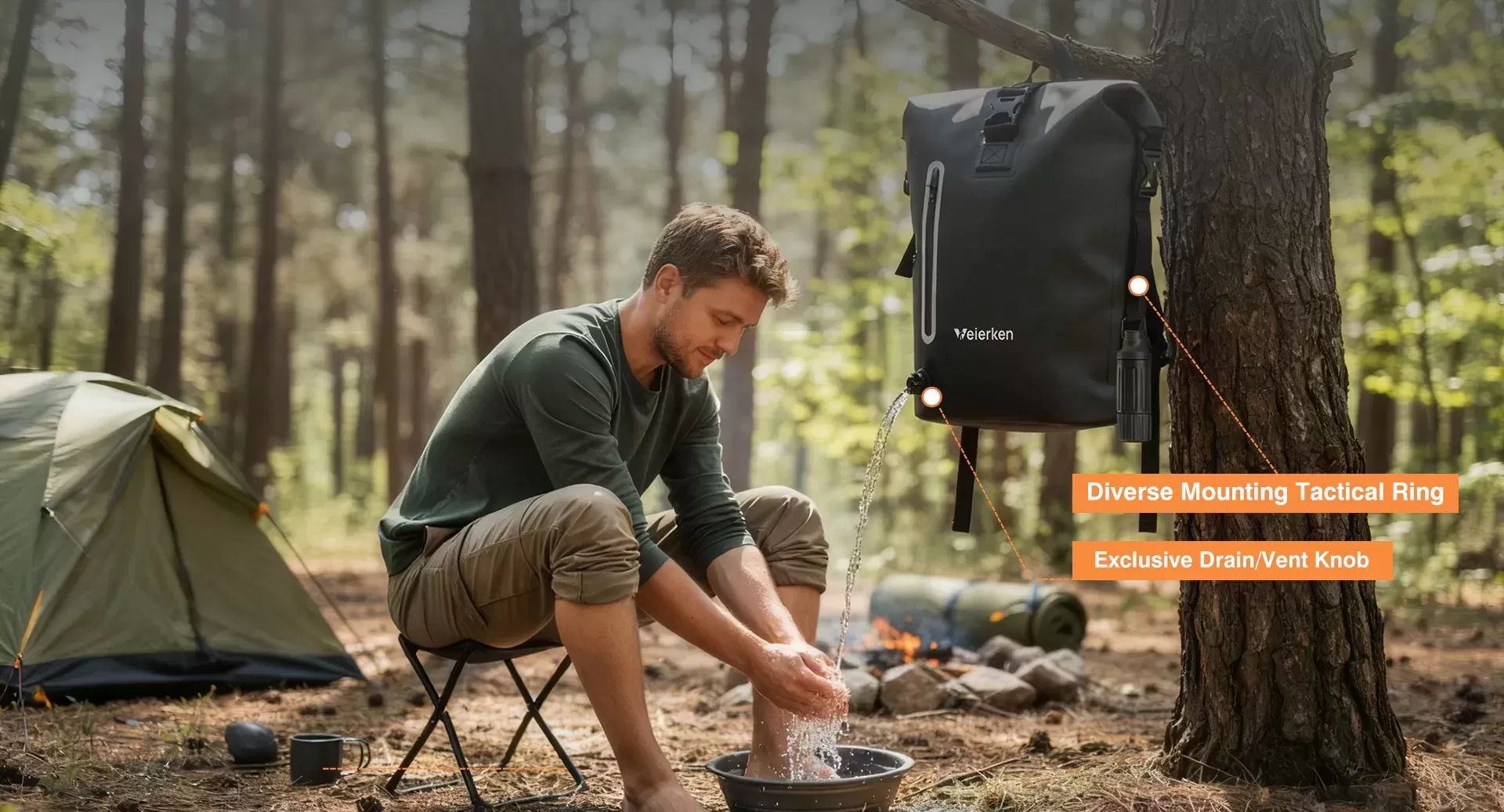
A rafting bag is only as strong as its attachment points. Look for manufacturers that reinforce D-ring patches and handle mounts. The factory should weld these stress points using thick backing plates rather than simply gluing them to the exterior. For buckles, specify reliable brands like Duraflex or YKK to prevent cracking under load.
At Weierken, we perform pull-tests on all handle attachments to verify they can withstand the forces of a fully loaded bag being dragged through swift currents.
Testing and Certification Support
Before launching a product line, verify that your custom dry bag factory can supply physical and chemical testing data. Reliable manufacturers partner with third-party labs like SGS or TUV to provide certified reports on tensile strength, hydrostatic pressure resistance, and chemical safety.
Comparing the 3 Fabric Options
To help simplify your sourcing decisions, we have compiled a direct comparison of these three materials below:
| Fabric Type | Primary Target Market | Key Advantage | Relative Cost | Eco-Friendliness |
|---|---|---|---|---|
| 500D/1000D PVC Tarpaulin | Commercial Outfitters, Entry-level Retail | Excellent cost-to-durability ratio | Low to Moderate | Low (Requires specialized formulas for eco-compliance) |
| TPU Laminated Nylon/Polyester | Mid-to-High-end Brands, Backpacker/SUP Markets | Lightweight and highly flexible in cold weather | Moderate to High | High (Fully recyclable and biodegradable) |
| TPU-Coated Ripstop Nylon (Cordura) | Professional Guides, Expedition Teams, Military | Extreme tear and puncture resistance | High | High |
Frequently Asked Questions
1. TPU vs PVC dry bag: Which is better for cold weather rafting?
TPU is significantly better for cold climates. PVC tarpaulin contains plasticizers that migrate out of the material over time, causing it to become stiff and brittle in freezing temperatures. TPU maintains its elasticity and softness even in sub-zero environments, reducing the risk of stress cracks during folding.
2. Can a custom dry bag factory help us meet EU REACH standards?
Yes. Experienced manufacturers can source eco-friendly waterproof fabric that complies with REACH and RoHS standards. If you require PVC, you must specify "phthalate-free, non-toxic PVC" during the quoting process, as standard industrial PVC will not pass these regulatory checks.
3. What is the standard MOQ for heavy duty rafting gear wholesale orders?
Minimum Order Quantities (MOQs) typically depend on fabric availability. For standard colors of 500D PVC tarpaulin, the MOQ is usually lower (around 500 pieces) because the fabric is readily stocked. For specialized TPU-coated ripstop nylon, the MOQ may increase to 1,000 pieces or more to meet the fabric mill's minimum run requirements.
4. How do manufacturers test the waterproof integrity of rafting bags?
Rafting bag manufacturers utilize inflation tests and hydrostatic pressure tests. The inflation test involves filling the bag with air, sealing it, and submerging it in water to watch for bubbles. Professional factories also use specialized machinery to apply water pressure directly to the welded seams to measure their failure threshold.
5. Can we request a physical fabric swatch book before placing a bulk OEM order?
Yes, professional manufacturers encourage this. Weierken provides material swatches and color books to OEM buyers during the initial consultation. This allows your design team to feel the fabric weight, test the flexibility, and approve the color matching before we begin prototyping.
Partner with an Experienced Rafting Bag Manufacturer
Developing a high-performance dry bag requires balancing material performance, budget, and regulatory compliance. Whether you need a cost-effective PVC line for commercial outfitters or a premium, eco-friendly TPU pack for retail distribution, Weierken offers the technical expertise to bring your designs to life.
Our production facility handles high-frequency welding, precise pattern cutting, and rigorous pressure testing. We help brands select the exact raw materials that fit their functional needs and compliance goals.
Contact our engineering team today to request a fabric swatch book or to discuss your custom manufacturing requirements. Let us help you build reliable, durable gear for your next production run.