
The global demand for cycling gear continues to grow. As riders segment into distinct disciplines—from gravel grinding to daily urban commutes—a single, generic bag design no longer satisfies the market. Brand managers, outdoor distributors, and sourcing specialists require highly targeted product lines to remain competitive.
Yet, finding reliable riding bag manufacturers presents major operational challenges. Many buyers struggle with misaligned factory R&D capabilities. Others receive production batches where the waterproof construction fails under real-world conditions, or the raw fabrics lack necessary environmental certifications. A misalignment here can damage your brand reputation and delay product launches.
To mitigate these risks, your manufacturing partner must do more than just stitch fabric together. An experienced custom bike bag manufacturer like weierken understands that different cycling scenarios demand distinct materials, construction methods, and testing standards. This guide analyzes five key riding environments and details the technical manufacturing requirements for each.
1. Urban Commute & City Riding
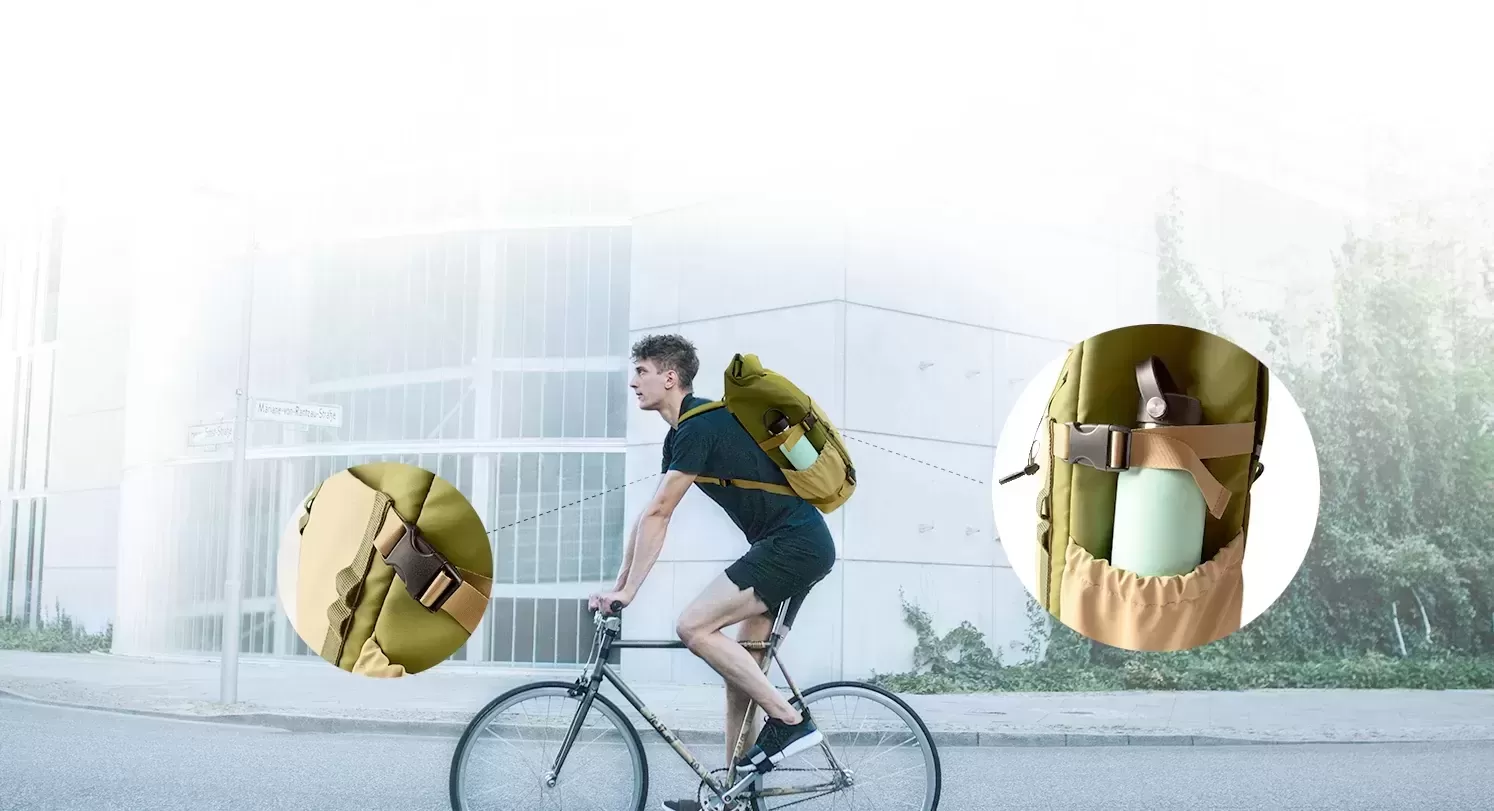
Urban cyclists need gear that transitions easily from the bike frame to the office. These riders face unpredictable weather, busy traffic, and the daily wear of city life. For this segment, utility must balance with a clean, professional aesthetic.
Core Products
Commuter panniers with integrated laptop sleeves
Sleek handlebar bags with quick-release shoulder straps
Convertible backpack-panniers
OEM Manufacturing Specifications
Material selection is critical for urban lines. Brands typically request high-density polyester (such as 600D or 900D) with a water-resistant polyurethane (PU) coating. For premium collections, Cordura nylon or Global Recycled Standard (GRS) certified RPET fabric offers excellent durability and appeals to eco-conscious consumers. This is where partnering with an experienced commuter pannier OEM pays off, as they can source verified sustainable materials reliably.
Safety features must be built into the construction. Reflective panels or hidden retroreflective piping improve low-light visibility without compromising the daytime aesthetic. For secure attachment, modern urban panniers use adjustable mounting systems. These mounting hooks should feature soft-grip inserts to protect the consumer's bike racks from scratches.
When executing your branding, a skilled cycling bag OEM should offer multiple customization options. High-frequency voltage branding, embossed TPU patches, and subtle screen printing are excellent methods to display logos cleanly on technical city fabrics.
2. Bikepacking & Long-Distance Touring
Bikepacking and touring require bags that can endure harsh outdoor environments. Riders carry heavy loads over long distances, often through sustained rain, mud, and rough terrain. Product failure in remote areas is not an option.
Core Products
Large-capacity saddle bags (seat packs)
Frame bags (full-frame and half-frame configurations)
Waterproof fork bags and top tube packs
OEM Manufacturing Specifications
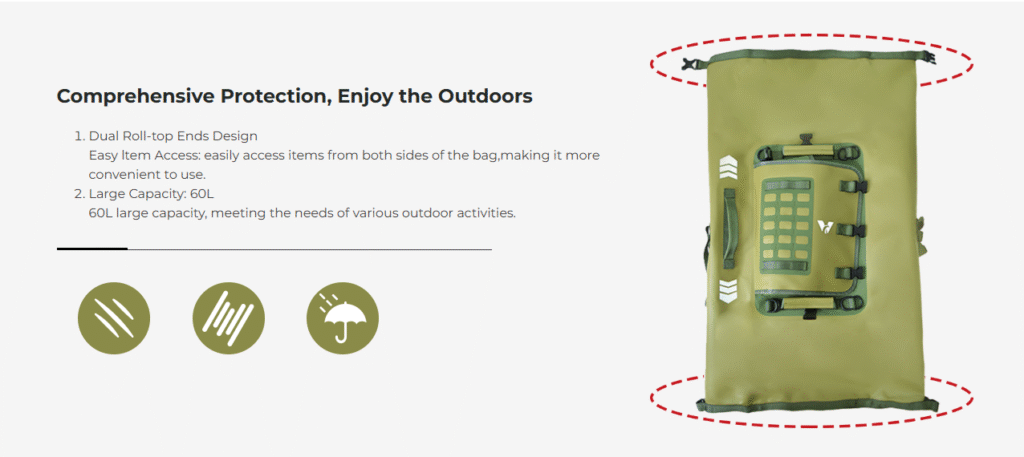
Waterproofing is the primary challenge for this category. Standard stitched seams will leak under heavy rain, even if the fabric itself is waterproof. Therefore, a professional waterproof bicycle bag factory must utilize high-frequency welding (HFW) or hot-air tape sealing. High-frequency welding fuses TPU (Thermoplastic Polyurethane) or PVC-coated fabrics at a molecular level, creating a completely seamless, airtight barrier.
For these demanding products, double-sided TPU-laminated nylon (such as 420D or 840D ripstop) is highly recommended. TPU retains its flexibility in freezing temperatures, unlike cheaper PVC coatings which can crack. The structural design must also minimize sway during riding.
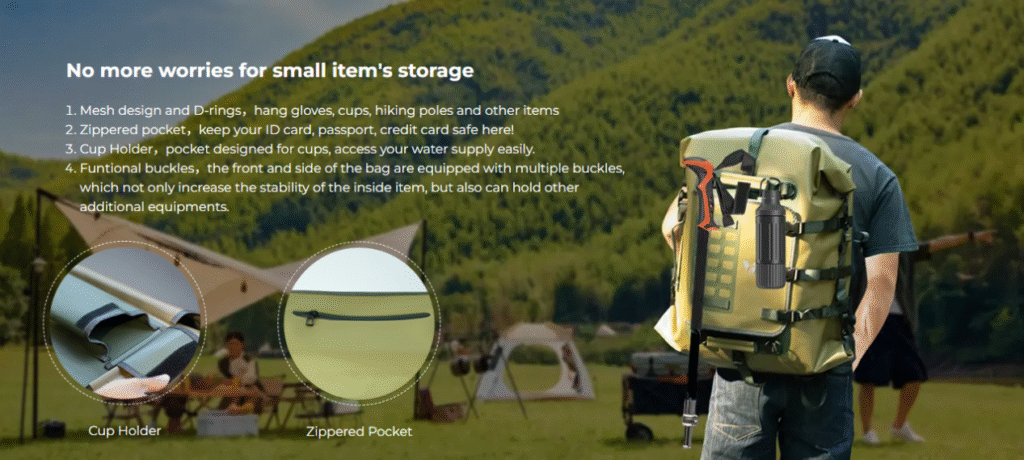
Hardware selection requires heavy-duty components. A robust supply chain should utilize reliable fasteners like Duraflex, ITW Nexus, or Fidlock magnetic buckles. Secure multi-point attachment systems, reinforced with heavy-duty anti-slip Hypalon straps, prevent the bags from shifting on technical trails. If you plan to order bulk inventory, working with a specialist in bikepacking bag wholesale ensures you secure consistent hardware quality across large production runs.
3. Mountain Biking (MTB) & Trail Riding
Mountain biking involves high-impact movement, vibration, and contact with branches, dirt, and rock. Gear designed for trail riders must prioritize body stability, impact protection, and quick access to hydration.
Core Products
Hydration-compatible backpacks (10L to 20L)
Low-profile trail hip packs (lumber packs)
Protective frame-mount tool wraps
OEM Manufacturing Specifications
A specialized MTB backpack supplier focuses heavily on ergonomic stability and load distribution. A standard backpack will bounce and slide during aggressive descents. To prevent this, manufacturers construct three-point harness systems with adjustable chest and waist straps. The back panel should feature molded EVA foam covered in breathable 3D air-mesh, allowing heat dissipation while keeping the load close to the rider's center of gravity.
Hydration compatibility requires specialized manufacturing steps. The bag must include an insulated bladder compartment, secure routing loops for the drinking tube, and a food-grade TPU bladder outlet. The bladder compartment itself should be lined with silver thermal foil to help maintain liquid temperature.
For added safety, some brands integrate lightweight, flexible impact protectors (such as SAS-TEC or D3O foam inserts) into the back panel of the backpack. This extra layer helps absorb impact during a fall, adding a crucial selling point for safety-conscious riders.
4. Road Racing & Aerodynamic Riding
Road cyclists are focused on speed, efficiency, and weight reduction. Any accessory added to a high-end road bike must minimize aerodynamic drag and weigh as little as possible.
Core Products
Streamlined top tube bags (fuel pods)
Micro saddle pouches for spare tubes and CO2 cartridges
Aero handlebar bags
OEM Manufacturing Specifications
Weight saving is the primary goal here. A quality custom bike bag manufacturer utilizes ultra-lightweight materials, such as 70D or 100D diamond ripstop nylon laminated with a thin TPU membrane. The structural profiles must be narrow and tapered to stay out of the path of the rider's knees and reduce wind resistance.
In addition, road riders need to access nutrition or small tools quickly while riding. The opening mechanisms should be simple and easy to operate with one hand. Waterproof zippers with molded zipper garages, or magnetic self-closing flaps, allow the rider to grab items without losing momentum.
The interior should feature lightweight structured plastic inserts (such as PE boards). These sheets keep the bag's aerodynamic shape intact even when it is empty, preventing fabric sagging that can rub against the rider's legs or the bicycle frame.
5. E-Bike & Utility Riding
E-bikes are heavier, travel at higher average speeds, and are often used for utility purposes like grocery shopping or carrying heavy cargo. This category requires reinforced construction and dedicated compartments for electronic components.
Core Products
Heavy-duty rear rack trunks with insulated side pockets
Dedicated E-bike spare battery transport bags
Heavy-duty commercial delivery panniers
OEM Manufacturing Specifications
E-bike batteries are sensitive to shocks, vibrations, and temperature extremes. When designing a battery storage compartment, manufacturers must use thick closed-cell polyethylene (PE) foam padding. This cushioning helps protect the battery cells from vibration damage during rough rides.
Because E-bikes carry heavier payloads, the mounting brackets on the bags must be exceptionally strong. Standard plastic hooks can break under high weight and sudden stops. Brands should specify reinforced nylon hooks or aluminum mounting rails with locking mechanisms that prevent the bags from detaching at high speeds.
For utility and food delivery bags, thermal insulation is often a key requirement. Incorporating thick pearl cotton insulation and food-grade PEVA linings allows the bags to double as hot or cold storage compartments, expanding their market appeal.
Why Partner with Weierken for Your Next Project?
Managing multiple factories for different product categories is inefficient and costly. weierken offers an integrated solution. As an experienced custom bike bag manufacturer, we balance structural design with high-performance manufacturing processes.
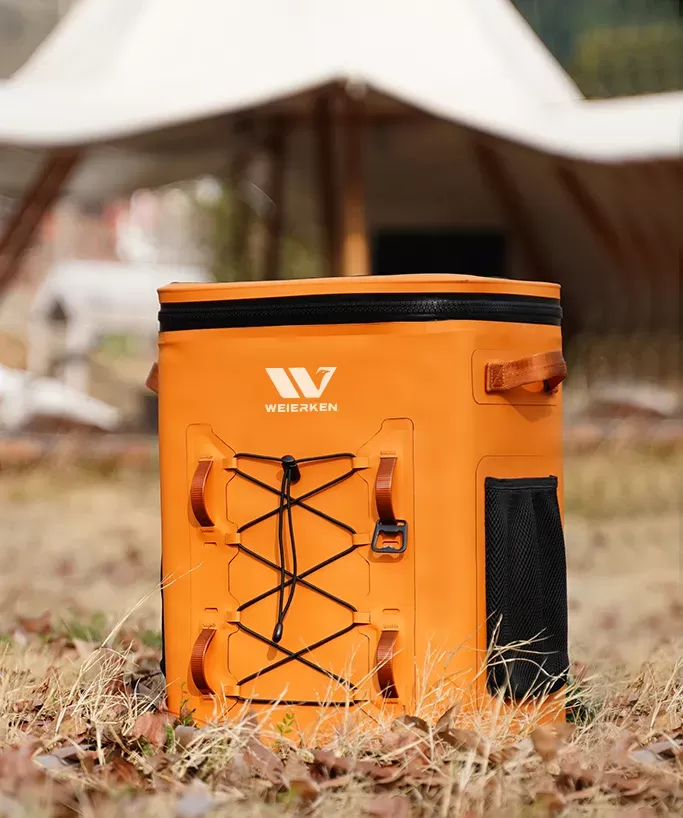
Our production facilities handle both traditional stitched construction and high-frequency waterproof welding. This versatility allows us to manufacture everything from lightweight road pouches to heavy-duty, submersible touring packs. We perform rigorous testing on all incoming raw materials, verifying fabric strength, colorfastness, and water column pressure ratings before production begins. This systematic approach ensures your finished goods meet international retail standards.
Frequently Asked Questions
What is the typical Minimum Order Quantity (MOQ) for custom bike bags?
Standard MOQs generally range from 500 to 1,000 units per design, depending on the complexity of the bag and the availability of specialized materials. For highly customized items requiring unique fabric dye lots, the MOQ may be higher. We suggest contacting our sales team directly to discuss your specific product requirements.
What is the difference between high-frequency welding and stitched seams?
Stitched seams use a needle and thread, which creates thousands of tiny holes in the fabric. Even if tape-sealed, these seams can degrade over time under heavy tension. High-frequency welding uses electromagnetic energy to fuse the TPU or PVC-coated fabric layers together without needles. This creates an airtight, permanently waterproof bond ideal for outdoor and bikepacking bags.
How does a waterproof bicycle bag factory test for water resistance?
We use several industry-standard methods to verify waterproof performance. These include hydrostatic head tests to measure the fabric's resistance to water penetration under pressure, and rain chamber tests where fully assembled bags are subjected to simulated heavy downpours. For submersible bags, we perform inflation or immersion tests to check for air or water leaks along the welded seams.
Can we source eco-friendly materials for our commuter pannier OEM project?
Yes. We offer GRS-certified recycled fabrics (RPET), PVC-free TPU laminations, and PFAS-free durable water repellent (DWR) coatings. We can provide the necessary material certifications and transaction certificates (TC) to verify the sustainability of your supply chain to your customers.
What is the typical lead time for prototyping and mass production?
Developing a custom prototype usually takes 7 to 14 business days, depending on design complexity and material availability. Once the sample is approved and materials are finalized, mass production typically takes 45 to 60 days. We provide detailed timelines at the beginning of each project to help you plan your marketing launches accurately.
Partner with an Experienced Manufacturing Expert
Are you looking to expand your product line or improve the build quality of your current cycling gear? Partnering with the right riding bag manufacturers is a critical step toward securing market share. Let us help you turn your concepts into reliable, high-performance products that riders trust.
Contact our sourcing team today to discuss your technical specifications, request a quote, or arrange a sample production run. We are ready to assist you at every step of the development process.