
From the view of an experienced courier delivery bag factory, manufacturing a durable, cost-effective bag is about finding the right material balance. You must weigh physical performance against production budgets.
As a professional manufacturer, Weierken understands these manufacturing compromises. Below, we share four hidden material strategies that professional factories use to balance cost, weight, and lifespan.
Secret 1: Outer Shells – Balancing Fabric Denier and Waterproof Coatings
The lifespan of a delivery backpack depends heavily on its outer fabric. When a courier delivery bag factory designs a heavy-duty logistics bag, we must decide on the fabric grade and its protective coating.
Understanding Oxford Fabric Denier (D)
Denier measures the thickness of individual threads in the weave. A higher number, like 1680D Oxford fabric, offers excellent resistance to tears and punctures. However, it also adds significant weight and production costs.
1680D Oxford Fabric: Best for heavy-duty industrial courier bags that face extreme friction every day.
600D or 900D Oxford Fabric: Best for standard courier and food deliveries. It offers sufficient abrasion resistance while keeping the empty bag lightweight.
Choosing the Right Coating: PVC vs. PU
To keep rain from soaking the contents, the outer fabric requires a synthetic coating on the back. A commercial courier delivery bag factory typically chooses between two options based on your target market's climate.
PVC (Polyvinyl Chloride) Coating: This option provides excellent waterproofing at a lower price point. However, PVC stiffens and cracks easily in cold winter climates.
PU (Polyurethane) Coating: PU coatings remain flexible in sub-zero temperatures and are more environmentally friendly. They cost more, but they prevent cracking during cold-weather deliveries.
Secret 2: Insulation Interlayers – Density Matters More Than Thickness
For food and temperature-sensitive parcel delivery, heat retention is a major performance metric. Many procurement managers assume that a thicker insulation layer always yields better results. In reality, a seasoned courier delivery bag factory focuses on material density rather than simple thickness.
EPE (Expanded Polyethylene) Foam Density
EPE foam is the most common insulation material in the logistics industry. The secret to a long-lasting bag lies in controlling the density of this foam, which is measured in kilograms per cubic meter.
Low-Density EPE (15–18 kg/m³): This foam is cheap but easily collapses under pressure. After a few weeks of constant squeezing, the bag loses its shape and its insulation value drops.
High-Density EPE (22–28 kg/m³): This foam provides better thermal resistance. It also acts as a structural support, keeping the bag upright and professional-looking after months of heavy use.
Rigid Foam Alternatives (EVA and PU Boards)
For professional catering or heavy lunchbox distribution, standard foam might not suffice. In these situations, Weierken recommends using high-rigidity EVA foam or polyurethane hardboards to handle the extra stress.
EVA Foam Panels: These panels offer superb shock absorption and low thermal conductivity, making them excellent for fragile cargo.
Rigid PU Foam: This material provides maximum insulation for long-distance cold-chain routes, keeping items hot or cold for hours.
Secret 3: Inner Linings – Sanitation, Sealing, and Wipe-Clean Surfaces
The interior lining of a delivery bag comes into direct contact with food containers or parcel wraps. Therefore, the material must resist moisture, grease, and bacterial growth while remaining easy to clean.
A specialized courier delivery bag factory relies on smart material pairings and modern sealing processes to solve these inner-chamber challenges.
The Difference in Aluminum Foils
Aluminum foil reflects radiant heat back toward the food. However, cheap foil laminated with non-woven fabric tears easily when scraped by plastic containers or cardboard corners.
Woven-Base Aluminum Foil: We reinforce this foil with a high-tensile woven mesh. This backing stops plastic edges from tearing the shiny surface.
Thick PEVA Sheets: For non-reflective needs, thick PEVA sheets offer a smooth, waterproof surface that easily wipes clean of spilled sauces.
High-Frequency Welding vs. Sewing
Traditional sewing needles leave thousands of tiny holes in the interior liner. When soup or condensation leaks through these holes, it spoils the internal foam, creating mold and bad odors. A modern courier delivery bag factory avoids this issue entirely.
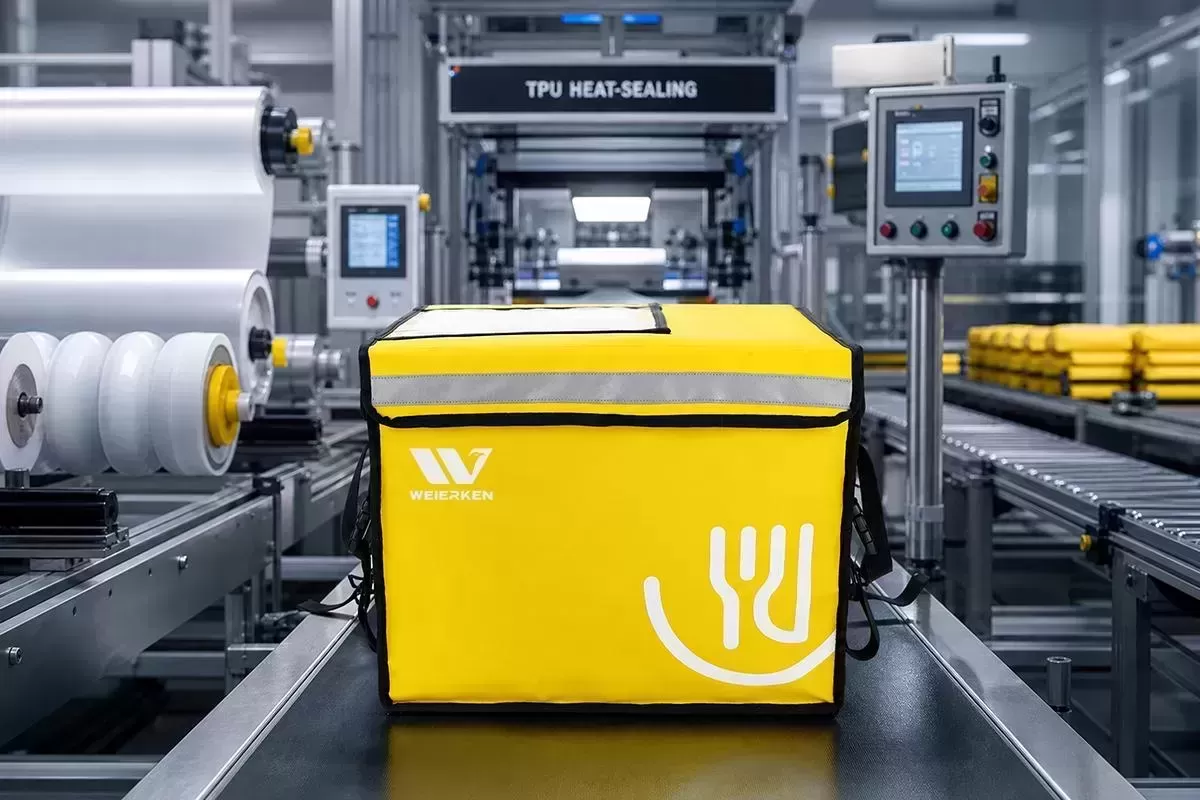
Seamless Hot-Pressing: We use high-frequency welding machines to melt the edges of TPU or PEVA sheets together.
No Needle Holes: This welding process creates a seamless, 100% leakproof interior tub that traps liquids and prevents bad odors from developing.
Secret 4: Internal Support Structures – Balancing Rigidity and Bag Weight
A sagging delivery bag looks unprofessional and can easily damage delicate food items or document parcels inside. Choosing the right internal support system is essential to keep the bag rigid without adding unnecessary weight.
PP Hollow Boards (Corrugated Plastic)
This is the most common structural material used by manufacturers. PP hollow boards are lightweight, waterproof, and very affordable.
The Limitation: Lower-grade PP boards can warp or soften when exposed to intense summer heat or heavy vertical loads.
The Application: They work best for small to medium-sized hand-carry delivery bags where weight is a primary concern.
Fiberglass Rods and ABS Frames
For large, motorcycle-mounted delivery boxes, PP boards are rarely strong enough. In these cases, a professional courier delivery bag factory will suggest structural alternatives.
Fiberglass Support Rods: These rods slide into dedicated internal pockets. They create a strong, lightweight cage that prevents the bag from folding under pressure.
Molded ABS Plastic Frames: These modular frames provide maximum structural rigidity, ensuring your delivery bags maintain their shape even when stacked together.
Finding Your Balancing Point
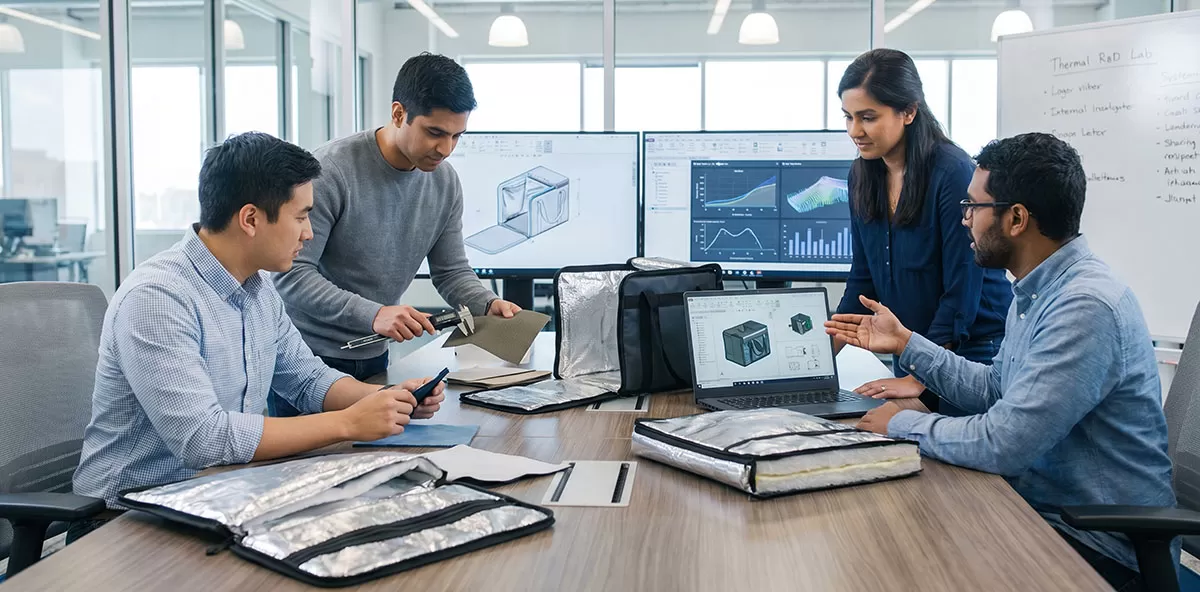
Choosing the right materials for your delivery bags is not about buying the most expensive fabrics available. It is about balancing your daily delivery environments, expected bag lifespans, and direct procurement budgets.
As a leading courier delivery bag factory, Weierken helps B2B buyers navigate these technical details. We assist you in building custom courier bags that fit your unique logistics routes and budget targets.
Are you ready to optimize your delivery gear? Contact our engineering team today to share your requirements, request physical samples, or receive a quick price quotation for your bulk order.
Frequently Asked Questions
1. How does a courier delivery bag factory test the durability of fabrics?
We use motorized abrasion testing machines to rub fabric samples against rough surfaces under constant pressure. We also perform tensile strength tests to measure how many Newtons of pulling force the seams and fabrics can withstand before they break or tear.
2. What is the benefit of purchasing directly from a courier delivery bag factory?
Buying directly from a manufacturer like Weierken eliminates agent commissions, gives you access to custom material specifications, and allows you to enforce direct quality control. You also gain access to technical support and replacement parts for bulk operations.
3. How do you prevent backpack shoulder straps from pulling out?
We do not rely on simple stitching to hold shoulder straps in place. Our factory uses thick nylon webbing that runs deep into the back panel of the bag. We then secure these points with heavy-duty box-and-cross stitches and metal rivets to distribute the load.
4. Can your courier delivery bag factory help design bags for specific weather conditions?
Yes. If you operate in rainy regions, we will suggest TPU fabrics with high-frequency welded seamless interiors. If you work in freezing winter conditions, we will recommend PU-coated fabrics and cold-resistant buckles that do not break in the cold.
5. What is the typical MOQ for custom designs at your courier delivery bag factory?
Our standard minimum order quantity for fully customized delivery bags is 500 units. This MOQ allows us to purchase specialized custom materials and set up our factory assembly lines efficiently for your production run.
6. Why does Weierken use PEVA instead of PVC for some food bag linings?
PEVA is chlorine-free, eco-friendly, and safe for direct food contact. It remains highly flexible in cold weather and is easier to clean. While PVC is cheaper, PEVA offers better long-term durability and complies with strict food hygiene standards.