
The global demand for motorcycle travel and commuting accessories continues to rise. More riders are investing in high-quality luggage to secure their gear during long tours or daily commutes. For brands and distributors, sourcing reliable gear means finding a manufacturer that understands the harsh road conditions riders face.
Choosing a qualified motocycle bag maker involves looking beyond basic assembly. The right manufacturing partner must offer specialized capabilities that turn a design concept into a durable, road-ready product. A factory that provides end-to-end OEM services can help you optimize costs, minimize design flaws, and protect your brand reputation.
As an experienced motocycle bag maker, Weierken supports global brands by providing specialized material sourcing, precise prototyping, and strict quality control. Let’s look at the four essential OEM services you should expect from your manufacturing partner.
1. Custom Material Sourcing & Technical Fabric R&D
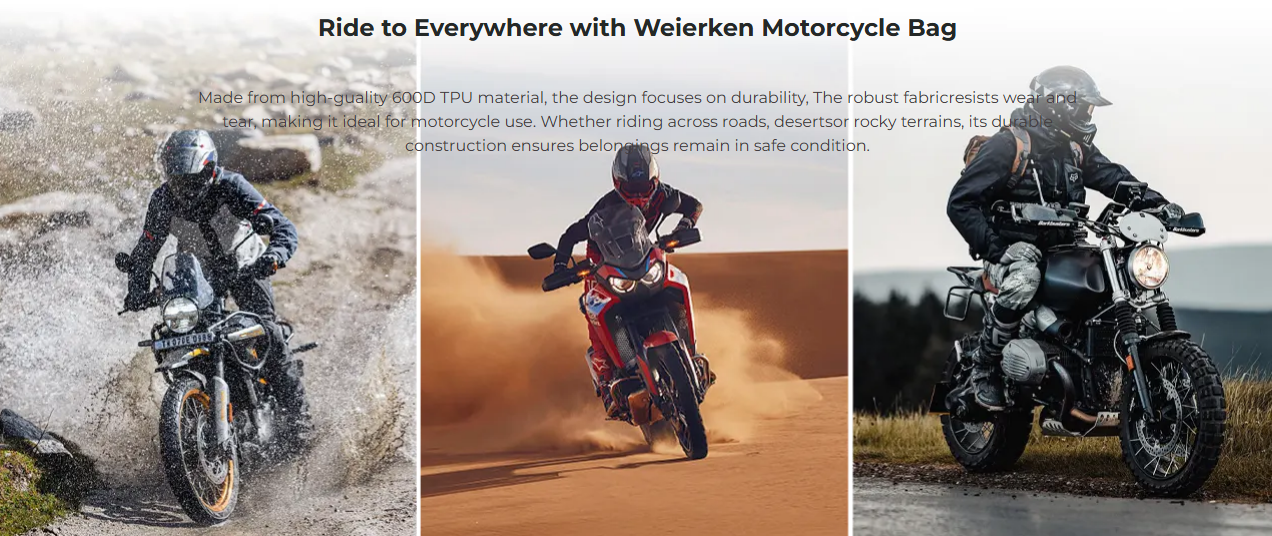
Motorcycle bags face much harsher environments than standard outdoor backpacks. High wind resistance, road debris, prolonged UV exposure, and heavy rain can degrade cheap materials quickly. A professional motorcycle bag manufacturer must have a strong supply chain for technical fabrics and components.
Sourcing High-Performance Technical Fabrics
Your manufacturer should offer access to industrial-grade materials that resist tearing and abrasion. Ask your prospective supplier if they can source and process the following materials:
1680D ballistic nylon: Excellent for heavy-duty saddlebags and tail bags due to its high density and abrasion resistance.
Cordura fabrics: Known for durability and resistance to scuffs and tears under extreme conditions.
TPU double-sided coating: Essential for creating mud-resistant, easy-to-clean exterior panels.
Advanced Waterproofing Technologies
Riders often get caught in sudden downpours. Relying solely on loose rain covers is no longer enough for premium brands. A leading waterproof motorcycle bag factory should offer seamless manufacturing methods.
Look for suppliers capable of high-frequency welding (RF welding). This process melts fabric edges together to form airtight seams. When combined with waterproof zippers, this technique allows bags to achieve an IPX6 waterproof rating or higher, keeping gear dry without extra covers.
Material Compliance and Certification
If you sell in Europe or North America, material safety compliance is non-negotiable. Ensure your partner sources raw materials that comply with international standards. These include REACH, RoHS, and California Proposition 65. Ask for verified test reports from third-party laboratories early in your discussions.
2. Advanced 3D Modeling & Rapid Prototyping
A motorcycle bag must fit the contours of a bike frame without moving at high speeds. Poorly designed mounting systems can scratch the paintwork, block exhaust pipes, or even cause accidents. A professional supplier should assist you in refining your design before mass production begins.
Fitment Design and Secure Mounting Systems
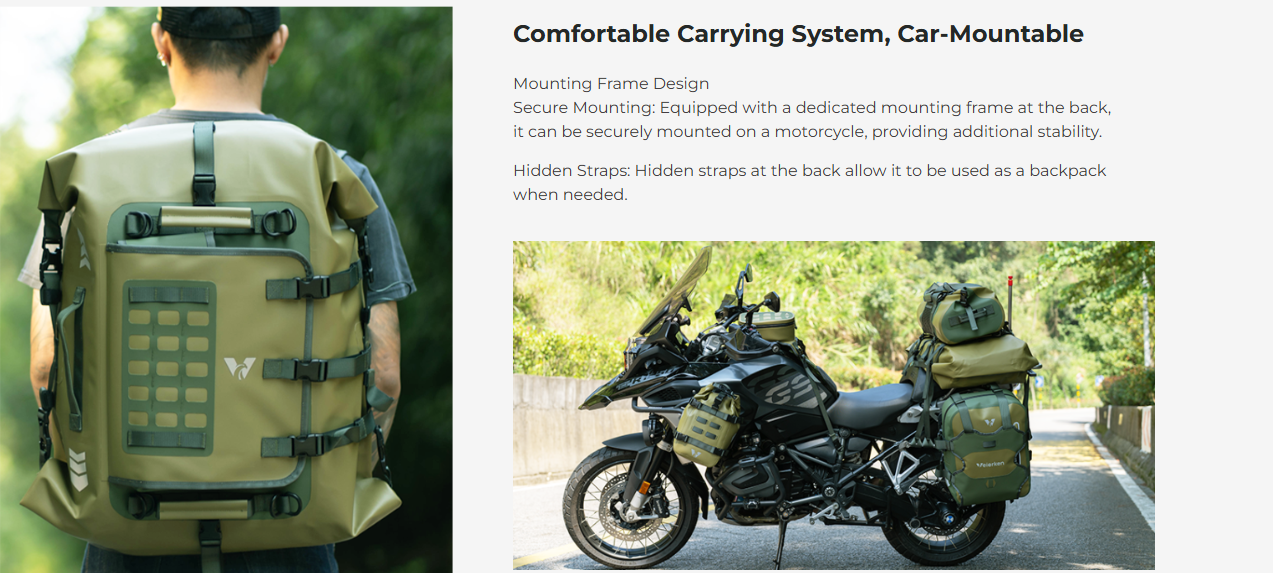
Experienced manufacturers employ R&D teams who understand different motorcycle styles, from adventure tourers to retro cruisers. They help design functional mounting systems that remain stable on uneven terrain. This includes integrating adjustable straps, non-slip backing materials, and reliable quick-release buckles.
Rapid Physical Prototyping
Concept drawings do not always translate perfectly to the physical world. Your OEM partner should offer rapid prototyping services to turn your 2D sketches or 3D files into physical samples. A standard turnaround time of 7 to 14 days is typical for a professional sample room.
With a physical sample in hand, you can perform real-vehicle test fits to check:
Clearance from hot exhaust pipes and moving wheels.
Strap tension and ease of mounting/dismounting.
Aerodynamic profile and wind noise at highway speeds.
In the middle of your development phase, working with an agile partner like Weierken helps you identify structural weaknesses early. This prevents costly mold modifications and delays during bulk production.
3. Rigorous Specialized Testing & Quality Control (QC)
Road vibrations can cause seams to split and straps to snap. A reliable motocycle bag maker must have an in-house testing lab or work with certified testing houses to verify durability. Relying only on visual inspections is a risk to your brand's reputation.
Pull-Strength & Load-Bearing Testing
Motorcycle luggage carries heavy tools, locks, and camping gear. Manufacturers should conduct pull-strength testing on all critical load-bearing points. This includes strap attachments, carry handles, and plastic D-rings. These tests ensure the bag can handle unexpected bumps at high speeds.
Environmental and Weather Simulation
Sunlight, rain, and coastal air can degrade fabrics and corrode metal hardware. Ensure your manufacturing partner conducts these environmental tests:
UV aging test: Simulates long-term exposure to sunlight to ensure fabrics do not fade or lose tensile strength.
Salt-spray testing: Checks zippers, buckles, and metal snaps for rust and corrosion resistance.
Cold-crack testing: Ensures TPU or PVC coatings do not crack when used in freezing temperatures.
Vibration and Abrasion Resistance
Using specialized machinery, technicians simulate the continuous vibration of a motorcycle engine. This test helps verify that the inner lining and mounting straps will not wear through after hours of riding. At Weierken, we carry out these strict quality checks to verify that every batch meets real-world riding demands before it leaves our factory floor.
4. Flexible Supply Chain Support & Custom Packaging
Sourcing high-quality OEM motorcycle bags is only half the battle. You also need a supplier that supports your inventory strategy, protects your products during transit, and simplifies international shipping.
Flexible MOQ (Minimum Order Quantity) Support
Launching a new product line involves market risk. A supportive manufacturer should offer reasonable MOQs for new designs. This allows you to test the market with a smaller initial order before committing to larger production runs. Ask if the supplier offers lower MOQs for standard colors while reserving higher MOQs for custom-dyed fabrics.
Retail-Ready and E-commerce Custom Packaging
The unboxing experience shapes how customers perceive your brand. Your OEM partner should offer comprehensive packaging services, including:
Custom-printed hangtags with installation instructions.
Dustproof storage bags to protect the product during shipping.
Sturdy, retail-ready outer cartons or space-saving flat packaging for e-commerce fulfillment.
Compliance labeling, such as barcodes and warning labels required by Amazon or regional retailers.
Export Compliance and Logistics Assistance
International logistics can be complicated. A reputable **waterproof motorcycle bag factory** should have experience handling export documentation, customs clearance, and freight forwarding. Whether you require FOB, CIF, or DDP shipping, your partner should help you calculate the total landed cost to avoid unexpected fees at the port of entry.
A reliable motocycle bag maker does more than sew fabric together. They act as a strategic partner, helping you select the right materials, refine your designs, test for durability, and manage your logistics. By focusing on these four essential OEM services, you can build a more resilient supply chain and deliver high-performance luggage to your customers.
If you want to discuss your next project, Weierken offers tailored OEM and ODM solutions to meet your specific market demands. We help brands design, test, and manufacture durable, high-performance "bulk motorcycle bags". Contact our team today to request a quote or order a custom prototype.
Frequently Asked Questions
1. What is the typical MOQ for custom motorcycle luggage?
Minimum order quantities depend on the complexity of the design and the materials used. Generally, standard fabric designs require an MOQ of 500 pieces per style. For bags requiring specialized molds, such as hard-shell panels or custom-molded parts, the MOQ may be higher. Contact us to discuss your specific design requirements.
2. How does a waterproof motorcycle bag factory ensure reliable water resistance?
We combine high-frequency welding technology with TPU-coated fabrics to create seamless joins. This eliminates needle holes where water could seep in. Additionally, we use water-resistant zippers and roll-top closures to prevent water entry under heavy rain conditions.
3. Can we customize the mounting systems to fit specific motorcycle models?
Yes. Our R&D team can develop custom strap systems, quick-release base plates, or magnetic mounting setups designed to fit specific adventure, retro, or sport bikes. We can work from your technical drawings or physical bike measurements.
4. What materials are best for heavy-duty OEM motorcycle bags?
We recommend 1680D ballistic nylon or Cordura for high abrasion resistance. For fully waterproof bags, we recommend double-sided TPU-coated nylon or heavy-duty PVC tarpaulin. We can help you select the ideal material balance based on your target price and performance requirements.
5. How long does the prototyping process take for a new design?
Once we finalize the technical specifications and source the materials, creating a physical prototype usually takes 7 to 14 working days. If your design requires custom plastic injection molds or specialized hardware, the initial prototyping phase may take longer.