
Sourcing waterproof bags that survive submersion up to 1 meter for 30 minutes starts with one decision: choosing the right IPX7 bag factory. Not every manufacturer delivers consistent protection. Some rely on stitched seams that leak. Others skip batch testing.
This guide walks through five essential capabilities to verify before placing a custom order – from welding methods to material certifications. Whether you need backpacks, duffels, or dry bags for outdoor, marine, or motorcycle use, these criteria help you separate qualified factories from the rest.
What Does IPX7 Mean for Bag Manufacturing?
The IP (Ingress Protection) rating system (IEC 60529) defines how well a product resists solids and liquids. For waterproof bags, the second digit – X7 – is the key.
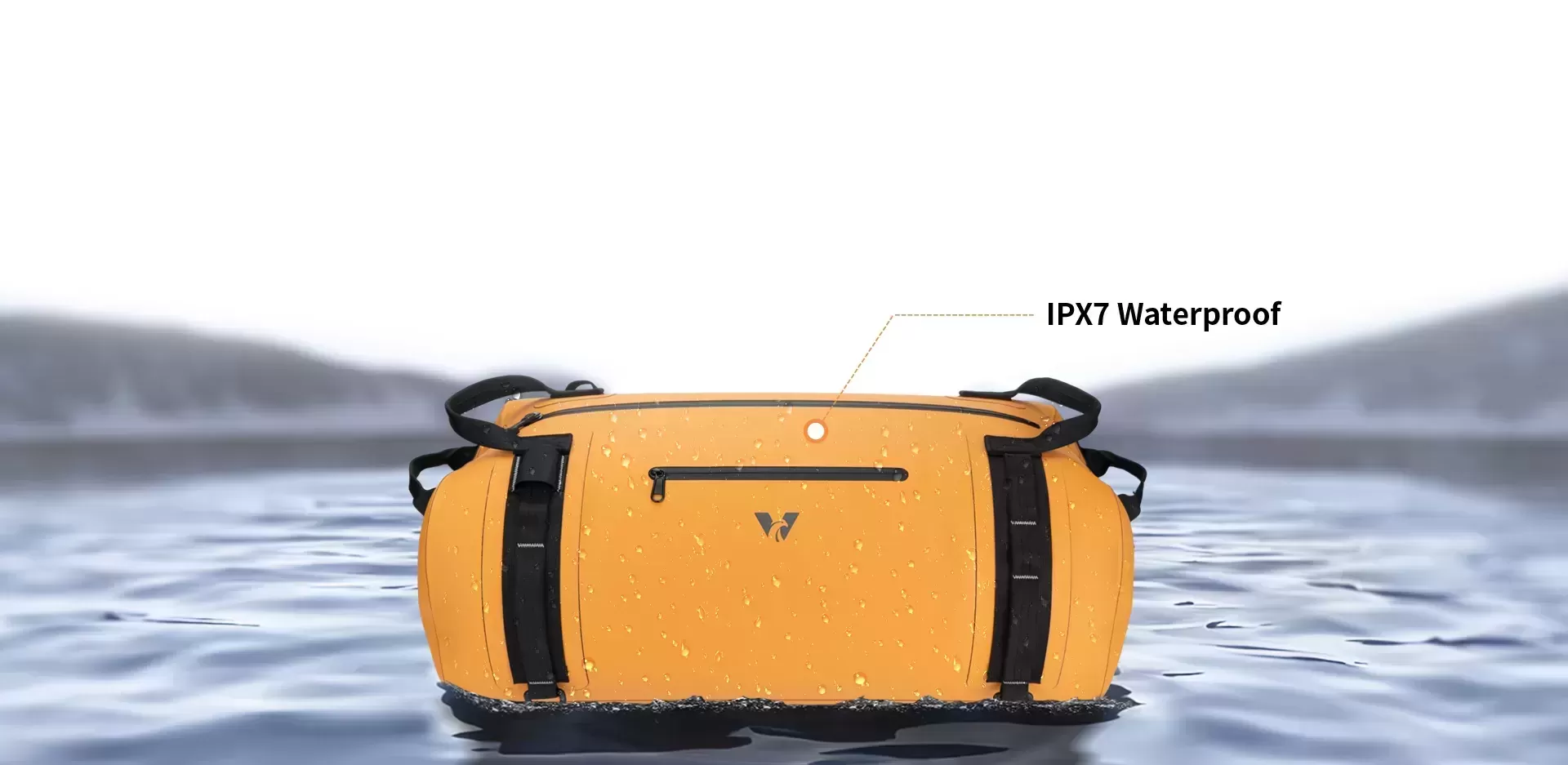
IPX7 certification means the bag can be immersed in water up to 1 meter deep for 30 minutes without harmful leakage.
This level is mandatory for kayaking, fishing, motorcycle touring, and any activity where electronics, clothing, or gear must stay bone-dry.
A professional IPX7 bag factory designs every seam, closure, and zipper to meet this benchmark – not by accident, but through engineered processes.
Core Capabilities of a Trusted IPX7 Bag Factory
Not every waterproof bag workshop is equal. Below are the four most critical areas to inspect.
1. Welding & Seam Sealing Technology
Stitching creates needle holes – the fastest path to water ingress. True IPX7 protection requires high-frequency (RF) welding or hot-air welding.
How it works: Heat fuses material layers at a molecular level, forming a bond stronger than the base fabric.
What to look for: Automated production lines with consistent temperature and pressure control.
Take weierken as an example. Their IPX7 bag factory operates fully automated RF welding stations, eliminating manual variances. Every seam undergoes inline pressure checks – a detail that reduces failure rates significantly.
2. Waterproof Material Selection
The fabric determines durability, flexibility, and weight. Leading IPX7 manufacturers work with three main material families:
TPU-laminated fabrics – Soft feel, high tear strength, ideal for premium backpacks.
PVC tarpaulin (e.g., 1000D) – Extreme abrasion resistance, common for heavy-duty dry bags and motorcycle luggage.
Welded coated nylon/polyester – Lighter weight, suitable for IPX7 when seams are fully welded.
Red flag: Factories that cannot specify the exact material grade or provide supplier certificates. A reliable IPX7 bag factory sources certified waterproof fabrics with documented test data.
3. In-House Quality Control & Submersion Testing
Certification isn’t a one-time event – it must be repeated batch after batch.
Submersion chambers should be used to test random samples from each production run.
Look for factories with 15+ years of waterproof bag experience. That track record often means refined SOPs and fewer surprises.
At weierken, every custom batch goes through a 30-minute, 1-meter submersion test before shipping. Test results are documented and shared with clients – no guesswork.
4. Product Range Flexibility
A full-service IPX7 bag factory can supply multiple product types without retooling. Common categories include:
| Product Type | Typical Uses | Key Features |
|---|---|---|
| Waterproof backpacks (28L roll-top) | Hiking, commuting, travel | Roll closure, padded back, laptop sleeve |
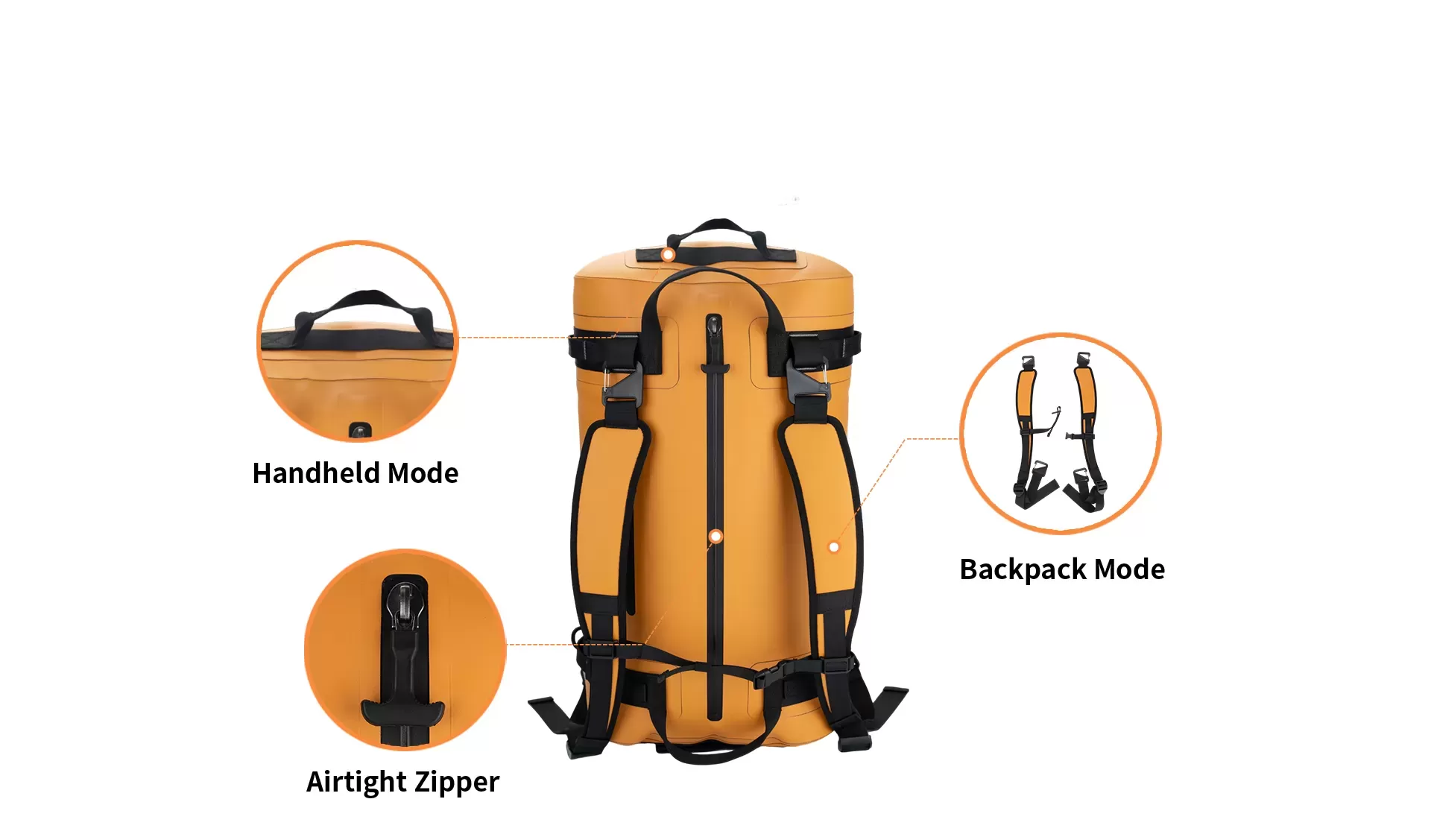
| Dry duffel bags (90L+) | Boating, camping, motorcycle | Welded seams, airtight zippers, carry handles |
| Specialty dry bags | Kayaking, diving, watersports | Floating design, pressure relief valve, transparent window |
| Custom OEM/ODM designs | Branded retail, corporate, specialized gear | Full material, size, color, logo customization |
The 5-Step Customization Process with an IPX7 Bag Factory
Partnering directly with a factory gives you control over design, materials, and branding. Here is how a professional IPX7 bag factory like weierken manages custom orders:
Requirement consultation – You share target capacity, use case, and desired features (e.g., roll-top vs. zipper closure).
Technical drawing & prototyping – Factory engineers produce 2D/3D drawings and stitch/weld a sample.
Sample testing & approval – You test the prototype. A reputable factory runs IPX7 submersion tests before sending it to you.
Production & quality hold points – Mass production begins after sample sign-off. Inline inspections happen at every welding station.
Final QA & logistics – Random finished bags are pulled for another submersion test. Then packing and shipping.
Note on MOQ: Most custom IPX7 bag factories set minimum order quantities between 500–2,000 pieces per color/design. Lower MOQs may be available for standard models with logo only.
How to Choose the Right IPX7 Bag Factory – 5 B2B Decision Criteria
When evaluating suppliers, use this checklist:
✔ Proven waterproof expertise – Ask how many years they have specifically manufactured IPX7-rated bags.
✔ Material traceability – Can they provide mill certificates for TPU or PVC fabric?
✔ Production line transparency – Do they allow video inspections or third-party audits?
✔ Lead time & capacity – What is their monthly output? What is the typical sampling-to-shipping timeline?
✔ Communication & compliance – Responsive, clear answers to technical questions matter. Certifications like SA8000 (social accountability) indicate operational maturity.
A dependable IPX7 bag factory – such as weierken – meets all five points openly. No vague claims, only testable facts.
Conclusion – Secure Your Supply Chain with a Certified IPX7 Partner
Every stitch, weld, and zipper affects whether a bag keeps gear dry. By focusing on factories with RF welding, certified waterproof materials, and batch submersion testing, you reduce hassle and returns.
Ready to start your custom IPX7 waterproof bag project?
Contact weierken directly:
Send your design brief or target specifications
Request sample prototypes and submersion test reports
Get a clear production timeline and MOQ details
Send inquiry now – we will respond within 24 hours with technical recommendations and a tailored quote.