

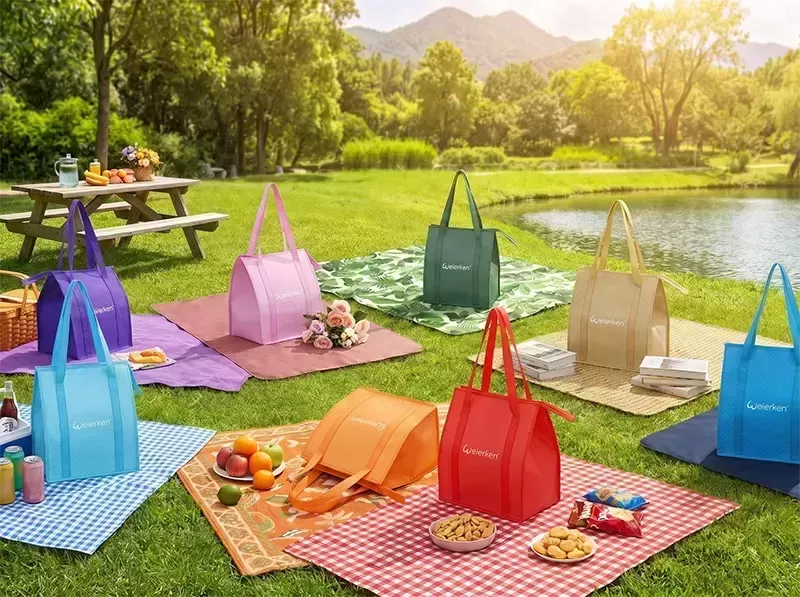
Outdoor retailers face a massive opportunity in the soft cooler and thermal gear market. Camping, kayak touring, fishing, and overland travel continue to drive retail sales for high-performance coolers. Buying direct from the source allows retail chains and direct-to-consumer (DTC) brands to cut middleman markups by 20% to 35%.
Direct sourcing also introduces serious operational risks. Insulated cooler bags are technical products. If an overseas supplier cuts corners on closed-cell foam density, uses cheap toxic linings, or relies on standard needle stitching instead of waterproof welding, the end consumer deals with melting ice, leaking water, and ruined vehicle trunks. High return rates quickly erase your retail margins.
To protect your brand equity, you need a repeatable audit system. Whether you visit a production plant in person or hire a third-party inspection agency, use this 5-step factory audit process before placing large purchase orders with an insulated cooler bag manufacturer like Weierken.
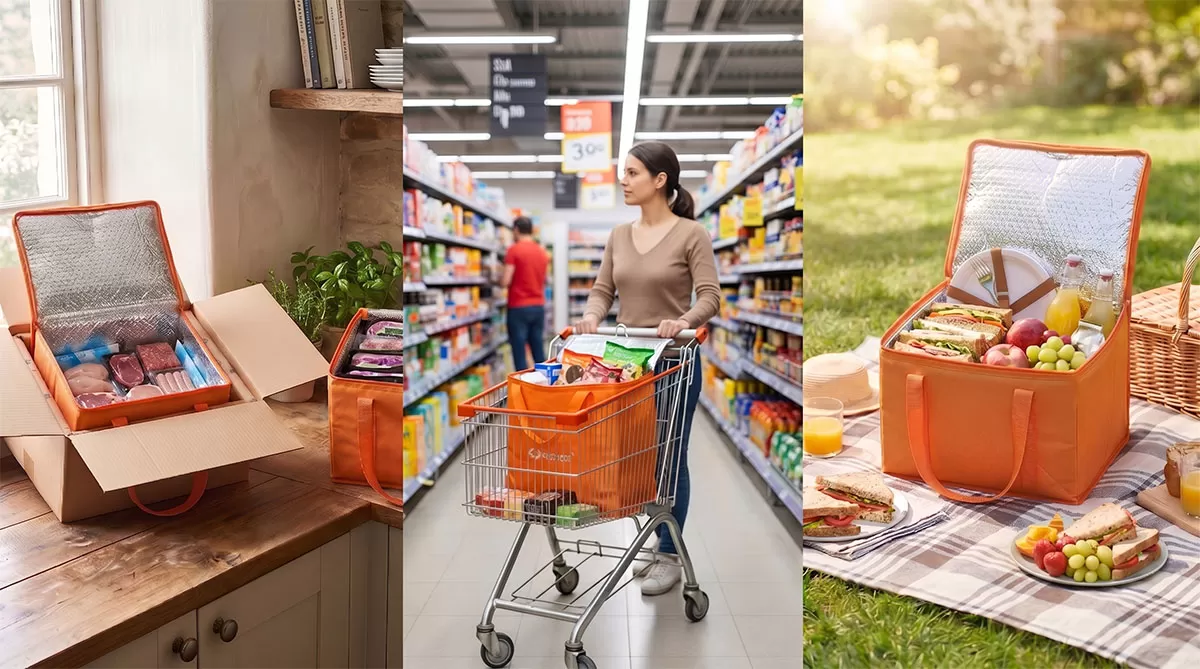
Step 1: Audit Thermal Insulation Materials and In-House Testing
Capabilities
The true value of any cooler bag lies in its core thermal barrier. Low-cost factories often use cheap, open-cell sponge foam. Open-cell foam absorbs moisture, breaks down under compression, and loses its insulating ability within hours.
When auditing potential suppliers, inspect their raw material storage and verify the specific insulation types they process daily:
High-Density Closed-Cell Foam (EVA/NBR): Look for dense, closed-cell structures that trap air pockets without absorbing ambient moisture. This foam maintains structural rigidity and thermal resistance for days.
Multi-Layer Thermal Core Composite (EPE): Verify the lamination thickness. High-grade bags combine 15mm to 25mm of layered foam with reflective aluminum or TPU backing to bounce radiant heat away from the cargo.
Food-Grade Contact Linings: Ensure all interior linings use certified food-safe TPU or heavy-gauge PEVA. Demand proof of compliance for FDA, LFGB, and REACH standards to verify the materials are non-toxic, BPA-free, and odorless.
Never rely on verbal performance claims. A qualified custom thermal bag supplier must run an in-house environmental test lab. Check if the factory owns constant-temperature test chambers where they execute standardized 24-hour, 48-hour, and 72-hour ice retention tests.
As an industry benchmark, Weierken operates its own testing facility, providing buyers with documented thermal loss curves, ice melt timelines, and custom foam thickness configurations ranging from 5mm to 25mm based on target price points.
Step 2: Inspect Leakproof Construction and High-Frequency Welding Lines
Sewn seams leak. When melted ice pools at the bottom of an insulated bag, standard needle holes act as exit channels for water. A reliable source for wholesale leakproof cooler bags must use seamless bonding technology.
During the factory floor walkthrough, focus on the assembly methods used for the interior tub and outer shell:
Radio Frequency (RF) and High-Frequency Welding: Verify that the factory uses RF welding machinery to fuse TPU or heavy PVC fabrics at the molecular level. Molecular fusion creates a single, uninterrupted barrier that is 100% leakproof and airtight.
Welding Mold Inventory and Maintenance: Check the condition of the tooling molds. Clean, well-maintained copper and aluminum molds prevent uneven weld lines and pinhole gaps along bottom corners.
Airtight and Water-Resistant Zipper Installation: Inspect how operators install waterproof zippers. Check for precision alignment, airtight zipper garages, and reinforced bartack stitching at high-stress pull points to prevent zipper separation under heavy loads.
Factories with decades of specialized waterproof production handle structural stress points differently. Weierken utilizes automated RF welding stations and reinforced anchor patches, ensuring cooler bags can carry up to 50 lbs of ice and drinks without seam failure.
Step 3: Evaluate In-Line Quality Control and First-Pass Yield Metrics
A reliable factory prevents defects on the production line rather than sorting out ruined bags at the shipping dock. Your audit must verify a structured, three-phase inspection system: Incoming Quality Control (IQC), In-Process Quality Control (IPQC), and Final Quality Control (FQC).
Ask the quality control director to show you real-time logs and verify the following checkpoints:
IQC Material Testing: The factory should test incoming fabrics for tensile strength, hydrostatic water resistance, zipper cycle durability (minimum 5,000 pulls), and abrasion resistance.
First-Piece Approval Protocols: Line supervisors must sign off on a physical "Golden Sample" at the start of every shift before mass production starts.
100% Submersion and Air-Inflation Testing: For airtight soft coolers, check whether the factory inflates every finished liner to test for micro-leaks under water before closing the outer shell.
Review the plant's First-Pass Yield (FPY) metrics. Top-tier factories maintain a first-pass yield rate above 98%. Weierken achieves a 99.5% first-pass yield through strict inline QC checkpoints, keeping return rates for retail partners near zero.
Step 4: Verify Social Compliance and Sustainable Certifications
Major retail chains like REI, Decathlon, and Costco enforce strict environmental, social, and governance (ESG) rules. Sourcing from an uncertified facility puts your retail distribution agreements at risk. A sudden failed audit can block your inventory from store shelves.
A comprehensive factory audit checklist for outdoor bags must include the following verified certifications:
Social Responsibility Audits: Require valid BSCI (Business Social Compliance Initiative) or SEDEX (SMETA 4-Pillar) audit reports. These confirm safe working conditions, fair pay, and zero child or forced labor.
Recycled Material Standards (GRS): If you plan to market eco-friendly cooler lines, verify that the facility holds a Global Recycled Standard (GRS) scope certificate. The factory must supply genuine Transaction Certificates (TCs) for all rPET fabrics.
Quality Management Systems: Confirm active ISO 9001 certification to ensure standardized operating procedures across every department.
Working with a certified eco-friendly supplier protects your brand reputation. Weierken maintains full compliance with BSCI, GRS, REACH, SEDEX, rPET, and ISO 9001 standards, giving commercial buyers clean audit trails for global retail placement.
Step 5: Assess Dual-Hub Resilience, Tariff Optimization, and DDP Logistics
Sourcing bulk insulated bags for outdoor retailers involves navigating trade barriers, fluctuating freight costs, and supply chain bottlenecks. Sourcing exclusively from a single high-tariff region can destroy your retail pricing strategy.
Look for suppliers with diversified international manufacturing operations:
Dual-Facility Production (China + Southeast Asia): Sourcing raw materials from China while performing final cut, welding, and assembly in Cambodia provides significant tariff savings.
Tariff Reduction via GSP/Trade Programs: A qualified China Cambodia insulated bag factory allows Western buyers to legally reduce or eliminate import duties on soft-sided coolers.
Full DDP (Delivered Duty Paid) Shipping: Managing ocean freight, customs declarations, and domestic trucking takes focus away from selling gear. Verify if your supplier handles complete door-to-door delivery.
Weierken operates three advanced manufacturing facilities across China and Cambodia, covering more than 80,000 square meters with over 3,000 skilled workers. Their Cambodia production lines offer substantial tariff benefits for North American and European retailers, while their dedicated logistics arm provides complete DDP shipping right to your regional fulfillment hubs.
15-Point Factory Auditing Scorecard for Soft Coolers
Take this practical checklist into your next supplier audit meeting to evaluate their capabilities systematically:
| Audit Category | Specific Inspection Point | Target Standard | Pass / Fail |
|---|---|---|---|
| 1. Insulation | Core Foam Material | High-density closed-cell EVA/NBR foam (no open-cell sponge) | [ ] |
| 2. Insulation | Food-Grade Liner Safety | FDA / LFGB / REACH compliant TPU or PEVA film | [ ] |
| 3. Insulation | Thermal Testing Setup | In-house temperature chamber with 48h+ ice retention data | [ ] |
| 4. Sealing | Welding Machinery | High-Frequency / RF welding equipment (not stitched liners) | [ ] |
| 5. Sealing | Seam Burst Strength | Reinforced welded seams resistant to 40+ lbs load stress | [ ] |
| 6. Sealing | Zipper Hardware | Airtight waterproof zippers with welded garages | [ ] |
| 7. Quality | IQC Material Testing | Documented tensile, hydrostatic, and colorfastness tests | [ ] |
| 8. Quality | Leak Testing Process | 100% air-pressure inflation or water-submersion check | [ ] |
| 9. Quality | First-Pass Yield (FPY) | Factory-verified yield rate equal to or higher than 98% | [ ] |
| 10. ESG | Social Responsibility | Active BSCI or SEDEX (SMETA) audit documentation | [ ] |
| 11. ESG | Recycled Fabrics | GRS Scope Certification and verified rPET supply chain | [ ] |
| 12. ESG | Quality System | Active ISO 9001 certified operational processes | [ ] |
| 13. Supply Chain | Dual-Hub Manufacturing | Multi-country footprint (e.g., Cambodia lines for low tariffs) | [ ] |
| 14. Supply Chain | Logistics Service | Full DDP door-to-door customs and shipping management | [ ] |
| 15. R&D | Sample Turnaround | Functional production-grade prototype delivery in 12–30 days | [ ] |
Frequently Asked Questions
Q1: Why is closed-cell foam necessary for commercial soft coolers?
Closed-cell foam features sealed, non-connecting air pockets. Unlike open-cell foam, it does not absorb liquid, retains its thickness under heavy loads, and delivers superior thermal resistance. This keeps ice frozen for multiple days in warm weather without trapping mold or unpleasant odors inside the bag walls.
Q2: How do high-frequency welded seams prevent cooler bag leaks?
High-frequency radio waves heat and fuse thermoplastic materials like TPU at the molecular level without needles or threads. This creates a solid, unified seam that handles heavy internal water pressure without dripping or peeling apart over time.
Q3: What tariff advantages exist when sourcing cooler bags from Cambodia?
Cambodia benefits from preferential trade programs with several major markets. While bags exported directly from China may face steep trade tariffs in the US and Europe, products assembled and shipped from Cambodia qualify for lower duty rates, saving retailers 15% to 25% on their landed unit costs.
Q4: What is the typical minimum order quantity (MOQ) for custom bulk insulated bags?
For fully custom designs requiring specialized welding tooling, custom pantones, and branded hardware, factory MOQs usually range from 500 to 1,000 units per colorway. Established contract manufacturers can adjust volumes depending on whether you choose stock molds or proprietary tooling.
Q5: How can a retailer verify that a supplier's rPET fabrics are genuine?
Ask the supplier for a valid GRS (Global Recycled Standard) Scope Certificate under the factory's registered legal name. Once production begins, require individual Transaction Certificates (TCs) for every raw material batch to guarantee full traceability back to recycled post-consumer bottles.
Q6: How long does the custom prototype process take for complex cooler designs?
Most industrial factories require 4 to 8 weeks for custom bag sampling. However, an agile manufacturing partner with an in-house tooling workshop can deliver fully functional, production-ready prototypes in just 12 to 30 days.
Secure Your Direct Supply Chain with a Verified Manufacturing Partner
Sourcing bulk insulated bags for outdoor retailers direct from factory lines is the most effective way to protect your profit margins. Success comes down to selecting a manufacturing partner with proven thermal engineering, leakproof welding equipment, strict quality assurance, and favorable tariff structures.
Weierken brings 20 years of technical manufacturing experience, multi-facility operations across China and Cambodia, and an uncompromising 99.5% quality yield to your brand.
Ready to upgrade your outdoor thermal gear lineup? Contact the Weierken engineering and sales team today to request a quote, schedule a virtual factory audit, or commission your custom prototype within 12 to 30 days.