

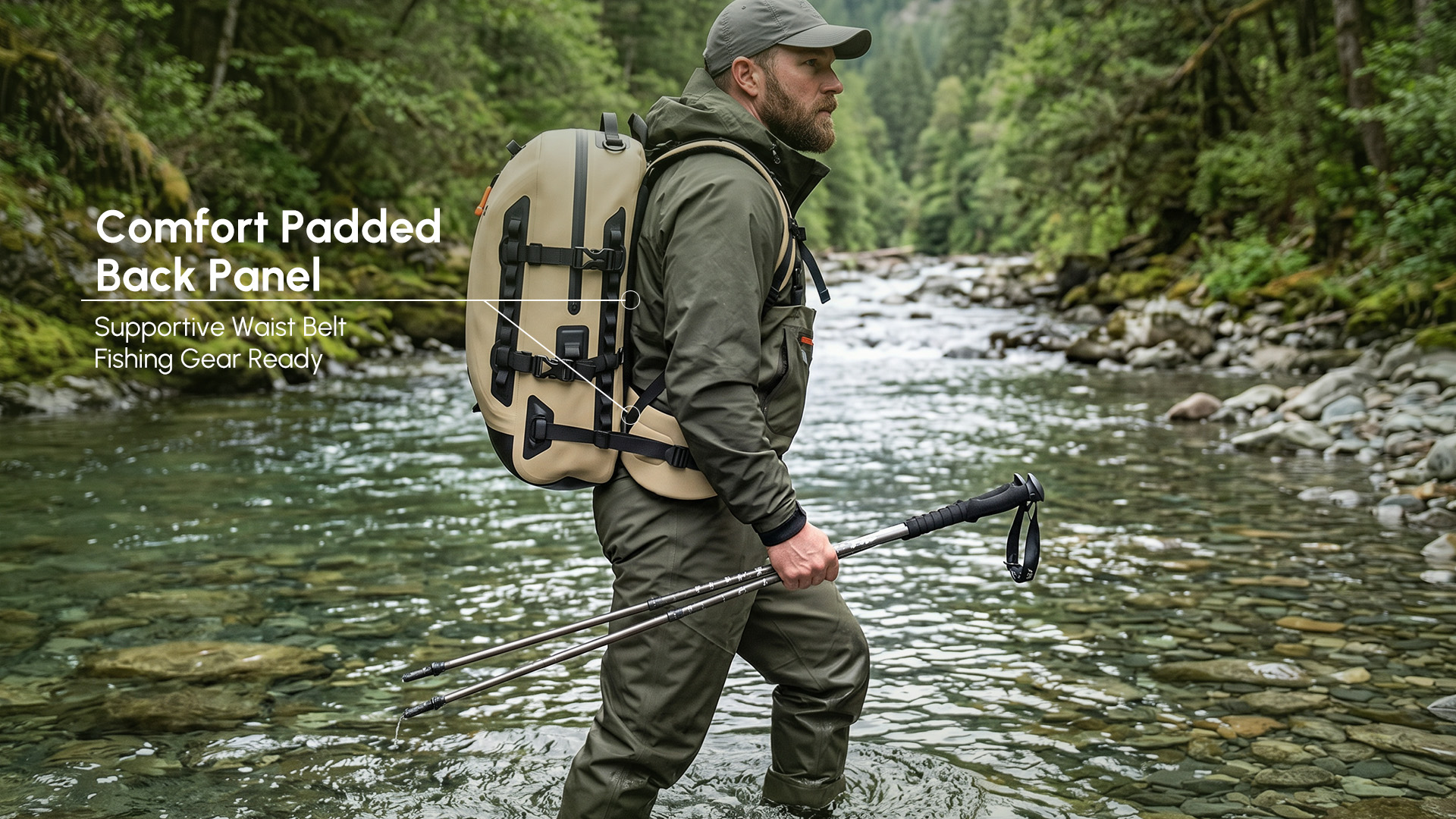
Bank fishing continues to surge across global markets. Anglers want mobility, lightweight gear, and immediate access to their lures. For outdoor and tackle brands, building a successful line of bank fishing bags, sling packs, and waist systems is a massive commercial opportunity.
Yet finding the right manufacturing partner remains a challenge. Sourcing teams frequently deal with supply chain disruptions, rising import duties, slow sampling cycles, and inconsistent build quality. A simple seam failure or zipper leak can ruin a product line and damage brand equity.
Choosing a reliable bank fishing bag supplier requires looking beyond basic price quotes. You need an OEM partner with engineering depth, strong supply chains, and transparent communication. Drawing from over 20 years of technical outdoor manufacturing experience, Weierken breaks down the essential criteria for selecting your next OEM partner.
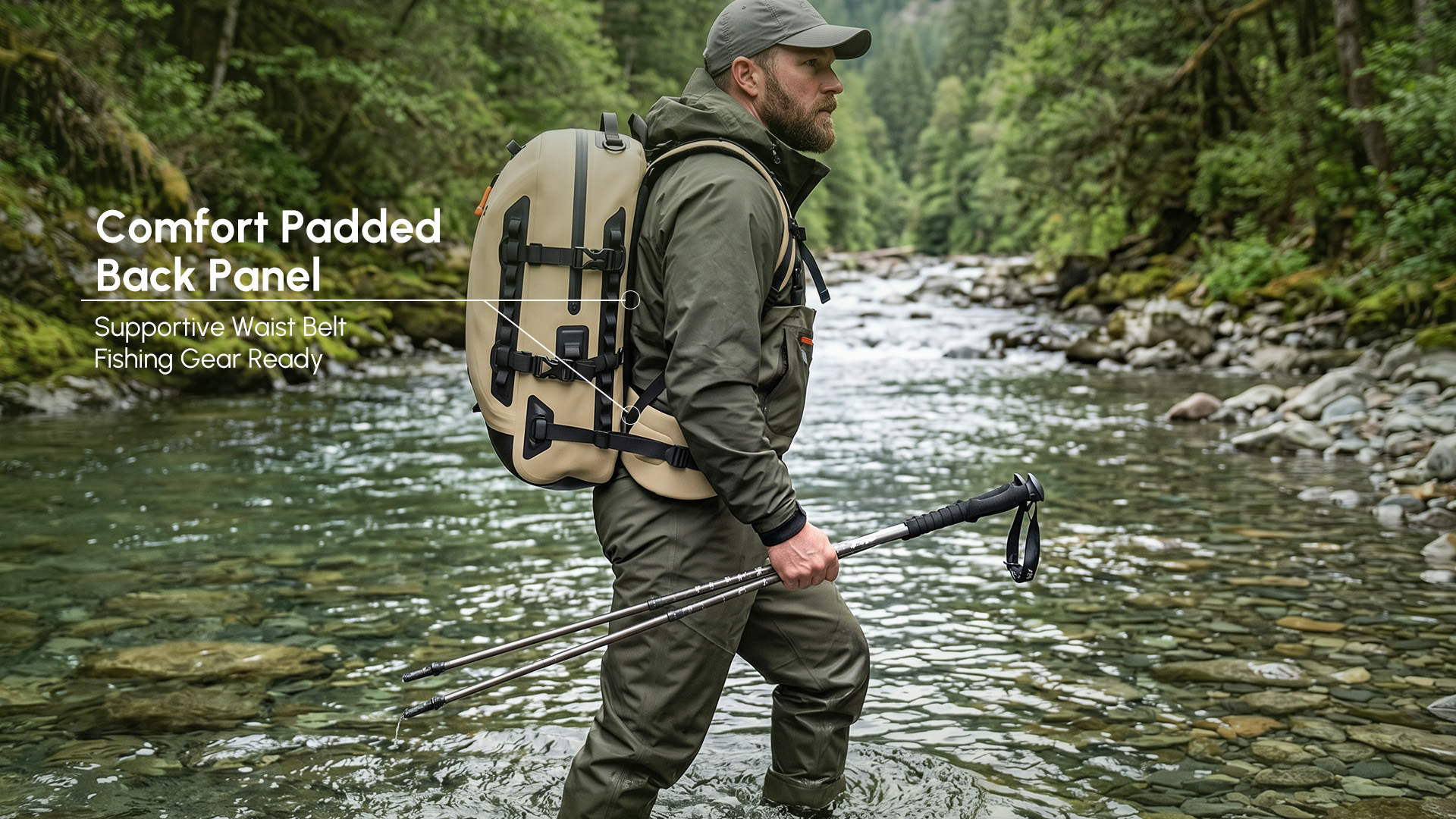
1. Evaluate Supply Chain Resilience and Total Landed Cost
Single-region manufacturing is no longer a safe strategy for international brands. Geopolitical friction, regional lockdowns, and sudden tariff shifts can disrupt seasonal launches. Your supplier must offer structural flexibility to protect your margins.
Dual-Factory Footprint (China + Cambodia)
A multi-factory manufacturing model gives your business built-in risk protection. Weierken operates production facilities in both China and Cambodia, allowing brands to balance rapid development with cost-efficient volume production.
Development Agility: China facilities manage complex prototyping, material sourcing, and quick-turn production runs.
Scalable Mass Production: Cambodia facilities handle large-volume orders, shielding brands from sudden labor constraints.
Supply Security: If unexpected disruption hits one region, your production shifts seamlessly without missing retail deadlines.
Tariff Reductions and Duty Optimization
Landed cost dictates your gross margins. Import duties on bags and technical luggage entering the US and European markets can range from 15% to over 30% depending on origin and material classification.
Working with a supplier that maintains compliant manufacturing in Cambodia opens access to Generalized System of Preferences (GSP) and favorable trade agreements. Shifting assembly to duty-advantaged facilities can cut 10% to 20% off your landed cost, giving you pricing room against competitors.
Quality Control and First-Pass Yield Rates
Bank fishing puts heavy stress on gear. Anglers bushwhack through thick brush, drop bags on rocky banks, and fish in pouring rain. Poor stitching or cheap fabric means high return rates and negative online reviews.
Look for an OEM that enforces strict Acceptable Quality Limit (AQL) standards at every stage.
Ensure incoming raw materials undergo tensile, tear, and water-repellency testing.
Demand an end-of-line first-pass yield rate of 99.5% or higher to protect your brand reputation.
Turnkey DDP Logistics Support
Managing freight forwarders, customs clearances, and port drayage drains internal resources. A professional bag supplier should simplify the entire logistics process.
Suppliers offering Delivered Duty Paid (DDP) terms handle sea or air freight, port clearance, and customs payments. Your product arrives directly at your third-party logistics (3PL) warehouse or distribution hub without hidden customs fees or administrative bottlenecks.
Social Compliance and Material Certifications
Entering major retailers like Bass Pro Shops, Decathlon, or Cabela's requires strict compliance validation. Your factory must meet global labor, safety, and environmental standards.
Facility Audits: Verify current BSCI, SEDEX, or ISO 9001 audit reports.
Material Standards: Request traceable Global Recycled Standard (GRS) and rPET documentation for eco-friendly lines.
Chemical Safety: Ensure fabrics, coatings, and plastics comply fully with REACH and RoHS standards.
2. Assess Market-Driven R&D and Engineering Capabilities
Bank fishing bags are highly functional tactical equipment. Anglers need one-handed zipper pulls, dedicated plier holsters, quick-deploy rod holders, and waterproof lure box compartments. Your supplier cannot just follow drawings blindly; they must understand the end-user environment.
Trend-Aware In-House Design Support
A capable factory does not wait for complete technical packets before contributing. They keep track of angling trends, lure dimensions, and ergonomic preferences.
Weierken works closely with brand product managers to refine concepts early. Whether your brand wants a minimalist urban street-fishing sling or a rugged multi-day shore pack, your supplier should provide input on pocket ergonomics, balance points, and strap geometry.
Rapid Prototyping and Pattern Making
Time-to-market often decides who captures seasonal demand. Long sampling rounds delay product launches and waste marketing budgets.
Fast Turnarounds: Standard tackle bag samples should take no longer than 12 to 30 days, with simple concepts completed even faster.
Pattern Precision: Computer-aided design (CAD) cutting systems ensure sample patterns match final mass production tooling exactly.
Fewer Iterations: Experienced pattern makers interpret functional requirements correctly on the first pass, cutting weeks off the sampling phase.
Advanced Waterproof and Heavy-Duty Construction
Bank anglers frequently wade through mud, cross shallow creeks, and cast in heavy rain. Basic stitched polyester bags with standard zippers will leak quickly.
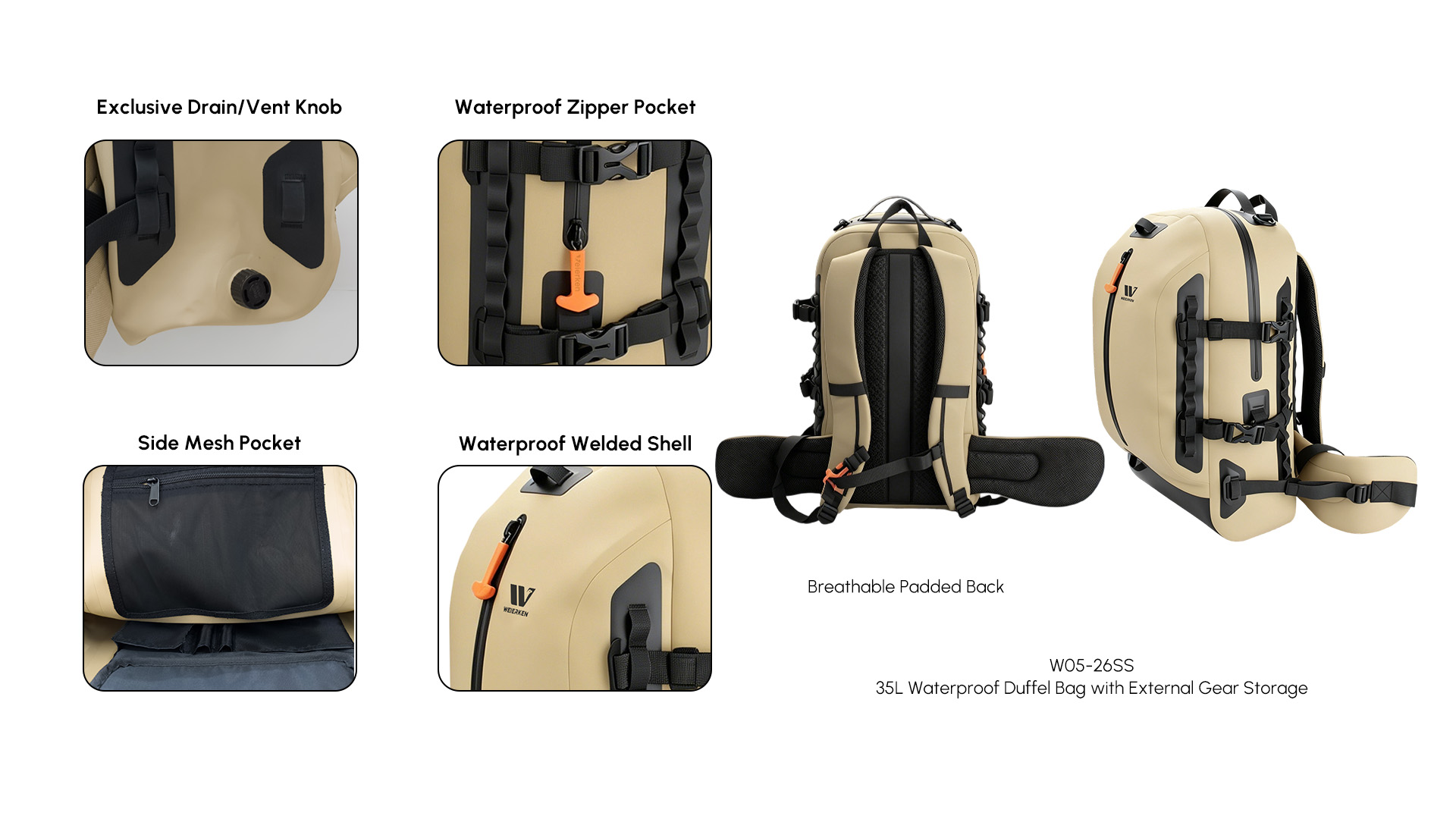
High-Frequency & TPU Welding: For submersible or splash-proof compartments, your supplier must master seamless bonding techniques.
Durable Substrates: Experience with 500D to 1000D Cordura, ripstop nylon, and TPU-laminated fabrics ensures tear resistance in thorny brush.
Corrosion Resistance: Saltwater and brackish shore fishing demand anti-corrosive plastic hardware and coated water-resistant zippers.
Decades of Technical Outdoor Know-How
Complex outdoor bags involve dozens of structural panels, foam inserts, webbings, and hardware components. Sourcing each item individually creates production bottlenecks.
A supplier with 20 years in technical bag manufacturing maintains deep raw-material vendor relationships. They know which thread gauge handles heavy load points and which closed-cell foam prevents water absorption during rain. That practical knowledge protects your brand from costly field failures.
3. Look for a Long-Term Strategic Partner, Not Just a Vendor
Transactional factories quote low prices and disappear when technical challenges arise. True growth happens when your manufacturing partner acts as a direct extension of your operations team.
Seamless Team Extension and DFM Advice
Design for Manufacturability (DFM) saves significant production costs. An experienced OEM analyzes your initial sketches to identify potential weak points or unnecessary cost drivers.
They suggest alternative panel layouts to optimize fabric yields and reduce material waste.
They recommend reinforcement bar-tacks on high-stress grab handles and sling attachment points.
They balance custom metal trims with reliable standard components to protect margins.
Clear, Transparent English Communication
Misunderstandings around technical specs ruin sample runs. You need a dedicated project account team that speaks fluent technical English and understands commercial bag construction.
Direct communication eliminates the back-and-forth guessing games common in cross-border manufacturing. When engineering questions arise, an experienced team provides clear photos, video walkthroughs, and viable alternative solutions right away.
Milestone-Driven Production Tracking
Late shipments destroy seasonal product launches. Your supplier must provide end-to-end visibility throughout the production cycle.
Structured Gantt Charts: Every project should follow clear timelines from raw material arrival to final packaging.
Pre-Production (PP) Approvals: Clear PP sample sign-offs ensure the production line builds the exact approved spec.
Proactive Updates: Live status reports keep your planning and marketing teams aligned ahead of warehouse arrivals.
Comparing Supplier Types for Bank Fishing Bags
Understanding the difference between supplier types helps you make the right investment for your tackle brand.
Trading Companies: Good for off-the-shelf catalog orders, but offer zero control over factory floors, high markups, and limited technical customization.
Generic Bag Factories: Capable of cheap sewing, but lack understanding of fishing accessories, tool holders, waterproof coatings, and ergonomic weight distribution.
Specialized Technical OEM/ODM Partners (Like Weierken): Direct factory pricing, dual-country supply chains, in-house technical R&D, and complete control over quality and delivery schedules.
Frequently Asked Questions (FAQ)
Q1: What is the typical minimum order quantity (MOQ) for an OEM bank fishing bag project?
A1: For custom OEM projects, MOQs generally start between 500 and 1,000 units per style or colorway. This allows for custom fabric dyeing, specialized hardware sourcing, and optimal factory line balancing. Smaller pilot runs can sometimes be accommodated depending on material availability.
Q2: How long does it take from initial design to the delivery of mass production?
A2: Prototyping and pattern revisions typically take 2 to 4 weeks. Once pre-production samples are approved and raw materials arrive, mass production generally requires 45 to 60 days. Adding ocean transit, full turnaround usually runs between 3 to 4 months.
Q3: Can our brand supply our own designs and technical packs, or do you design in-house?
A3: Both options work. If you have complete tech packs and 3D CAD files, a reliable supplier will follow them strictly while providing DFM feedback. If you only have hand sketches, mood boards, or reference physical bags, an experienced OEM engineering team can build technical drawings and patterns from scratch.
Q4: What materials work best for durable, weather-resistant bank fishing bags?
A4: For high abrasion resistance, 600D to 1000D high-density polyester or nylon with water-repellent (DWR) surface treatments and heavy PU backing perform exceptionally well. For true waterproof compartments, 420D to 840D TPU-laminated fabrics joined with high-frequency welding are ideal.
Q5: How does a dual-base supply chain (China + Cambodia) help reduce overall costs?
A5: China offers unparalleled raw material supply chains and rapid prototyping infrastructure. Cambodia provides lower labor costs and preferential tariff access into key Western markets. Combining both gives brands fast R&D and lower overall landed costs on bulk runs.
Q6: How do you protect our brand's proprietary designs and intellectual property?
A6: Reliable OEM suppliers execute strict Non-Disclosure Agreements (NDAs) before reviewing any technical files. Dedicated tooling, custom molded logos, and proprietary features remain exclusive to your brand, with strict internal controls preventing cross-customer exposure.
Conclusion: Build Your Next Tackle Line with Weierken
Choosing the right bank fishing bag supplier shapes the future of your tackle business. You need a partner that combines rugged product design, reliable quality control, and the commercial advantage of a dual-country manufacturing footprint.
Weierken brings 20 years of technical outdoor gear manufacturing to your team. From rapid 12-day sampling to duty-optimized volume production in Cambodia and complete DDP logistics, Weierken helps outdoor brands bring category-leading fishing bags to market with confidence.
Ready to start your next bank fishing bag line? Send your specifications, sketches, or project brief to the Weierken engineering team today to receive a free design review and production quote.