

Operating a pizza chain with dozens or hundreds of franchise locations requires military-grade consistency. When customers order from your brand, they expect piping hot, crisp pizza every single time. A single soggy crust or crushed box damages your reputation, leading to negative online reviews and lost repeat sales.
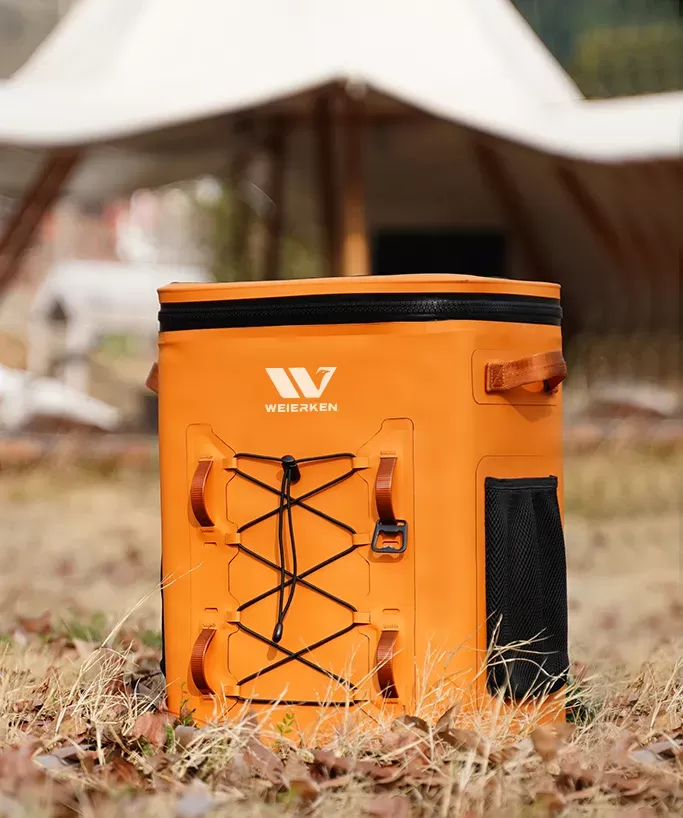
For large franchises, delivery gear is not an operational afterthought. Off-the-shelf delivery bags fail quickly under continuous commercial use. That is why enterprise operators partner with specialized manufacturers like Weierken to build custom branded pizza bags for restaurant chains that safeguard product presentation and turn delivery fleets into mobile brand assets.
Transitioning from generic bags to enterprise-grade, custom delivery solutions changes the unit economics of off-premise dining. Below, we break down the five non-negotiable engineering specifications required when sourcing branded pizza bags for restaurant chains.
The True Cost of Commercial Delivery Bags (TCO Analysis)
Procurement directors often fall into the trap of evaluating unit price rather than Total Cost of Ownership (TCO). A cheap, generic delivery bag costs less upfront but fails within three to four months. Zippers break, seams tear, foam collapses, and grease soaks into unsealed linings, creating foul odors.
Replacing bags three times a year drives up operational overhead. In contrast, heavy-duty branded pizza bags for restaurant chains built to industrial standards last 18 to 24 months in continuous fleet rotation. Over a two-year operational window, investing in commercial-grade bags cuts fleet equipment costs by up to 60% while protecting your core food product.
Spec 1: Chain-Grade Thermal and Vapor Equilibrium
The primary point of failure in pizza delivery is not just heat loss; it is moisture accumulation. Trapped steam turns a crispy crust into a soggy, rubbery mess within fifteen minutes. Commercial bags must balance temperature retention with vapor release.
Multi-Layer Thermal Core
Enterprise delivery requires thick, high-density insulation. Standard retail bags rely on thin 5mm foam that collapses under pressure. Industrial-grade bags feature 15mm to 20mm high-density Expanded Polyethylene (EPE) or closed-cell polyurethane foam.
- Maintains food core temperatures above 65°C (149°F) for up to 45 minutes, satisfying strict HACCP food safety standards.
- Reflective thermal barriers bounce radiant heat back toward the cardboard boxes rather than letting it dissipate through the outer shell.
- Dense insulation panels retain their cellular structure, preventing cold spots even after months of daily compression.
Engineered Moisture-Release Grommets
Heat retention means nothing if steam turns your pizza crust soft. Commercial bags must feature precision-machined brass or aluminum ventilation grommets. These vents release excess moisture vapor without causing rapid internal temperature drops.
By controlling vapor transmission rates, the bag preserves the structural integrity of the crust and prevents cardboard boxes from weakening and collapsing under their own weight during multi-order transit.
Spec 2: Heavy-Duty Fleet-Grade Exterior and Interior Fabrics
Delivery couriers handle bags aggressively. They throw them onto scooter racks, squeeze them into car footwells, and expose them to pouring rain and scorching sun. Thin polyester shells crack and tear within weeks.
Abrasion-Resistant Exterior Substrates
To survive the demands of high-frequency franchise operations, external shells must use 900D to 1680D high-density PVC-coated Oxford polyester or heavy-duty thermoplastic polyurethane (TPU) laminated fabrics. These materials offer exceptional tensile strength and puncture resistance.
- Waterproof exterior coatings keep heavy rain from soaking through to the thermal core.
- UV-resistant finishes prevent fabric brittleness and color fading caused by continuous sun exposure on delivery bikes.
- Reinforced base panels resist scuffing when couriers place bags on concrete, asphalt, or metal delivery racks.
Seamless, Oil-Resistant Food Contact Liners
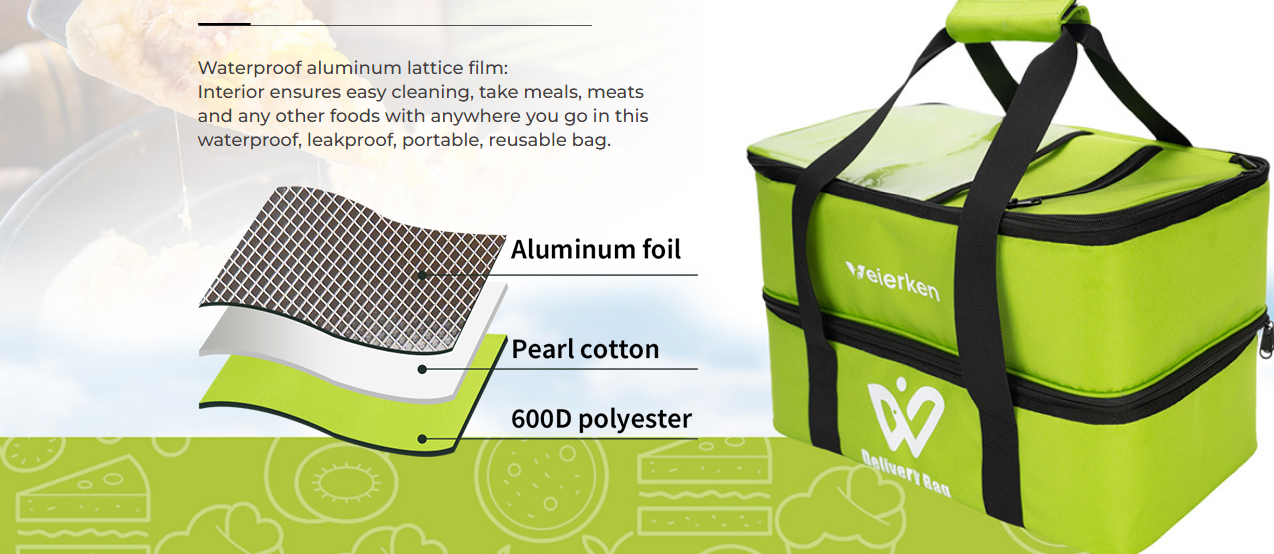
Pizza grease, condensation, and loose sauce will inevitably spill inside the bag. Stitched seams allow liquids to seep into the internal foam, creating a breeding ground for bacteria and mold. Fleet-grade bags solve this through high-frequency heat-welded liners made from heavy-duty aluminum foil or food-grade PVC.
Seamless interiors eliminate needle puncture holes. Kitchen staff can wipe down, sanitize, and dry the interior within thirty seconds, keeping franchise turnaround times tight and meeting regional hygiene protocols.
Spec 3: Rigid Anti-Crush Architecture and Fleet Integration
During peak dinner rush hours, drivers stack multiple boxes into a single bag. A soft-sided bag collapses under the weight, crushing the bottom boxes and pressing melted cheese directly against the box lids. Maintaining food presentation requires structural rigidity.
Reinforced Internal Skeletal Framework
Professional bags feature integrated structural panels within the walls, top, and base. Lightweight polypropylene (PP) hollow sheets or removable fiberglass battens create a rigid internal exoskeleton.
- The rigid frame supports the weight of up to five 16-inch pizza boxes without bowing or bending.
- Side panels keep the bag square, making loading and unloading faster for kitchen staff and drivers.
- Modular internal dividers allow drivers to separate hot pizzas from cold beverages or side salads within the same unit.
Ergonomics and Vehicle Securement
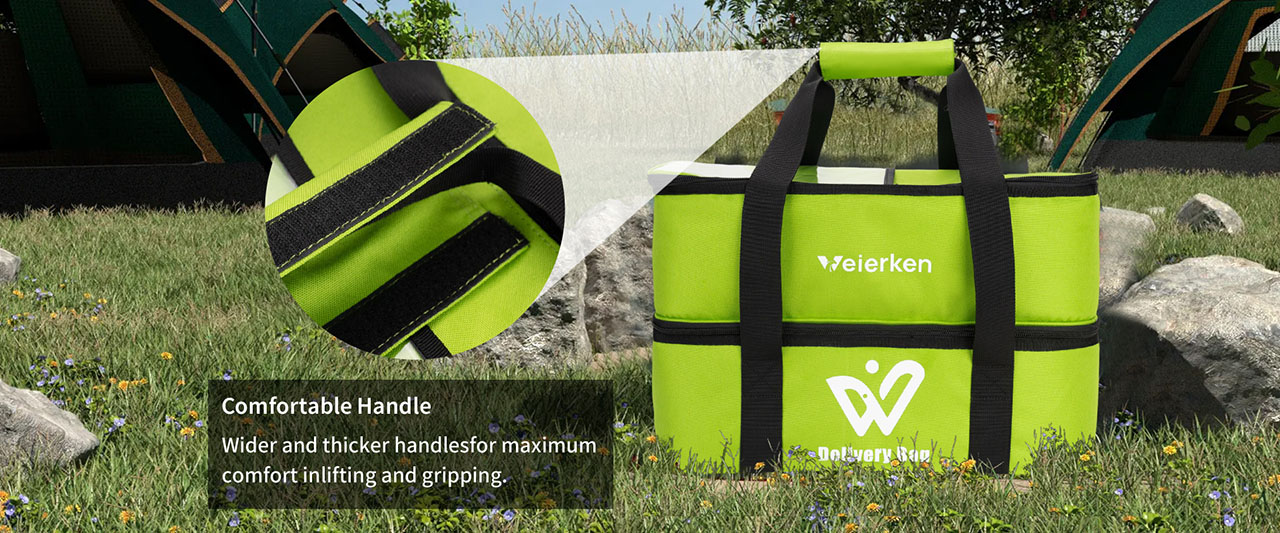
A delivery bag must secure easily to various fleet vehicles, including motorbikes, e-bikes, and compact cars. High-stress anchor points demand Box-X reinforced stitching, military-grade seatbelt webbing, and heavy-duty composite buckles.
Integrated D-rings and adjustable tie-down straps anchor the bag firmly to rear bike racks, keeping the carrier level and preventing pizzas from sliding sideways during sharp turns or sudden stops.
Spec 4: Franchise-Wide Brand Consistency and Extreme-Wear Printing
Your delivery fleet is an active advertising medium. Tens of thousands of pedestrians and motorists see your delivery drivers every single day. A faded logo or peeling graphic makes your business look careless. Brand consistency across every franchise location is essential.
Engineering partners like Weierken help restaurant chains match corporate brand identity guidelines precisely. Bag manufacturers must utilize custom Pantone (PMS) ink matching to ensure color variation remains negligible (Delta E < 1.5) across separate production runs of tens of thousands of units.
Industrial-Grade Printing Methods
Standard heat transfers crack and peel after limited exposure to weather and washing. Fleet-grade manufacturing utilizes heavy-cure silkscreen printing with cross-linking bonding agents, or molded vulcanized rubber patches.
- Graphics withstand hot water washdowns up to 60°C without peeling or flaking.
- UV-inhibiting ink formulas resist fading, chalking, and discoloration from extended sun exposure.
- Sublimation techniques allow for photographic, edge-to-edge branding on front and side panels without closing fabric pores.
High-Visibility Nighttime Safety Accents
Driver safety is a serious corporate responsibility. Premium branded pizza bags for restaurant chains integrate commercial-grade retroreflective strips, such as 3M Scotchlite, directly into the perimeter seams.
These reflective elements catch vehicle headlights up to 200 meters away in low-light environments, protecting your delivery personnel while providing prominent brand visibility at night.
Spec 5: Food Contact Compliance and Global ESG Standards
Operating a global or nationwide restaurant brand introduces major supply chain and legal liabilities. Delivery gear comes into close contact with hot food containers. Materials that off-gas harmful chemicals when exposed to heat pose direct safety risks to your customers and brand reputation.
Toxin-Free, Food-Safe Materials
Every internal component of your delivery bags must comply with FDA 21 CFR 177 standards in the United States and EU REACH/RoHS regulations in Europe. Linings and foams must be completely free from heavy metals, phthalates, BPA, and toxic plasticizers.
Specialized testing chambers bake materials at continuous temperatures of 80°C to verify zero volatile organic compound (VOC) emissions. The interior of the bag must remain completely odorless under extreme heat, ensuring that your pizza tastes only like your signature recipe.
Enterprise Sustainability (ESG) Compatibility
Modern restaurant groups face strict environmental, social, and governance (ESG) targets. Discarding hundreds of non-recyclable bags every year harms your sustainability metrics. Leading chains now demand circular materials.
- Recycled polyester (rPET) derived from post-consumer plastic bottles forms the exterior structural shell.
- Eco-friendly TPU coatings replace traditional toxic PVC treatments without sacrificing water resistance.
- Modular component designs allow individual replacement of broken zippers or
worn panels, extending product lifespans and keeping materials out of
landfills.
Why Cheap Delivery Bags Damage Restaurant Profitability
Procuring low-spec delivery bags is an expensive mistake for expanding pizza franchises. The real cost lies in customer churn caused by lukewarm, soggy food and damaged packaging. Consider the operational math behind commercial gear:
- Reduced Remakes and Refunds: Maintaining crust temperature and box structure drastically cuts down on order remakes and delivery compensation vouchers.
- Consistent Brand Exposure: Crisp, professional-looking bags turn delivery fleets into mobile billboards that build brand equity throughout your delivery territory.
- Lower Replacement Cycles: Buying one durable, commercial-grade bag every two years costs far less than buying three cheap alternatives over the same timeframe.
When sourcing branded pizza bags for restaurant chains, treating your delivery equipment as a critical engineering component protects food quality, driver safety, and corporate bottom lines.
Frequently Asked Questions
Q1: How do commercial pizza delivery bags keep crusts crisp during long trips?
A1: Commercial bags utilize balanced thermal management. High-density 15mm-20mm foam retains ambient heat, while industrial vapor-release grommets vent excess moisture. This controlled exhaust prevents condensation from forming inside the bag, which is the main cause of soggy crusts and weakened cardboard boxes.
Q2: What is the typical lifespan of heavy-duty branded pizza bags for restaurant chains?
A2: When manufactured using 900D-1680D nylon or TPU fabrics, heat-welded seamless liners, and reinforced Box-X stitching, commercial bags typically last 18 to 24 months in daily high-frequency rotation. This is roughly four to five times longer than standard off-the-shelf delivery bags.
Q3: How do franchise systems maintain accurate logo colors across multiple production runs?
A3: Professional manufacturers match inks against specific Pantone Matching System (PMS) codes and measure color variance with digital spectrophotometers. Maintaining a Delta E color difference rating of less than 1.5 guarantees that your bags look identical whether they are manufactured this month or two years from now.
Q4: Can commercial-grade pizza delivery bags be cleaned and sanitized in commercial dishwashers?
A4: Bags with integrated internal rigid frames should not be placed into commercial dishwashers. Instead, the interior liner features high-frequency welded seams without needle holes, allowing kitchen workers to spray the surfaces with commercial food-safe sanitizers and wipe them clean within seconds.
Q5: How many pizza boxes can a standard commercial delivery bag hold without crushing?
A5: Enterprise bags feature internal polypropylene (PP) hollow boards or lightweight composite skeletons. This internal framework allows the bag to support three to five large pizza boxes (up to 16 or 18 inches) along with sides, preventing the weight of top boxes from crushing bottom items.
Upgrade Your Chain’s Delivery Infrastructure
Scale your restaurant brand with delivery gear engineered to perform under real-world commercial conditions. Weierken specializes in manufacturing heavy-duty, high-performance delivery bags designed specifically for expanding franchise networks and international food service enterprises.
Do not let substandard gear compromise your product quality or customer loyalty. Contact our enterprise team today to discuss your technical specifications, request a custom prototype tailored to your menu, and review our tiered volume pricing.