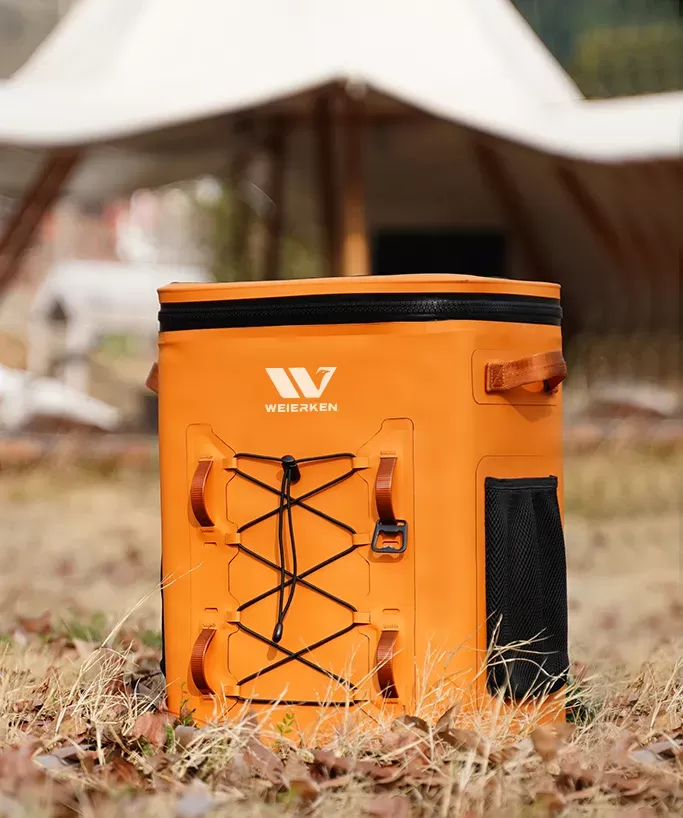

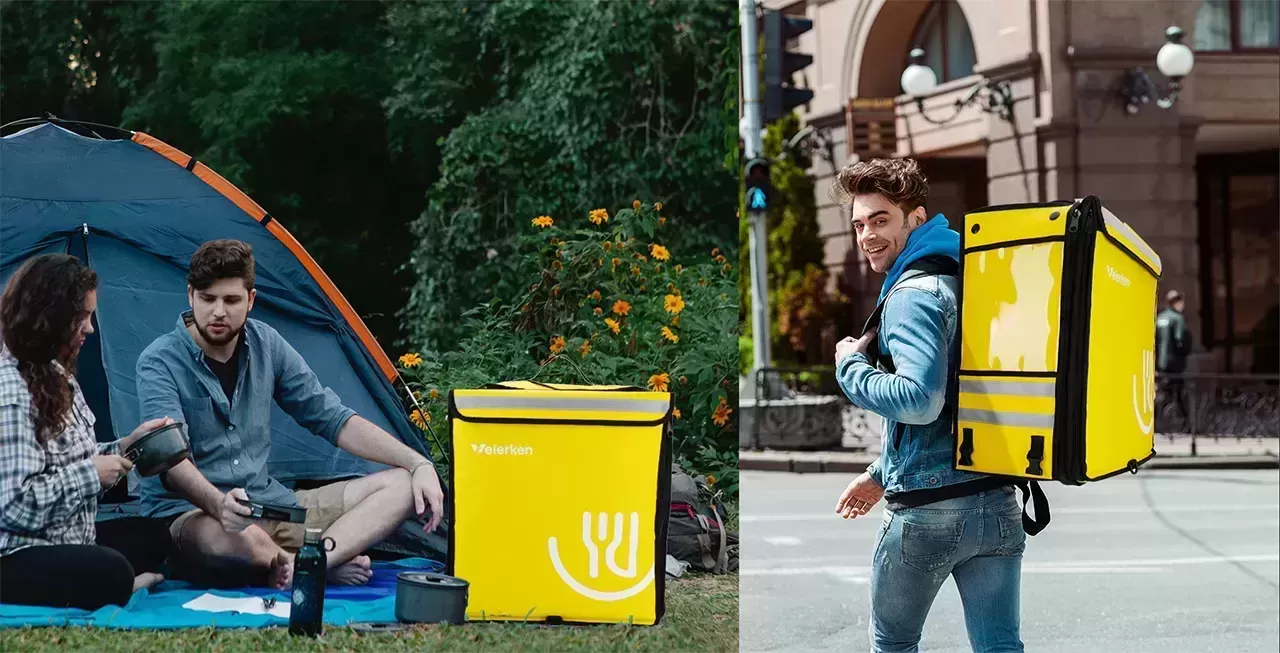
The food delivery industry depends heavily on thermal performance and packaging durability. A delivery bag is not just an accessory. It is a critical tool that preserves food quality, maintains temperature, and protects your brand reputation during transit.
Commercial delivery bags face constant wear and tear. Drivers zip and unzip them hundreds of times a day. They carry heavy loads in pouring rain and freezing cold. Standard retail bags fail quickly under these conditions.
To avoid frequent replacements and customer complaints about cold food, procurement managers must run a systematic factory audit. Partnering with an experienced lunch delivery bag maker like Weierken can help you secure durable products. This guide outlines six practical auditing steps to verify your supplier's capabilities.

1. Verify Factory Certifications & Social Compliance
A reliable lunch delivery bag maker must operate under recognized international management standards. This compliance ensures consistent product quality and protects your brand from ethical sourcing risks.
When auditing a potential commercial delivery bag manufacturer, start by requesting their official documentation. You should verify that these certificates are current and issued by accredited third-party registrars.
ISO 9001 Certification: This proves the factory maintains a standardized quality management system from raw material sourcing to final packing.
BSCI or Sedex (SMETA) Reports: Social compliance is vital for global brands. These audits verify fair labor practices, safe working conditions, and environmental standards.
Material Safety Certificates: Ask for REACH or RoHS compliance documents. This ensures the chemical compounds in the fabrics and plastics are safe for food-contact environments.
Working with a BSCI audited factory reduces compliance risks. It guarantees that your supply chain meets global ethical standards.
2. Evaluate Fabric Durability & Industrial-Grade Hardware
Food delivery bags face harsh weather, UV exposure, and rough handling. The raw materials used by your food delivery bag supplier determine the lifespan of the finished product.
During your audit, inspect the warehouse and material preparation area. Check the specifications of the fabrics and hardware currently on the production line.
Look for these industrial-grade materials:
High-Denier Fabrics: High-quality bags use 1680D double-strand Oxford fabric or heavy-duty nylon. These materials resist abrasions and tearing.
TPU and PVC Coatings: A waterproof outer layer or inner lining protects food from rain. Check if the supplier uses TPU coatings, which are more environmentally friendly than traditional PVC.
Heavy-Duty Zippers: Zippers are often the first part to fail. Verify if the factory offers brand-name options like YKK or SBS. Look for water-resistant zippers with thick polyurethane sealing tape.
A professional insulated food delivery bags manufacturer will gladly show you their material spec sheets. They will also let you feel the thickness and weight of their fabric stock.
3. Inspect Load-Bearing Sewing & Reinforcement Techniques
A delivery bag loaded with heavy containers puts extreme stress on its handles and shoulder straps. If the stitching is weak, the handle can snap mid-delivery, ruining the food and injuring the courier.
Walk through the sewing lines of the lunch delivery bag maker. Watch how the workers construct stress points. Experienced manufacturers, including Weierken, apply specialized sewing techniques to reinforce load-bearing areas.
Your quality inspection checklist should cover these critical points:
Box Stitching: The connection points for handles and straps should have a rectangular box stitch with an internal diagonal cross ("X" stitch).
Bar-tack Reinforcement: Look for dense, zig-zag bar-tack stitches at the ends of straps and pocket openings to prevent unraveling.
High-Tensile Thread: Ensure the factory uses bonded nylon thread rather than standard polyester sewing thread. Nylon thread offers much better resistance to moisture and tension.
Stitch Density: Measure the stitches per inch. High-quality commercial bags generally require 7 to 9 stitches per inch to ensure seam strength.
Poor stitching leads to seam slippage under load. Always pull firmly on the sample strap attachments during your factory visit to check for loose threads.
4. Assess Insulation Performance & Easy-Clean Linings
The primary job of any delivery bag is to keep hot food hot and cold food cold. The design of the insulation chamber and the quality of the lining materials directly affect this performance.
When auditing the construction of these bulk lunch bags, pay close attention to the internal layers. Ask the development team to show you a cross-section of their insulated walls.
Evaluate these technical details:
Multi-Layer Insulation: Reliable bags feature a triple-layer design. This includes an outer weather-resistant shell, a dense foam core (EPE or polyurethane foam), and a reflective inner lining.
Foam Thickness: Commercial bags need at least 8mm to 15mm of high-density foam insulation. Thin foam will not maintain safe food temperatures during long transit times.
Heat-Sealed Seams: Traditional stitched linings allow liquid to seep into the insulation foam, causing mold and odors. Ensure the factory uses high-frequency welding to create 100% leakproof, heat-sealed seams.
Food-Grade Linings: The inner aluminum foil or PEVA lining must be easy to wipe clean, sanitize, and certify as safe for direct food contact.
5. Examine On-Site Quality Control & Testing Equipment
A professional lunch delivery bag maker does not wait for the customer to find defects. They catch issues on the factory floor using systematic testing protocols.
Ask to visit the factory’s internal testing laboratory. A well-equipped laboratory shows that the manufacturer values long-term quality control. Check if they use the following testing equipment:
| Testing Equipment | Quality Control Purpose |
|---|---|
| Tensile Strength Tester | Measures the maximum weight capacity of handles, straps, and seams before they break. |
| Zipper Reciprocating Tester | Repeatedly opens and closes zippers to simulate years of intensive daily use. |
| Thermal Insulation Chamber | Measures temperature retention over time under controlled external conditions. |
| Waterproof Spray Tester | Simulates heavy rainstorms to check the water resistance of outer fabrics and seams. |
Additionally, check their Quality Control process. Look for active Incoming Quality Control (IQC) on fabrics, In-Process Quality Control (IPQC) at sewing stations, and Final Quality Control (FQC) before packaging.
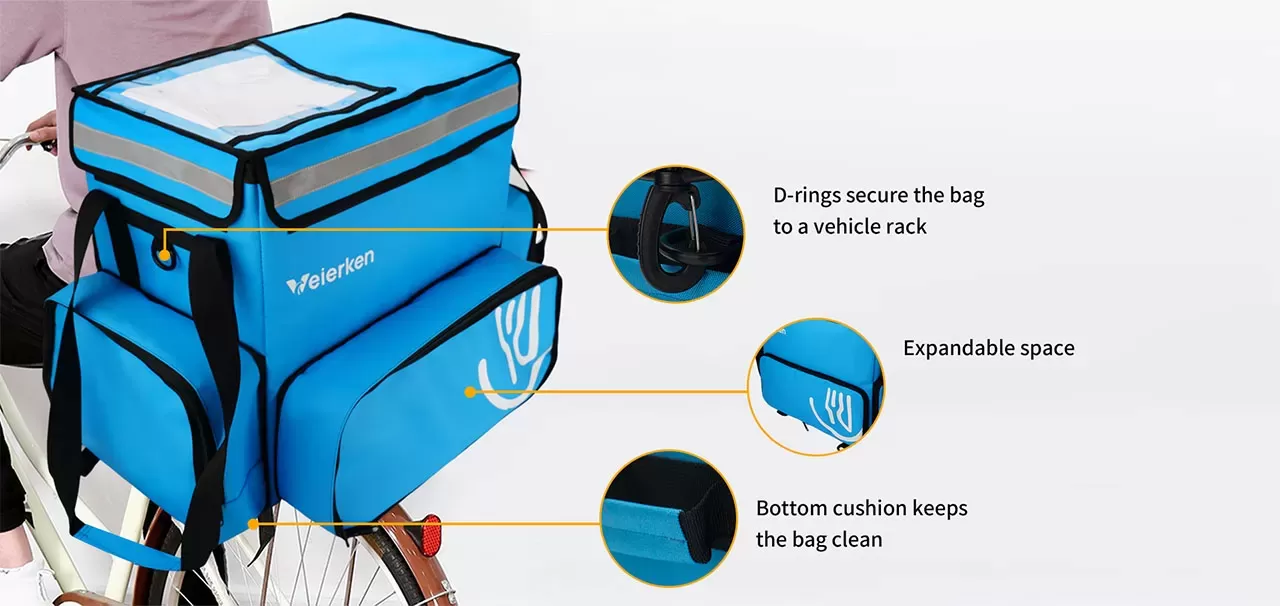
6. Analyze Production Capacity, Automation, & Lead Times
Large food delivery platforms and restaurant chains often require thousands of custom bags delivered within tight schedules. A factory might make great samples, but they must also have the capacity to scale production.
Walk around the cutting and assembly floors to analyze their production speed and technological setup.
Automated Cutting Systems: Manual fabric cutting can lead to dimensional errors. Look for automated CNC fabric cutters. These machines ensure consistent panel dimensions and reduce fabric waste.
Specialized Machinery: Check for high-frequency welding machines for TPU linings and automated programmable sewing patterns for handle reinforcement.
Worker Skill and Staffing: Ask about their stable workforce size. High worker turnover can lead to inconsistent stitching quality during peak production seasons.
Material Inventory Management: Verify if they keep safety stocks of standard raw materials to shorten production lead times.
Understanding these factors helps you determine if the manufacturer can scale production when your business expands.
Finding a reliable supplier requires a structured approach. By examining factory certifications, material durability, sewing reinforcement, insulation systems, QC testing, and production capacity, you protect your supply chain from costly product failures.
At Weierken, we specialize in manufacturing high-performance, durable, and custom-designed delivery gear. We maintain strict quality standards to ensure your food deliveries arrive at the right temperature, every single time.
Are you looking to source heavy-duty delivery bags for your business? Contact our team to request a factory tour, schedule a video audit, or ask for a detailed product quotation.
Send us your specifications today to receive a prompt, professional quote.
Frequently Asked Questions
Q1: What is the difference between PEVA and Aluminum Foil linings in delivery bags?
Aluminum foil linings offer excellent heat reflection and work well for keeping foods hot. PEVA linings are thicker, highly durable, and easy to wipe clean. When heat-sealed, PEVA provides a leakproof interior that prevents liquids from soaking into the insulation foam.
Q2: Why are heat-sealed seams so important for commercial food delivery?
Stitched inner seams have needle holes that allow spilled liquids, condensation, or grease to seep into the internal insulation. Over time, this moisture causes mold growth, bad odors, and ruins the bag. Heat-sealed seams use high-frequency welding to create a completely waterproof barrier.
Q3: What is the standard production lead time for a bulk order of custom delivery bags?
Lead times generally range from 30 to 45 days after sample approval and deposit payment. This depends on the order size, design complexity, and material availability. Standard designs with in-stock materials can sometimes be completed faster.
Q4: How do you test the thermal performance of your bags?
We place containers filled with hot water (around 80°C / 176°F) inside the bag. We then place the bag in a temperature-controlled testing room. Using digital sensors, we record the internal temperature drop at regular intervals over 2 to 4 hours to verify temperature retention.
Q5: Can you customize bags to fit specific motorcycle or bicycle racks?
Yes. A professional lunch delivery bag maker can customize the external dimensions, strap layouts, and base attachment plates. This ensures the bags fit securely onto various motorcycle racks, scooter bases, or bicycle frames.