

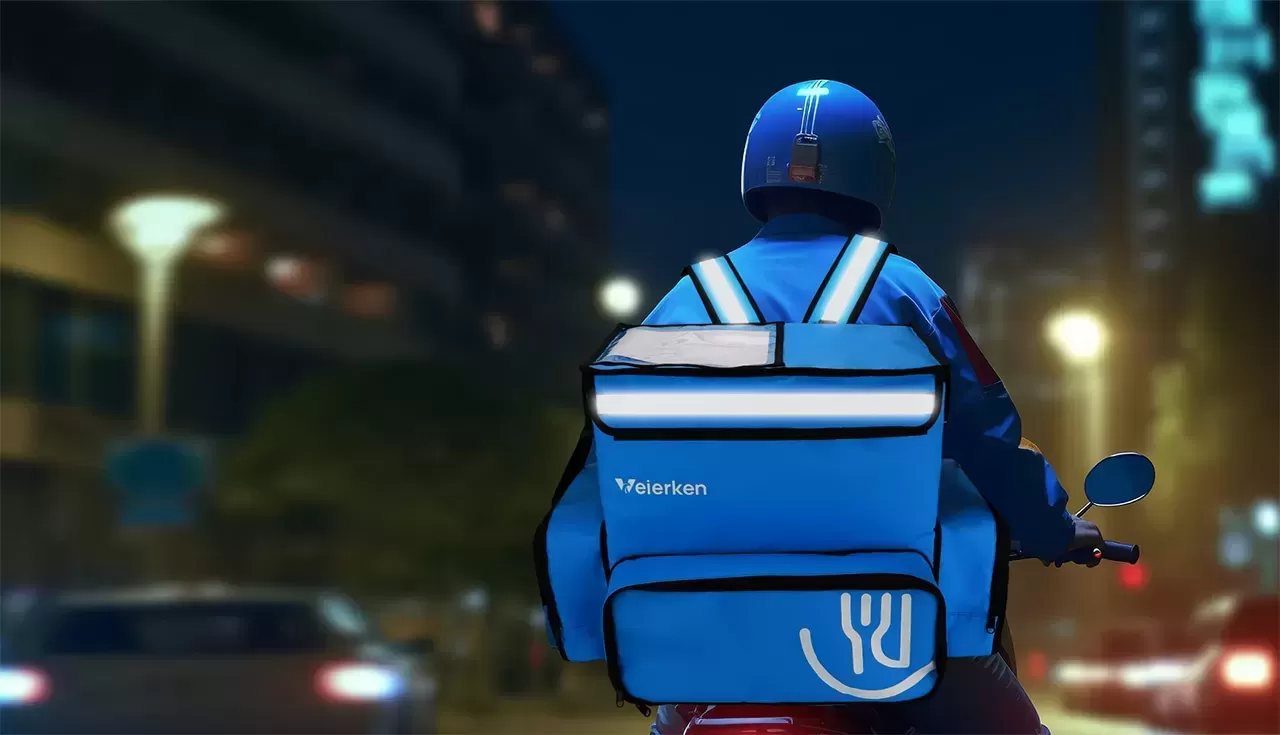
Delivery couriers serve as the vital link between local merchants and consumers. The thermal delivery backpack or carrier box is the primary tool that protects the quality of those meals. Facing heavy downpours, constant opening, and physical impacts, a reliable bag must balance weatherproofing, temperature retention, and structural strength.
For B2B procurement managers, choosing the wrong manufacturing partner leads to soaked orders, damaged meals, and high replacement costs. Working with a professional waterproof delivery bag maker like Weierken helps secure consistent product quality. This 6-step checklist provides a practical framework to audit your next supplier and minimize supply chain risks.
Step 1: Inspect Fabrics and Waterproofing Techniques
Evaluate Rain Protection in Harsh Environments
Delivery bags spend hours outdoors in shifting weather conditions. You must verify that the raw materials and seam construction can withstand sustained rainfall without absorbing moisture.
Key Checklist Items
Fabric Specification: Ensure the factory uses high-density materials like double-sided TPU coated tarpaulin, heavy-duty PVC mesh fabric, or high-denier ripstop polyester (at least 500D or 900D) with a durable water-repellent (DWR) coating.
Seam Construction: Check if the stitched seams feature interior waterproof seam tape. For complete moisture protection, the inner lining should use high-frequency welding (RF welding) to eliminate needle holes entirely.
Hydrostatic Pressure Rating: Ask the manufacturer if their fabrics meet specific waterproofness standards, such as resisting a 10,000 mm water column.
Step 2: Evaluate Frame Structure and Load-Bearing Design
Prevent Bag Collapse and Sagging
Couriers carry varying food volumes and weights. A delivery bag that sags or loses its shape makes riding difficult, threatens food presentation, and shortens the product's lifespan.
Key Checklist Items
Internal Support Materials: Verify the composition of the support frames. Reliable options include lightweight fiberglass rods, hollow polypropylene (PP) boards, or rigid corrugated plastic panels rather than cheap, bendable cardboard.
Reinforced Stress Points: Look for heavy-duty bartack stitching at critical connection points, including shoulder straps, carry handles, and harness bases.
Load-Bearing Tests: Ask the waterproof delivery bag maker if they perform tensile strength tests and drop tests with fully loaded bags to verify seam integrity under stress.
Step 3: Test Thermal and Cold Retention Efficiency
Protect Food Freshness and Brand Reputation
A waterproof bag must also serve as an effective thermal insulator. The choice of insulation materials directly affects whether food arrives hot or fresh items stay chilled.
Key Checklist Items
Insulation Thickness: Ensure the middle insulation layer uses high-density expanded polyethylene foam (EPE) or EVA foam with a thickness of at least 8mm to 10mm.
Reflective Interior Liners: Verify the liner uses wear-resistant, easy-to-clean aluminum foil or food-grade PEVA film to reflect radiant heat and contain spills.
Thermal Testing Data: Request test reports showing temperature curves over a 45-minute period in both hot and cold ambient settings.
Our production protocols at Weierken utilize standardized thermal testing to ensure our insulation layers keep meals within safe temperature zones throughout the delivery run.
Step 4: Check Hardware Durability and Safety Features
Extend Operational Lifespan and Protect Riders
Zippers, buckles, and velcro straps are high-wear components that face constant use. Furthermore, delivery riders require clear visibility during night shifts and rainy afternoons.
Key Checklist Items
Heavy-Duty Zippers: Ensure the factory installs smooth-sliding, dustproof, and water-resistant zippers from reputable brands like SBS, or uses custom-molded rubberized zipper tracks.
Cold-Resistant Hardware: Check if the plastic buckles and adjustment clips are made from nylon resins that resist cracking in freezing winter temperatures.
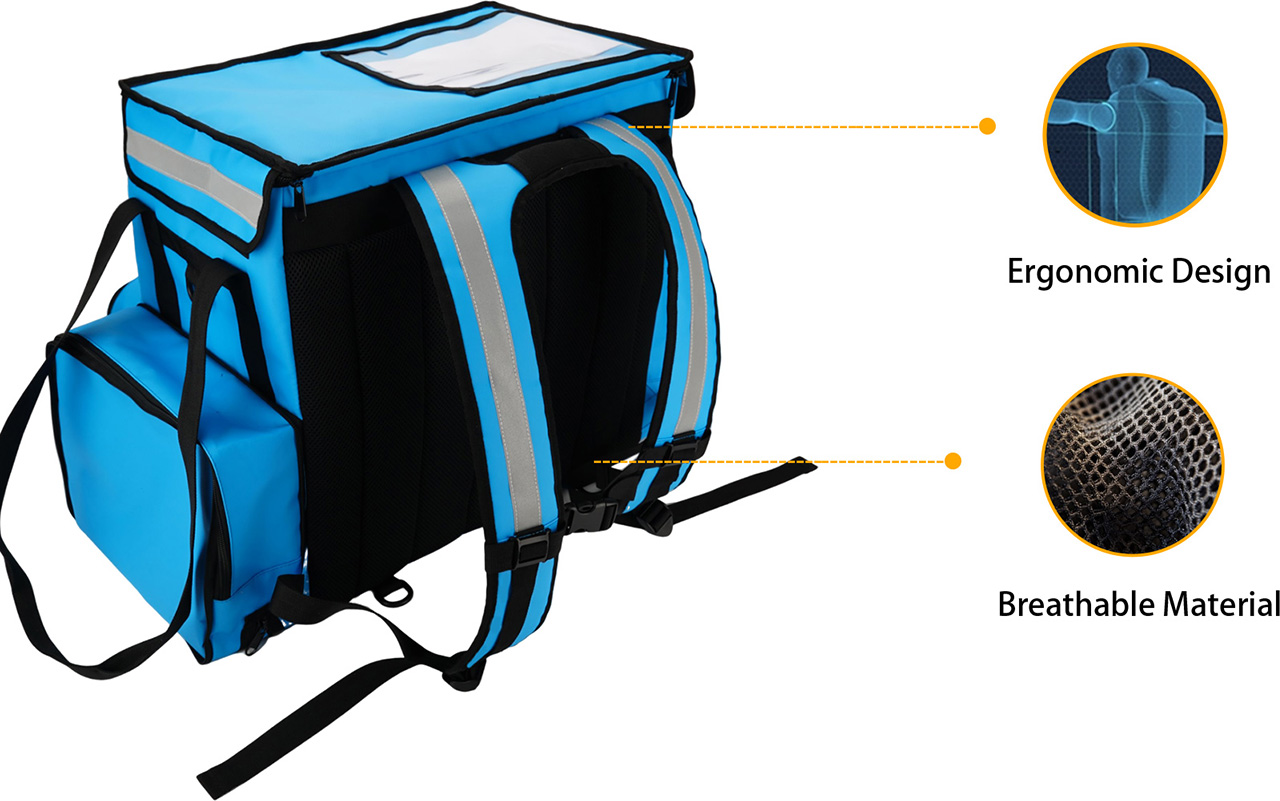
Reflective Trim Safety: Verify that high-visibility 3M reflective strips or reflective piping are sewn onto all sides of the bag to keep riders visible to motorists in low-light conditions.
Step 5: Assess Customization and Sampling Capabilities
Ensure Flexible Production for Diverse Delivery Needs
Different delivery models require tailored storage solutions. Hot pizza delivery, grocery cold chains, and multi-order courier routes need unique dimensions, compartments, and branding layouts.
Key Checklist Items
Sampling Accuracy: Evaluate how quickly the waterproof delivery bag maker translates your 2D concepts or 3D files into physical prototypes, and verify their attention to detail regarding stitching and logo printing.
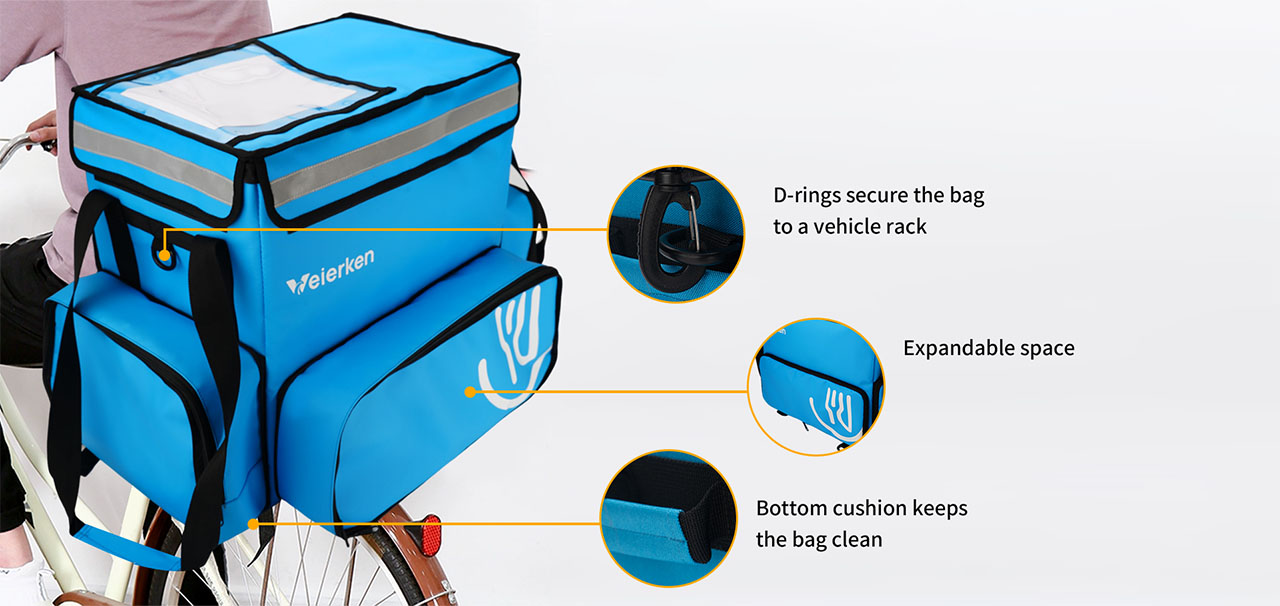
Modular Interior Accessories: Check if the manufacturer can design adjustable Velcro dividers, spill-resistant cup holders, external storage pockets, and expandable compartments.
Branding Durability: Confirm they offer long-lasting branding options like UV-resistant silkscreen printing, embossed rubber patches, or heat-transfer graphics that will not peel or fade under direct sunlight.
Step 6: Audit Factory Capacity, Compliance, and Quality Control
Secure On-Time Delivery for Large-Scale Orders
B2B procurement often involves large seasonal orders with tight launch deadlines. Working with a compliant, organized factory prevents shipping delays and legal hurdles.
Key Checklist Items
Factory Certifications: Ensure the manufacturer holds international quality certifications like ISO9001 and has passed social compliance audits such as BSCI or Sedex.
Monthly Output Capacity: Confirm their monthly production volume and ask about their scheduling flexibility during peak seasons when shipping demand spikes.
In-Line Quality Control (QC): Review their QC processes, from incoming material inspections (IQC) to in-process checks (IPQC) and final pre-shipment quality assurance (FQC).
Building Long-Term Trust in Your Supply Chain
Choosing a reliable waterproof delivery bag maker goes beyond comparing unit prices on a spreadsheet. It requires a balanced evaluation of material science, structural engineering, and manufacturing scale. By applying this 6-step checklist during your factory audits, you can avoid uncertified workshops and select a partner built for reliable, high-volume production.
At Weierken, we focus on providing durable, customized, and high-performance delivery solutions designed for modern commercial fleets. We emphasize material testing, technical innovation, and transparent manufacturing. If you are planning your next fleet upgrade or seasonal roll-out, contact our sales engineering team today to share your specifications and request a detailed quote.
Frequently Asked Questions (FAQ)
1. Why is high-frequency welding better than stitching for waterproof delivery bags?
Traditional stitching uses sewing needles that leave tiny holes in the fabric, allowing rainwater to seep through under pressure. High-frequency welding uses electromagnetic energy to fuse TPU or PVC fabrics together at the molecular level, creating a continuous, seamless bond that is completely airtight and leakproof.
2. What is the difference between PVC and TPU coated fabrics?
TPU (Thermoplastic Polyurethane) is lighter, remains flexible in cold climates, lacks chemical odors, and is environmentally friendly. PVC (Polyvinyl Chloride) is more affordable and offers excellent tear resistance, but it can stiffen in freezing conditions and is heavier than TPU. A professional waterproof delivery bag maker can help you choose the right material for your budget and climate.
3. How do you clean the interior of a thermal delivery bag?
Most commercial delivery bags feature a smooth aluminum foil or PEVA lining. You can clean these materials by wiping them down with a mild disinfectant spray and a damp microfiber cloth. Avoid using harsh chemical solvents or machine washing, as this can degrade the heat-sealed seams and insulation foam.
4. What is the standard MOQ when working with a professional waterproof delivery bag maker?
Minimum order quantities (MOQs) typically range from 500 to 1,000 bags per style. This volume allows the factory to purchase custom-dyed fabrics, adjust specialized heat-welding machinery, and run an efficient production line while maintaining competitive wholesale pricing.
5. How do you prevent zippers from breaking during peak delivery hours?
Using premium zippers with wider tracks, such as No. 8 or No. 10 sizes, helps distribute pulling forces. Additionally, integrating rubber zipper pull tabs makes them easier for couriers to grip while wearing gloves, reducing mechanical strain on the slider mechanism.
6. Can I customize the bag with my company's specific brand colors?
Yes. Manufacturers can match your precise brand guidelines using Pantone color matching for both the shell fabric and the trim. For larger runs, factories can custom-extrude TPU or PVC sheets in your brand’s specific colorway, ensuring consistency across your entire delivery fleet.