
Standard backpack manufacturing relies almost entirely on needles, threads, and sewing machines. If a needle punctures the fabric, it is simply part of the assembly process. However, in the waterproof gear industry, every single needle hole is a potential leak path. The production environment for submersible gear requires a fundamentally different approach to manufacturing.
The manufacturing core of a professional waterproof bag maker lies in advanced material bonding. Instead of traditional stitching, factories must master high-frequency welding (HF welding) and specialized heat-sealing technologies. If the factory lacks these precise capabilities, your product runs a high risk of seam separation, delamination, and water leakage in the field.
This audit checklist serves as a practical guide for sourcing managers. It helps you evaluate whether a factory has the necessary machinery, material management, and quality control protocols. When evaluating partners like Weierken, using a structured auditing framework ensures that your production run meets international waterproof standards.
1. Core Production Machinery and Equipment Evaluation
A reliable waterproof bag maker must possess the correct machinery to handle advanced thermoplastic materials. During your factory walk-through, look closely at the fabrication floor to assess the state and capacity of their assembly equipment.
High-Frequency Welding (HF Welding) Equipment
High-frequency welding uses electromagnetic energy to heat and fuse materials from the inside out. This process creates a bond that is often stronger than the original material. Your audit should verify the following details:
Machine Count and Output: Does the factory have enough high-frequency welding machines to handle your production volume without outsourcing?
Tooling and Mould Maintenance: Check the storage area for the welding copper moulds. Moulds must be clean, flat, and free of scratches, as any defect will transfer directly to the bag seam.
Parameter Control: Ensure that machines have digital displays showing pressure, current, and weld time. Operators should not rely on guesswork to set these critical parameters.
Hot-Air Seaming Machines
If your product design combines sewing with waterproof protection, the factory must seal the stitched seams. This requires specialized hot-air seaming machines to apply waterproof tape over the needle lines.
Tape Temperature Controls: The machine must maintain a stable temperature to melt the adhesive backing of the seam sealing tape without scorching the base fabric.
Pressure Roller Alignment: Inspect the rollers to ensure they apply uniform pressure. Uneven pressure leads to micro-gaps where water can seep through over time.
Material Cutting Precision
Clean edges are necessary for clean welds. If the fabric edges are frayed or unevenly cut, the high-frequency weld will be weak and inconsistent.
Automated Cutting Systems: Check if the factory uses CNC laser cutters or automated die-cutting machines. These systems yield much cleaner edges than manual scissors.
Die Blade Inspection: If the factory uses hydraulic press cutters, inspect the steel dies. Dull blades cause physical pulling and stretching of the TPU coated fabric, ruining the weld tolerance.
2. Raw Material Management and Storage Standards
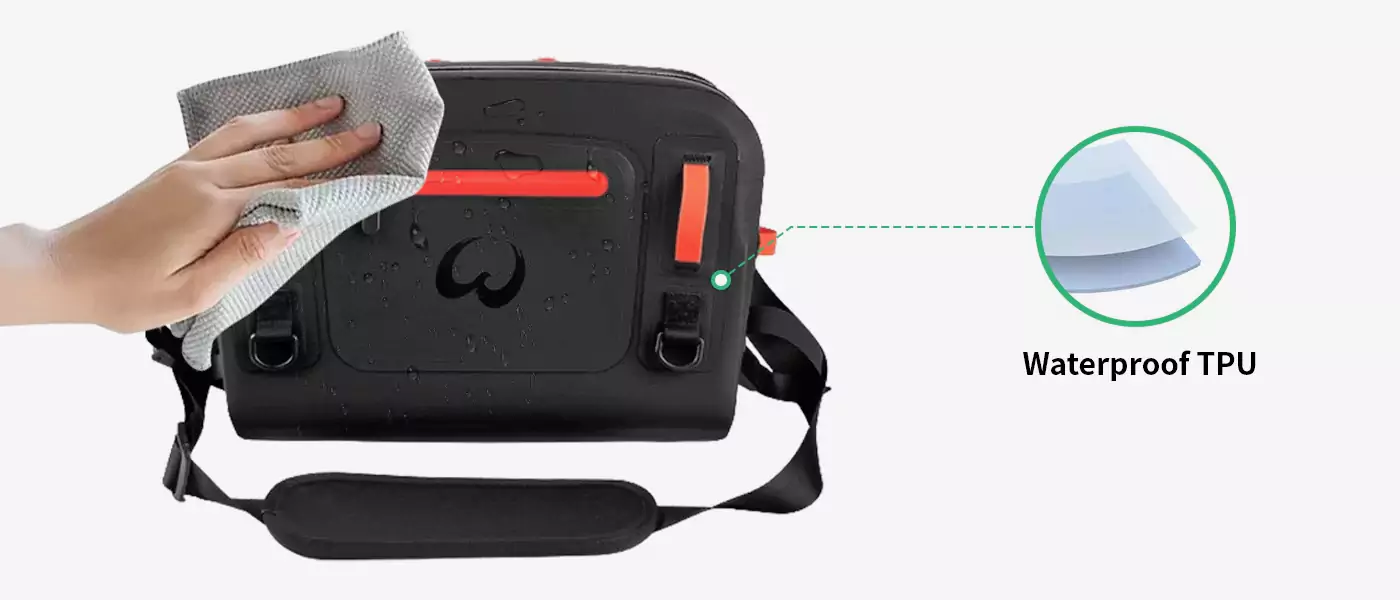
Waterproof fabrics like thermoplastic polyurethane (TPU) and polyvinyl chloride (PVC) are highly sensitive to their environment. Poor storage conditions can degrade these materials before they ever reach the production line.
A competent waterproof bag manufacturer must maintain strict control over their warehouse conditions. Damp or overly hot environments can cause premature aging of the coatings.
| Material Type | Storage Vulnerability | Required Storage Conditions |
|---|---|---|
| TPU Coated Fabric | Hydrolysis (breakdown due to moisture), UV yellowing | Temperature: 15°C - 25°C, Humidity < 60%, no direct sunlight |
| PVC Tarpaulin | Plasticizer migration, sticking, stiffness in cold weather | Stored flat or on racks, away from direct heat sources |
| Airtight Zippers | Deformation of teeth, degradation of sealing lubricants | Stored in original dust-proof boxes, flat without bending |
Incoming Quality Control (IQC) Protocols
A professional factory does not accept raw materials blindly. They must run functional tests on incoming rolls of fabric to verify their structural integrity.
Peel Strength Test: Does the lab perform a peel strength test to check how well the TPU or PVC layer adheres to the base textile?
Fabric Weight and Thickness Verification: Technicians should measure the fabric weight per square meter to ensure it matches the agreed product specification.
Chemical Compliance: Ask to see the factory's tracking system for environmental regulations. A professional waterproof bag maker should maintain clear records of REACH, RoHS, and Phthalate-free compliance reports.
3. Quality Control (QC) and Testing Procedures
Testing is the most critical stage of the manufacturing process for technical bags. A single pinhole can ruin an entire production batch. Your audit must verify that the waterproof bag maker runs both in-process and finished goods testing.
During our factory visits, we look for brands like Weierken that implement multi-stage inspection systems. The testing flow must be systematic and documented at every station.
In-Process Quality Control (IPQC)
Waiting until the end of the production line to test bags is a costly mistake. If a welding machine parameter is set incorrectly, hundreds of bags might be ruined before anyone notices.
First Piece Inspection: At the start of every shift, or when changing a welding mould, the QC team must run a sample weld and perform a welding seam tensile test.
Destructive Testing: Inspect the laboratory to see if they pull sample welds apart to verify that the fabric tore before the weld seam separated. This confirms a true molecular bond.
Finished Quality Control (FQC)
For technical dry bags, backpack liners, and submersible pouches, testing must be exhaustive. A reliable factory uses two primary methods to check for leaks:
Airtightness and Inflation Testing
For high-performance bags featuring an airtight zipper or dry-bag roll-tops, the inflation test is standard practice.
The factory inflates the finished bags to a specified pressure using a low-pressure air compressor.
The bags are left on inspection racks for 12 to 24 hours.
QC workers measure the air pressure before and after the testing period to calculate the exact leakage rate. Any noticeable drop in pressure results in a rejected bag.
Water Immersion Testing
This test simulates actual use cases in wet environments and is essential for checking raw seam integrity.
Bubble Test: Submersing an inflated bag in a clear water tank allows inspectors to check for escaping air bubbles. This instantly highlights any microscopic pinholes in the weld seams.
Weighted Immersion: For specific depth ratings (like IPX7 or IPX8), the factory should submerge weighted sample bags for 30 minutes to check if any moisture reaches the interior.
4. Workmanship and Assembly Line Management
Even the best high-frequency machines require skilled human operation. High-frequency welding requires precise timing, alignment, and manual handling.
If an operator places the fabric slightly off-center in the mould, the weld thickness will be uneven, leading to weak spots. Your audit should examine the human factor on the production floor.
Worker Stability and Training: Ask about the turnover rate of the welding machine operators. High turnover rates lead to inconsistent welding quality, as new operators require time to learn the specific heat tolerances of different fabrics.
Operational Work Instructions: Look for clear, laminated visual instruction sheets placed at every workstation. These sheets should clearly show the correct alignment steps and common defects to avoid.
Shop Floor 5S System: Examine the assembly tables for cleanliness. Because TPU is easily punctured, the work surfaces must be clean. Any stray metal shavings, needles, or sharp plastic debris can ruin a bag during assembly.
5. Social Compliance, Capacity, and Supply Chain Integrity
A successful partnership with a waterproof bag maker extends beyond the factory floor. You need to ensure the business is stable, compliant with international laws, and integrated with raw material suppliers.
Certifications and Social Responsibility
Most international retailers require proof of ethical manufacturing before they will list your products. Your audit should verify standard industry credentials:
Social Audits: Does the factory possess a current BSCI or SMETA audit report? These documents verify fair labor practices, safe working conditions, and reasonable working hours.
Quality Management: Look for active ISO 9001 certifications to ensure the factory maintains a consistent management structure.
Supply Chain Integration
How does the factory source its raw materials? A factory that buys raw polyester and laminates the TPU in-house has greater control over quality and lead times than a factory that buys pre-laminated materials from external markets.
In-house fabric processing also helps stabilize material costs, protecting you from sudden price fluctuations. Partnering with a vertically integrated manufacturer allows you to address material issues directly at the source.
Frequently Asked Questions
1. What is the main difference between auditing a standard bag factory and a waterproof bag factory?
A standard bag audit focuses on sewing machine efficiency, stitching straightness, and thread tension. A waterproof bag factory audit focuses heavily on material lamination, raw material storage, and welding technologies like high-frequency welding and hot-air taping. The testing processes also differ; waterproof bags require pressurized inflation and water immersion tests, which standard bag factories do not use.
2. Why is high-frequency welding better than simple heat sealing for waterproof bags?
Simple heat sealing applies heat to the outside of the material, which can melt or weaken the outer layer of fabric before the center is fused. High-frequency welding vibrates the molecules inside the plastic layers, creating heat within the material itself. This results in a much stronger bond that does not degrade the outer protective coatings.
3. How long should an inflation test last to confirm a bag is airtight?
For high-end dry bags and submersible packs, a professional waterproof bag maker will typically conduct an inflation test lasting between 12 and 24 hours. The pressure inside the bag is monitored using a pressure gauge to identify any minor leaks that might not show up during a quick immersion test.
4. Can TPU-coated fabrics be repaired if they fail a factory audit?
If a seam weld fails during production, the fabric generally cannot be re-welded over the same spot because the material coating has already been altered by the initial heat cycle. However, small pinholes found during final inspection can sometimes be patched using specialized adhesive patches. A reliable factory should have clear rules on when a bag must be scrapped versus when it can be repaired.
5. What are the signs of poor material storage in a factory warehouse?
Signs of poor storage include rolls of TPU or PVC stacked directly on concrete floors without pallets, exposing them to rising moisture. You should also watch out for dusty storage areas, hot temperatures, and direct sunlight shining on material rolls, which can prematurely yellow white TPU and weaken its overall peel strength.
Partner with a Proven Manufacturer
Finding a reliable production partner is key to launching a successful line of waterproof gear. Conducting a thorough audit of a factory's machinery, QC protocols, and material handling helps prevent costly quality issues before production begins.
If you are looking for an experienced waterproof bag maker to help build your next product line, Weierken offers the manufacturing expertise, clean facilities, and quality control systems needed to protect your gear in the field.
We invite you to contact us to discuss your design specifications, production requirements, or upcoming factory audits. Request a quote from our technical team today to learn how we can support your manufacturing needs.