

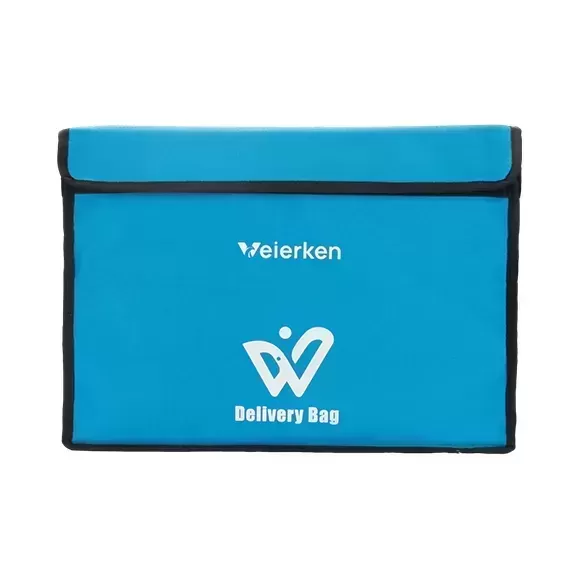
Delivering drinks is fundamentally different from delivering solid food. Liquids slosh, shift center of gravity mid-turn, and conduct thermal energy rapidly. A single sudden stop on a scooter can turn six premium specialty coffees into an expensive, soggy mess across the bottom of a carrier.
Most fleet managers and beverage procurement teams start with off-the-shelf delivery bags. Within three months, they run into the same cycle of failure: split seams, moldy open-cell foam from dairy leaks, crushed cup lids, and driver complaints about lower back strain. Generic food bags are built for flat pizza boxes and rigid plastic clamshells. They are not engineered to stabilize tall, top-heavy, multi-temperature liquid cargo.
Working with a specialized insulated drink delivery bag OEM bridges the gap between commercial textile manufacturing and logistical engineering. At Weierken, our engineering teams build carrier systems around liquid dynamics, real-world fleet mounts, and route thermal targets. If you are sourcing custom bags for a national beverage chain or an on-demand courier fleet, here are the six non-negotiable custom features a capable OEM partner must deliver.
1. Modular & Adaptive Cup Stabilizer Systems
A single delivery run rarely carries identical cups. A rider might pick up two 8oz flat whites, a 24oz iced boba tea with a dome lid, and a paper-bagged pastry. Traditional fixed-diameter fabric holes fail this test. Small cups wobble and tip, while wide cups compress the foam wall until it tears.
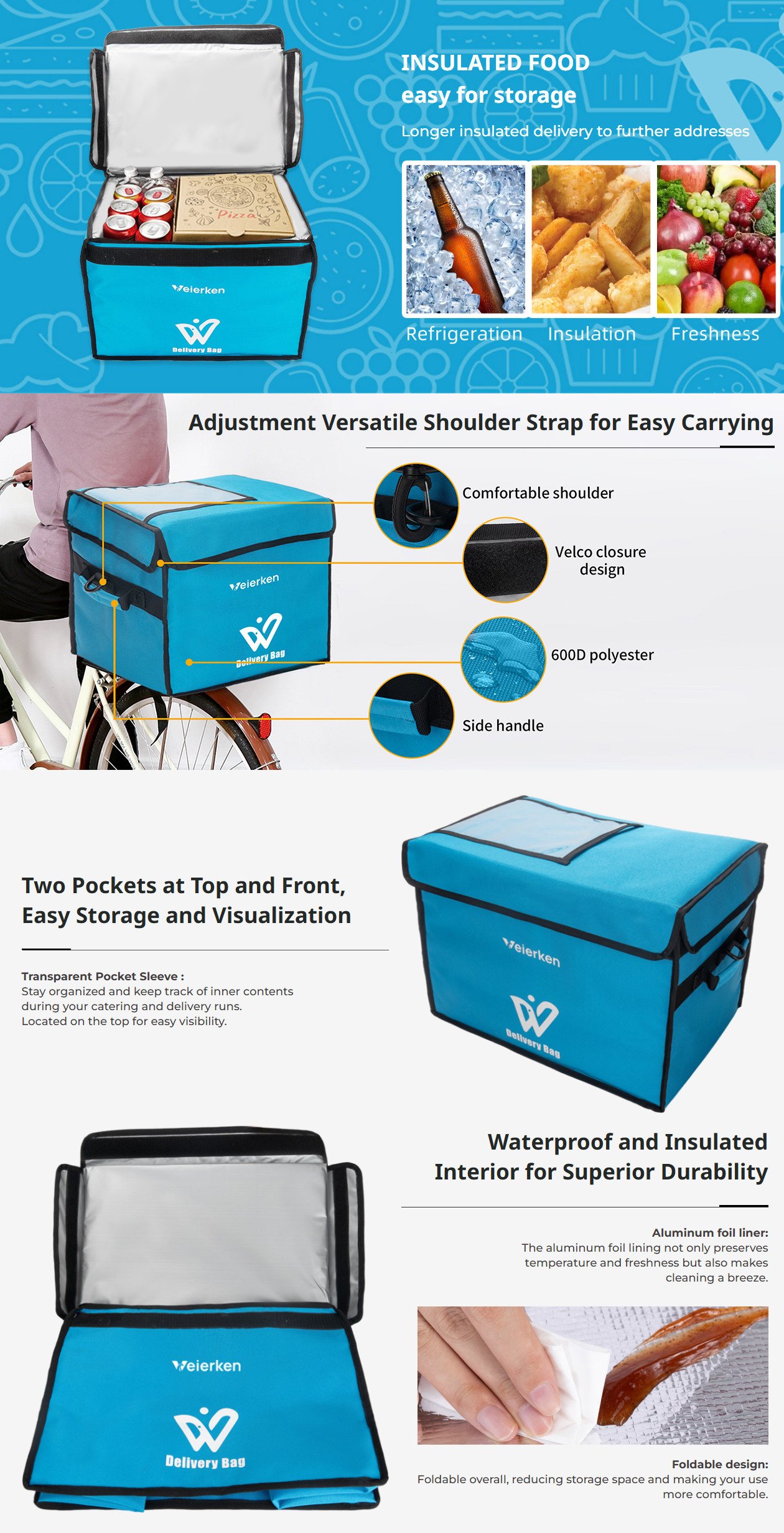
A reliable insulated drink delivery bag OEM engineers stabilization around mechanical retention rather than passive friction.
Laser-Cut EVA and EPP Core Inserts: Expanded Polypropylene (EPP) and high-density EVA foam offer rigid, shock-absorbing cavities. An experienced OEM uses precision die-cutting or laser routing to create flexible internal teeth. These teeth flex outward to grip wide 32oz cold cups, yet exert inward spring tension to secure narrow 8oz espresso cups without popping the lids.
Magnetic and Hook-and-Loop Modular Partitions: Delivery volumes peak and dip throughout the day. Removable baffle walls let couriers reconfigure interior layouts in seconds. A courier can toggle between a full 6-cup grid, an 8-cup beverage matrix, or a split configuration with half the bag reserved for bakery goods.
Low-Center-of-Gravity Floor Reinforcement: When a courier leans into a turn on a bicycle or motorbike, liquid shifts to the outer wall. A qualified OEM integrates lightweight, corrugated polypropylene (PP) honeycomb bottom boards. This stiff structural base prevents the floor from sagging under liquid weight, stopping the lateral tipping chain reaction before it starts.
2. Dual-Temperature Compartment Isolation
Cross-temperature orders present a common logistical hurdle. A single customer order often pairs a steaming hot latte with an iced frappe. If placed in the same insulated chamber, heat migrates directly to the cold zone. The hot drink cools to lukewarm, and the iced drink melts, watering down the recipe and condensing all over the paper cup wall.
Off-the-shelf bags attempt to solve this with a thin, unsealed cloth flap. This does not work. Convection transfers heat rapidly across non-sealed barriers.
A specialized insulated drink delivery bag OEM solves this through true thermal zone separation:
Airtight Thermal Baffle Walls: Commercial OEMs build multi-layer divider panels using closed-cell XPE foam wrapped in fiberglass-reinforced aluminum foil. The key to success lies in the edge seals. Using industrial magnetic strips or airtight gasket seals along the divider edges cuts off air convection between chambers. This setup maintains an internal temperature variance (Delta T) of up to 40°C between compartments for standard delivery windows.
Integrated Phase Change Material (PCM) Pockets: Cold beverages require active thermal absorption, especially in summer. Rather than tossing loose ice packs on top of delicate cup lids, an engineering-driven OEM sews structural mesh or TPU retention sleeves into the chamber side walls. These hold commercial PCM or gel packs flat against the cup bodies, cooling the beverage without putting downward weight on the lids.
3. High-Frequency Welded 100% Leakproof Liners
Every beverage delivery fleet encounters dropped cups. The lid pops off, or a paper seam splits under condensation. In standard bags assembled with nylon thread and needle stitching, sugary liquid drains directly through the stitch holes into the internal insulation layer.
Once milk, syrup, or fruit puree enters open-cell polyurethane foam, it cannot be cleaned out. Within 72 hours, bacteria multiply, producing unpleasant odors and mold. The bag becomes a health hazard and must be discarded.
This is why top-tier brands require high-frequency (HF) welded liners directly from their manufacturing partner.
Seamless Radio-Frequency (RF) Welding: Instead of piercing materials with needles, HF welding uses electromagnetic energy to melt and fuse food-grade TPU (Thermoplastic Polyurethane) or heavy-gauge PVC sheets at the molecular level. This creates a continuous, seam-free bucket liner. Liquids remain fully contained inside the liner tub, preventing fluid from ever touching the insulation core.
Removable "Tub" Engineering: For enterprise fleets, bag hygiene directly impacts brand reputation. When Weierken engineers commercial beverage delivery solutions, we often deploy fully removable internal liner tubs held in place by marine-grade perimeter zippers or heavy-duty industrial hook-and-loop tape. Couriers can unzip the entire inner tub, hose it down with hot water and sanitizer, wipe it dry, and reinstall it within minutes. This single feature extends the operational lifespan of the delivery backpack by more than 300%.
4. Ergonomic Suspension & Multi-Modal Fleet Mounts
Liquid is heavy. Eight 24oz bubble teas, complete with ice, cups, and stabilizers, weigh close to 6 kilograms. Carrying that weight over an eight-hour shift puts high physical strain on couriers. Fatigued couriers drop bags, move slower, and suffer long-term musculoskeletal injuries that drive up fleet turnover.
At the same time, courier fleets deploy diverse transportation options: motorbikes, electric scooters, traditional bicycles, and on-foot walking couriers. A dedicated insulated drink delivery bag OEM builds versatility into the carry architecture.
Load-Shifting Harness Systems: Professional delivery bags borrow suspension mechanics from technical mountaineering packs. They feature molded EVA air-mesh back panels with ventilation channels, load-lifter adjustment straps on the shoulders, and wide, padded hip belts. The harness shifts up to 70% of the liquid pack's weight off the cervical spine and shoulders directly onto the pelvic bone.
Reinforced Chassis Tie-Down Anchors: Carrying a liquid pack on a rider's back is not always ideal. A tailored OEM bag integrates heavy-duty, box-stitched D-rings, reinforced hypalon side wings, and dedicated webbing channels. These let riders secure the pack to rear motorcycle racks (such as standard Honda Super Cub cargo plates) or bicycle luggage carriers. The bag must remain stable at 50 km/h over potholes without racking the structural frame.
5. Extreme Weatherproofing & Heavy-Duty Closures
Beverage delivery demands spike when the weather turns poor. When it pours or snows, order volumes climb. Unfortunately, severe weather is also when cheap delivery bags fail most visibly. Standard nylon zippers leak water into the drink chamber, saturating paper cup carriers and dissolving cardboard cup sleeves.
A dependable insulated drink delivery bag OEM builds exterior shells to commercial marine standards.
Waterproof Zippers: Standard coil zippers act like sieves. OEM-grade designs use heavy-duty AquaGuard or TPU-laminated water-repellent zippers. These feature vulcanized polyurethane tapes that press tightly together when closed, blocking wind-driven rain from penetrating the teeth.
Storm Flap Overlays and Magnetic Roll-Tops: For routes facing heavy tropical rain, zippers can be supplemented with magnetic-catch storm flaps or roll-top closure mechanisms. Couriers can open and close the bag using one hand while wearing bulky, wet motorcycle gloves. This drops transaction seconds at curbside drop-offs and eliminates mechanical zipper failures altogether.
1680D TPU-Coated Ballistic Shells: Thin polyester shells tear the first time a courier brushes against a brick wall or drops the bag on abrasive asphalt. Leading OEMs use high-density 1680D or 900D Oxford polyester coated with double-sided matte TPU. This material is completely waterproof, resists abrasions, stops tears, and wipes clean of road grime with a wet rag.
6. Corporate Branding & Smart IoT Readiness
Delivery couriers are moving billboards across metropolitan centers. For global chains, your delivery bag is often the only physical touchpoint a customer sees. Faded logos, peel-away vinyl stickers, and scuffed surfaces project a low-quality brand image.
Furthermore, managing large delivery bag inventories across multiple franchise hubs presents major asset loss problems.
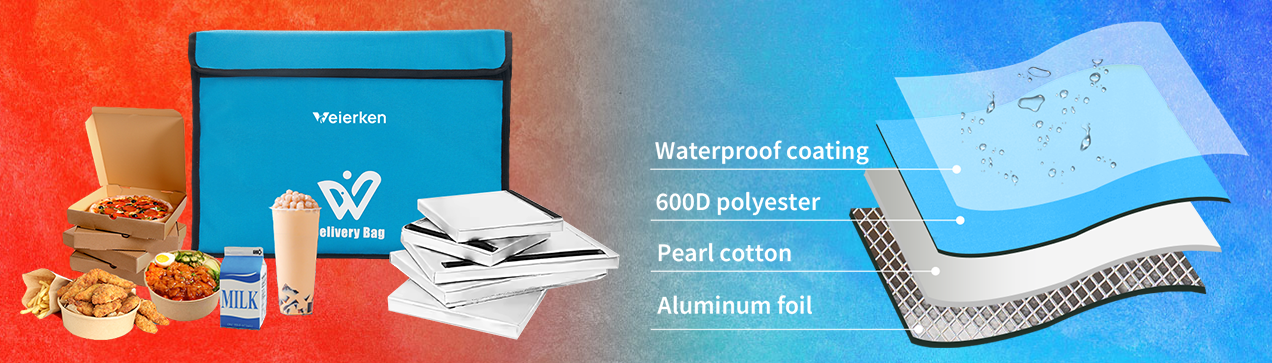
Industrial-Grade Print Durability: Top OEMs do not rely on standard screen printing. They apply reflective, UV-cured inks and vulcanized rubber badges that withstand thousands of hours of direct sunlight, salt exposure, and mechanical abrasion without flaking. For limited-time marketing pushes, clear welded PVC front pockets allow brand teams to slide in seasonal promotional posters on demand.
Integrated IoT and Asset Tracking Pockets: Professional fleet managers monitor their mobile equipment. A forward-thinking insulated drink delivery bag OEM builds dedicated, concealed internal sleeves to house asset trackers like Apple AirTags, Tile units, or dedicated GSM/GPS fleet transponders. These pockets sit behind thermal insulation layers so metalized foil does not interfere with wireless signals.
Active Illumination (LED) Integration: Nighttime rider safety remains a major legal liability for fleet operators. Advanced OEM designs can integrate USB-powered electroluminescent light strips or low-draw flexible LED pipelines along the pack contours, powered directly by a courier's portable power bank.
Comparison: Generic Food Delivery Bag vs. Engineered OEM Beverage Bag
To understand the business case, procurement teams must look past the initial unit price and calculate the Total Cost of Ownership (TCO) across twelve months of fleet operation.
| Feature Focus | Generic Off-the-Shelf Delivery Bag | Engineered OEM Beverage Delivery Bag |
|---|---|---|
| Cup Retention | Loose elastic loops or static, single-size cutouts. | Modular laser-cut EPP/EVA with dynamic flexing teeth. |
| Liner Construction | Stitched aluminum foil or thin PEVA with needle holes. | High-frequency welded, seamless TPU tub (100% leakproof). |
| Thermal Management | Single chamber with passive, unsealed separation flap. | Dual-zone sealed magnetic baffles; ΔT up to 40°C. |
| Cleaning and Sanitation | Difficult to clean; foam absorbs sour milk; causes mold. | Removable, hose-washable liner tub; quick-wipe materials. |
| Fleet Ergonomics | Flat webbing shoulder straps; zero weight distribution. | Load-lifting suspension harness, hip belt, and chassis mounts. |
| Product Lifespan | 1 to 3 months under heavy commercial use. | 12 to 24 months with replaceable wear parts. |
Evaluating Your OEM: Procurement Checklist
When vetting an insulated drink delivery bag OEM, you need to separate cut-and-sew brokers from actual product engineering manufacturers. Before issuing a purchase order or committing capital to production tooling, run prospective suppliers through this engineering checklist:
DFM (Design for Manufacturability) Review: Does the supplier provide detailed feedback on stress points, seam tape choices, and foam densities, or do they simply copy your reference sample without question?
In-House High-Frequency Welding Tooling: Does the factory own and operate HF welding lines, or do they outsource leakproof liners to third-party sub-suppliers?
Thermal Chamber Testing Data: Can the manufacturer supply calibrated data log curves proving internal temperature hold times across both hot and cold chambers under controlled external temperatures (e.g., 35°C ambient)?
Lifecycle and Stress Benchmarks: Ask for internal lab reports showing zipper cycle tests (minimum 10,000 pulls), handle tensile pull tests (exceeding 30kg), and fabric abrasion cycles (Martindale test standards).
Frequently Asked Questions
Q1: What is the typical Minimum Order Quantity (MOQ) for an insulated drink delivery bag OEM project?
A1: For fully customized OEM projects requiring custom dye lots, branded hardware, and custom-molded EVA/EPP cup holders, initial production run MOQs typically range from 500 to 1,000 units. For modifications built on existing structural chassis patterns, some manufacturers support pilot runs starting at 200 to 300 units.
Q2: Why is high-frequency welding superior to taped seams for beverage liners?
A2: Taped seams rely on heat-activated glue to cover needle perforations. Over time, constant exposure to moisture, acidic fruit juices, and dairy breaks down the adhesive, causing the tape to peel away. High-frequency welding does not use glue or needles; it permanently fuses the thermoplastic materials together, eliminating seam failure entirely.
Q3: Can custom beverage bags hold hot food orders at the same time?
A3: Yes. By integrating sealed, magnetic-gasket insulated dividers, an OEM can split the interior volume into distinct thermal zones. One side holds hot food at over 65°C using heat-reflective aluminum foil walls, while the isolated drink sector keeps iced drinks cold without heat migration.
Q4: How long does the Design for Manufacturability (DFM) and sampling process take?
A4: A structured OEM sampling cycle typically takes between 10 and 20 business days. This timeframe covers initial CAD layout, CNC pattern cutting, prototype assembly, internal thermal validation, and physical leak testing before the golden sample ships to the client.
Q5: What exterior fabric offers the best long-term durability for motorbike courier fleets?
A5: A 1680D high-density ballistic polyester or nylon coated with a smooth Thermoplastic Polyurethane (TPU) layer provides the best field durability. It delivers exceptional puncture resistance, handles heavy rainfall, and lets fleets wipe off city grease and exhaust residues without degrading the fabric fibers.
Request an Engineering Consultation and DFM Review
Eliminate spilled drinks, cold coffee complaints, and premature gear replacement. Partner with Weierken to build a custom carrier system engineered around your real-world cup dimensions, transit vehicles, and thermal profiles.
Submit your container specs, target route durations, and fleet size to our technical team today. We will deliver a complete Design for Manufacturability (DFM) analysis along with an initial 3D design quote within 48 hours.