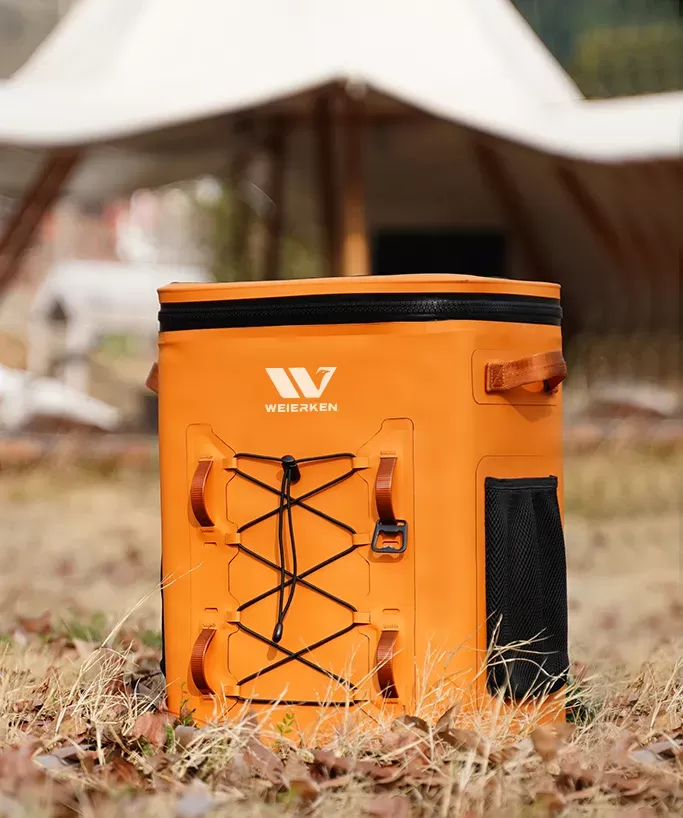

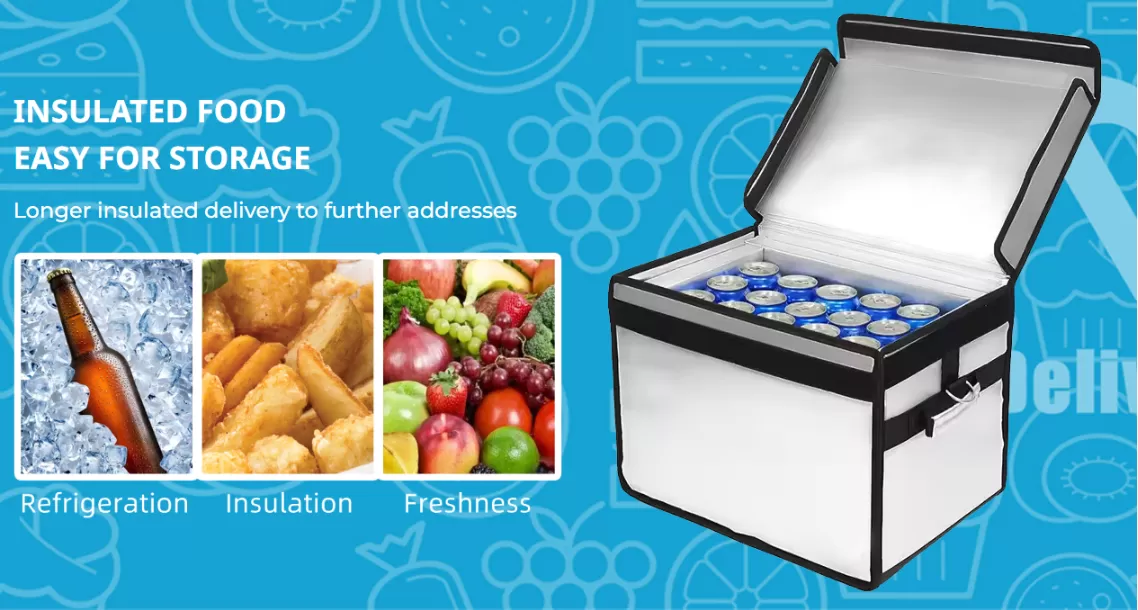
Beverage delivery operates on razor-thin margins where temperature control makes or breaks the customer experience. Industry data shows that over 35% of negative reviews on food delivery platforms stem from lukewarm coffee, melted frappes, or watered-down bubble tea. Liquid carries a much higher specific heat capacity than solid food. When a cold drink warms up, melting ice dilutes the recipe's Brix level within minutes, ruining the flavor profile.
Most commercial courier bags fail because factories treat drink transport like standard pizza or burger delivery. When liquids slosh, they generate kinetic friction, destabilize bag geometry, and leak onto insulation cores. Choosing an experienced custom beverage delivery bag manufacturer helps delivery platforms and national beverage brands avoid these costly failures. Companies like Weierken build specialized thermal testing protocols specifically to solve the physical challenges of liquid transport.
This guide breaks down the five thermal quality control (QC) stages that professional manufacturers use to engineer, validate, and mass-produce high-performance beverage delivery gear.
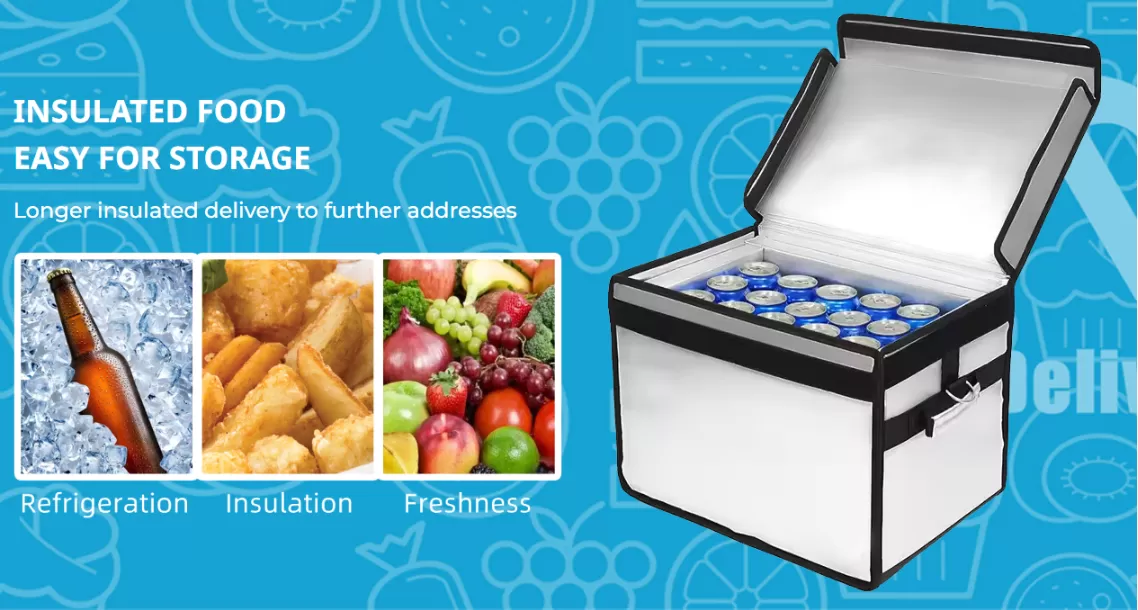
Step 1: Raw Material Incoming Thermal & Hydrostatic QC
Quality begins long before fabric hits the cutting table. A reliable factory subjects every roll of insulation and liner fabric to incoming material inspection.
Closed-Cell Foam Inspection (K-Value and R-Value Verification)
Low-cost bag makers often use cheap, recycled expanded polyethylene (EPE) foam. EPE breaks down under repeated flexing, creating micro-voids where air circulates and accelerates heat loss. A specialized factory rejects scrap foam in favor of cross-linked polyethylene (XPE) or closed-cell ethylene-vinyl acetate (EVA).
Thermal Conductivity (K-value) Testing: Lab technicians verify that raw foam maintains low thermal conductivity, typically below 0.035 W/(m·K).
Density Uniformity: The factory measures core density across multiple sheet points. Consistent density prevents localized hot spots that ruin milk-based drinks.
Cell Integrity Checks: Technicians inspect cross-sections under magnification to ensure the air-bubble matrix is 100% closed, preventing moisture absorption.
Hydrostatic Head Testing for Liquid Barriers
Drink deliveries inevitably experience spills. If spilled tea, milk, or acidic citrus juice seeps into the bag's insulation, bacterial growth and sour odors ruin the unit within days. Wet insulation also loses up to 80% of its thermal resistance.
An engineering-led custom beverage delivery bag manufacturer puts inner lining fabrics (such as food-grade TPU or heavy-duty PVC) through hydrostatic pressure testing. The fabric must withstand at least 10,000 mm of water column pressure. Technicians also test welded corners to verify that interior liners remain completely leakproof under pooling liquid.
Thermal Radiation Barrier Testing
A conductive insulator alone is not enough to protect cold drinks in direct sunlight. Bags need radiant barriers. The factory tests pure aluminum composite films for:
Infrared Reflectance: Premium reflective laminates bounce back up to 95% to 97% of radiant heat waves.
Flex Crack Resistance: Technicians fold test swatches thousands of times to confirm the aluminum foil layer will not flake away from its polymer backing during daily courier use.
Step 2: Eliminating Thermal Bridging in Structural Design QC
Thermal bridging happens when heat bypasses insulated panels through structural gaps, hardware seams, and uninsulated zip tracks. A well-built delivery bag eliminates these thermal bypass routes entirely.
Seam and Zipper Thermal Imaging (FLIR Inspections)
Standard nylon coil zippers behave like open chimneys for thermal exchange. Warm air rushes in, and cold air sinks out. A qualified manufacturing partner solves this by installing wide, insulated storm flaps or using airtight, TPU-coated water-resistant zippers.
During prototype QC, engineers inspect the closed bag with forward-looking infrared (FLIR) thermal cameras. If bright yellow or red heat lines appear along zipper teeth or corner seams, the design goes back to engineering for thicker baffle seals.
Dual-Temperature Compartment QC (Hot vs. Cold Separation)
Customers regularly order an iced latte and a piping-hot breakfast wrap in the same ticket. If placed in an undivided cavity, thermal equilibrium equalizes both items, cooling the food and melting the drink.
A competent custom beverage delivery bag manufacturer builds rigid, removable thermal divider walls. To validate separation, technicians load one chamber with hot liquid at 65°C and the adjacent chamber with cold beverages at 4°C. After 45 minutes, thermal leakage across the central divider must not shift the cold chamber by more than 1.5°C.
Modular Beverage Stabilizer System
Air space is the enemy of thermal performance. Empty room inside a half-full bag promotes air convection, speeding up temperature loss. In addition, unsecured cups tilt during motorbike turns, leading to lid pop-offs.
EPP Molded Trays: Expanded polypropylene (EPP) cup holders combine structural rigidity with high insulation properties.
Custom Die-Cut EVA Foam: Custom-cut foam collars match specific cup diameters (e.g., 12 oz, 16 oz, 24 oz), preventing convective air currents around the cup walls.
Foldable Dividers: Internal collapsible wings allow riders to shrink the active thermal cavity when transporting single-cup orders.
Step 3: Simulated Transit Stress Testing in Environmental Chambers
Spec sheets mean nothing if a bag fails during actual delivery routes. Experienced manufacturers run real-world transit simulations in environmental testing labs.
Facilities like Weierken rely on programmable climate chambers to test bags against severe regional climates before mass production begins.
Simulating Seasonal Climates
The factory places loaded delivery bags inside a controlled climate chamber with calibrated thermocouple probes submerged in test drinks.
Summer Stress Test (40°C Ambient): The test evaluates bags packed with cold beverages (starting at 4°C). The goal is to keep liquid temperatures below 8°C for at least 60 to 90 minutes.
Winter Deep-Freeze Test (-10°C Ambient): The test tracks hot tea and coffee (starting at 75°C). The bag must hold the core drink temperature above 55°C across a standard 45-minute urban transit window.
The Multi-Drop "Door-Opening" Simulation
Food delivery couriers do not leave their bags sealed during an entire shift. They open them repeatedly at multiple pickup and drop-off points.
To simulate this cycle, automated actuators or technicians open the bag lid for 30 seconds every 10 minutes over a two-hour run. Multi-channel data loggers record how fast internal temperatures spike and how quickly the bag recovers after the lid seals again. Bags with thick convective gaskets recover their thermal balance much faster than basic bags.
Step 4: Mechanical Load Coupled with Thermal QC
Insulation performance changes drastically when materials carry physical weight. Drink carriers are heavy; six 1,000 ml cups of bubble tea weigh over 6 kilograms. That weight compresses bottom panels, reducing their thickness and insulation value.
Compression Resistance and R-Value Retention
When open-cell or low-grade foam is compressed under heavy drink orders, its internal air cells collapse. Without trapped air, the material conducts heat rapidly from hot pavement or motorcycle exhaust brackets.
The engineering team runs cyclic compression testing. They load the bottom panel with heavy payloads for hours, then measure the remaining thickness. A qualified custom beverage delivery bag manufacturer reinforces high-stress load areas with high-density EVA composite boards or corrugated honeycomb polymer plates. This prevents bottom sagging and preserves the core insulation barrier.
Handle and Harness Tension Fatigue Testing
Rider safety and bag durability depend on reinforced load points. Stitches under tension can stretch, widening needle puncture holes through outer waterproof layers and letting in warm air.
Jerk Drop Testing: The factory loads the bag to 1.5 times its maximum rated beverage payload and drops it by its handles on a mechanical rig for 5,000 continuous cycles.
Seam Hermeticity Check: After tensile stress testing, technicians inspect anchor seams to verify that the internal waterproof lining has not developed pinhole air leaks.
Step 5: Custom Branding QC Without Compromising Thermal Integrity
Delivery fleets act as mobile billboards for delivery platforms and beverage brands. However, aggressive branding methods can compromise the bag's protective performance if not applied correctly.
Evaluating Thermal Print Degradation
Screen printing or heat-press sublimation transfers involve high surface temperatures. If an inexperienced factory applies hot heat-transfers directly to an assembled bag, the heat can melt or distort the internal XPE or EVA foam layer.
A knowledgeable manufacturer applies custom logos, corporate Pantone dyes, and reflective badges to the outer shell fabric *before* bonding it to the thermal insulation core. This workflow ensures that branding stays crisp while the insulating foam underneath maintains its full thickness and cellular structure.
Reflective Strips and Vehicle Mount Integrity
Courier bags face harsh outdoor conditions every day. External hardware must pass rigorous physical checks:
Reflective Sheeting Adhesion: Tested to ISO 20471 high-visibility standards to ensure night-delivery rider safety without peeling after prolonged rain exposure.
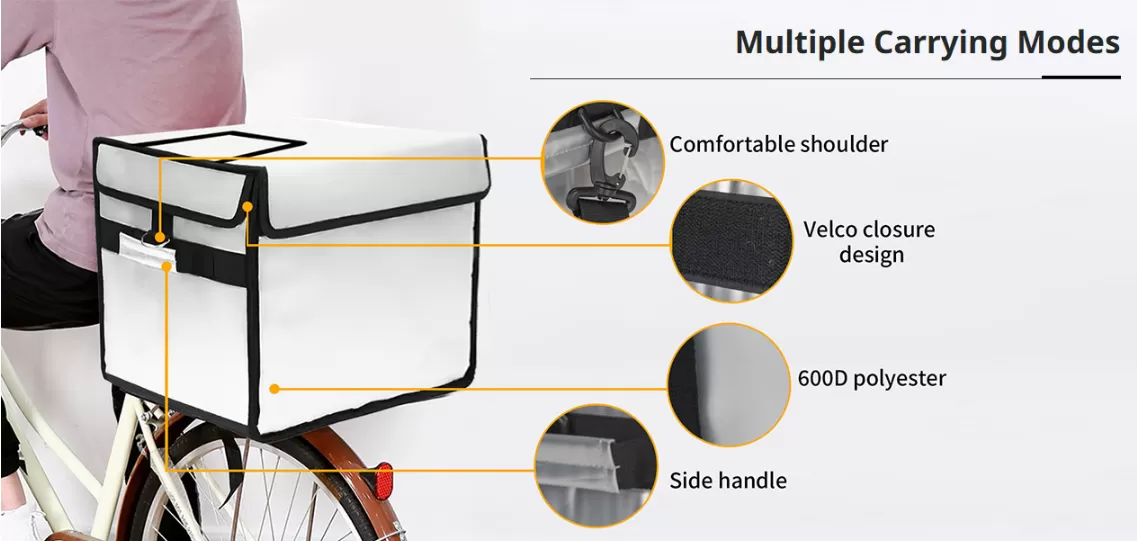
Base-Plate Tie-Down Pull Force: Anchor straps built for motorcycle luggage racks must withstand over 500 N of direct pulling force, keeping the drink carrier level on rough roads.
Frequently Asked Questions
Q1: How long can a professionally engineered beverage delivery bag keep cold drinks cold?
A1: A well-engineered bag using closed-cell XPE foam and pure aluminum radiant barriers keeps chilled drinks (starting at 4°C) below 8°C for 60 to 90 minutes in a 35°C to 40°C environment. Adding phase change material (PCM) gel packs or high-density EPP molded inserts can extend this holding time beyond 2 to 3 hours.
Q2: How do you prevent cold and hot drinks from affecting each other's temperature inside one bag?
A2: A certified custom beverage delivery bag manufacturer installs a dense, removable thermal partition. This barrier uses a multi-layer sandwich of high-density EVA foam encased in reflective foil and waterproof TPU. It creates two isolated micro-climates, allowing 65°C hot coffee and 4°C iced drinks to sit side-by-side for up to 45 minutes with less than a 1.5°C temperature transfer.
Q3: What makes drink delivery bags structurally different from standard food delivery backpacks?
A3: Drinks are heavy liquids that shift and slosh during transport. Beverage delivery bags feature reinforced composite bottom boards to stop base sagging, molded cup-stabilizer trays to prevent tipping, and 100% leakproof heat-welded liners. These components stop accidental spills from soaking into the insulation core.
Q4: Why does our delivery fleet experience sour odors in our delivery bags after just a few months?
A4: Sour smells happen when liquid spills penetrate conventional stitched seams and soak into cheap, open-cell EPE foam. Bacteria thrive in the damp foam matrix, and it becomes impossible to sanitize. Switching to high-frequency welded, seamless TPU liners stops liquids from ever touching the insulation layers, keeping the bag clean and odor-free.
Q5: What is the typical MOQ when working with a custom beverage delivery bag manufacturer?
A5: Minimum order quantities (MOQs) typically range from 500 to 1,000 units for fully custom bags requiring custom dimensions, branded exterior fabrics, and specialized molded cup trays. Simpler customizations, such as adding corporate logos to established factory models, can often start around 300 to 500 units.
Conclusion & Buyer's QC Action Plan
Every beverage order represents your brand's reputation. When a customer receives a lukewarm drink, they rarely blame the delivery courier; they blame the beverage company. Partnering with a factory that understands the science of thermal quality control protects your product quality and customer loyalty.
Before signing your next production run, ask prospective suppliers for proof of their quality standards:
[ ] Review real temperature decay curves from an environmental test chamber.
[ ] Require hydrostatic head test certificates for interior liners (minimum 10,000 mm).
[ ] Verify that dividers and cup inserts prevent thermal transfer between hot and cold items.
[ ] Check that branding methods leave the inner insulation foam undamaged.
Working with an engineering-focused partner like Weierken ensures your fleet receives beverage delivery bags designed, built, and tested for commercial performance. Eliminate temperature complaints, stop spill damage, and deliver every drink exactly as your baristas made it.
Ready to upgrade your beverage delivery equipment? Contact our technical engineering team today to review thermal decay test reports, discuss custom cup holder configurations, or request a fully engineered prototype for your fleet.