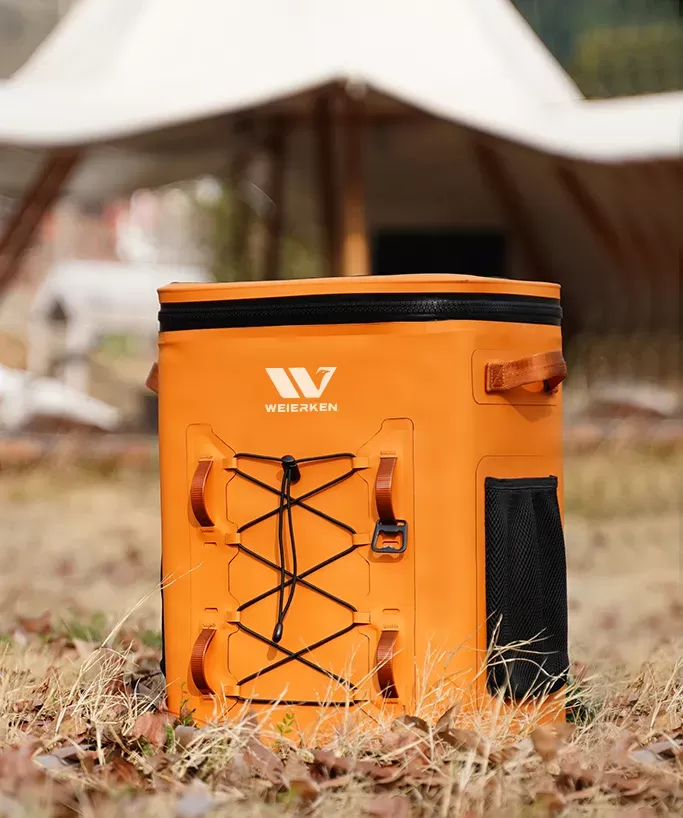

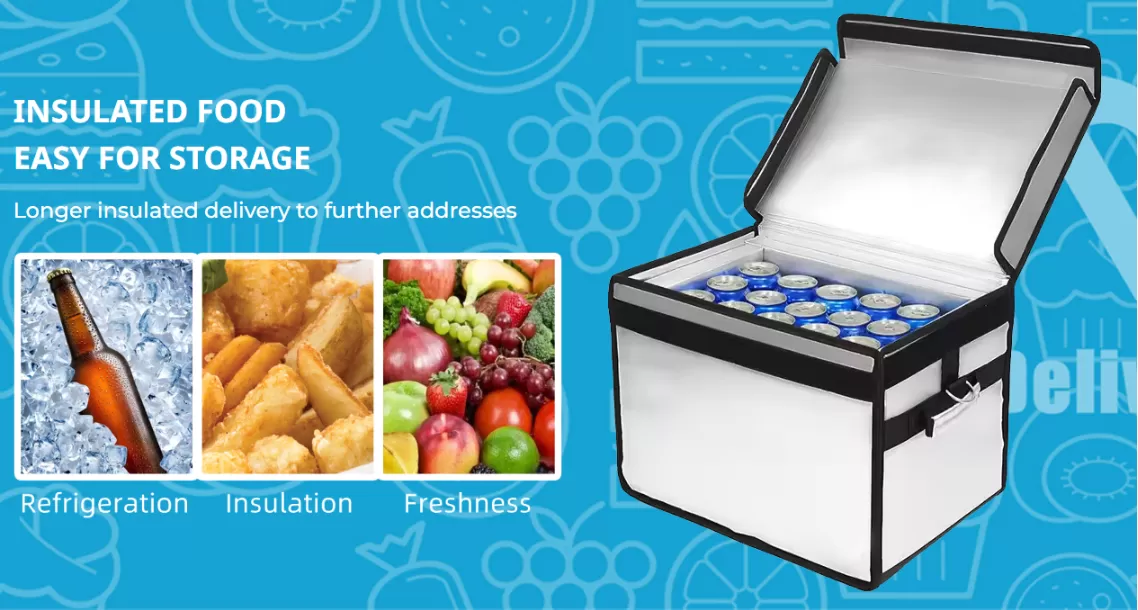
Spilled drinks cost food delivery platforms millions of dollars every year. When a paper cup ruptures or a bubble tea lid pops inside a courier's pack, the liquid does not just ruin a customer's meal. It seeps into the bag's insulation, creates a breeding ground for bacteria, and leaves a sour stench that no sanitizing spray can fully remove.
Most commercial bags on the market claim to be waterproof. Yet, fleet managers find their drivers replacing bags every few months due to wet insulation and ruined seams. At Weierken, our engineering team regularly dissects failed delivery gear to understand why standard solutions fall short in high-volume operations.
The root problem lies in the confusion between water-repellent fabric and a structurally sound, truly leakproof beverage delivery backpack. Achieving an impenetrable barrier requires specialized materials paired with seamless thermal joining technologies. Here is an engineering breakdown of the top five materials required to manufacture a leakproof beverage delivery backpack built for enterprise logistics.
Water-Repellent vs. Structurally Leakproof: The Core Difference
Many commercial buyers purchase bags advertised as "waterproof" only to see puddles dripping from the backpack's bottom seams during transit. This occurs because the procurement team purchased water-repellent fabric, not a structurally leakproof system.
Water-repellent fabric: Treats the outer textile with a chemical coating (like DWR or light PU) that sheds light rain. However, the bag is assembled using needle stitching. Every stitch creates a hole through which trapped liquid escapes.
Structurally leakproof construction: Uses completely non-porous thermoplastic substrates combined with stitchless sealing methods. Liquids stay contained inside the bladder even if an entire drink carrier tips over.
To withstand the rough handling of city couriers, an industrial leakproof beverage delivery backpack relies on the following five core materials.
1. Food-Grade TPU-Coated Fabric (The Inner Tub Standard)
Thermoplastic Polyurethane (TPU) coated nylon or polyester serves as the premier choice for zero-leak inner compartments. While traditional bags use cheap Polyvinyl Chloride (PVC) for linings, modern enterprise fleets are shifting rapidly to TPU.
TPU provides exceptional flexibility across extreme temperature ranges. Delivery couriers operating in winter conditions often find that cheap PVC liners freeze, turn brittle, and crack along fold lines. TPU retains its elasticity down to -30 degrees Celsius, eliminating stress fractures caused by opening and closing the pack.
Crucially, TPU contains no plasticizers. It complies fully with FDA and EU regulations for direct food contact. It resists animal fats, cooking oils, and acidic drink residues, preventing the inner bladder from yellowing or hardening over time.
From a manufacturing perspective, TPU is the ideal substrate for Radio Frequency (RF) and High-Frequency (HF) welding. The material melts and fuses under electromagnetic energy, creating a molecular bond that forms a one-piece watertight basin inside the leakproof beverage delivery backpack.
2. 500D to 900D Heavy-Duty PVC Tarpaulin (The Armored Outer Shell)
The exterior of a delivery backpack must survive abrasive contact with concrete, metal scooter racks, tree branches, and heavy rainfall. For the outer shell, high-density PVC tarpaulin (ranging from 500D to 900D) remains the industry benchmark.
This composite consists of a high-tenacity polyester scrim woven inside two layers of smooth PVC film. The internal mesh delivers exceptional tear resistance and tensile strength, preventing punctures from sharp drink tray corners.
Impermeable surface: Dirt, road grease, and spilled liquids cannot penetrate the tight outer surface.
Direct pressure washing: Depot operators can hose down or pressure-wash the bags between driver shifts without water seeping into the core.
Abrasion endurance: Dragging the bag across pavement or gravel will not wear through the outer layer, protecting the interior moisture barriers.
By specifying 900D tarpaulin on the base panel and 500D on the side panels, designers optimize the backpack's weight while providing maximum abrasion resistance where couriers rest the pack on rough ground.
3. Closed-Cell EVA or EPE Foam (The Non-Absorbent Thermal Core)
Insulation is where most failed backpacks secretly rot. Standard low-cost bags use open-cell polyurethane sponge. Think of open-cell foam as a bath sponge: when an iced beverage container sweats or a hot soup spills, the foam acts as a wick, drawing liters of fluid into the walls.
Once soaked, open-cell foam never fully dries. It gains dead weight, sags, loses its thermal resistance, and develops black mold within weeks. A certified leakproof beverage delivery backpack must specify closed-cell foam, typically Expanded Polyethylene (EPE) or Ethylene-Vinyl Acetate (EVA).
Closed-cell foam features microscopic bubbles that are completely sealed off from one another. Moisture cannot enter the cell structure, even when fully submerged in water. This design offers distinct operational advantages:
Zero fluid absorption: Condensation and beverage spills run down the liner surface instead of penetrating the insulation.
Structural stiffness: EVA foam provides a rigid, crush-resistant wall that keeps drink cup holders vertical during transit, preventing accidental tipping.
Consistent thermal performance: Dry insulation maintains beverage temperatures (hot or cold) up to four times longer than moisture-compromised open-cell foam.
4. Airtight and Watertight TPU Zippers (The Upper Seal)
Many delivery bags feature leakproof bottom liners, yet liquid still manages to spill out during transport. Why does this happen? When a scooter brakes aggressively or accelerates up a hill, the fluid pooled at the bottom sloshes upward and exits through standard spiral zippers.
Standard coil zippers use woven teeth wrapped around fabric tape. Even "water-resistant" zippers featuring a polyurethane face coating will leak under dynamic pressure when liquid crashes against them.
To eliminate this failure point, a high-spec leakproof beverage delivery backpack employs diving-grade, airtight TPU zippers. These specialized components feature extruded teeth vulcanized directly to an interlocking rubberized or TPU tape. When zipped shut, the opposing teeth compress the lips of the tape together, creating an airtight, hydrostatic seal.
Integrating these technical zippers keeps sloshing drinks contained inside the bag, protecting the delivery driver's back, vehicle, and electrical gear during sudden stops.
5. Food-Safe Composite Aluminum Foil with Antimicrobial PEVA
For mid-tier fleet budgets or secondary internal partitions, heat-sealable composite PEVA (Polyethylene Vinyl Acetate) laminated to reflective aluminum foil serves as an efficient alternative lining material.
PEVA contains zero chlorine or phthalates, providing a safe environment for food packaging transport. When laminated with aluminum foil, it creates a radiant heat barrier that bounces thermal energy back toward hot beverages while reflecting ambient heat away from cold drinks.
During the manufacturing stage at Weierken, this composite lining receives an antimicrobial surface treatment. The non-porous finish allows couriers to wipe away sticky sugar syrups, dairy residues, and boba pearls with a simple disinfectant wipe. Because the composite material can be thermal-welded along its seams, it prevents liquids from reaching the internal foam insulation without requiring costly secondary liners.
Advanced Assembly: Why High-Frequency Welding Beats Traditional Stitching
Selecting superior materials covers only half of the engineering equation. How those materials join together determines whether the finished unit succeeds as a genuine leakproof beverage delivery backpack.
Traditional needle-and-thread stitching punches hundreds of microscopic entry points through the fabric. Seam-sealing tape offers only a temporary fix; over time, the heat from warm food containers, combined with lactic acid from spilled milk, dissolves standard seam tape adhesives within three to six months.
High-Frequency (HF) or Radio Frequency (RF) welding solves this problem permanently:
Molecular fusion: HF welding passes electromagnetic energy through overlapping TPU or PVC sheets, exciting the molecules until the layers melt into a single, uniform sheet.
Zero perforations: No needles touch the critical containment areas of the bag liner.
Tear-resistant joins: The welded seam frequently demonstrates higher tensile strength than the surrounding raw fabric itself.
By creating a solid, tub-style inner liner via RF welding, the backpack can hold standing water indefinitely without sweating or weeping through the base.
Rigorous Quality Testing Protocols for Fleet Operations
Enterprise procurement teams cannot rely on manufacturer marketing claims alone. Before approving mass production of a custom leakproof beverage delivery backpack, commercial buyers should demand documented test results based on standardized protocols:
1. The 48-Hour Static Hydrostatic Test
Technicians fill the backpack's welded inner liner with water to a depth of 150 millimeters. The bag sits elevated on an absorbent paper substrate for 48 hours at room temperature. The liner fails if technicians detect any moisture migration, seam sweating, or weight reduction.
2. Dynamic Tilt and Vibration Simulation
Liquid behaves differently when subjected to road vibration. Filled drink containers sit inside the pack mounted to a multi-axis vibration table replicating scooter engine frequencies and potholes. Technicians tilt the rig to a 45-degree angle to verify that the airtight closures and welded seams withstand sloshing pressure without weeping.
3. ASTM G21 Antifungal Compliance
Because spilled food and warm environments accelerate bacterial growth, raw liner materials undergo fungal resistance testing under ASTM G21 standards. Specimens are placed on agar growth mediums inoculated with fungal spores. A passing grade requires zero fungal growth after a 28-day incubation cycle.
Fleet ROI: The Business Case for Upgraded Materials
Investing in higher-grade materials like TPU, closed-cell EVA, and RF-welded structures requires a higher initial capital outlay per unit compared to standard consumer-grade nylon bags. However, commercial delivery operations see immediate financial payback across several operational metrics:
Lower replacement cycles: Standard stitched bags fail every 3 to 5 months under commercial use. Welded TPU-lined bags routinely last 18 to 24 months, reducing annual gear procurement spend by more than 40%.
Reduced customer refund claims: Holding beverage holders level and protecting meals from external road moisture drives down order damage rates.
Courier retention: Drivers avoid carrying smelly, leaking bags that drip sticky liquid down their backs, boosting courier satisfaction and reducing turnover.
Frequently Asked Questions
Q1: Why does a standard stitched delivery bag leak even when labeled
"waterproof"?
A1: A bag labeled waterproof usually features a
waterproof surface coating on the fabric itself. However, sewing the panels
together punches thousands of needle holes through that coating. Under dynamic
movement, standing liquid naturally forces its way through these needle
penetrations. A true leakproof beverage delivery backpack must utilize
stitchless sealing methods like RF welding for its interior lining.
Q2: What makes TPU liners superior to traditional PVC for beverage
delivery?
A2: TPU is more durable, environmentally responsible, and
chemically stable than PVC. It contains no plasticizers, meaning it will not
leach chemicals into food delivery spaces or become brittle and crack during
cold winter runs. TPU also offers higher resistance to oils, greases, and
abrasion, resulting in a significantly longer service life.
Q3: Can these backpacks handle boiling soups and cold drinks
simultaneously without condensation build-up?
A3: Yes, provided the
backpack utilizes closed-cell insulation foam combined with an internal divider.
Closed-cell EVA foam blocks thermal transfer between compartments, keeping cold
drink condensation from softening the structure while preventing hot vapor from
escaping into adjacent food areas.
Q4: How does RF welding impact the repairability of delivery
bags?
A4: Welded seams rarely fail compared to stitched seams,
virtually eliminating the most common failure point of delivery gear. If the
outer tarpaulin suffers an accidental puncture from an external collision, depot
technicians can patch it using industrial adhesive or thermal patches without
compromising the integrity of the inner welded bladder.
Q5: How should fleet managers sanitize these backpacks to prevent
odor buildup?
A5: Thanks to the non-porous TPU lining and
closed-cell foam construction, crews can wipe down the bag interior using
standard commercial quaternary ammonium sanitizers or mild bleach solutions.
Because the liner will not absorb water, the backpack dries quickly with a clean
towel and returns to service immediately.
Q6: What is the typical lead time and MOQ for custom OEM beverage
backpacks?
A6: For commercial OEM manufacturing at Weierken, typical
minimum order quantities start at 500 units for fully customized designs. Rapid
material sampling takes approximately 7 to 10 days, while standard
container-load production runs generally finish within 30 to 45 days.
Source Commercial-Grade Delivery Gear Built for Zero Leaks
Minimizing in-transit damage requires more than standard off-the-shelf bags. Delivery operations demand rugged, scientifically selected materials engineered specifically to contain beverage spills and endure brutal urban delivery environments.
Weierken engineers and manufactures commercial-grade delivery bags, insulated transport solutions, and custom backpacks for regional restaurant platforms and global delivery fleets. Our factory utilizes heavy-duty RF welding, automated cutting, and certified food-contact materials to protect your customer relationships and lower fleet operational overhead.
Looking to eliminate beverage delivery damages across your courier network? Contact our technical sales team today to request material swatches, review lab testing data, or get an OEM manufacturing quote tailored to your exact operational specifications.