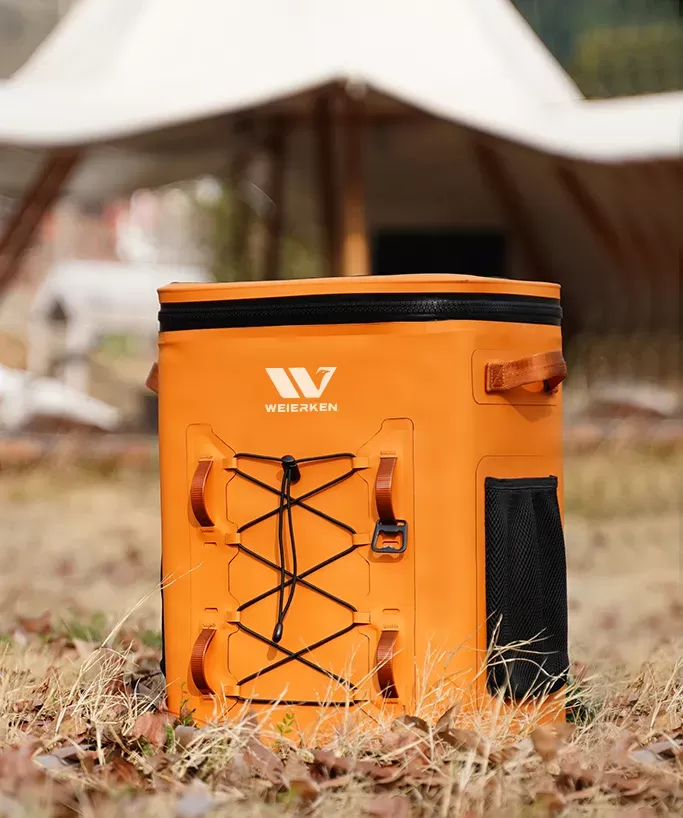

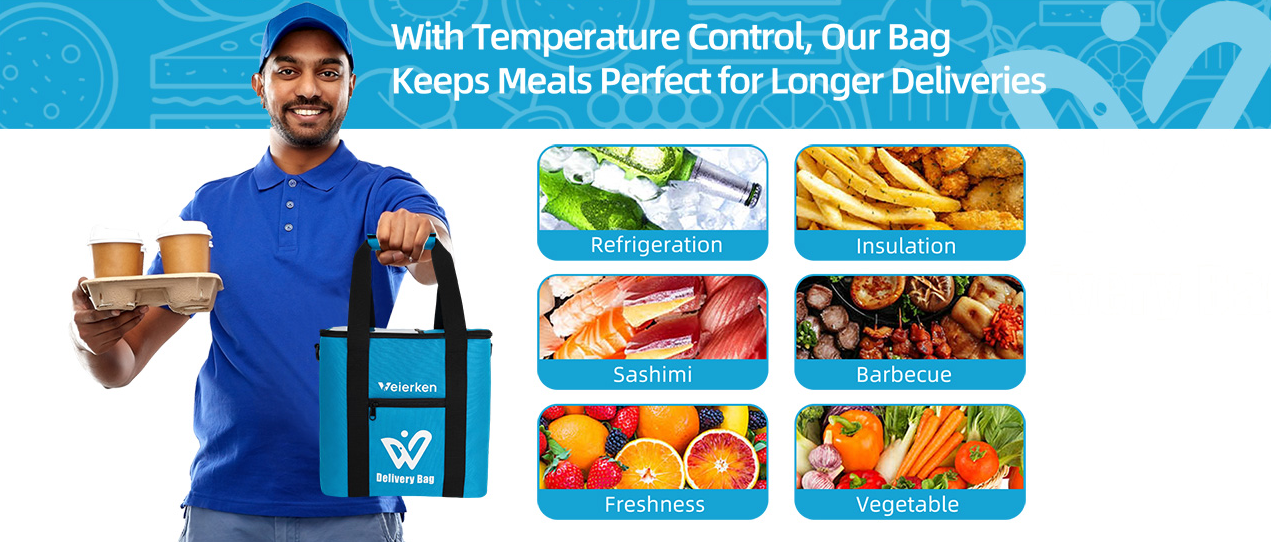
Off-the-shelf thermal totes fail the operational realities of modern ice cream brands. Standard cooler bags carry generic dimensions, fail to secure pint containers, lack mounting points for delivery motorbikes, and quickly break down under sub-zero cooling agents. If an artisan gelato or frozen dessert melts en route, your brand absorbs the financial loss and the reputational hit.
Procuring custom insulated ice cream bags requires more than finding a contract stitcher who prints logos onto stock inventory. Many vendors claim full OEM capabilities, yet act merely as assembly shops with no engineering depth. A genuine manufacturing partner develops bespoke ice cream cooler bags engineered around your delivery radius, chosen refrigerants, and transport fleet constraints.
Industrial brands like Weierken build custom thermal packaging bags from the molecular and structural level up. When sourcing high-performance carriers for frozen distribution, logistics managers should evaluate their manufacturing partners against seven critical OEM benchmarks.
1. True DFM and Structural Engineering Capabilities
A dependable OEM partner does not simply accept your sketches without critique. They apply Design for Manufacturability (DFM) principles to improve structural durability, thermal efficiency, and production yield. They inspect how your product fits, moves, and vents inside the carrier.
If you ship standard pints, half-gallons, or individual novelty tubs, your manufacturer should configure dedicated internal slots and modular cells. These compartments stop containers from tipping, spinning, or smashing during sudden stops. A true OEM provides:
Detailed 2D mechanical cut patterns showing seam placement and reinforcement points.
3D CAD models and exploded assembly renders demonstrating foam layer stacking.
Load-distribution engineering to ensure heavy dry ice blocks do not warp the bag's base plate.
If a supplier asks only for your vector logo file and an overall bag height, they are running a print-and-pack operation, not an engineering-led OEM service for custom insulated ice cream bags.
2. Sub-Zero Material Science Expertise (Solving Cold-Cracking)
Transporting ice cream requires temperatures at or below -18°C. When using dry ice to extend holding time, interior temperatures drop to -78.5°C (-109.3°F). Standard PVC films, low-grade nylon linings, and cheap hot-melt adhesives experience rapid cold embrittlement under these conditions, cracking within days of commercial use.
A reliable OEM cold chain delivery partner understands polymer chemistry at sub-zero temperatures. They maintain an inventory of specialized, cold-resistant materials specifically validated for freezing environments:
Low-Temperature TPU Composites: Thermoplastic polyurethane films engineered to remain flexible down to -40°C without micro-fissuring.
Cross-Linked Closed-Cell EVA Foam: Resists moisture absorption while maintaining its cushioning and insulating value under deep freeze conditions.
Multi-Layer Radiative Barriers: Reinforced pure aluminum foil bonded with high-tensile woven scrim to reflect radiant thermal loads.
Ask your OEM candidate to detail how their custom insulated ice cream bags isolate sub-zero refrigerants from direct polymer contact. Without dedicated cold-crack prevention, your fleet will experience liner tears within weeks.
3. Advanced RF High-Frequency Seamless Welding
Sewing machines punch thousands of needle holes through fabric, thermal insulation, and waterproof liners. For frozen items, these micro-perforations spell disaster. Chilled air escapes, warm humidity enters, and condensation accumulates inside the foam core, causing internal rot and thermal breakdown.
Top-tier factories rely on High-Frequency Radio Frequency (RF) and ultrasonic heat-welding machines. This technique applies electromagnetic energy and mechanical pressure to fuse thermoplastic linings into a continuous, seamless envelope. The outcome is an interior that is completely impervious to leaks, spills, and vapor transfer.
High-performance OEM insulated delivery bags pair seamless internal liners with industrial airtight zippers. These zippers employ vulcanized rubber tracks and interlocked polymer teeth to form a hermetic seal. This engineering turns a lightweight fabric bag into a high-efficiency portable freezer.
4. In-House Thermal Testing Labs and Empirical Data
Any sales agent can promise their carrier keeps contents frozen for four hours. A professional OEM backing custom insulated ice cream bags proves it with empirical laboratory data. Reliable factories operate controlled climate chambers to test prototypes against varying ambient conditions.
Your manufacturer should provide data-logged reports verifying performance, detailing:
Internal temperature curves plotted across 60, 120, and 240 minutes.
Comparative holding times using different cooling agents (e.g., dry ice pellets versus -21°C phase change materials).
Thermal imaging (FLIR) scans that reveal cold loss at seams, zippers, and structural folds.
Engineering teams at Weierken utilize calibrated multi-channel thermocouples inside environmental test chambers set to 35°C (95°F) ambient heat. This guarantees that your private label cold chain bags meet strict field parameters before steel dies are cut and mass production begins.
5. Rapid Prototyping with Production-Grade Materials
Prototyping speed matters, but material fidelity matters more. Some factories produce a golden sample using premium domestic materials, then quietly swap in cheaper, lower-density foam and thinner liners for bulk manufacturing runs. This bait-and-switch disrupts commercial cold chains.
A reliable manufacturer builds functional prototypes within five to seven business days, using the exact raw materials, insulation densities, and zipper classes planned for full-scale production. This gives your fleet team the ability to run real-world stress tests:
Drop and Impact Testing: Dropping loaded bags onto concrete from 1.5 meters to check seam strength.
Vibration and Shake Testing: Simulating urban motorcycle transit on cobblestones and broken asphalt.
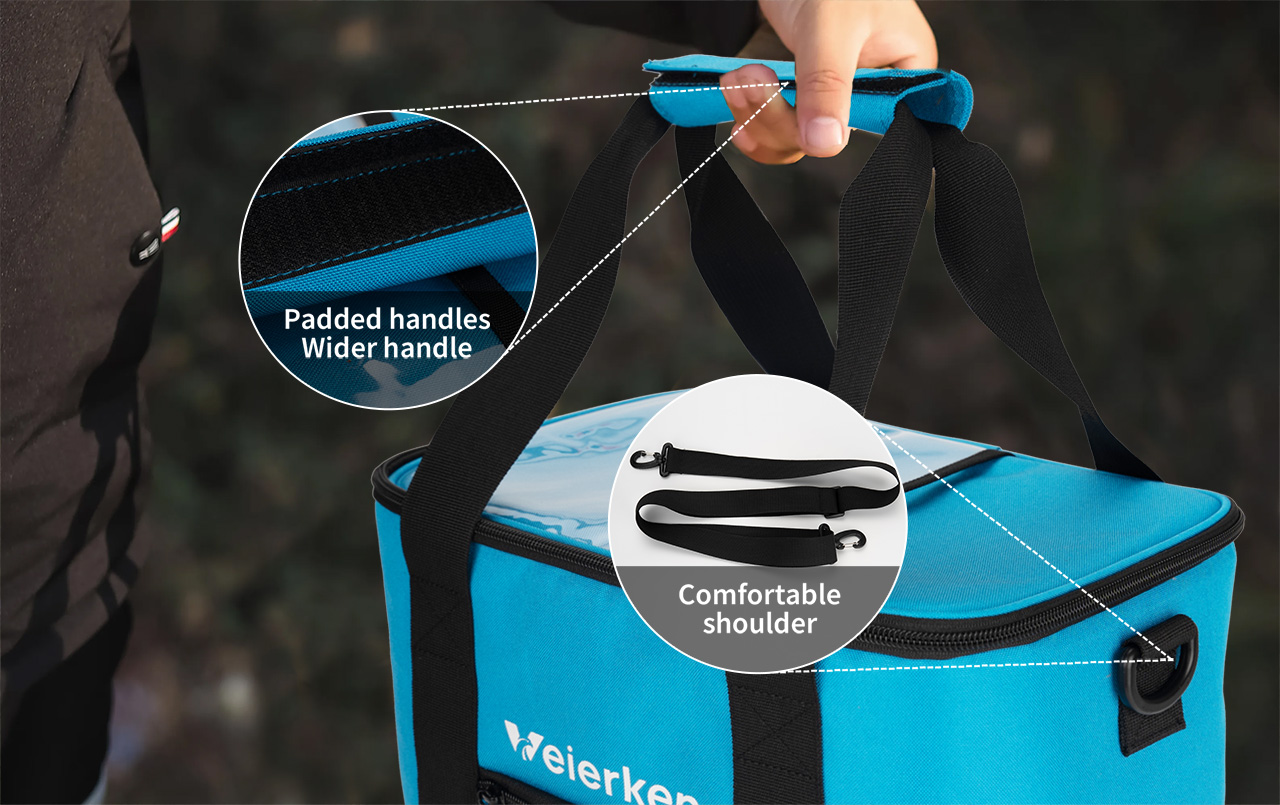
Rider Ergonomics Audits: Checking strap balance, handle padding, and ease of access during multi-drop routes.
True OEM partners welcome harsh prototype testing. They use field feedback to adjust strap anchors, foam densities, and zipper pulls before production begins.
6. Industrial-Grade Custom Branding and Abrasion Resistance
Your delivery gear operates in demanding environments. Couriers handle bags constantly, loading them into crates, riding through rainstorms, and resting them on concrete sidewalks. Standard screen printing flakes, chips, and fades within weeks under heavy UV exposure and friction.
A capable OEM service offers industrial branding methods designed for long operational life:
High-Frequency Debossing: Presses your brand directly into the TPU or tarpaulin exterior for a permanent mark that cannot scratch away.
Heavy-Duty Polyurethane Silk-Screening: Employs flexible, cross-linked inks that stretch with the fabric without cracking.
Sublimation Printing: Fuses pigments directly into technical polyester fibers for vibrant, full-panel brand graphics.
Micro-Prismatic Reflective Elements: Incorporates high-visibility safety tape compliant with ANSI/ISEA standards directly into structural seams.
Ask prospective suppliers if their printing processes pass cross-hatch adhesion tests (ASTM D3359) and rub-resistance checks. The visual presentation of your custom insulated ice cream bags should stay crisp through months of daily courier service.
7. Transparent QC Systems and Food-Grade Compliance
Reliable manufacturing demands rigorous quality control across every production stage. A quality failure in the field costs far more than fixing a defect in the factory. Professional OEMs enforce structured quality assurance procedures throughout the manufacturing run:
Incoming Quality Control (IQC): Inspects received fabric lots, foam density tolerances, and zipper tensile strength before cutting starts.
In-Process Quality Control (IPQC): Checks high-frequency weld seams, adhesive curing, and alignment on every active line.
Final Quality Control (FQC): Executes strict inspections under Acceptable Quality Limit (AQL) 2.5/4.0 standards for cosmetic, structural, and dimensional checks.
Additionally, check the manufacturer's regulatory credentials. The interior liners of your bespoke ice cream cooler bags must comply with FDA and EU LFGB food-contact safety directives. Even though ice cream is pre-packaged, leaking cartons or melting condensation can expose dairy products to liner materials. Toxic plasticizers, lead, or phthalates have no place in your food distribution chain.
Engineering Specification Matrix: OEM Material Options
To assist your procurement and packaging development team, the matrix below details the structural material configurations available when designing custom insulated ice cream bags:
| Component | Standard Option | Commercial-Grade Option | Heavy-Duty Cold-Chain Option |
|---|---|---|---|
| Outer Shell Fabric | 600D Polyester with PU coating | 500D PVC Tarpaulin (Waterproof) | 840D - 1680D TPU Film Composite (Tear-Proof) |
| Insulation Core | 8mm - 10mm Standard EPE Foam | 15mm - 20mm High-Density EVA Foam | 20mm Dual-Density Foam + Vacuum Insulation Panels (VIP) |
| Interior Liner | Stitched Aluminum Foil | Heat-Sealed PEVA Lining | RF-Welded Cold-Crack Resistant TPU Film |
| Zipper Hardware | #5 Nylon Coil Zipper | #8 Water-Resistant Reverse Coil | #10 Airtight Pressure-Sealed Marine Zipper |
| Sub-Zero Add-ons | Elastic mesh divider | Padded dry ice separator sleeve | Removable phase change material (PCM) brackets |
Frequently Asked Questions (FAQ)
Q1: What is the typical development timeline for custom insulated ice
cream bags?
A1: A standard OEM timeline takes 3 to 5 business days
for CAD modeling, 5 to 7 days for physical functional prototyping, and 25 to 35
days for mass manufacturing. Total turnaround depends on raw material
availability, such as custom-dyed outer fabrics or custom hardware tooling.
Q2: How does an OEM prevent dry ice from destroying the internal
structure of the bag?
A2: Engineers resolve this by isolating the
cooling agent. Top OEMs integrate dedicated hanging suspension pockets or
insulated buffer plates made from materials like heavy-duty polyester mesh or
TPU-coated hypalon. This stops direct contact between the -78.5°C dry ice and
the primary external seams, eliminating cold cracking.
Q3: What is the typical Minimum Order Quantity (MOQ) for fully
bespoke ice cream bags?
A3: For custom sizes using in-stock fabric
colors, the typical MOQ starts at 500 units. For fully bespoke designs that
demand custom-dyed fabrics, unique hardware molds, or integrated vacuum panels,
factories usually set an MOQ between 1,000 and 2,000 units.
Q4: Can our engineering team audit thermal test chamber runs
remotely?
A4: Yes. Capable OEMs provide video documentation
alongside continuous CSV data exports from multi-channel temperature loggers.
These reports verify internal temperatures, ambient room heat, and testing
duration.
Q5: Why is RF welding preferred over stitching for frozen food
delivery bags?
A5: Stitching punctures fabrics, creating pathways
for warm air infiltration and condensation buildup inside the foam. RF welding
uses high-frequency energy to melt thermoplastic layers together into a single
bonded surface. This provides an airtight, completely leak-proof cavity that
locks in cold temperatures.
Build Your Custom Cold Chain Fleet with Weierken
Generic cooler bags cannot protect your frozen products over long delivery routes. Protecting your ice cream quality, brand identity, and delivery margins requires engineered equipment. By focusing on DFM modeling, advanced material science, RF welding, and clear thermal data, you select a manufacturing partner that helps your delivery network succeed.
Weierken manufactures high-grade custom insulated ice cream bags, OEM insulated delivery bags, and technical cold chain systems for leading food brands around the world. Our engineering group will help you select the ideal foam density, lining materials, and mounting hardware for your delivery setup.
Need to upgrade your delivery performance? Contact our engineering team today to review your DFM specifications, explore material options, and order a production-grade prototype for your fleet.