
For ice cream brands, dairy distributors, and grocery retailers, temperature control during transit is a major challenge. Even a minor temperature fluctuation can ruin the texture of ice cream, leading to crystallization and customer complaints. When transport temperatures fail, brand reputation suffers immediate damage.
As an established ice cream thermal tote maker, weierken looks beyond simple aesthetics. Our engineering team focuses on the physics of heat transfer: conduction, convection, and radiation. We study how heat penetrates packaging during transit to design practical solutions that keep ice cream solid.
Below, we share five critical manufacturing solutions developed from our production lines. These strategies help B2B buyers protect their cold chain and ensure their frozen products arrive in stable condition.
1. Multi-Layer Composite Insulation (Material Synergy)
The Practical Challenge
A single material cannot block all three forms of heat transfer. Cheap, single-layer bags might block drafts, but they fail to stop radiant heat from the sun or conductive heat from warm surfaces. This weakness causes ice cream to soften quickly along the edges of the bag.
The Manufacturing Solution
We solve this by combining multiple material layers, each serving a specific thermal purpose. As an experienced insulated cooler bag manufacturer, weierken uses a structured multi-layer approach:
Outer Shield: We use high-density 600D Oxford fabric or tear-resistant TPU to repel external moisture and resist abrasion during transport.
Thermal Barrier: We insert a thick layer of high-density EPE (Expanded Polyethylene) or XPE foam. This layer typically ranges from 5mm to 10mm in thickness, trapping air to slow down heat conduction.
Reflective Lining: We line the interior with highly reflective aluminum foil or thickened PEVA. This layer reflects over 95% of radiant heat back outward, keeping the interior environment stable.
This combined material structure creates a reliable barrier, slowing down the heat transfer rate and keeping the internal temperature cold for longer periods.
2. Seamless High-Frequency Welding to Prevent Air Leaks
The Practical Challenge
Traditional industrial sewing machines use needles that pierce the fabric. While stitched seams are strong, they leave thousands of microscopic holes in the lining. Cold air easily escapes through these punctures, while warm, humid air seeps inside, creating a thermal bridge that melts ice cream rapidly.
The Manufacturing Solution
To address this problem, we recommend high-frequency welding (also known as seamless hot-pressing) instead of traditional stitching for the inner lining. This technique uses electromagnetic energy to melt and fuse the liner materials into a single, continuous sheet.
Airtight Chamber: Fusing the seams eliminates needle holes, creating an airtight interior that prevents convection.
Leakproof Performance: The melted seams prevent liquid water or condensation from seeping into the insulation foam, preserving the bag's thermal properties over time.
Hygiene and Cleaning: Seamless linings do not have crevices where spilled ice cream can hide, making sanitization simple for delivery staff.
By eliminating thermal bridges at the joints, this method maintains a stable internal climate, protecting delicate frozen products during transport.
3. Advanced Sealing Mechanisms: Airtight Zippers and Roll-Top Designs
The Practical Challenge
The zipper area is often the weakest point in a thermal bag. Standard nylon zippers allow cold air to leak out and warm air to enter. If a delivery driver repeatedly opens and closes the bag, the air exchange accelerates, causing ice cream to melt near the top opening.
The Manufacturing Solution
To secure this vulnerable area, we offer advanced sealing mechanisms tailored to different delivery workflows:
Airtight Waterproof Zippers: We use rubber-coated zippers similar to those found on dry diving suits. The interlocking teeth seal tightly against each other, blocking air exchange.
Roll-Top Closures: For heavy-duty last-mile ice cream delivery, we construct bags with a folding roll-top buckle system. Folding the fabric over itself multiple times seals the opening without relying on zippers, keeping warm air out.
Insulated Zipper Flaps: We install thick, foam-filled interior flaps directly behind the zipper line to block any residual heat transfer through the zipper teeth.
These sealing options help logistics companies maintain proper temperatures, even when delivery vehicles lack active refrigeration.
4. Dedicated Phase Change Material (PCM) Compartments
The Practical Challenge
Many distributors simply throw loose ice packs or dry ice blocks into a bag alongside their ice cream. This approach creates problems. Heavy ice packs can slide around and crush fragile ice cream cups. Additionally, loose ice settles at the bottom of the bag, leaving the top layers of ice cream vulnerable to rising warm air.
The Manufacturing Solution
As a specialized ice cream thermal tote maker, weierken integrates dedicated mesh pockets and elastic straps into the interior walls of our bags. These compartments hold phase change materials (PCMs) like gel packs or dry ice blocks in fixed positions.
Gravity-Driven Cooling: Placing PCM pockets at the top and along the sides of the interior utilizes natural physics. Cold air is denser and sinks, creating a continuous downward circulation that cools the entire bag evenly.
Physical Protection: Securing the cooling elements prevents them from shifting during transit, protecting paperboard tubs and plastic cups from crushing.
Efficient Space Use: Keeping ice packs flat against the walls maximizes the usable space inside the bag, allowing drivers to pack more products per trip.
Using structured compartments ensures that every item inside the tote benefits from consistent, even cooling, reducing hot spots that lead to melting.
5. Optimized Volume and Air Buffer Control
The Practical Challenge
When a thermal bag is only half-filled, the remaining space fills with air. This excess air acts as a heat reservoir. Each time the bag is opened, this warm air mixes with the cold air, speeding up the melting process. Standard, one-size-fits-all bags often fail because they leave too much empty space.
The Manufacturing Solution
We help B2B buyers choose or design thermal packaging that matches their specific product dimensions. Right-sizing the bag reduces dead air space and improves overall thermal efficiency.
Custom Sizing: We analyze your standard packaging—whether you ship single-serve cups, pint tubs, or large bulk tubs—to manufacture bags that fit your products closely.
Adjustable Velcro Dividers: We offer movable, insulated panels that allow delivery drivers to adjust the internal volume of the bag based on the size of each order.
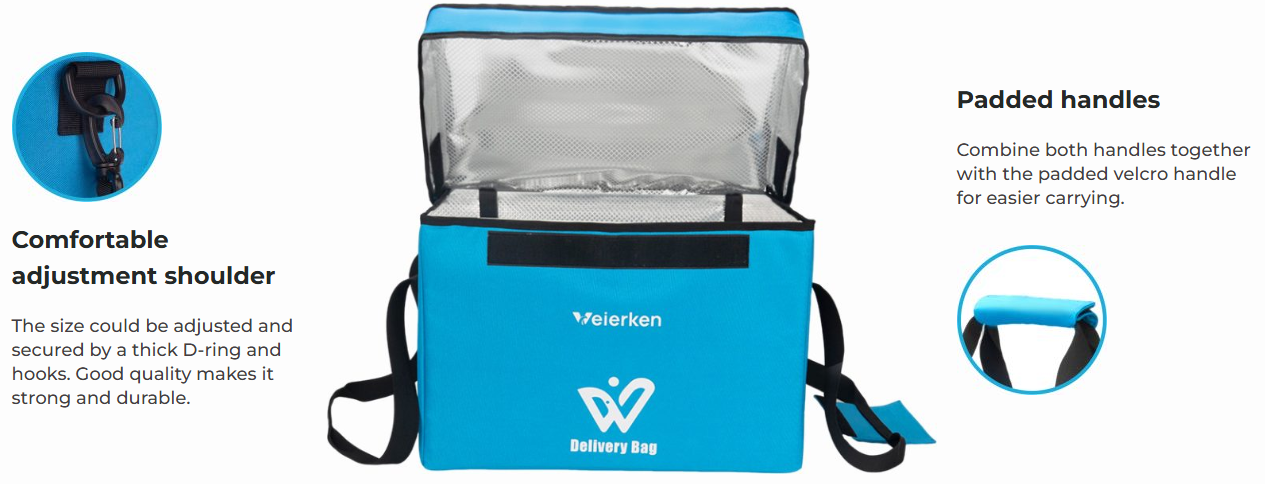
Compression Straps: Exterior compression straps allow users to tighten the bag and squeeze out excess air when carrying smaller loads, preserving the internal cold zone.
Optimizing the internal volume helps businesses cut down on the amount of dry ice needed, saving money on cold chain packaging solutions.
How Weierken Supports Your Cold Chain Business
Weierken works closely with cold chain operators and food distributors to solve transport challenges. As a dedicated insulated cooler bag manufacturer, we offer comprehensive services to meet commercial requirements:
Custom thermal bag wholesale options with tailored branding, custom sizing, and specific color schemes.
A wide range of insulation thicknesses (from 5mm to 10mm+) to meet your specific transit duration goals.
Rigorous factory testing, including temperature-retention trials, to ensure dependable performance in hot weather.
We focus on quality materials, reliable construction, and practical designs to help you deliver frozen goods in consistent condition, protecting your brand reputation with every shipment.
Frequently Asked Questions
1. How long can an ice cream thermal tote keep products frozen?
The duration depends on several factors, including the insulation thickness, the use of cooling agents (like dry ice or gel packs), and external weather conditions. Standard bags with 8mm EPE foam can keep ice cream frozen for 2 to 4 hours during typical last-mile ice cream delivery. With dry ice and high-frequency welded seams, this duration can extend to 6 hours or more.
2. Can dry ice be used safely inside these thermal totes?
Yes, but you must choose the right inner materials. Standard PVC liners can crack or turn brittle when exposed to the extreme cold of dry ice (-78.5°C). We recommend using high-quality PEVA, TPU, or aluminum foil linings designed to withstand low temperatures without cracking or peeling.
3. What is the minimum order quantity (MOQ) for custom thermal bag wholesale?
Our minimum order quantities vary depending on the level of customization, material choices, and bag dimensions. Generally, our custom wholesale orders start at 500 to 1,000 units per run. This allows us to set up specialized machinery, such as high-frequency welding equipment, efficiently.
4. Are the inner linings of your thermal bags food-safe?
Yes. We use food-grade, non-toxic materials for all interior linings, including PEVA and TPU. These materials comply with international food safety standards, contain no heavy metals, and are easy to wipe down and sanitize between deliveries.
5. Can we print our brand logo on the exterior of the bags?
Yes. We offer several printing methods, including silk-screen printing, heat transfer printing, and sublimation, depending on your logo's complexity and the exterior fabric chosen. This helps build brand visibility during home deliveries.
Ready to Improve Your Cold Chain Deliveries?
As a committed ice cream thermal tote maker, weierken understands how small temperature variations affect your product quality and business reputation. Whether you need custom-sized bags, specialized printing, or specific thermal testing data, our engineering team is here to assist you.
Contact us today to discuss your project requirements, request a quotation, or order a custom sample for your business needs.