

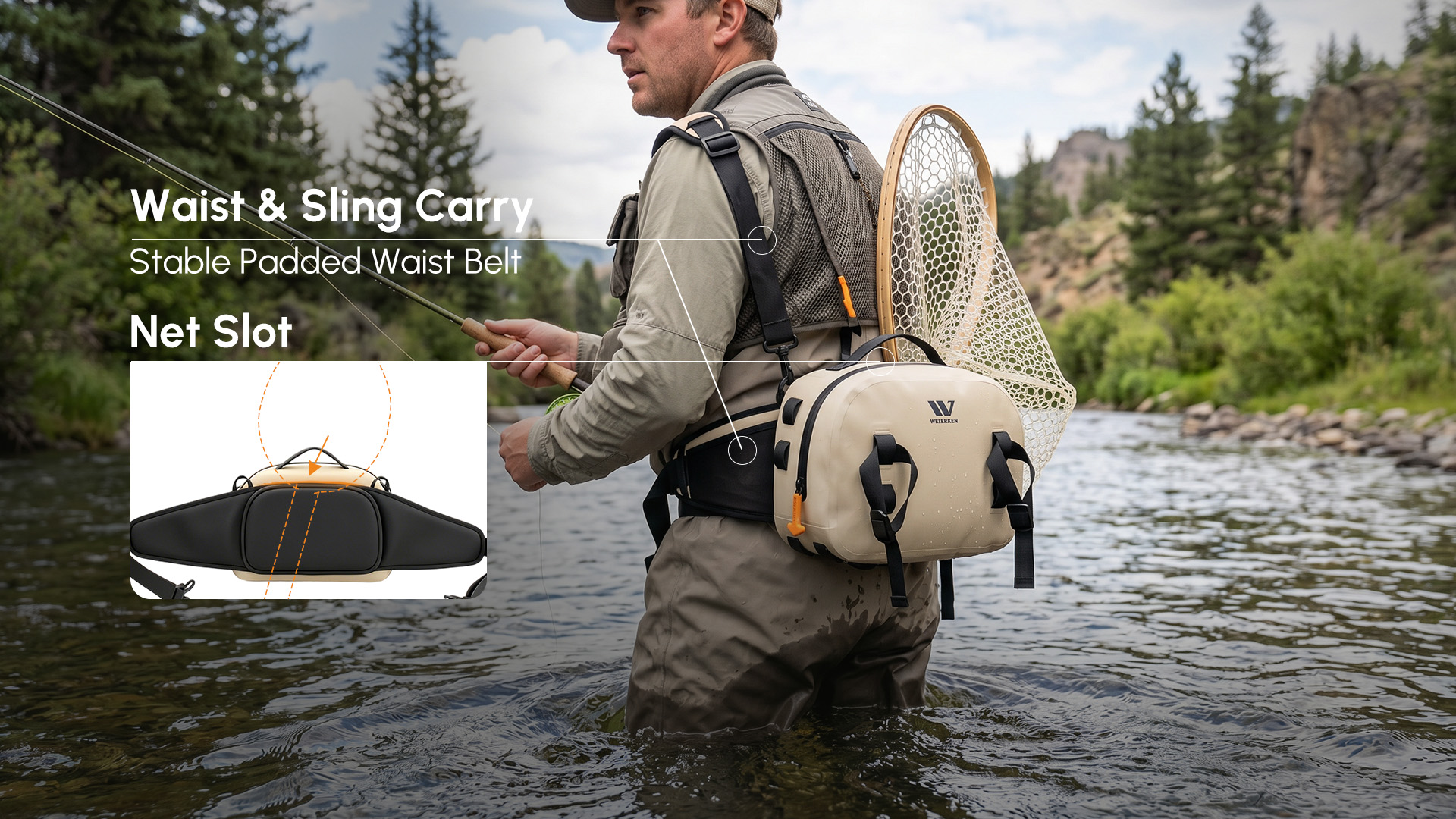
In fly fishing, gear bags are not simple storage containers. They serve as the primary protective barrier for expensive reels, fly boxes, cameras, and extra dry layers when anglers wade into deep currents and harsh weather. A bag failure miles upstream ruins expensive gear and ends the expedition early.
For outdoor brand managers and procurement leads, choosing the right partner requires a rigorous technical evaluation. You need a partner that understands heavy abrasion, airtight construction, and submersion-grade materials. As an experienced outdoor pack manufacturer with over 20 years in technical bag production, Weierken operates dual manufacturing hubs in China and Cambodia to deliver mission-critical technical packs to global brands.
Use this field-tested guide to audit any prospective fly fishing gear bag supplier for technical capability, raw material integrity, and long-term durability.
1. Raw Material Audit: Waterproofing, Abrasion, and Compliance
Material quality defines the baseline performance of any fly fishing pack. If the base textile or coating degrades, no amount of precise assembly will save the bag from leaking.
Substrate Fabrics and Advanced TPU Coatings
Modern anglers demand lightweight builds that withstand abrasive riverbeds, granite boulders, and dense brush. Traditional heavy PVC is falling out of favor because it cracks in freezing conditions and contains toxic plasticizers.
Base Fabric Specifications: Look for high-tenacity 420D to 840D Nylon 6.6 or ripstop Polyester. High denier nylon offers superior puncture resistance when loaded with tools and wading accessories.
Single vs. Double-Sided TPU: Thermoplastic Polyurethane (TPU) delivers outstanding low-temperature flexibility and hydrolysis resistance. Ensure the supplier applies single or double-sided polyether-based TPU coatings to prevent fabric delamination over years of water exposure.
Abrasion Testing: Request certified laboratory data for Taber Abrasion (ASTM D3884) and Tongue Tear Strength tests to verify real-world rock and scrub resistance.
Chemical Safety and Sustainability: Verify that the supplier sources raw goods compliant with REACH, RoHS, and OEKO-TEX standards. Top-tier factories offer certified GRS (Global Recycled Standard) rPET fabrics to help brands meet eco-conscious consumer expectations.
Watertight Closures and Saltwater Hardware
Submersible bags rely entirely on their closure mechanisms. Even minor hardware compromises lead to catastrophic leaks inside the main chamber.
Airtight Zippers: True submersible packs need toothless or pressure-sealed waterproof zippers (such as TIZIP MasterSeal or high-grade equivalent pressure zippers). Inspect the zipper garage and end-stops for molded seal integration.
Corrosion-Proof Components: Fly fishing covers both alpine freestone streams and coastal saltwater flats. All D-rings, clips, and buckles must use impact-resistant POM (Polyoxymethylene) or branded Duraflex/ITW nylon.
Salt Spray Testing: Any anodized aluminum or stainless steel components must withstand a minimum of 48 to 96 hours in continuous Salt Spray Testing (ASTM B117) without pitting or oxidation.
2. Craftsmanship and Durability: Factory Floor Evaluation
High-end technical fabrics require specialized machinery and trained operators. A qualified fly fishing gear bag supplier must demonstrate flawless execution across non-stitched assembly lines.
Radio Frequency (RF) and Ultrasonic Welding
Submersible fly fishing bags must avoid conventional needle stitching on the main dry compartment. Needle holes create thousands of entry points for pressurized water.
Seamless High-Frequency Welding: Ensure the factory uses calibrated RF (Radio Frequency) or hot-air welding machines. The thermal bond must melt the TPU layers together into a continuous, molecularly fused seam.
Weld Seam Inspection: Check weld lines for uniform width, zero glue overflow, and complete edge fusion. Weak welds create micro-channels that fail under dynamic water pressure.
Inflation and Submersion Testing: Competent manufacturers run 100% pneumatic bubble tests. They inflate the welded shell to 1.5–3 PSI and submerge it in clear inspection tanks to catch any air bubbles before shipping.
Stress-Point Reinforcement Systems
Fly bags often carry heavy loads, such as wet wading boots, extra spools, net handles, and full hydration reservoirs. Dynamic pull forces concentrate on strap attachment zones.
Hypalon and TPU Anchor Patches: Shoulder harness anchors and haul handles must sit on laser-cut Hypalon or multi-layer TPU reinforcement patches to distribute structural stress.
Box-X and Bar-Tack Stitching: Load-bearing stitching must run on dedicated exterior weld plates outside the sealed dry compartment. This maintains internal waterproofing while handling heavy pulls.
Quality Control Metrics: Partner with factories running documented ISO 9001 systems. At Weierken, our incoming, in-line, and final QC checks achieve a 99.5% first-pass yield, protecting your brand against field warranty returns.
3. Engineering, Prototyping, and Technical Solutions
A reliable fly fishing gear bag supplier should serve as a collaborative design partner rather than a passive contract stitcher. Fly fishing bags require custom 3D tooling, complex geometric welding, and specialized field ergonomics.
Rapid Prototyping Cycles: In-house sample rooms must produce functional, field-ready samples within 12 to 30 days. Fast turnaround times allow your team to run seasonal river testing without missing product launch dates.
Ergonomic Carry Systems: Look for technical capabilities in dual-density EVA foam thermoforming, breathable hydrophobic mesh back panels, and contour-cut shoulder straps that allow free arm movement during double-haul casting.
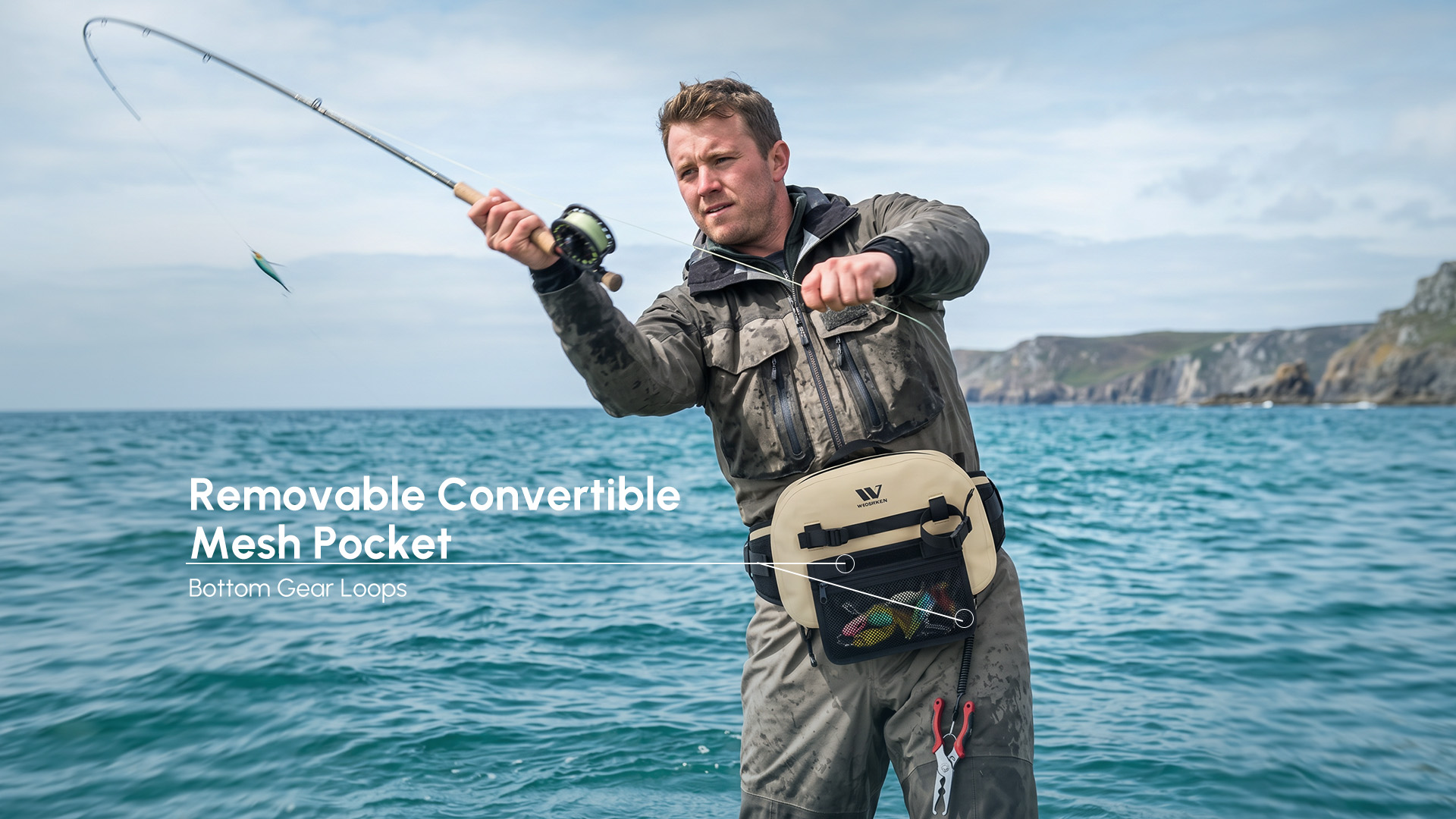
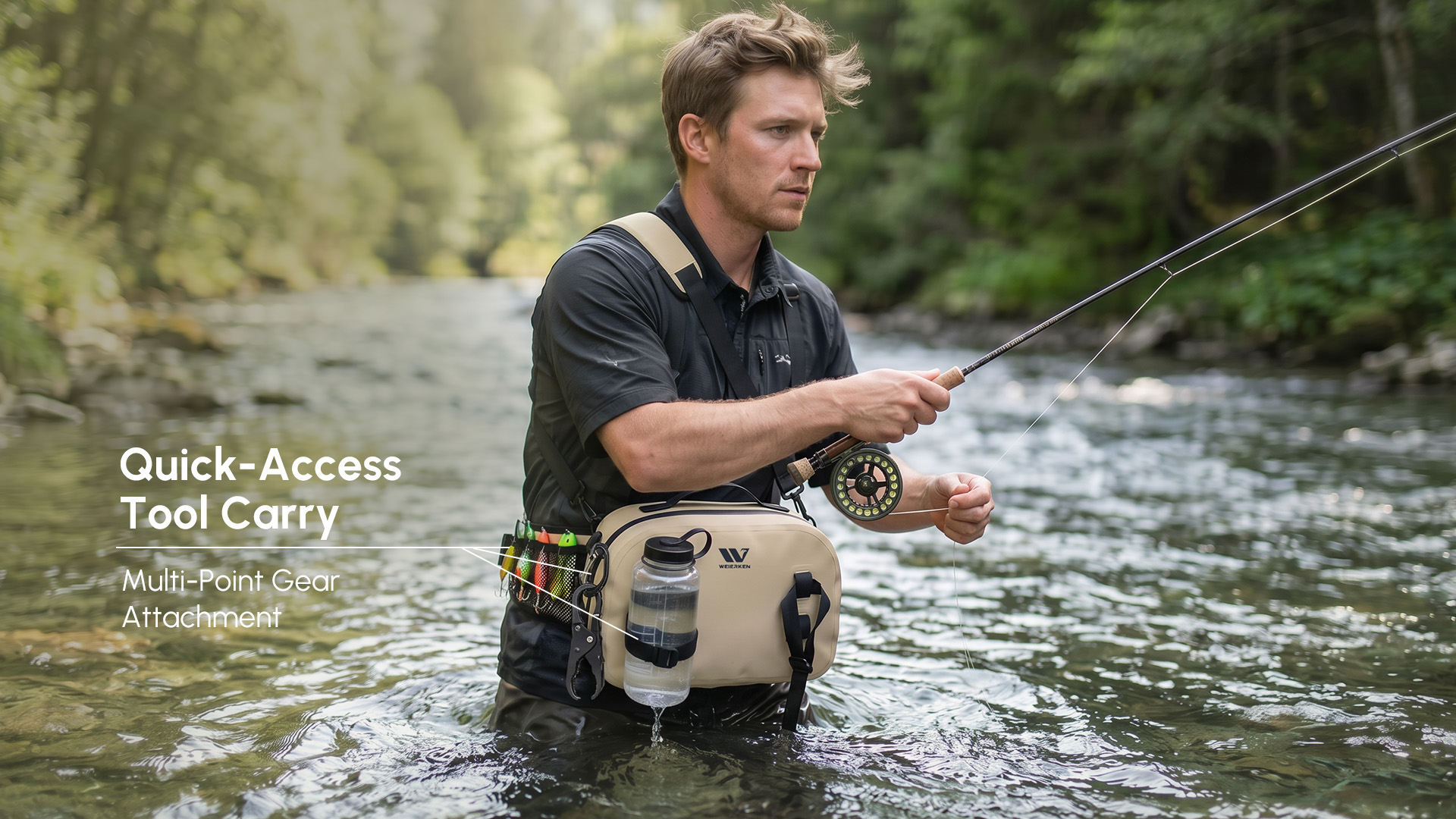
Integrated Tool Storage Engineering: The engineering team should know how to integrate exterior tippet spool holders, magnetic fly patch docks, landing net sleeves, and molded rod tube lashings directly into the pack structure.
4. Supply Chain Security and Global Delivery Capabilities
Geopolitical shifts, fluctuating shipping costs, and changing tariffs require agile supply chain strategies. Brand margins can disappear quickly if you rely on a single-region production facility.
Dual-Hub Manufacturing: China + Cambodia
Working with a multi-facility manufacturing group provides flexibility and direct financial advantages:
Tariff Optimization: Sourcing through a Cambodian facility can provide significant duty savings for imports entering North American and European markets under specific trade preference programs.
Production Scalability: Our high-precision sample creation and technical fabric development take place alongside advanced assembly lines in China, with seamless volume scaling available at our Cambodia facility.
Risk Mitigation: Dual-facility production shields your brand against regional labor shortages, power disruptions, and localized port bottlenecks.
End-to-End International Logistics (DDP Services)
Evaluate whether your supplier offers full Delivered Duty Paid (DDP) logistics management. DDP shipping transfers the burden of export clearance, ocean freight booking, customs brokerage, and harbor drayage to the manufacturer. Finished packs arrive straight at your distribution warehouse with zero paperwork friction.
Social Compliance and Ethical Operations
Outdoor consumers care deeply about ethical manufacturing practices. Verify that your manufacturing partner holds up-to-date audits from globally recognized social compliance bodies, such as BSCI, SMETA/SEDEX, or ISO 14001. Ethical manufacturing protects your brand reputation and ensures fair labor standards across your supply network.
Frequently Asked Questions (FAQ)
Q1: What is the main difference between TPU and PVC for fly fishing gear bags?
A1: TPU (Thermoplastic Polyurethane) provides better tear strength, remains flexible in sub-zero alpine conditions, and does not crack over time. It is also more environmentally friendly and recyclable. PVC is heavier, releases toxic chlorine compounds during manufacturing, and degrades quickly under prolonged UV exposure.
Q2: How do you verify if a fly fishing bag is truly submersible?
A2: A submersible pack holds an IPX7 or IPX8 rating. To test this, the bag is fully zipped and submerged under 1 meter of water for 30 minutes. A qualified fly fishing gear bag supplier validates this on the factory floor using positive-pressure air inflation and water immersion tanks to verify zero leakage along seams and zipper tracks.
Q3: What are typical Minimum Order Quantities (MOQs) for custom technical waterproof packs?
A3: Technical welded bags typically require an MOQ between 500 and 1,000 units per colorway. This minimum is driven by custom fabric dyeing runs, specific TPU extrusion thicknesses, and high-frequency tooling setups for specialized welding molds.
Q4: How long does the sample development process take for custom designs?
A4: For technical waterproof packs requiring custom welding molds, pattern engineering, and waterproof zipper sourcing, sample production typically takes between 12 and 30 days depending on the structural complexity of the design.
Q5: How does a dual-hub manufacturing strategy lower supply chain risk?
A5: Splitting or transitioning orders between facilities in China and Cambodia helps outdoor brands reduce customs duty expenses, maintain steady production during peak seasonal shifts, and avoid logistical delays from regional shipping bottlenecks.
Partner with an Experienced Technical Bag Manufacturer
Sourcing high-performance waterproof packs requires an experienced manufacturing partner. From high-frequency weld integrity and airtight closures to duty-advantaged global logistics, every step in the supply chain directly affects your product performance and bottom line.
Weierken delivers 20 years of technical outdoor gear manufacturing expertise, a proven 99.5% first-pass quality rate, and the supply chain flexibility of dual facilities in China and Cambodia. Our engineering team helps emerging and global outdoor brands build durable, submersible wading packs, hip packs, and roll-top dry bags.
Contact our technical engineering team today to review your tech packs, discuss sample development, or request a detailed factory quote for your upcoming product line.