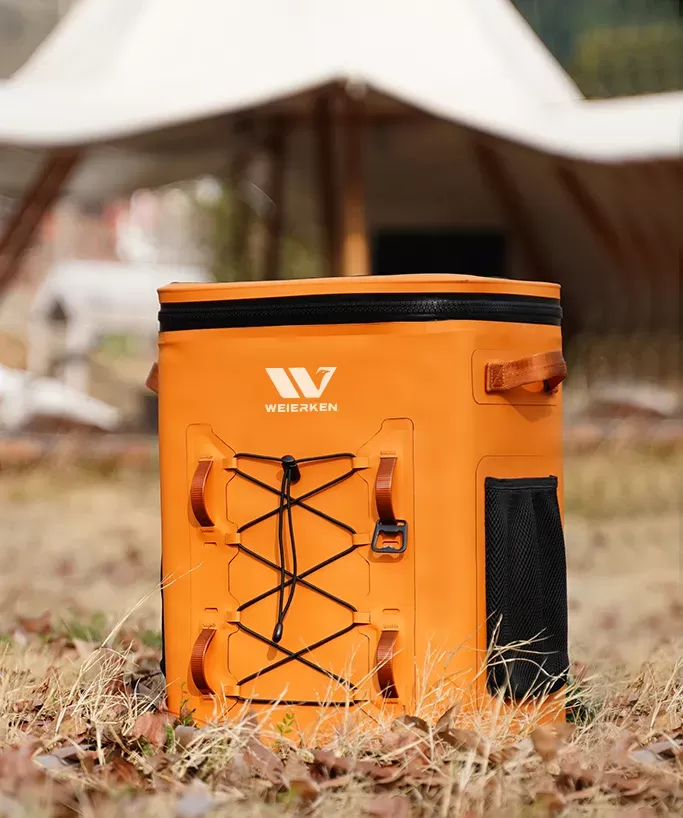

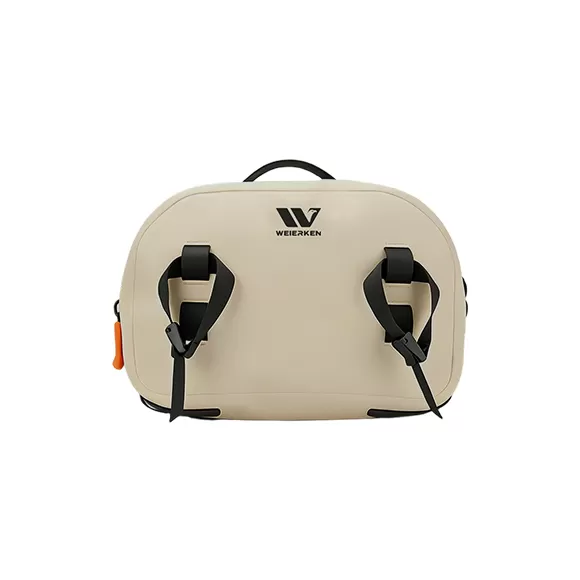
Fly fishing and wading gear markets continue to expand across North America, Europe, and Australasia. Modern anglers demand hands-free mobility, immediate tool access, and dependable gear protection in heavy currents and downpours. As a result, compact fishing chest packs have become essential equipment for outdoor brands.
For brand managers, procurement directors, and gear startups, building a competitive line requires more than slapping a logo on a generic bag. Sourcing private label fishing chest packs involves precise technical fabrics, high-frequency welding, balanced ergonomic harnesses, and resilient international supply chains.
Poor seam sealing, failing zippers, and unexpected import tariffs can quickly erode your brand reputation and profit margins. This guide details everything you need to assess materials, select manufacturing paths, navigate tariff strategies, and vet factory partners like Weierken to build a market-winning technical tackle program.
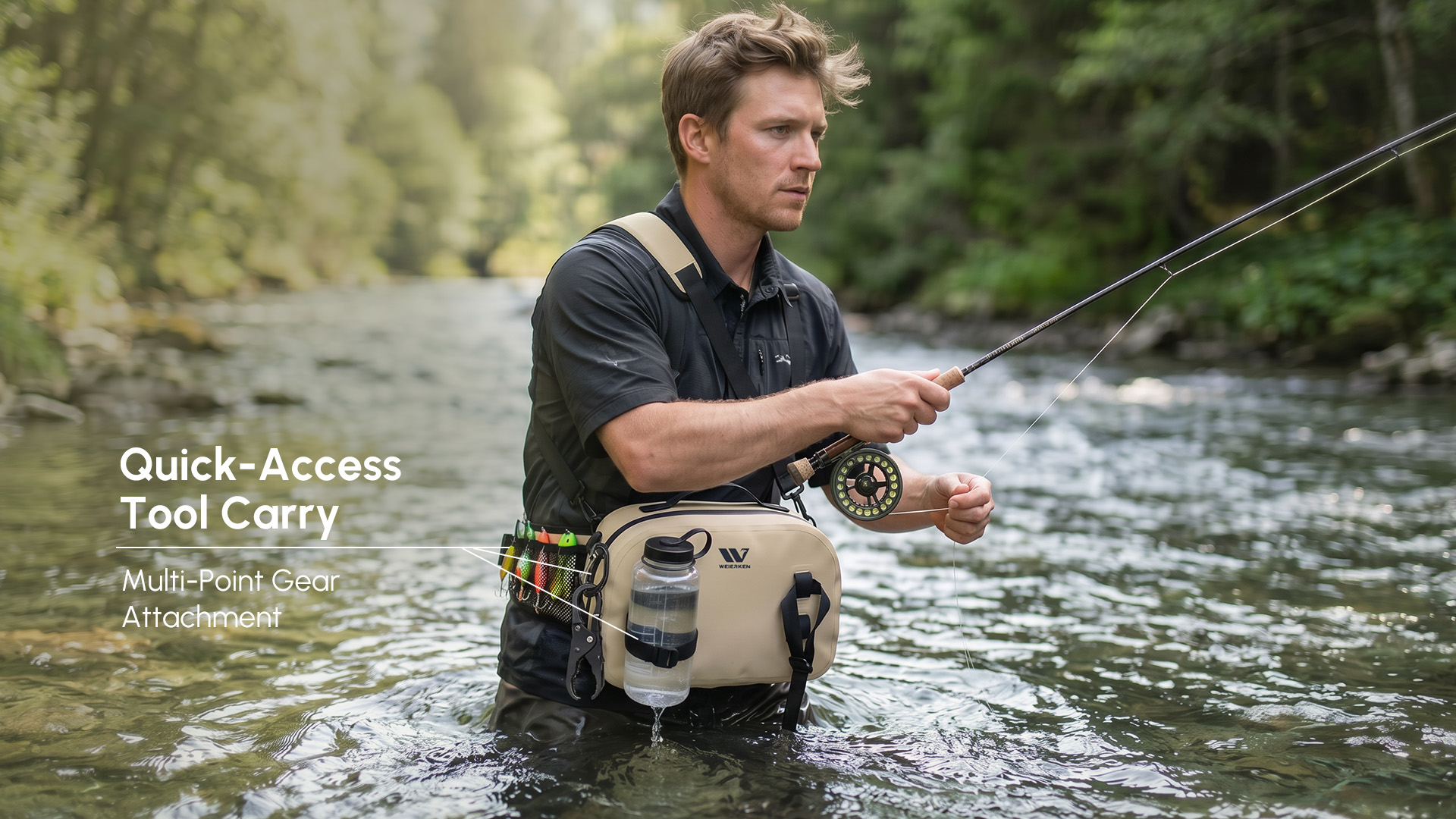
1. Key Technical Specs of Premium Fishing Chest Packs
Technical fly fishing gear operates in demanding environments. Wading anglers routinely stand in waist-deep water where a single slip can submerge non-waterproof gear. When designing your product line, focus on these critical build specifications.
Advanced Waterproofing and Construction Methods
Water-resistant fabric is no longer enough for serious wading packs. Buyers expect true submersible or high-exposure performance based on exact usage tiers:
TPU-Laminated Nylon: Use 420D to 840D high-tenacity nylon coated on both sides with Thermoplastic Polyurethane (TPU). This material resists punctures, tears, and severe abrasion from rocks and brush.
High-Frequency (RF) Welding: Traditional needle-and-thread stitching creates microscopic holes that leak under water pressure. High-frequency welding fuses TPU panels at the molecular level, creating airtight and watertight seams.
Submersible Airtight Zippers: For true IPX7 ratings, integrate pressure-tested toothless or heavy-duty sealed tooth zippers that keep contents dry during complete submersion.
Ergonomic Harness and Load Distribution
A full fishing chest pack often carries fly boxes, lead weights, tippet spools, and water bottles. Proper weight distribution prevents angler fatigue during long days on the river:
Molded Back Panels: Breathable, 3D closed-cell EVA foam panels promote airflow while preventing water absorption.
4-Point Adjustable Harness: Padded neck and shoulder straps with multi-point adjustments ensure the pack stays centered without sagging or chafing against wading jackets.
Modular Docking Systems: Chest packs should integrate directly with larger fishing backpacks or wading vests via quick-release duraflex buckles.
Functional Rigging and Storage Features
Anglers judge chest packs by how efficiently they can tie knots, change flies, and access tools with one hand:
Drop-Down Workstation: A structured, fold-down front pocket with a replaceable high-density EVA fly patch creates a stable platform for fly changes.
Integrated Tool Ports: Laser-cut hypalon docking stations and magnetic tool keepers securely hold forceps, nippers, and zingers.
Dedicated Tippet Tenders: Exterior drop-out tippet spool holders allow rapid leader changes without opening main compartments.
Corrosion-Resistant Hardware: Saltwater-rated nylon clips, anodized aluminum D-rings, and heavy-duty hypalon pull tabs withstand corrosive coastal environments.
Sustainable Materials and Eco-Certifications
Modern outdoor consumers favor environmentally responsible brands. Leading manufacturers can now source GRS-certified (Global Recycled Standard) recycled nylon (RPET) and Bluesign-approved TPU coatings. These materials match the tensile strength of virgin polymers while minimizing toxic emissions during production.
2. OEM vs. ODM: Choosing the Right Customization Route
Selecting between OEM (Original Equipment Manufacturing) and ODM (Original Design Manufacturing) defines your budget, development timeline, and market differentiation.
ODM: Fast-Track White Labeling
If you want to enter the market quickly or test a new seasonal category, ODM is the most cost-effective path:
Utilize the factory’s pre-tested patterns, tooling molds, and structural designs.
Customize brand visuals using silicone molded badges, laser-engraved logos, custom colorways, and bespoke zipper pullers.
Significantly lower sample development costs and faster production lead times (typically 30–45 days after sample approval).
OEM: Full Custom Development
For established brands requiring proprietary features, specialized dimensions, or unique harness systems, OEM provides complete control:
Build the pack from your own Tech Pack, 3D CAD models, or physical prototypes.
Develop custom TPU welding molds and proprietary tooling for external pockets.
Total ownership over intellectual property, ensuring your pack design remains exclusive to your brand.
The Prototyping and Testing Sequence
A reliable custom fishing chest pack manufacturer follows a rigid prototyping cycle before starting mass production:
Concept Review & DFM: Design for Manufacturability analysis to identify leak risks or assembly bottlenecks.
First Article Sample (T1): Validating dimensions, harness balance, and pocket layout.
Water Immersion Testing: Pressure testing welded chambers to verify airtight and watertight structural integrity.
Pull-Force Testing: Verifying that all D-rings, grab handles, and buckle anchor points withstand a minimum of 25–30 kg of tensile load.
3. Supply Chain Strategy: Beating Tariffs & Ensuring Capacity
Geopolitical shifts and changing trade policies mean that factory location directly impacts your final landed cost. A smart sourcing strategy relies on supply chain diversification.
The China + Cambodia Dual-Manufacturing Model
Relying on a single manufacturing origin can expose your brand to high tariffs and regional shutdowns. Working with a manufacturing partner like Weierken, which maintains manufacturing bases across both China and Cambodia, provides major commercial advantages:
Tariff Mitigation: Finished goods exported from Cambodia to the United States or the European Union often benefit from lower duty rates or Generalized System of Preferences (GSP) duty exemptions, significantly cutting import taxes compared to direct shipments from China.
Raw Material Efficiency: China remains the premier global hub for technical TPU fabrics, waterproof zippers, and custom hardware. Weierken leverages Chinese material supply chains for R&D and rapid prototyping, then executes mass production runs in Cambodia to maximize cost savings.
Supply Continuity: Dual facilities allow you to balance production lines across regions, protecting your inventory pipeline against unexpected local disruptions.
Production Scale and Delivery Reliability
Seasonal fishing cycles demand strict delivery discipline. If your inventory misses the spring fishing opener, your retail sales will suffer. Ensure your manufacturing partner operates sufficient floor space (over 50,000+ sqm) and maintains a steady workforce of skilled heat-welding technicians to handle peak seasonal orders without production delays.
4. How to Audit a Custom Fishing Chest Pack Manufacturer
High-end waterproof packs require specialized production techniques that standard backpack factories cannot execute. Use this checklist to audit prospective factory partners.
1. Essential Factory Certifications
Verify that the factory meets international labor and quality standards through third-party audits:
ISO 9001: Proves the presence of a standardized Quality Management System across all production lines.
BSCI / Sedex (SMETA): Verifies ethical labor standards, fair wages, workplace safety, and environmental compliance.
Bluesign / OEKO-TEX: Ensures chemical compliance and safe textile processing across all raw materials.
2. Dedicated High-Frequency Machinery
Inspect the factory's technical equipment. Quality waterproof bag production requires specialized machinery, including:
Programmable high-frequency welding machines with precision temperature controls.
Hot-air seam taping machines for hybrid sewn-and-taped compartments.
Hydrostatic pressure test chambers to test batch air retention.
Laser-cutting tables to achieve smooth, clean edges on TPU and hypalon components.
3. Stringent Quality Control (AQL 2.5 Standards)
Ensure the manufacturer conducts thorough multi-stage inspections rather than relying solely on end-of-line spot checks:
IQC (Incoming Quality Control): Hydrostatic head testing and tensile strength testing on raw TPU fabric rolls before cutting.
IPQC (In-Process Quality Control): Visual and dimensional checks at every heat-welding station.
100% Leak Testing: Fully inflating submersible pockets and submerging them in testing tanks to identify pinhole leaks before packaging.
FQC (Final Quality Control): AQL 2.5 general inspection covering stitching density, hardware functionality, cleanliness, and barcode accuracy.
5. Why Partner with Weierken for Your Fishing Pack Line
Finding a dependable supplier for private label fly fishing gear requires a balance of technical expertise, large-scale capacity, and trade-friendly logistics. Weierken delivers these capabilities across every stage of the manufacturing process.
20 Years of Technical Heritage: Founded in 2006, Weierken has spent two decades specializing in high-performance waterproof bags, outdoor technical luggage, and specialized fishing gear.
Massive Dual-Hub Capacity: With three self-owned manufacturing bases across China and Cambodia covering more than 80,000 square meters and staffed by over 3,000 skilled workers, we handle high-volume commercial production runs smoothly.
Global Brand Trust: Weierken has served more than 2,000 global outdoor brands, direct-to-consumer labels, and commercial retailers, providing comprehensive end-to-end OEM and ODM support.
Design Philosophy: Our engineering team designs around four core pillars: Innovation, Durability, Clean Aesthetics, and Sustainability. We help you refine your product for real-world angling performance while optimizing production efficiency.
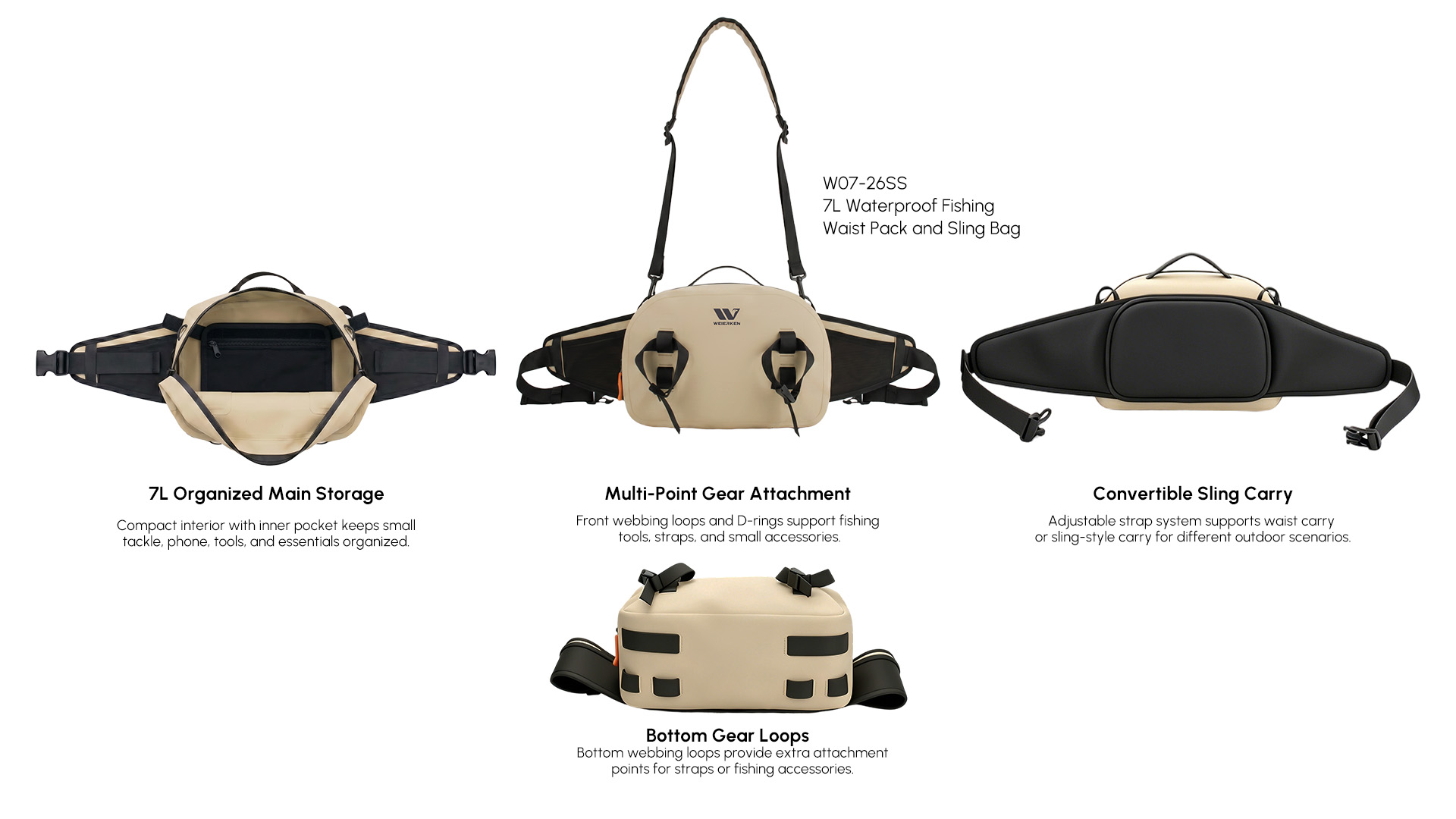
Frequently Asked Questions (FAQ)
Q1: What is the typical MOQ for custom private label fishing chest packs?
A1: For full custom OEM projects requiring dedicated fabric dye lots or custom welding molds, Minimum Order Quantities (MOQs) generally start at 500 to 1,000 units per style or colorway. For ODM designs utilizing existing tooling and in-stock technical TPU materials, MOQs can start as low as 300 units.
Q2: What is the real difference between a water-resistant and a 100% submersible chest pack?
A2: Water-resistant chest packs use traditional sewn seams treated with DWR (Durable Water Repellent) coatings and splash-proof reverse-coil zippers. They protect gear in light rain, but water will penetrate the seams and zipper teeth if dropped in the river. Submersible chest packs feature seamless high-frequency welded TPU construction and airtight, pressure-sealed zippers that keep gear dry even when held underwater.
Q3: How does manufacturing in Cambodia reduce import costs for US and European buyers?
A3: Sourcing from Cambodia allows buyers to avoid high Section 301 tariffs applied to Chinese-origin goods entering the United States. Furthermore, Cambodia benefits from trade preferences in several key international markets, lowering overall landed duty rates compared to direct shipments from other Asian manufacturing hubs.
Q4: How long does the sampling and mass production process take?
A4: Developing a prototype sample for an ODM chest pack takes 7–10 days. Complex OEM designs requiring custom tooling and laser-cut patterns take 14–21 days. Once samples and Tech Packs are approved, mass production runs take between 45 and 60 days, depending on order volume and material lead times.
Q5: Can you integrate recycled fabrics into our private label fishing chest packs?
A5: Yes. Weierken regularly works with GRS-certified recycled nylon, RPET polyester, and non-toxic TPU films. We can supply complete transaction certificates (TC) to verify the sustainability credentials of your finished packs for retail compliance and marketing support.
Q6: How do you test the waterproof integrity of welded chest packs before shipment?
A6: Every production batch undergoes strict quality control testing. Main airtight compartments are inflated with positive air pressure and immersed in water tanks to check for escaping micro-bubbles. We also perform continuous 24-hour weight-bearing inflation tests and cyclical zipper pull tests to guarantee zero seam or hardware failures.
Build Your Custom Fishing Gear Line Today
Launching a reliable line of private label fishing chest packs requires the right balance of technical fabric selection, precision welded construction, ergonomic load-bearing design, and tariff-smart manufacturing. Partnering with an experienced manufacturer protects your investment and ensures your gear delivers dependable performance on the river.
Whether you need to adapt an existing ODM platform or build a ground-up technical wading pack from your own technical drawings, Weierken's engineering teams in China and Cambodia are ready to bring your concept to market.
Ready to start your project? Contact the Weierken team today to request a quote, review material swatches, or schedule a design consultation with our technical bag engineers.