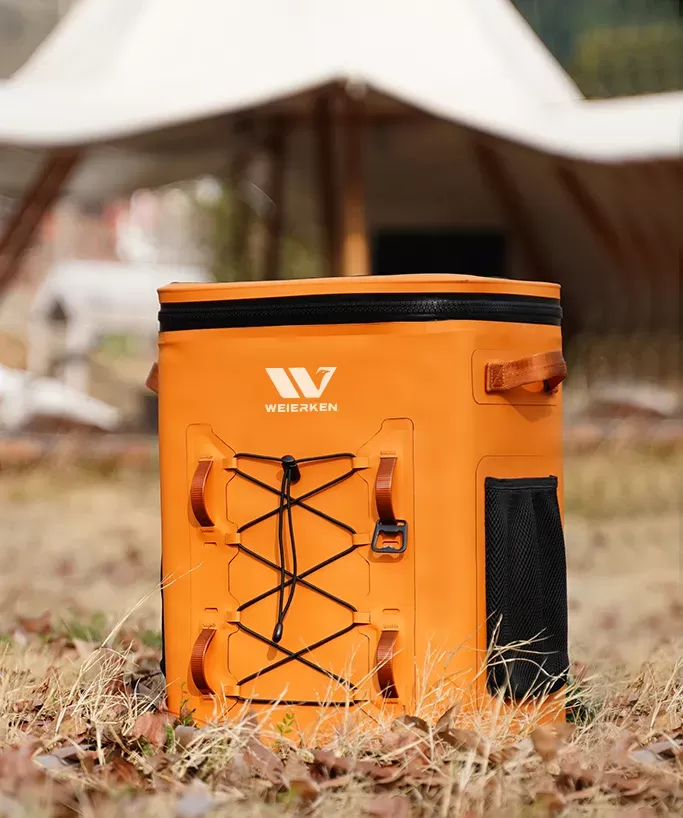

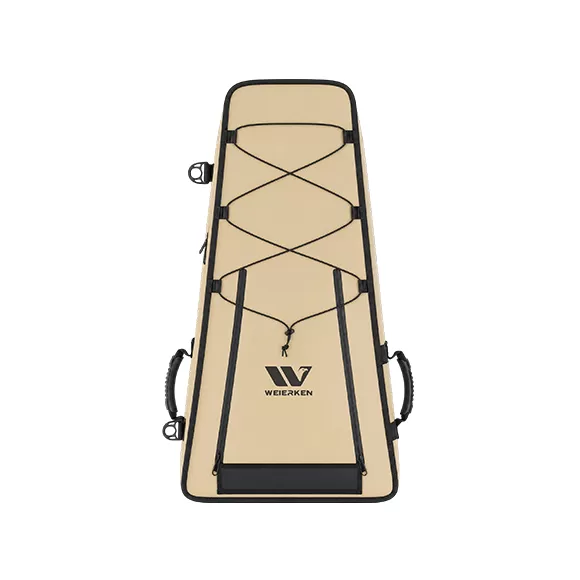
Marine boat fishing puts outdoor gear through brutal tests. Open water exposes equipment to corrosive saltwater spray, pounding waves, intense UV rays, and heavy tackle loads. Standard tackle bags made for freshwater banks degrade fast in these harsh offshore conditions.
For fishing brands, distributors, and tackle companies, choosing an experienced boat fishing gear bag manufacturer is critical. A specialized factory understands marine engineering, material science, and waterproof construction. Whether you are expanding an existing product line or developing a custom private label collection with specialists like Weierken, this guide explains what to look for when sourcing high-performance marine bags.
Request a Custom Quote & Sample Development
What Makes Boat Fishing Gear Bags Unique?
A boat tackle bag is not just a standard backpack with extra pockets. It serves as a protective vault for expensive reels, lures, electronics, and terminal tackle on wet decks.
Saltwater Corrosion & Waterproofing
Salt crystals act like sandpaper on fabrics and create rapid corrosion on metals. When ocean spray hits a boat deck, moisture creeps into every standard stitched seam through needle punctures.
Professional marine bags rely on tested Ingress Protection (IP) ratings to protect gear:
IPX6: Protects against high-pressure water jets and heavy ocean spray.
IPX7: Submersible up to 1 meter in water for 30 minutes without leaking.
IPX8: Continuous submersion under specified pressure.
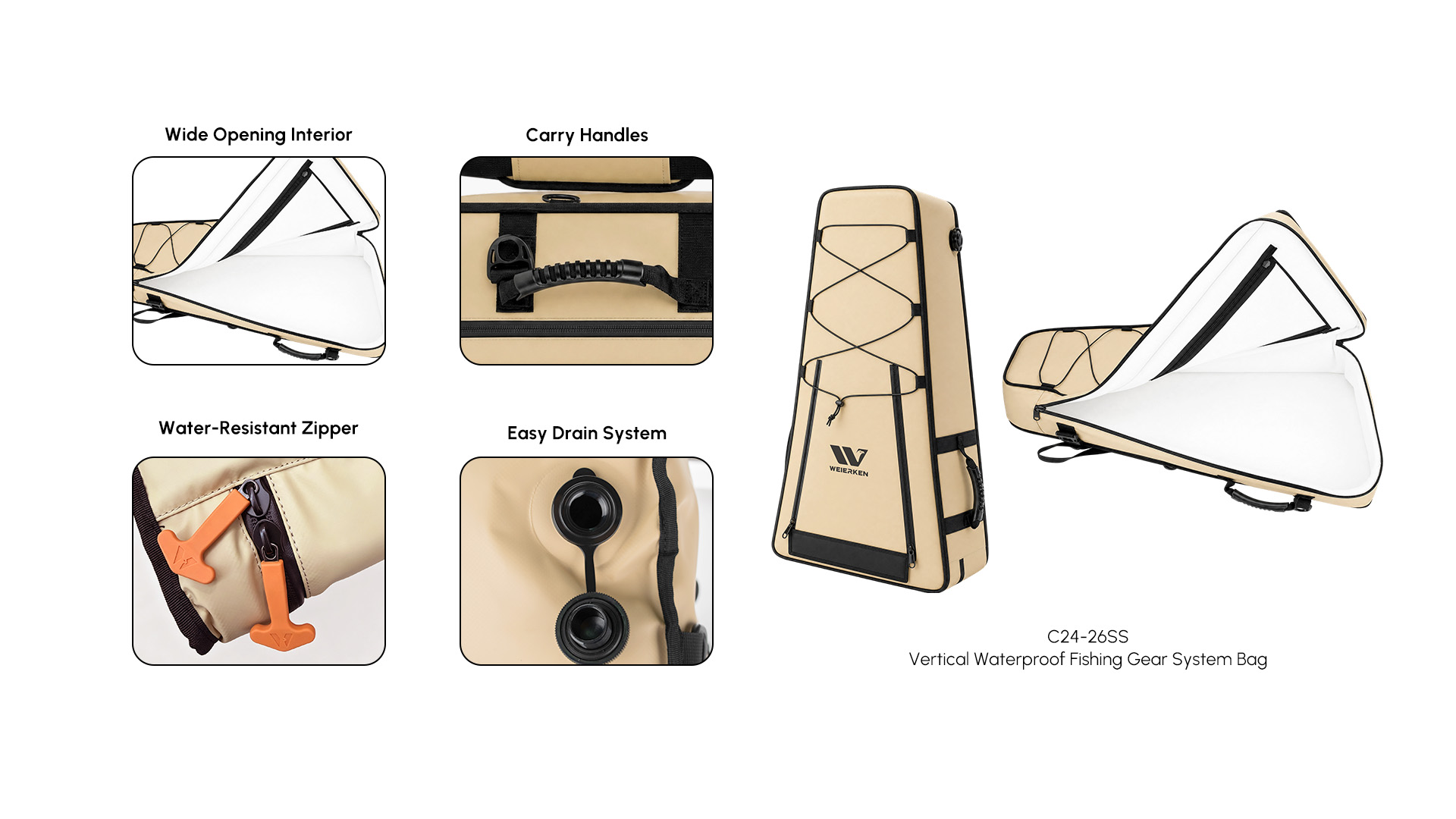
To achieve true IPX6 or IPX7 ratings, manufacturers use High-Frequency (HF) welding or Radio Frequency (RF) heat-sealing instead of traditional stitching. HF welding fuses thermoplastic layers at the molecular level, creating a permanent, watertight barrier that needle stitches cannot match.
UV Resistance & Heavy-Duty Durability
Boat decks offer zero shade. Relentless sun exposure degrades ordinary fabrics, causing them to fade, turn brittle, and crack within a single season.
A qualified custom fishing gear factory uses raw materials treated with UV inhibitors (UV 50+ protection). These treated textiles maintain tensile strength, colorfastness, and water repellency after hundreds of hours under direct sunlight.
Marine-Grade Hardware
Hardware failures ruin a tackle bag faster than fabric tears. Standard metal sliders and iron snaps seize up from salt oxidation within weeks.
A dependable B2B bag supplier equips boat bags with corrosion-proof components:
Marine-Grade Zippers: Molded nylon tooth zippers (such as YKK VISLON) or airtight, waterproof zippers with polyurethane-coated tape.
Corrosion-Proof Fasteners: 316 stainless steel D-rings or heavy-duty POM (polyacetal) composite buckles that resist salt buildup.
Drainage Grommets: Brass or composite grommets in exterior pockets to prevent water accumulation.
Key Materials & Technologies Used by Top Manufacturers
Choosing the right fabric balance determines your product's durability, weight, and retail price point. The table below outlines the core materials top manufacturers use for marine luggage.
| Material | Waterproof Level | Abrasion Resistance | Weight & Flexibility | Best Application |
|---|---|---|---|---|
| 500D / 1000D PVC Tarpaulin | 100% Waterproof (Welded) | Very High | Heavier, stiff in extreme cold | Heavy-duty waterproof marine dry bags, commercial deck bags |
| Thermoplastic Polyurethane (TPU) | 100% Waterproof (Airtight) | Exceptional | Lightweight, highly flexible | Airtight fishing tackle backpacks, premium submersible boat bags |
| 1680D / 900D Polyester + PU Backing | Water-Resistant (Needs Rain Cover) | High | Medium weight, soft hand-feel | Traditional boat tackle bags with structural organizer trays |
The Critical Role of the Molded EVA Base
Boat decks are constantly wet from washdowns and sea chop. A flat fabric base allows water to seep through seams and soak the tackle inside.
Top-tier manufacturers integrate a compression-molded EVA bottom. This rigid, waterproof tub provides several direct advantages:
Stops Water Pooling: Raises the fabric body 1.5 to 3 inches off wet boat floors.
Non-Skid Traction: Textured treads grip wet fiberglass decks, keeping the bag from sliding during rough transits.
Impact Protection: Cushions sensitive tackle trays and expensive gear when dropped onto hard decks.
Step-by-Step: How to Vet a Boat Fishing Gear Bag Manufacturer
Selecting the right production partner ensures steady product quality, reliable delivery schedules, and smooth communication throughout the manufacturing cycle.
1. OEM/ODM Customization Capabilities
Look for a partner that provides complete product engineering support, not just basic cut-and-sew services. An experienced OEM tackle bag supplier should offer:
Design Translation: Converting hand sketches or 2D technical drawings into 3D CAD models and paper patterns.
Tooling & Mold Development: Creating custom molds for EVA bases, ergonomic handle grips, and rubber logo patches.
Branding Applications: Silkscreen printing, heat-transfer graphics, sonic welding badges, and reflective safety accents.
Leading manufacturers like Weierken help brands optimize functional pocket layouts, pliers holsters, and internal tray dividers before opening mass production molds.
2. Factory Certifications & Quality Control
A professional factory must have transparent manufacturing practices and documented quality management systems. Always verify their third-party audits:
ISO 9001: Verifies standardized quality management across all production steps.
BSCI / Sedex: Confirms ethical manufacturing, fair labor, and clean workspace conditions.
Ask prospective suppliers about their internal lab testing protocols. A reliable manufacturer conducts thorough pre-shipment tests:
Salt Spray Testing (ASTM B117): Tests zippers and hardware for 72+ hours under continuous salt mist to confirm corrosion resistance.
Hydrostatic Pressure Testing: Verifies fabric waterproofness and the burst strength of welded seams.
Zipper Cycle & Drop Testing: Verifies that loaded bags survive deck drops and thousands of zipper pulls without seam blowouts.
3. MOQ and Production Lead Times
Balancing Minimum Order Quantities (MOQ) with production speed is crucial when planning seasonal fishing launches. Standard industry parameters include:
Sample Development: 7 to 14 days for initial prototypes; 15 to 25 days for complex welded items needing custom tooling.
Mass Production: 35 to 50 days after sample approval and deposit confirmation.
MOQ Flexibility: Custom fabrics and dyed colors usually require 500 to 1,000 units per style, while standard stock-color runs may start around 300 units.
4. Supply Chain & Export Experience
Navigating international shipping, customs declarations, and regional outdoor regulations requires deep export experience. Ensure your supplier regularly exports to key fishing markets across North America, Europe, Japan, and Australia.
Experienced factories handle Harmonized System (HS) classifications accurately, optimize master carton sizes to lower container freight costs, and supply raw material compliance sheets (like REACH and Prop 65).
Future Trends in Fishing Bag Manufacturing
Staying competitive requires adopting the modern manufacturing techniques and material trends that appeal to today's anglers.
Eco-Friendly & Recycled Materials
Modern anglers care deeply about ocean health. Brands are shifting away from virgin petroleum-based fabrics toward sustainable alternatives:
GRS-Certified Recycled Polyester (rPET): Made from recycled plastic bottles, cutting environmental impact without losing tensile strength.
Non-Toxic TPU Coatings: Replacing traditional PVC with recyclable, biodegradable TPU that contains no phthalates or heavy metals.
Modular & Ergonomic Deck Systems
Space on small skiffs, bass boats, and offshore center consoles is limited. Modern tackle luggage emphasizes smart space management:
Laser-Cut MOLLE Systems: Lets anglers attach specialized tool sleeves, plier sheaths, and waterproof phone pouches.
Stackable Storage Layouts: Internal compartments tailored to industry-standard Plano or Meiho utility utility trays (3600 and 3700 sizes).
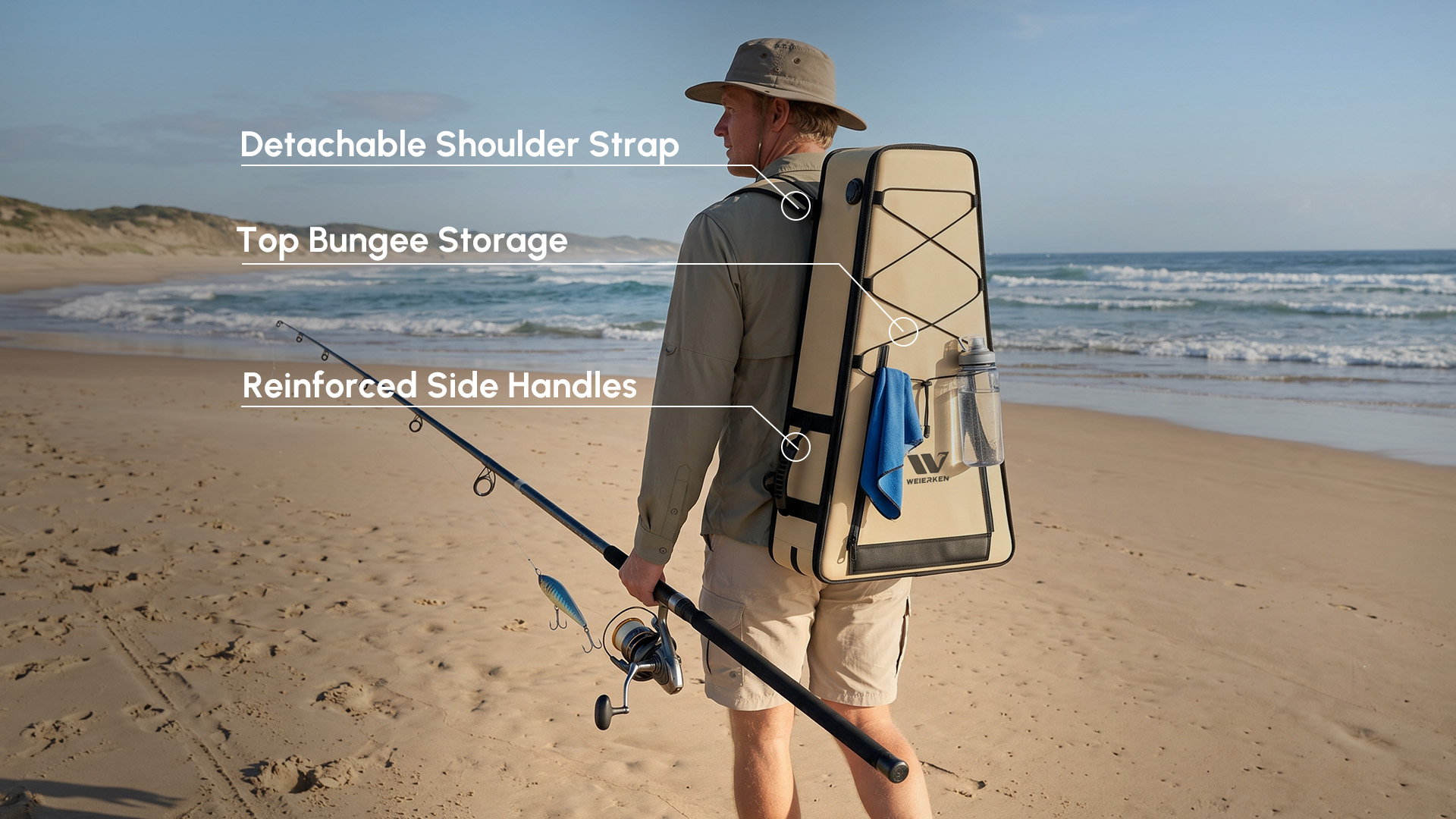
Convertible Carrying Systems: Padded shoulder straps that tuck away completely to prevent tripping hazards on boat decks.
Frequently Asked Questions
Q1: What is the typical MOQ for custom boat fishing bags?
A1: For full OEM customization with custom fabric colors and dedicated branding, typical MOQs range from 500 to 1,000 pieces per colorway. If you use standard in-stock fabrics and stock colors, some factories accommodate trial runs starting at 300 pieces.
Q2: How long does the OEM sampling process take?
A2: Basic prototypes using standard stock materials take roughly 7 to 10 working days. If your project requires custom molded EVA bases, specialized tooling, or unique welded dies, sample development generally requires 2 to 4 weeks.
Q3: TPU vs. PVC: Which material is better for marine fishing bags?
A3: Both materials offer complete waterproof protection when welded. PVC tarpaulin is tough, cost-effective, and highly puncture-resistant, making it great for commercial deck bags. TPU is lighter, remains flexible in freezing temperatures, resists UV degradation longer, and is more environmentally friendly, though raw material costs are higher.
Q4: What testing methods verify true saltwater durability?
A4: Manufacturers use the ASTM B117 salt spray test to inspect hardware and zippers over 48 to 96 hours of continuous exposure. Seams undergo hydrostatic head pressure tests to confirm water repellency, while drop tests and strap jerk tests verify structural durability under full tackle loads.
Q5: Can a factory produce both welded waterproof dry bags and traditional sewn tackle bags?
A5: Not all factories have both capabilities. Traditional tackle bags use computerized sewing and binding machines, whereas waterproof dry bags require high-frequency welding machines and hot-air seam-taping lines. Top manufacturers like Weierken maintain dedicated lines for both sewing and HF welding, making hybrid bag construction possible.
Sourcing high-grade marine luggage demands strict attention to materials, seam construction, and hardware reliability. A low-quality tackle bag will fail in wet, salty marine environments, resulting in negative reviews and costly product returns. Partnering with a specialized boat fishing gear bag manufacturer ensures your products stay completely dry, resist sun damage, and perform reliably on the water.
Take the time to verify factory certifications, demand rigorous salt-spray test data, and review sample builds carefully before starting mass production runs.
Ready to Build Your Custom Marine Bag Line?
Weierken engineers and manufactures high-performance marine tackle bags, welded dry bags, and custom outdoor luggage for global fishing brands.
Contact Our Engineering Team for a Free Quote & Sample Today