
Commercial catering and large-scale food delivery services operate under demanding conditions. Food must arrive at precise temperatures while meeting strict hygiene standards, whether serving corporate banquets, weddings, or ghost kitchens.
Procurement managers at catering chains face serious operational headaches. Standard promotional coolers collapse under heavy food pans. Weak handles snap during transport, and leaked sauces soak into interior seams, causing persistent health code violations.
Finding specialized catering bag manufacturers solves these structural issues. At weierken, we specialize in engineering heavy-duty, commercial-grade thermal delivery gear built for high-frequency industrial use.
This guide breaks down essential OEM customization options and provides a step-by-step factory auditing checklist to help you secure a reliable supply chain partner.
Essential OEM Customization Services for Catering Bags
Consumer cooler bags are not built for commercial food logistics. Professional catering operators require tailored engineering to match their standard kitchen equipment and delivery workflows.
1. Standardized Dimensions and Pan Compatibility
Commercial kitchens rely on standardized food containers. Your manufacturer must offer precise sizing that accommodates full-size and fractional Gastronorm (GN) pans without wasting internal space.
Full GN Pan Sizing: Internal cavities built specifically for 1/1, 1/2, and 1/3 Gastronorm stainless steel or plastic pans.
Multi-Layer Stacking: Reinforced internal wall structures that support heavy stacked food trays without bulging.
Collapsible Designs: Smart folding mechanisms that save valuable storage space in commercial kitchens and delivery vehicles.
2. Thermal Engineering and Active Heating Options
Maintaining food temperature over long transit times requires reliable thermal insulation. Professional catering bag manufacturers offer both passive and active thermal solutions.
Commercial Passive Insulation: Heavy-duty aluminum foil liners paired with 10mm to 20mm high-density EPE or PE foam for 4 to 6 hours of passive heat retention.
Active Heating Systems: Built-in 12V/24V vehicle power connectors or USB heating elements that maintain constant serving temperatures during long delivery routes.
Modular Thermal Dividers: Adjustable Velcro dividers that create separate hot and cold temperature zones inside a single delivery bag.
3. Branding, Ergonomics, and Field Safety
Delivery gear serves as a mobile billboard for your catering brand. Custom OEM services should offer clear branding options alongside functional safety features for field staff.
Inquire about high-visibility reflective striping for night deliveries, transparent document windows for order tickets, and abrasion-resistant screen printing or rubberized logo patches.
Material and Food Safety Compliance Standards
Food contact safety is non-negotiable in commercial catering. Substandard materials can leach harmful chemicals when exposed to hot steam or acidic food spills.
1. Food-Grade Interior Liners
Interior linings must comply with strict international food-contact safety standards. Ensure your manufacturer provides third-party testing documentation for all internal materials.
FDA compliance for North American food distribution markets.
LFGB testing credentials for European catering operations.
REACH and RoHS compliance ensuring zero toxic plasticizers or phthalates.
2. Sanitation, Cleanability, and Leak Prevention
Commercial bags must withstand daily cleaning with harsh chemical sanitizers. Stitched interior linings absorb grease and foster bacterial growth inside raw seam holes.
Look for heat-sealed PEVA, heavy PVC tarpaulin, or TPU inner liners. These smooth, seamless materials prevent liquid leaks and allow delivery staff to wipe the bag clean in seconds.
3. Heavy-Duty Exterior Shell Materials
Outer fabrics must withstand constant abrasion against delivery vans, concrete stairs, and metal staging tables. Leading catering bag manufacturers use heavy-duty materials ranging from 500D to 1680D PVC Tarpaulin or high-density waterproof nylon.
How to Audit a Catering Bag Factory
Never place bulk orders based solely on digital product catalogs. Conducting a structured factory audit verifies whether a supplier has the technical capacity to deliver consistent quality.
Step 1: Verify Management Systems and Certifications
Request documentation proving the facility operates under international quality control and social compliance standards before booking an audit.
Reliable producers maintain valid ISO9001 quality management certifications alongside BSCI or SEDEX social accountability audit reports. Manufacturing facilities like weierken also maintain strict HACCP-aligned sanitation guidelines across assembly halls.
Step 2: Inspect On-Site Workmanship and Stress Points
Evaluate actual assembly methods during live video walks or on-site visits. Pay close attention to high-stress areas where commercial bags usually fail.
Reinforced Handle Stitching: Confirm handles use box-x cross-stitching reinforced with steel rivets to handle 20kg to 50kg static loads.
Industrial Zippers: Ensure the factory installs heavy-duty #10 commercial zippers or genuine YKK zipper hardware to prevent tooth misalignment.
Edge Binding: Check that internal seams feature double-stitched nylon tape binding to prevent fraying over time.
Step 3: Evaluate Quality Control Testing Facilities
A trustworthy OEM factory operates in-house testing equipment to verify performance metrics before shipping finished goods.
Review their thermal drop testing setups, hydrostatic water pressure gauges, and zipper pull-cycle testing equipment. Ensure they execute clear AQL 2.5 inspection parameters for mass production orders.
Common Pitfalls when Sourcing Catering Bags
Avoiding typical sourcing mistakes saves procurement teams time and prevents costly inventory replacements down the line.
Mistake 1: Sourcing from Consumer Cooler Factories
Consumer lunch bag factories lack experience with commercial food pan dimensions and daily sanitation demands. Always select specialized commercial catering bag manufacturers.
Mistake 2: Overlooking High-Wear Hardware Parts
Choosing lower quotes that use cheap plastic zipper pulls or thin shoulder strap clips leads to field failures. Upgrading to commercial-grade hardware adds minimal unit cost while dramatically extending product lifespan.
Mistake 3: Ignoring Minimum Order Quantity (MOQ) Transparency
Some suppliers quote low base unit prices but require high fabric dyeing MOQs for custom corporate colors. Always clarify custom material order minimums before starting product prototyping.
Key Feature Comparison: Commercial vs. Consumer Bags
Understanding the technical differences between retail consumer bags and commercial catering bags helps justify your equipment budget to management:
Consumer Coolers: Thin 5mm foam, non-standard sizing, lightweight #5 zippers, stitched PEVA liners prone to tearing under sharp container corners.
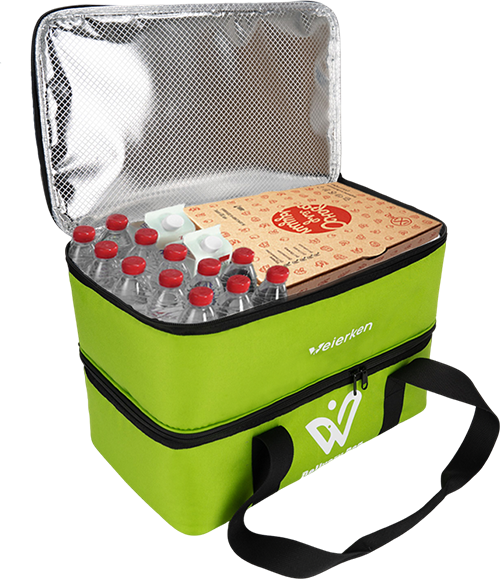
Commercial Catering Bags: 15mm-20mm dense foam, Gastronorm pan dimensions, heavy-duty #10 zippers, reinforced cross-stitched handles, welded food-grade TPU/Tarpaulin liners.
Selecting the Right OEM Supply Chain Partner
Partnering with experienced catering bag manufacturers is an investment in your brand's operational efficiency and food safety compliance.
The right supplier provides custom CAD sizing, assists with active heating integration, and delivers consistent build quality that protects your food investments on every route.
At weierken, our technical teams design and manufacture heavy-duty thermal solutions engineered to meet the strict demands of modern food service logistics.
Upgrade Your Catering Fleet Infrastructure
Are you looking to develop custom delivery bags for your catering fleet, upgrade thermal retention capabilities, or audit a new production partner?
Our engineering team is ready to review your pan dimensions, provide material swatches, and create custom prototypes built for commercial kitchen demands.
Ready to elevate your delivery quality? Request a custom OEM quote or book a technical consultation with our commercial bag specialists today!
Frequently Asked Questions (FAQ)
1. What sizing standards should commercial catering bags follow?
Commercial bags should align with international Gastronorm (GN) pan standards. Common sizes include full 1/1 GN pan dimensions, as well as 1/2 and 1/3 pan configurations, allowing catering teams to load standard kitchen hardware directly into delivery bags.
2. Can catering bag manufacturers install active heating elements inside delivery bags?
Yes. OEM manufacturers can integrate 12V or 24V vehicle-powered heating plates, PTC ceramic heating elements, or rechargeable USB heat pads into the bag's base and sidewalls to keep food hot during long delivery runs.
3. What food contact certifications are required for catering bag interior liners?
Liners that touch food packaging or hot steam should pass FDA regulations in North America or LFGB testing in European markets. Materials must also comply with REACH standards to ensure they are free from harmful plasticizers.
4. How do I verify if a catering bag factory uses commercial-grade stitching?
Check the stress points where handles and shoulder straps attach to the main body. Commercial construction requires heavy nylon thread, double-box cross-stitching (Box-X pattern), and metal rivet reinforcements capable of supporting 30kg to 50kg loads.
5. What is the typical minimum order quantity (MOQ) for custom OEM catering bags?
Standard OEM MOQs usually range from 300 to 500 units per custom design when using stock exterior fabric colors. If your project requires custom-dyed fabrics or specialized active heating components, MOQs may start at 1,000 units.
6. How do seamless welded liners prevent bacterial growth in delivery bags?
Seamless liners created with RF heat-sealing eliminate needle punctures and stitched seams where food grease and liquids usually collect. This smooth surface prevents mold growth and allows workers to sanitize the interior instantly with wet wipes.