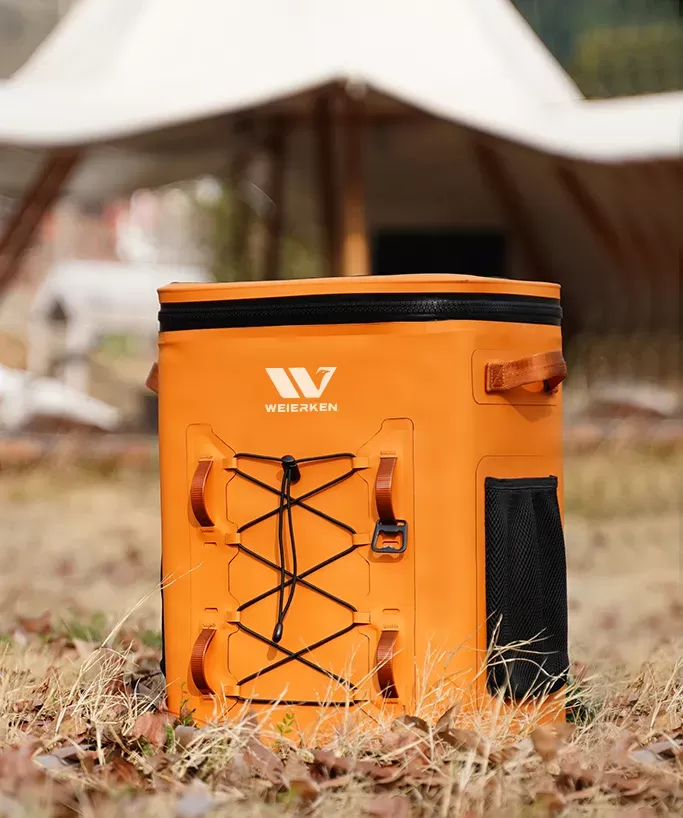

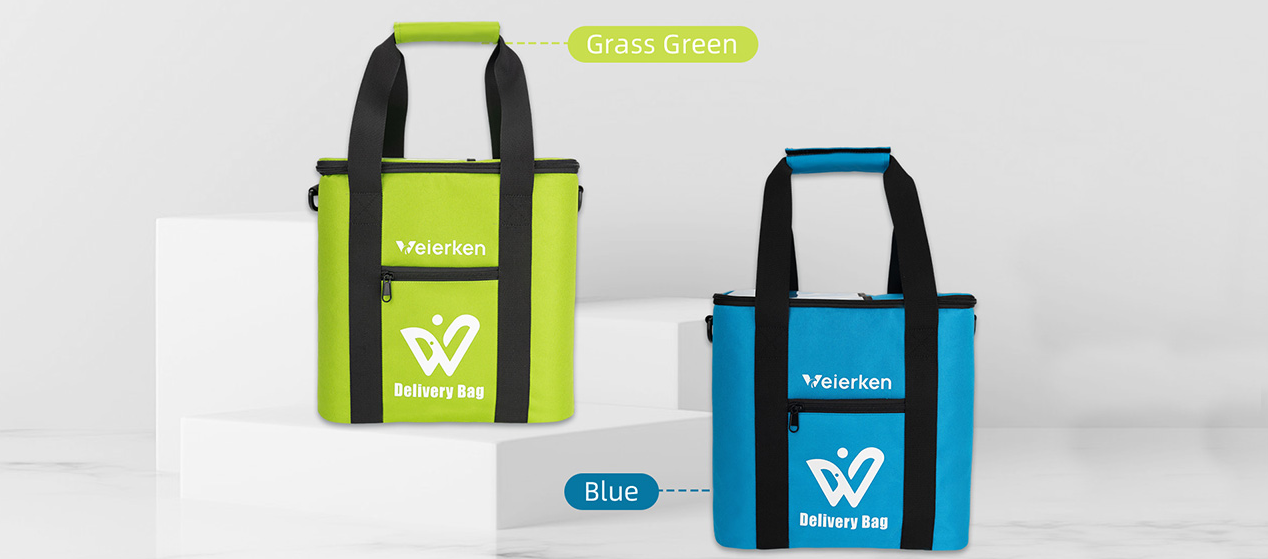
Fulfilling direct-to-consumer (D2C) raw pet food requires serious packaging engineering. Shipping frozen raw meat patties, bone broth pouches, and fresh-frozen organ chubs creates unique fulfillment challenges that standard grocery delivery totes cannot handle.
Frozen pet food is heavy, dense, and rigid. A standard customer shipment weighs between 15 and 30 pounds. When couriers toss these dense frozen blocks during transit, traditional expanded polystyrene (EPS) foam coolers often crack under impact.
Worse, cracked EPS boxes induce rapid thermal bridging. Warm ambient air rushes into the cargo space, melting the raw product. Once raw pet food thaws, it leaches blood and protein-rich purge fluid into the packaging.
A failed delivery ruins customer trust and creates health hazards. To protect your brand, you cannot rely on casual lunch coolers. You need precision-engineered cold chain bags for frozen pet meals that function as passive, controlled micro-cold storage systems.
Industrial manufacturers like Weierken approach these thermal carriers from an engineering perspective. Every layer, seam, and closure must perform reliably under extreme physical and thermodynamic stress.
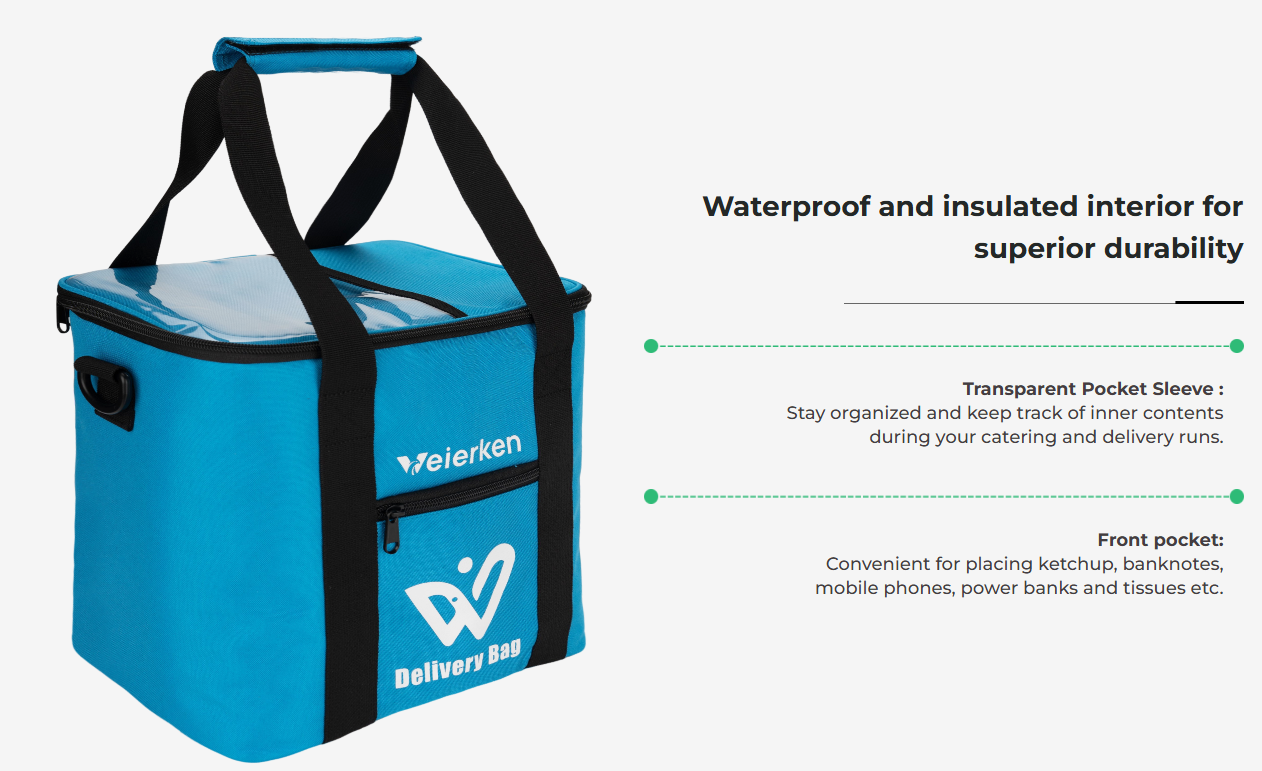
The 4-Layer Thermal Stack Architecture
A delivery bag must balance conductive resistance, radiant reflection, and convective sealing. Achieving 48 to 72 hours of sub-zero performance without adding dead weight requires a four-layer composite build.
Layer 1: The Outer Protective Armor
The exterior shell absorbs mechanical friction, courier drops, and weather exposure. We construct this layer from 600D or 900D post-consumer recycled polyester (rPET) backed with a thermoplastic polyurethane (TPU) waterproof film.
Resists abrasive scuffing and conveyor belt snags during sortation.
Maintains a hydrostatic head rating above 10,000 mm, keeping rain and road grime out.
Provides tensile rip-stop strength to support heavy internal payloads up to 35 lbs.
Layer 2: The Radiant Heat Barrier
Solar radiation and external ambient heat transfer through outer fabrics rapidly. Beneath the polyester shell, we integrate a double-sided metalized polyester film (aluminized Mylar).
Reflects up to 97% of ambient radiant thermal energy back away from the payload.
Functions as a windproof vapor barrier to reduce radiant warming inside parcel vans.
Layer 3: The Core Insulation Engine
The middle layer stops conductive heat transfer. While generic bags use cheap open-cell sponge foam, high-performance cold chain pet food packaging requires high-density, closed-cell expanded polyethylene (EPE) or ethylene-vinyl acetate (EVA) foam.
We specify foam thicknesses between 8mm and 12mm depending on the route transit window.
Features a low thermal conductivity rating (k-value around 0.032 to 0.035 W/m·K).
Resists compression under the heavy weight of frozen raw pet food, maintaining its insulating air cells throughout transit.
Layer 4: The Zero-Permeation Food-Grade Liner
The interior membrane directly touches food packs and refrigerants. We deploy 0.3mm to 0.5mm food-contact grade modified PEVA or heavy-duty TPU film.
Offers an entirely non-porous, wipe-clean, and sanitizable contact surface.
Resists puncture from hard, sharp corners of vacuum-sealed bone fragments and frozen chubs.
Formulated without phthalates, chlorine, or toxic plasticizers.
Solving the 3 Critical Engineering Vulnerabilities
Most commercial thermal delivery bags for pet food fail because factory designers treat them like ordinary luggage. Transporting frozen raw diets involves three specific failure points that require dedicated manufacturing solutions.
1. Seam Weeping and Purge Leakage
Traditional bag factories join panels using sewing needles and industrial thread. Every needle strike creates a tiny puncture hole through the liner. When raw meat thaws, purge fluid seeps through these stitches into the foam core.
Trapped animal blood rots inside the foam insulation, breeding bacteria and causing foul odors. The bag becomes impossible to sanitize and must be discarded.
The Engineering Solution: We eliminate stitch lines entirely on the inner tub. Using high-frequency (HF) radio-frequency welding and ultrasonic heat bonding, we fuse the thermoplastic liner panels into a single, seamless, watertight basin. Purge fluid remains completely contained, allowing customers or fulfillment hubs to rinse and sanitize the bag without absorbing moisture.
2. Sub-Zero Embrittlement from Dry Ice
Many brands use dry ice pellets or blocks to hold cargo space below -18°C (0°F). However, dry ice sublimates at -78.5°C (-109.3°F). Standard PVC and cheap vinyl liners hit their glass-transition temperature at these levels, turning brittle and shattering like glass under minor impact.
The Engineering Solution: We manufacture dry ice resistant cooler bags using specialized cold-crack modified TPU and cold-rated PEVA formulas. These polymers undergo rigorous flex-testing down to -80°C, retaining elasticity and tear resistance even when sitting directly against dry ice packs.
3. Zipper Convection and Thermal Bridging
A bag can feature superior wall insulation, yet still fail if heat enters through the zipper. Traditional coil zippers have loose teeth that permit constant air infiltration, allowing cold air to sink out while warm air drafts inside.
The Engineering Solution: We deploy a dual-stage thermal seal. First, we install an insulated baffle overlap—a thick, foam-filled weather-strip that presses tightly over the closure when closed. Second, for premium loops, we integrate airtight, water-resistant zippers with rubberized TPU laminates, stopping convective air exchange completely.
Fulfillment Economics: DIM Weight and Storage Realities
Beyond thermal performance, packaging decisions directly impact warehouse floor efficiency and parcel logistics costs.
Rigid EPS coolers present a major logistics headache: they take up massive storage space. A standard 40-foot shipping container holds only a limited quantity of empty EPS boxes because you are paying to transport and store dead air. In a fulfillment center, pallets of rigid coolers swallow valuable racking space.
Conversely, collapsible, soft-sided cold chain bags for frozen pet meals ship completely flat. Flat-packed delivery bags reduce inbound logistics volume and warehouse storage requirements by up to 70%.
Furthermore, parcel carriers bill based on Dimensional Weight (DIM Weight) rather than actual weight. Rigid boxes occupy fixed exterior dimensions regardless of what is inside. Semi-flexible insulated bags compress slightly in transit bins, optimizing dimensional profile and saving parcel shipping costs on long-distance carrier routes.
Laboratory Testing Protocols for B2B Procurement
Procurement managers should never approve commercial raw pet food delivery bags without verifying documented laboratory data. Before signing a high-volume supply agreement, demand proof of the following tests:
ISTA-7D Thermal Profile Testing
The packaging must endure dynamic climate chamber testing following the International Safe Transit Association (ISTA) 7D standard. The bag is loaded with target pet meal payloads and data loggers, then subjected to fluctuating summer profiles reaching 40°C (104°F).
The thermal curve must confirm that core product temperatures remain securely below -18°C (0°F) for at least 48 to 72 hours depending on your delivery window.
The 1.2-Meter Multi-Angle Drop Test
Fill the bag with 30 pounds of frozen dummy meat blocks. Drop the packed unit from a height of 1.2 meters (48 inches) onto flat concrete. The test protocol requires six distinct impacts: face, bottom, long edge, short edge, top closure, and corner.
A passed test requires zero liner tears, no seam separation, and fully intact handle anchor points. Handle webbing must feature reinforced box-X bar-tack stitching through internal backing plates to prevent tear-out.
Hydrostatic Dye Containment Testing
Fill the inner welded tub with colored liquid to a depth of 100mm. Allow the bag to sit undisturbed on white test paper for 24 hours. Any color bleed onto the paper indicates micro-porosity or seam welding failure.
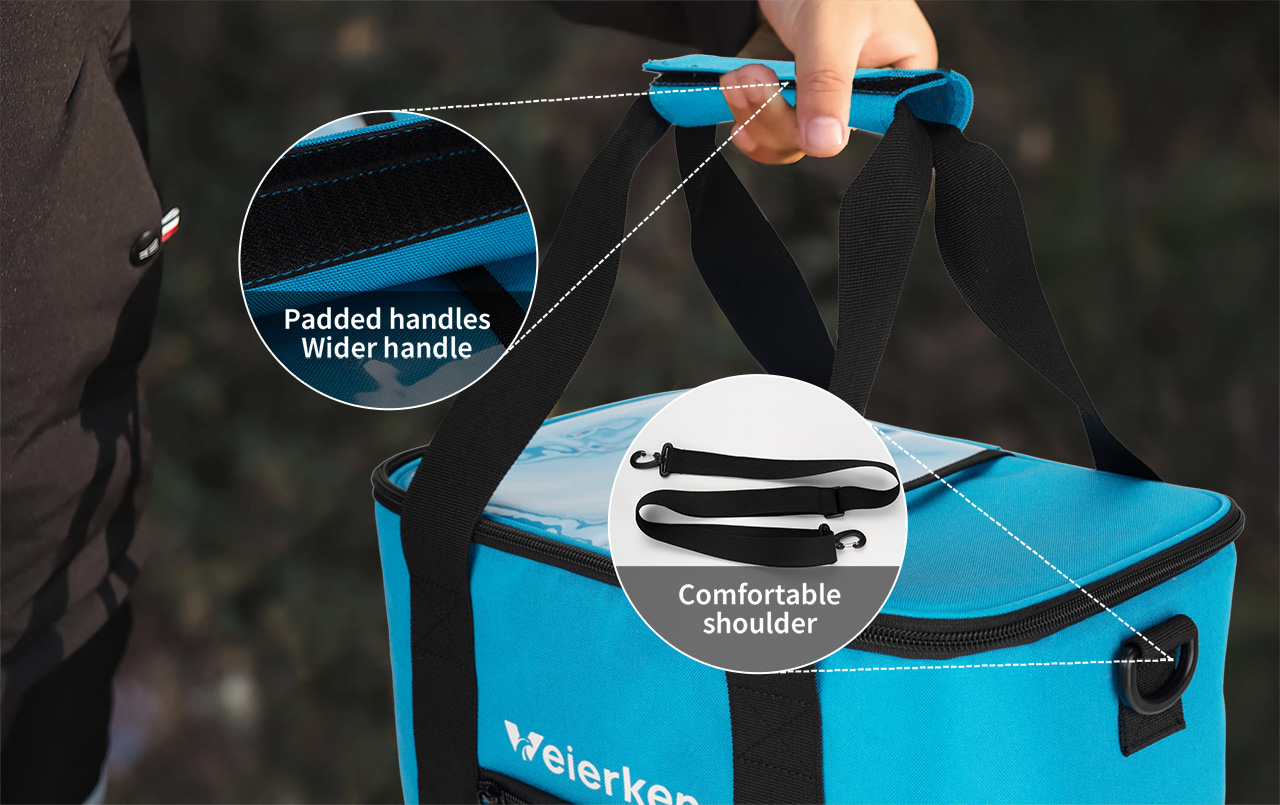
Supply Chain Optimization: The Weierken Manufacturing Model
Balancing technical performance with landed costs requires an agile manufacturing strategy. Weierken helps international brands protect margin targets through focused engineering and strategic manufacturing networks.
Importing finished textile goods from China into the United States often triggers hefty Section 301 tariffs, adding up to 25% in landing costs. Weierken operates a dual-hub production system across China and Cambodia to counter these trade barriers.
R&D and Rapid Prototyping in China: Material sourcing, custom tooling, and initial sampling take place within an established industrial supply ecosystem. We turn standard delivery bag prototypes around in 3 to 7 days, and complex technical bags within 12 to 30 days.
Duty-Free High-Volume Assembly in Cambodia: High-volume production runs transition seamlessly to our facility in Cambodia. This gives US and European buyers access to preferential tariff rates, cutting import duties significantly.
Certified Quality Assurance: Facilities run under ISO9001 quality systems and carry BSCI social compliance certifications. We also source certified GRS (Global Recycled Standard) materials to support corporate sustainability mandates.
Turnkey DDP Delivery: Weierken handles ocean freight, customs brokerage, and inland drayage, delivering finished pallets directly to your 3PL fulfillment warehouses.
Frequently Asked Questions
Q1: Can cold chain bags for frozen pet meals be sanitized and reused commercially?
A1: Yes. High-grade bags built with seamless, high-frequency welded PEVA or TPU liners can be washed, sprayed with food-safe disinfectants (such as quaternary ammonium or peracetic acid solutions), and air-dried between shipment cycles. The non-porous liners prevent moisture from reaching the inner insulation foam, ensuring hygienic reusability for 40 to 60 transit cycles.
Q2: How do you calculate the optimal bag volume based on raw pet food patty dimensions?
A2: We calculate the interior volume by modeling your frozen chub or patty tub dimensions inside 3D CAD software, allowing a 15% to 20% margin for cold-chain refrigerants (dry ice blocks or PCM gel packs). Minimizing empty headspace is vital. Excess air inside a thermal bag accelerates convective heat transfer, requiring more refrigerant to stay frozen.
Q3: What is the ideal ratio of dry ice to phase change material (PCM) gel packs?
A3: Dry ice excels at driving temperatures down rapidly below -18°C, but it sublimates into gas within 24 to 48 hours. PCM gel packs (formulated to freeze at -16°C or -21°C) melt much slower. For 72-hour transit windows, hybrid pack-outs work best: dry ice keeps the cargo deep-frozen during the first 24 to 36 hours, while high-enthalpy PCM packs absorb latent heat during the remaining hours.
Q4: Why does high-frequency welding outperform traditional sewing for leak prevention?
A4: Traditional sewing machines punch thousands of holes through the fabric to interlock thread loops. Blood, melting ice, and moisture easily leak through those holes under pressure. High-frequency welding uses electromagnetic energy to melt and fuse the polar molecules of TPU or PEVA film together at the molecular level, creating a continuous, seamless, airtight barrier.
Q5: How does a Cambodia production line reduce landed costs for US and EU buyers?
A5: Goods manufactured in Cambodia benefit from favorable trade programs. For US buyers, manufacturing in Cambodia bypasses punitive Section 301 tariffs on Chinese goods, lowering duty rates by 15% to 25%. For European buyers, Cambodia benefits from preferential Generalized Scheme of Tariff Preferences (GSP), directly improving landed gross margins.
Secure Your Cold Chain with Engineered Packaging
Fulfilling frozen raw pet food requires rugged, thermally sound packaging. Relying on fragile EPS foam boxes or cheap consumer lunch totes creates thaw risks, leaks, and customer churn. Upgrading to engineered cold chain bags for frozen pet meals lowers scrap rates, cuts inbound storage costs, and strengthens brand loyalty.
Partner with an OEM/ODM manufacturing team that understands cold-chain mechanics. Weierken builds custom, heavy-duty insulated packaging tailored to your brand dimensions, cold retention requirements, and route profiles. Take advantage of our duty-advantaged manufacturing to protect your bottom line.
Need to upgrade your delivery performance? Contact the packaging engineers at Weierken today. Submit your payload dimensions and target temperature window, and our team will prepare a technical review and build your custom engineering sample within 3 to 7 business days.