
Shipping raw pet food is one of the most demanding tasks in temperature-controlled logistics. Unlike kibble or freeze-dried treats, fresh-frozen pet meals contain blood, moisture, animal fats, and jagged bone fragments. When shipments experience shipping delays or courier drops, standard bags burst, leading to severe product damage.
A package rupture does more than ruin the unboxing experience. When animal purge fluid leaks, it creates severe biological hazards. Pathogens such as Salmonella, Listeria monocytogenes, and E. coli can contaminate delivery boxes, courier vans, and home kitchens, quickly triggering expensive recalls.
To scale a fresh-frozen pet diet brand, you cannot rely on generic kitchen vacuum bags or flimsy grocery totes. You need precision-engineered custom raw pet food transport bags designed from the polymer level up to withstand sub-zero freight conditions. Experienced manufacturers like Weierken build these containment systems to ensure total seal integrity from packaging line to pet bowl.
Regulatory Compliance and Food-Contact Safety
Raw pet food packaging requires the same material safety standards as human food. Animal fats and acidic meat juices degrade low-grade plastics, causing toxic additives to migrate into the food.
Your transport packaging must comply with strict food-contact regulations:
FDA 21 CFR 177.1520: Regulates olefin polymers, verifying that interior contact layers do not leach plasticizers, heavy metals, or volatile organic compounds into high-fat meats.
EU Regulation No 10/2011: Mandates specific migration limits (SML) for plastic materials intended to come into contact with raw animal proteins and lipids.
Virgin Resin Certification: Ensures that the interior contact film contains zero post-consumer scrap that could introduce unknown chemical contaminants.
Multi-Layer Barrier Science: The Co-Extrusion Formula
No single plastic resin provides puncture resistance, oxygen blocking, and hermetic sealing all at once. Reliable custom raw pet food transport bags rely on multi-layer co-extrusion or laminated barrier film structures. Each layer performs a distinct mechanical or chemical function.
1. The Gas Barrier Layer: EVOH and PVDC
Oxygen causes lipid oxidation, turning healthy animal fats rancid and destroying delicate nutrients like Omega-3 fatty acids. An internal layer of Ethylene Vinyl Alcohol (EVOH) provides an outstanding barrier to gas permeation.
Maintains an Oxygen Transmission Rate (OTR) of less than 0.5 to 1.0 cc/m²/24hr.
Stops foul meat odors from escaping through the film, which prevents courier rejections and pet sniffing during porch delivery.
Suppresses aerobic spoilage organisms during accidental minor temperature excursions.
2. The Puncture-Resistance Core: Biaxially Oriented Polyamide (BOPA/Nylon)
Biologically Appropriate Raw Food (BARF) formulas often contain ground chicken backs, duck necks, or cut bone chunks. Frozen bone edges act like chisels against interior bag walls during transport vibration.
Oriented Polyamide (Nylon) provides high tensile strength and puncture toughness.
Prevents flex-cracking when the bag flexes at sub-zero temperatures.
Distributes dynamic drop impact forces evenly across the film web rather than concentrating stress at a single impact point.
3. The Contamination-Proof Sealant Layer: Metallocene LLDPE
Raw pet meal manufacturing lines are wet and messy. During high-speed filling, meat juices, blood droplets, and animal tallow inevitably splash onto the bag's seal area. Standard low-density polyethylene (LDPE) cannot seal through fat, resulting in leaky microscopic channels.
We utilize premium Metallocene Linear Low-Density Polyethylene (mLLDPE).
The metallocene catalyst produces a narrow molecular weight distribution, allowing the resin to melt, flow around, and encapsulate fat and liquid contaminants.
Delivers exceptional hot-tack strength, forming a solid molecular weld instantly without waiting for the seal jaws to cool completely.
Seal Integrity: Eliminating Micro-Channels and Blowouts
A package is only as strong as its weakest seam. Traditional conductive heat sealing applies heated metal bars to melt the films together from the outside in. If temperature, pressure, or dwell time fluctuates by even 5%, microscopic leak pathways will form.
To guarantee leakproof performance in custom raw pet food transport bags, modern manufacturing uses advanced sealing techniques:
Ultrasonic and High-Frequency Sealing
Ultrasonic sealing uses high-frequency acoustic vibrations to generate localized friction heat directly between the film interfaces. This vibration displaces liquid, fat, and bone fragments out of the sealing zone before the plastic fuses.
The result is a clean, hermetic bond without burning the outer carrier film. This method reduces seal failure rates on high-speed pet meal packing lines to less than 0.1%.
Structural Geometry: Gusseted vs. Quad-Seal Architecture
When a delivery driver drops a 20-pound frozen box, the internal fluids and meat slabs exert massive hydrostatic pressure downward. Flat two-side pillow pouches split easily down their center seams under this load.
Quad-Seal (Corner-Seal) Bags: Distributes internal hydraulic shock outward to four reinforced corner creases rather than direct seam faces.
K-Seal and Round-Bottom Gussets: Reduces stress concentrations in bottom corners, preventing pinholes caused by settling heavy meat mixtures.
Wide Track Flange Seals: Expanding perimeter seal widths from standard 5mm to 10mm or 15mm creates a redundant barrier against high pressure.
Thermal Transport Integration: Secondary Cold Chain Support
Transport packaging does not work in isolation. Your primary raw pet food pouch must integrate seamlessly with secondary insulated shipping containers and active refrigerants.
Direct exposure to dry ice (-78.5°C) causes standard packaging films to vitrify and crack. To prevent this, professional raw meat transport pouches use cold-crack modified resins that maintain ductile flexibility down to -40°C or lower.
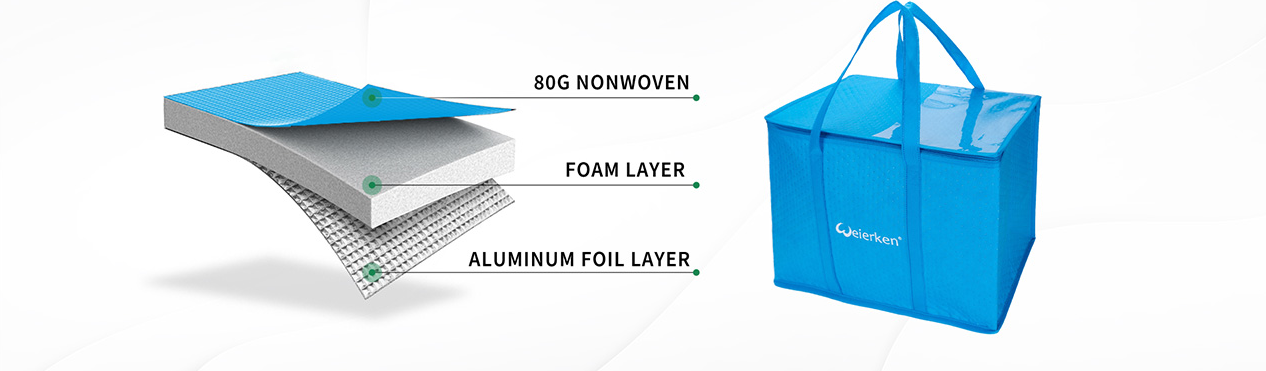
When engineering complete shipper kits, Weierken helps pet food brands combine durable interior primary bags with multi-layer metalized insulated outer liners. Adding reflective vacuum-metalized polyester (VMPET) to the secondary shipper repels radiant heat, keeping frozen raw meat solid below -18°C for 48 to 72 hours.
Packaging Validation: Laboratory Stress Testing Protocols
Do not guess whether your packaging will survive commercial transit. You must prove it in a laboratory environment using standardized test methods before running commercial production.
ASTM D5276: Free Fall Drop Testing
Pack the bags with your actual raw meat formula, freeze them to your distribution temperature (-18°C), and place them inside your corrugated shipping box with refrigerant packs. Drop the packed unit from 1.2 meters (48 inches) onto concrete across ten impact orientations: corners, edges, and flat faces.
A passing result requires zero seal rupture, zero film pinholes, and zero liquid discharge upon thawing.
ASTM F1140: Internal Burst Pressure Testing
This test clamps the bag and injects compressed gas until the package ruptures. It measures the maximum pressure the bag withstands before bursting.
High-performance custom raw pet food transport bags should achieve internal burst pressures exceeding 45 to 60 kPa, ensuring they withstand external compression in parcel carrier sorting systems.
ASTM F2096: Gross Leak Detection (Bubble Emission Test)
The package is submerged in water and pressurized internally to a set level. Technicians inspect the packaging for continuous streams of escaping air bubbles. This test detects micro-channels as small as 50 microns that allow thaw water to leak during last-mile delivery.
Printing, Brand Presence, and Shelf Appeal
Even though transport bags prioritize functional containment, high-end D2C pet brands still require premium aesthetics. The delivery bag serves as a key visual touchpoint for your brand.
However, condensation poses a major challenge for pet packaging graphics. When frozen packages enter humid ambient air, condensation coats the exterior film instantly. Low-grade surface inks will soften, smear, and rub off onto customers' hands.
Trap/Reverse Printing: We print graphic artwork on the interior side of the transparent outer polyester film before laminating it to the barrier layers. The ink stays trapped between plastic plies, shielding it completely from condensation, friction, and scuffs.
Polyurethane-Based Freeze Inks: Formulated specifically to retain elasticity and adhesion through freezing and thawing cycles.
Rotogravure Print Capability: Yields crisp photographic detail of raw cuts, healthy ingredients, and nutritional information with accurate color consistency across production batches.
Sustainable Packaging Trade-Offs for Raw Meat
Many pet owners demand eco-friendly, recyclable packaging. However, packaging raw animal protein presents unique sustainability challenges that require careful material trade-offs.
Compostable plant-based films (such as PLA) generally lack the water-barrier and puncture properties needed for raw meat. They soften when exposed to wet thaw fluids and split easily on bone edges during long transit windows.
The most practical sustainable path in 2026 is Mono-Material Recyclable PE. By laminating oriented polyethylene (BOPE) with barrier-coated polyethylene (PE) and metallocene sealant layers, we produce an all-PE structure. This structure delivers high puncture resistance, protects against leaks, and remains fully compatible with existing Store Drop-off polyethylene recycling streams.
Procurement Checklist: Engineering Your Custom Bag
Before requesting factory quotes for custom raw pet food transport bags, compile the following operational parameters:
Payload Dimensions and Weight: Will you pack single 1-pound chubs, 5-pound family patties, or 25-pound bulk master packs?
Meat Formulation Profile: Fine-ground boneless puree, coarsely ground bone mix, or intact whole bone cuts (such as turkey necks or beef ribs)?
Temperature Limits: Strict deep-freeze (-18°C with dry ice) or chilled fresh (0°C to 4°C using gel ice packs)?
Transit Duration: Next-day air courier (24 hours) or standard ground logistics (48 to 72 hours)?
Filling and Sealing Equipment: Manual bag loading with hand-sealing jaws, or automated Form-Fill-Seal (FFS) machinery?
Frequently Asked Questions
Q1: Why do standard vacuum pouches fail when shipping frozen raw pet food?
A1: Conventional vacuum pouches use thin PA/PE blends designed for retail meat display cases, not rugged shipping environments. When raw pet food freezes solid, irregular contours and bone fragments turn into rigid spikes. During parcel delivery, shock and vibration force these hard edges against brittle cold films, puncturing the barrier and causing leaks upon thawing.
Q2: What is the minimum seal strength required for custom raw pet food transport bags?
A2: For frozen raw food shipments weighing between 5 and 20 pounds, the seal tensile strength should measure at least 35 to 50 N/15mm according to ASTM F88 test standards. Anything lower risks seam blowouts when dropped during parcel carrier sorting.
Q3: How does bone-in raw meat affect material film thickness selection?
A3: Ground boneless raw meats perform well in 80-micron (3.1 mil) to 100-micron (4 mil) barrier films. Formulas containing bone chunks require thicknesses between 120 microns (4.7 mil) and 180 microns (7 mil). They also require an increased ratio of biaxially oriented nylon to prevent punctures.
Q4: Can custom raw pet food transport bags be recycled curbside?
A4: Traditional multi-material structures combining PET, Nylon, and PE cannot enter standard curbside paper or plastic recycling bins because the mixed layers cannot be separated. However, mono-material PE pouches engineered with EVOH gas barriers can be recycled through designated PE film recycling drop-off centers.
Q5: How do we prevent package ballooning when shipping frozen pet meals with dry ice?
A5: Sublimating dry ice releases large volumes of carbon dioxide gas. If dry ice sits inside a sealed primary pouch, the bag will expand and explode. Dry ice must always be placed outside the hermetically sealed food bag, inside the secondary insulated delivery shipper. The outer shipping container must feature controlled pressure-relief vents to exhaust CO2 gas safely while keeping ambient heat out.
Protect Your Cold Chain with Weierken Engineering
Every leaky package chips away at your profit margins, triggers customer refunds, and puts your brand reputation at risk. Manufacturing dependable custom raw pet food transport bags requires deep polymer expertise, advanced welding technology, and strict quality control.
Weierken specializes in engineering leakproof, food-safe cold chain packaging systems for direct-to-consumer and commercial raw pet nutrition brands. Our engineering team reviews your formulation, bone density, transit profiles, and brand specs to build custom packaging solutions that eliminate leaks completely.
Ready to eliminate leaks in your raw pet food shipments? Contact the packaging engineers at Weierken today to review your project specifications and request a functional Engineering Sample Kit.