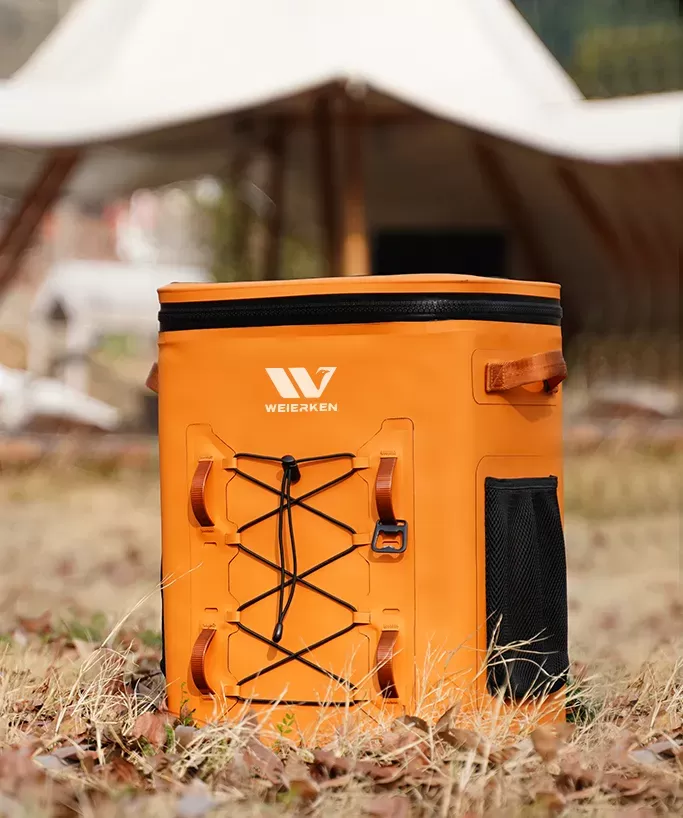

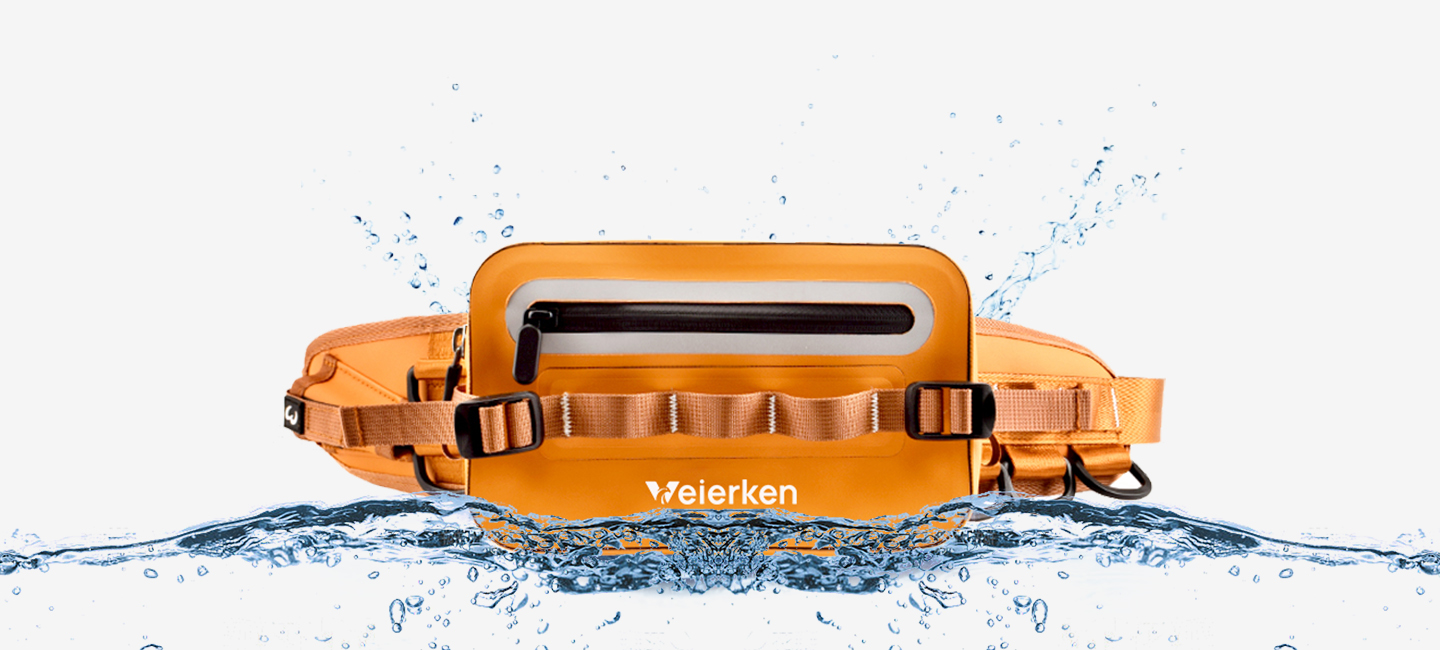
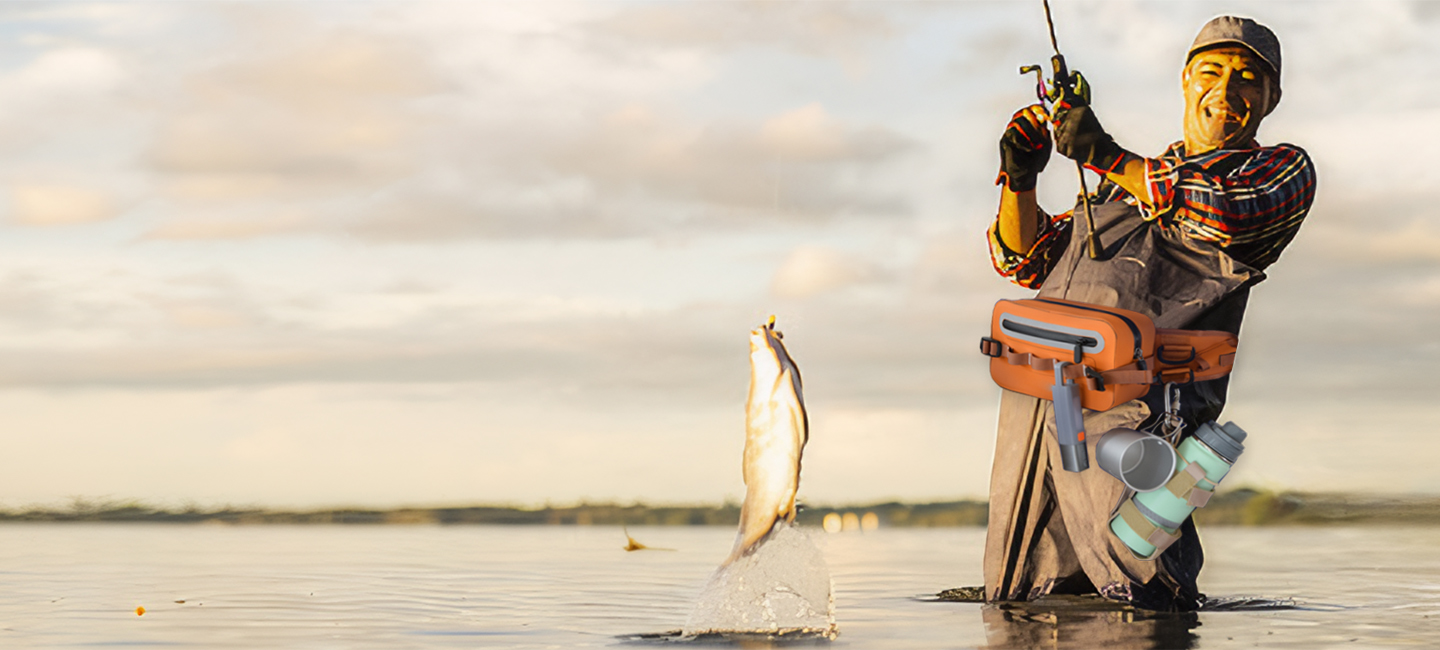
Fishing waist and lumbar packs operate in brutal environments. Anglers wade deep into river currents, stand under harsh ultraviolet radiation, scrape against jagged riprap, and expose their gear to corrosive salt spray. A normal hiking pack falls apart quickly out here.
For product developers and outdoor gear designers, material selection dictates over 80 percent of a product's working life. Selecting the wrong lining, a cheap zipper, or the wrong foam can destroy your brand's reputation after a single fishing season. At Weierken, we engineer performance carry solutions that survive extreme aquatic conditions.
If you are developing custom fishing waist packs, this engineering breakdown covers the eight essential material choices you need to specify before opening your tech pack.
1. Shell Textiles: High-Tenacity Nylon vs. Polyester
The choice between nylon and polyester shapes the bag's tear resistance, weight, and price point. Both fabrics have distinct advantages on the water.
A 420D or 500D Cordura® nylon serves as the industry benchmark. Nylon 6,6 filaments provide incredible tensile strength and abrasion resistance. When anglers push through thick briars or brush against concrete bridge pilings, high-tenacity nylon will not rip.
A 600D to 900D ripstop polyester offers an affordable, UV-stable alternative. While polyester has slightly lower abrasion strength than nylon of equal denier, it resists prolonged sun exposure much better. It also accepts sublimation printing cleanly, making it ideal for intricate camouflage patterns or custom colorways.
2. Barrier Coatings: Thermoplastic Polyurethane (TPU) vs. Polyurethane (PU)
The coating method determines whether your pack merely shrugs off light rain or functions as a fully submersible dry bag.
Thermoplastic Polyurethane (TPU) film laminated to both sides of the base fabric represents the pinnacle of waterproof performance. TPU creates an impenetrable barrier that does not crack in freezing temperatures. Most importantly, it allows radio-frequency (RF) or high-frequency (HF) welding. This process fuses panels together at the molecular level, creating seamless, 100% airtight seams.
Standard polyurethane (PU) back-coatings combined with durable water repellent (DWR) face finishes work well for splash-proof, everyday tackle packs. PU keeps the fabric supple, cuts material weight, and keeps manufacturing costs down. However, it requires cut-and-sewn construction with taped seams, which cannot withstand total underwater submersion.
3. Base Reinforcement: Compression-Molded EVA vs. Heavy Tarpaulin
The bottom panel of a lumbar pack suffers heavy physical punishment. Anglers drop their packs onto sharp oyster beds, wet gravel bars, and muddy boat decks.
High-density compression-molded EVA provides rigid, semi-structural protection. An EVA tub holds its shape, stops the pack from flopping over when set down, and shields internal plastic fly boxes from impact damage.
Heavy-duty 1000D PVC or TPU tarpaulin delivers maximum puncture resistance. This heavy fabric flexes easily around the lower seams, resists scuffing, and wipes clean with a wet rag after sitting in shoreline mud.
- Molded EVA keeps the bag structured and upright on flat surfaces.
- Heavy tarpaulin flexes naturally and resists sharp rock punctures.
- Textured base panels prevent the pack from sliding around on wet boat decks.
4. Closures: Airtight Submersible Tracks vs. Saltwater-Resistant Zippers
Zippers fail faster than any other component on a fishing bag. Salt crystallization, grit buildup, and water pressure will ruin generic hardware within weeks.
For true submersible performance, specify pressure-rated airtight zippers, such as TIZIP® MasterSeal or heavy-duty polyurethane waterproof teeth. These feature interlocking rubber lips that lock water out even when the pack is completely underwater. They require precise installation using welded bonding films.
For splash-resistant pockets, choose molded plastic-tooth zippers like YKK® AquaGuard® or marine-grade VISLON® closures. Unlike metallic coil zippers, molded plastic elements will never corrode, pit, or seize up from saltwater exposure.
5. Lumbar Suspension: High-Density Closed-Cell EVA Foam
Weight management makes or breaks a fishing waist pack. When an angler packs heavy lead sinkers, steel pliers, and full water bottles, the pack pulls downward on the lower back.
Always specify closed-cell EVA foam for hip wings and lumbar pads. Open-cell foam acts like a household sponge; when an angler wades past their waist, open-cell foam drinks in water, adds massive dead weight, and breeds mildew. Closed-cell EVA structures repel water completely, maintain their cushioning, and dry out immediately.
Pre-curved, anatomically molded lumbar wings wrap around the iliac crest. This design locks the bag onto the hips and stops side-to-side shifting while hiking over rough riverbeds.
6. Skin-Contact Lining: Heavy-Duty 3D Spacer Mesh
Waist packs create friction and heat buildup around the hips and lower back, especially in humid summer conditions.
A multi-layer 3D spacer mesh lines the interior face of the waist belt and back panel. The micro-filament middle layer creates an open cushion that lets air circulate freely between the angler's body and the pack.
Specify a snag-resistant surface knit. Coarse brush or loose mesh easily snags trailing fishing hooks. A tight hexagonal or micro-perforated weave breathes well without catching stray barbed hooks.
7. Structural Hardware: Salt-Resistant POM and Anodized Alloys
Plastic clips and buckles endure sudden tensile shocks when an angler tightens a loaded pack. Subzero mountain fishing can snap cheap, brittle plastics instantly.
Insist on virgin polyoxymethylene (POM) engineering plastic from trusted brands like Duraflex® or ITW Nexus®. POM maintains high impact resistance across wide temperature swings and ignores salt exposure.
For metal components—such as external plier d-rings, net-keeper clips, and zipper sliders—use only anodized aluminum alloys or marine-grade SUS 316 stainless steel. Standard zinc alloys corrode quickly, leaving behind white powdery oxidation that freezes moving parts.
8. Sustainable Manufacturing: GRS-Certified Recycled Yarns and PFC-Free DWR
Modern anglers are passionate conservationists. They support brands that minimize environmental footprints. Specifying clean, sustainable materials is now a commercial necessity.
Global Recycled Standard (GRS) certified RPET fabrics, made from reclaimed post-consumer plastic bottles, now match virgin polyester in tensile strength and colorfastness. You can build high-performance fishing packs using recycled ripstop shells without sacrificing durability.
Pair recycled textiles with PFC-free (C0) durable water repellent finishes. These chemical coatings meet strict global environmental regulations, such as California Prop 65 and European REACH standards, keeping toxic fluorocarbons out of delicate aquatic ecosystems.
Material Mapping: Matching Budget to Application
To design successful custom fishing waist packs, you must align material specs with your intended price bracket. Here is how our engineering team at Weierken maps these materials:
The Pro Submersible Lumbar Pack (MSRP $180 - $250+)
- Shell: 840D Nylon with dual-sided TPU lamination.
- Assembly: 100% Radio-Frequency (RF) welded seams.
- Main Zipper: Airtight submersible pressure zip.
- Padding: Pre-curved closed-cell EVA with hydrophobic lining.
- Hardware: Anodized aluminum clips and marine-grade POM.
The Bank & Trail Utility Pack (MSRP $65 - $110)
- Shell: 600D Ripstop Recycled Polyester with C0 DWR and PU back-coating.
- Assembly: Precision cut-and-sewn with reinforced binding tape.
- Zippers: YKK® AquaGuard® splash-resistant tracks.
- Padding: 3D breathable spacer mesh over dense EVA sheets.
- Hardware: Impact-modified Duraflex® quick-release buckles.
Quality Assurance: Verifying Materials Before Production
Never rely solely on a supplier's marketing claims. Before green-lighting mass production, run essential lab tests on raw materials:
- Hydrostatic Head Testing: Confirms the waterproof rating (e.g., 10,000mm to 20,000mm) of TPU fabrics.
- Martindale or Taber Abrasion: Measures how many friction cycles the face fabric takes before fraying.
- Salt Spray Testing (ASTM B117): Exposes zippers and metal hardware to 72 hours of hot salt mist to prove corrosion resistance.
- Colorfastness to Light (AATCC 16): Ensures custom camouflage prints will not fade under strong sunlight.
Frequently Asked Questions (FAQ)
Q1: Can we make custom fishing waist packs completely submersible using standard stitching?
A1: No. Needle punctures create thousands of tiny holes that leak under water pressure. Fully submersible bags require radio-frequency (RF) or hot-air welding with TPU fabrics, paired with an airtight, pressure-rated zipper track.
Q2: Why is closed-cell EVA foam preferred over open-cell polyurethane foam?
A2: Open-cell foam acts like a sponge, absorbing water when you wade past the waistline. Closed-cell EVA foam features sealed internal bubbles that block water entry, preventing heavy water weight, rotting, and foul smells.
Q3: What denier rating works best for technical fishing waist packs?
A3: A 420D to 500D nylon provides optimal balance between weight and tear resistance. For heavy-duty wear areas like the base or back wings, 840D nylon or 1000D tarpaulin provides superior durability.
Q4: Are PFC-free DWR coatings as effective as traditional chemical treatments?
A4: Modern C0 (PFC-free) water repellents provide excellent water-beading performance for surface protection. While they need slightly more frequent reapplication under oily conditions, they easily handle rain, river spray, and mud while meeting modern environmental rules.
Q5: How do we prevent tackle plier sheaths from wearing through the pack fabric?
A5: Reinforce the internal lining of the plier pocket with heavy hypalon fabric or semi-rigid TPU sheets. These heavy rubberized materials prevent pointed steel tools from puncturing the outer shell.
Bring Your Custom Fishing Pack Concepts to Life
Building high-performance fishing luggage requires technical material knowledge and precise assembly. Weierken specializes in complete OEM and ODM manufacturing services for technical fishing gear, outdoor packs, and welded waterproof luggage.
Our engineering team helps you source certified textiles, select the right hardware, and build prototypes that perform reliably on the water.
Contact us today to request a quote or order your Fishing Bag Material & Swatch Sample Kit. Let's start building your next market-leading product.