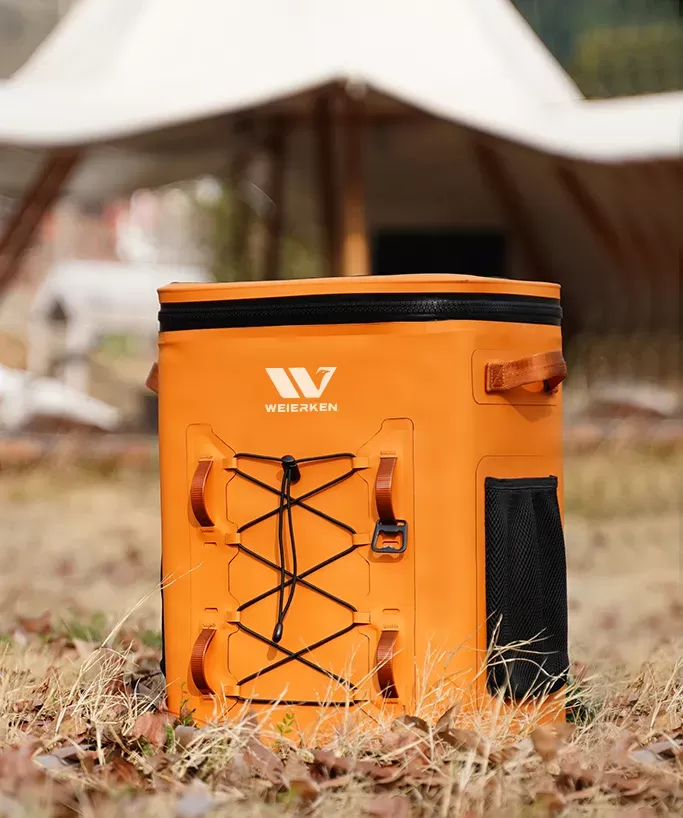

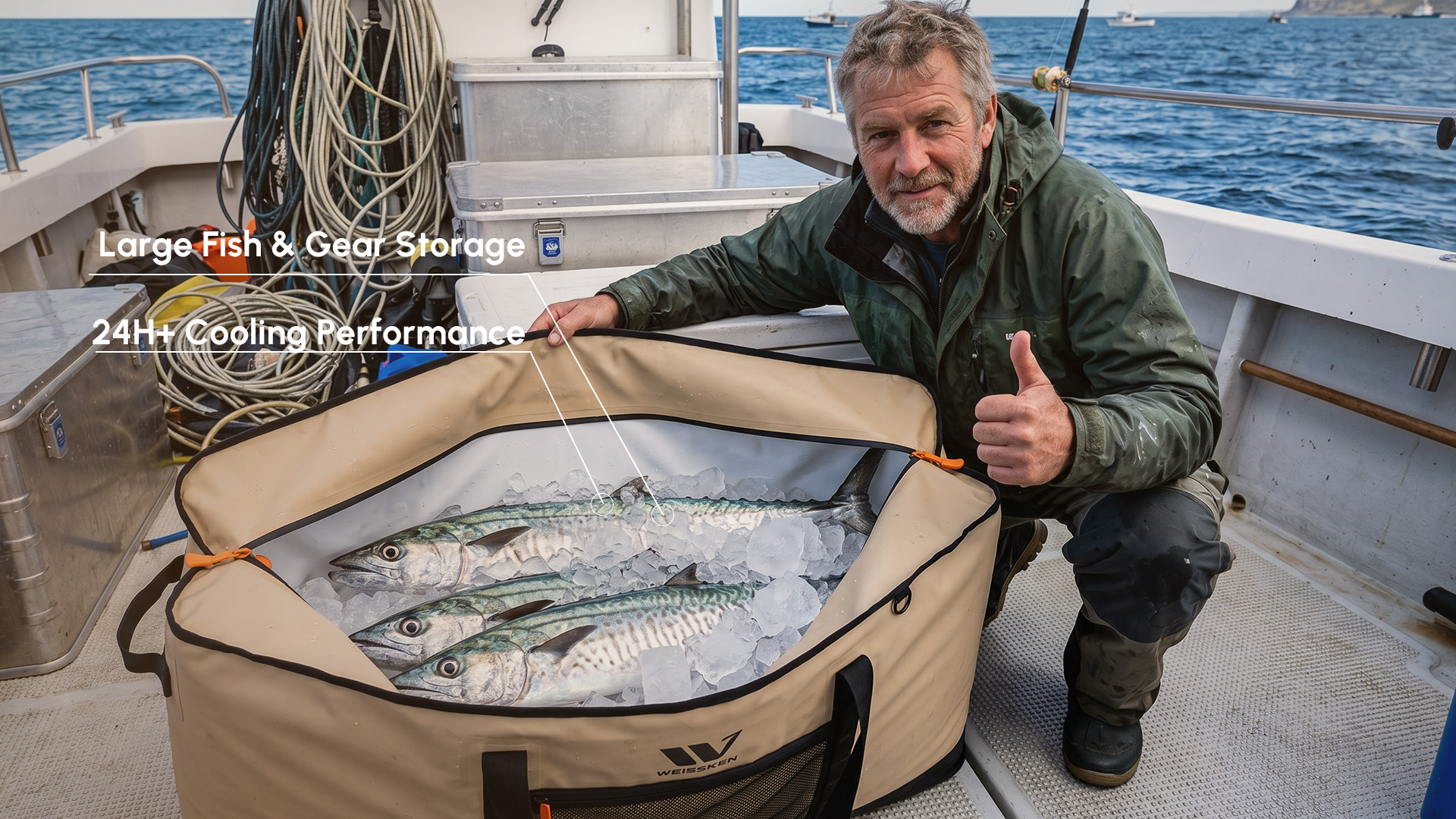
Hauling a 200-pound bluefin tuna or trophy marlin onto a boat deck presents an immediate logistical problem. Traditional roto-molded coolers are bulky, rigid, and eat up valuable deck space. Worse, a large pelagic fish rarely fits inside a standard marine cooler without bending the spine or leaving the tail exposed to the sun.
Commercial charter captains, tournament anglers, and recreational fishermen now demand flexible, high-performance cold storage. For outdoor tackle brands and marine distributors, sourcing custom tuna kill bags wholesale offers a direct path to satisfying this demand while maintaining healthy profit margins. High-end insulated fish cooler bags keep the catch cold and protect sashimi-grade meat quality for days.
As an experienced boat fishing gear bag manufacturer, Weierken builds commercial-grade kill bags engineered for punishing offshore conditions. This technical guide explains the materials, engineering, and sourcing strategies you need to build a profitable private-label fish bag program in 2026.
[Request a Wholesale Quote / Contact Factory Direct]
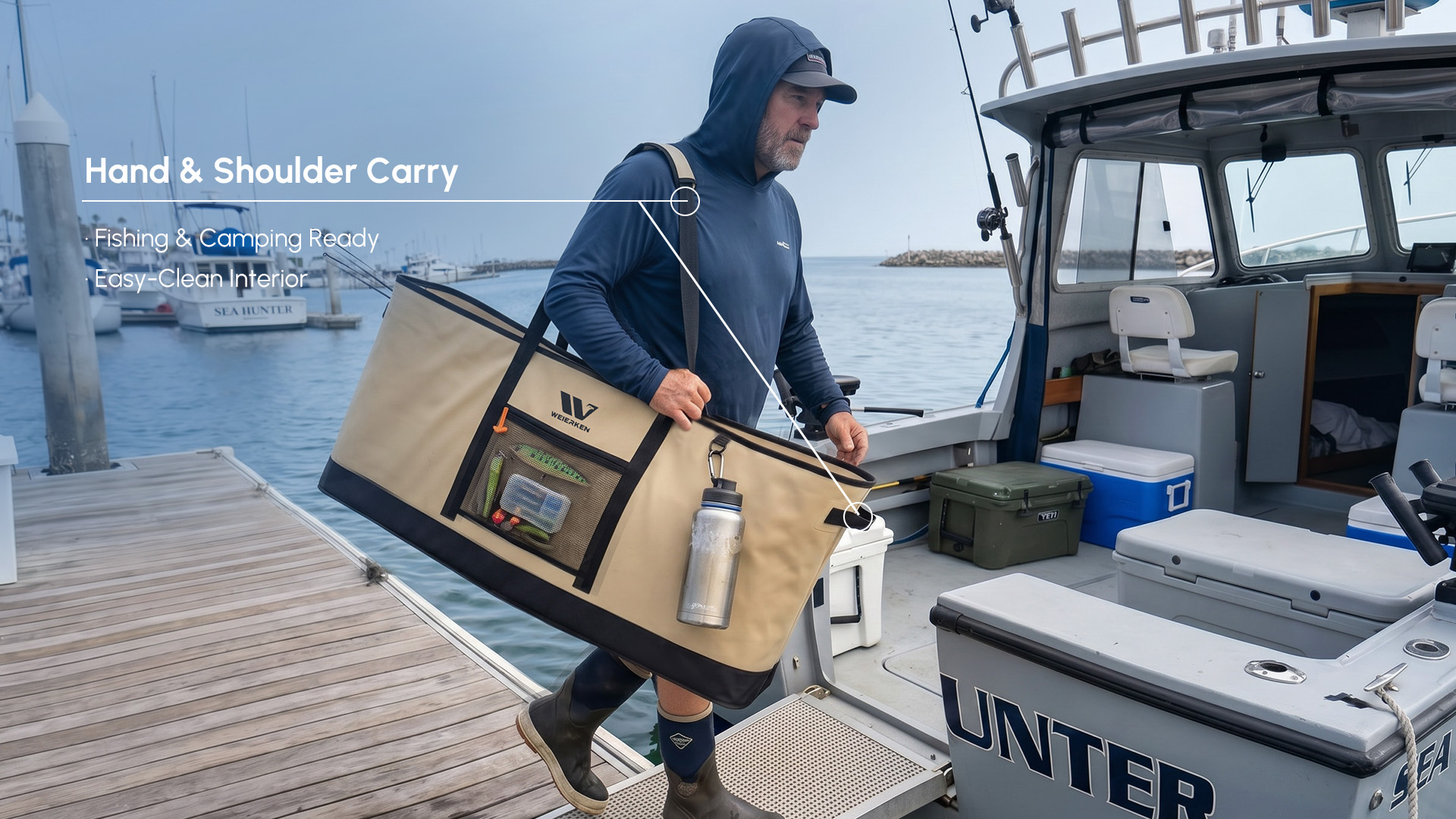
Anatomy of a Commercial-Grade Tuna Kill Bag
A reliable fish kill bag must survive sharp dorsal spines, heavy loads, and relentless saltwater exposure. When engineering a bag for commercial use, four structural components determine its performance on the water.
Thermal Insulation Technology
The thermal barrier makes or breaks a kill bag. Cheap bags use open-cell polyurethane foam, which acts like a sponge. Once punctured, open-cell foam absorbs fish blood and melted ice water, creating a foul odor that ruins the bag within weeks.
Commercial-grade bags must feature dense, closed-cell foam insulation:
Material: Closed-cell cross-linked polyethylene (PE) or EVA foam.
Thickness: 0.5-inch (12.7 mm) for standard offshore runs, up to 0.8-inch (20 mm) for multi-day pelagic tournaments.
Zero Water Absorption: The microscopic cell structure prevents fluids from entering the core, even if the inner liner suffers a puncture.
Ice Retention Performance: Quality closed-cell construction keeps ice solid for 48 to 72+ hours under direct marine sunlight, keeping the catch at a stable sub-40°F (4°C) temperature.
Heavy-Duty Exterior & Puncture Resistance
Tuna, wahoo, and kingfish have razor-sharp teeth and rigid, needle-like fins. The bag shell must resist abrasion against non-skid fiberglass decks and prevent punctures during rough seas.
Heavy-Duty PVC Tarpaulin (22oz to 28oz / 840D-1000D): Offers high tear resistance, UV stabilization, and simple wash-down capability.
Thermoplastic Polyurethane (TPU): A lighter, eco-friendlier alternative that remains flexible in freezing temperatures and provides higher tensile strength per square inch.
Inner Liner: Smooth, commercial-grade food-contact tarpaulin that resists mold, mildew, and fish oils.
Leak-Proof & Welded Seams
Traditional needle-and-thread stitching creates thousands of tiny holes in the fabric. When ice melts, bloody water seeps through the needle holes onto the boat deck, causing foul odors and safety hazards.
Professional manufacturing relies on High-Frequency Radio Frequency (RF) Welding. RF welding uses electromagnetic energy to fuse the PVC or TPU sheets at the molecular level. This creates a solid, unified bond that is completely waterproof, airtight, and stronger than the surrounding base material.
Marine Drain Plugs & Corrosion-Resistant Zippers
Corrosive saltwater environments destroy ordinary hardware within months. Every component on an offshore fish bag must withstand heavy salt spray.
Marine Drain Valves: Screw-in release plugs allow anglers to drain excess melted water without opening the main compartment, or connect a standard garden hose for quick cleaning.
Heavy-Duty Marine Zippers: Water-resistant airtight zippers or oversized #10/#12 molded nylon teeth. Nylon teeth prevent salt-crust lockups, while corrosion-proof plastic or marine-grade brass sliders eliminate rust.
Thermal Zipper Flaps: Padded internal foam flaps sit under the zipper path to prevent cold air leakage through the teeth.
Customization Options Available for Wholesale & OEM
Every fishing region targets different species, requiring tailored bag dimensions and features. As an OEM/ODM supplier, Weierken provides flexible custom specifications for private label programs.
| Customization Area | Standard Options | Custom/Commercial Specs |
|---|---|---|
| Dimensions (L x H) | 30" x 60", 40" x 80" | Custom sizes up to 120" (Giant Tuna / Marlin) |
| Bottom Profile | Flat envelope style | Gusseted flat-bottom (stands upright on deck) |
| Shell Fabric | 500D - 840D Heavy PVC | 1000D PVC Tarpaulin or 840D TPU Laminate |
| Insulation Core | 0.5" Closed-Cell Foam | 0.75" - 0.8" High-Density EVA Foam |
| Branding Application | Silk Screen Printing | UV Multi-Color, Heat-Transfer, Molded Rubber Patch |
| Colorways | White, Navy Blue, Steel Grey | Custom Pantone colors, Marine Camo patterns |
Functional Add-on Features
Add these functional upgrades to your custom order to differentiate your brand in the retail market:
Printed Fish Ruler: An integrated, UV-resistant inch/centimeter ruler along the top or side seam lets anglers verify legal catch limits instantly.
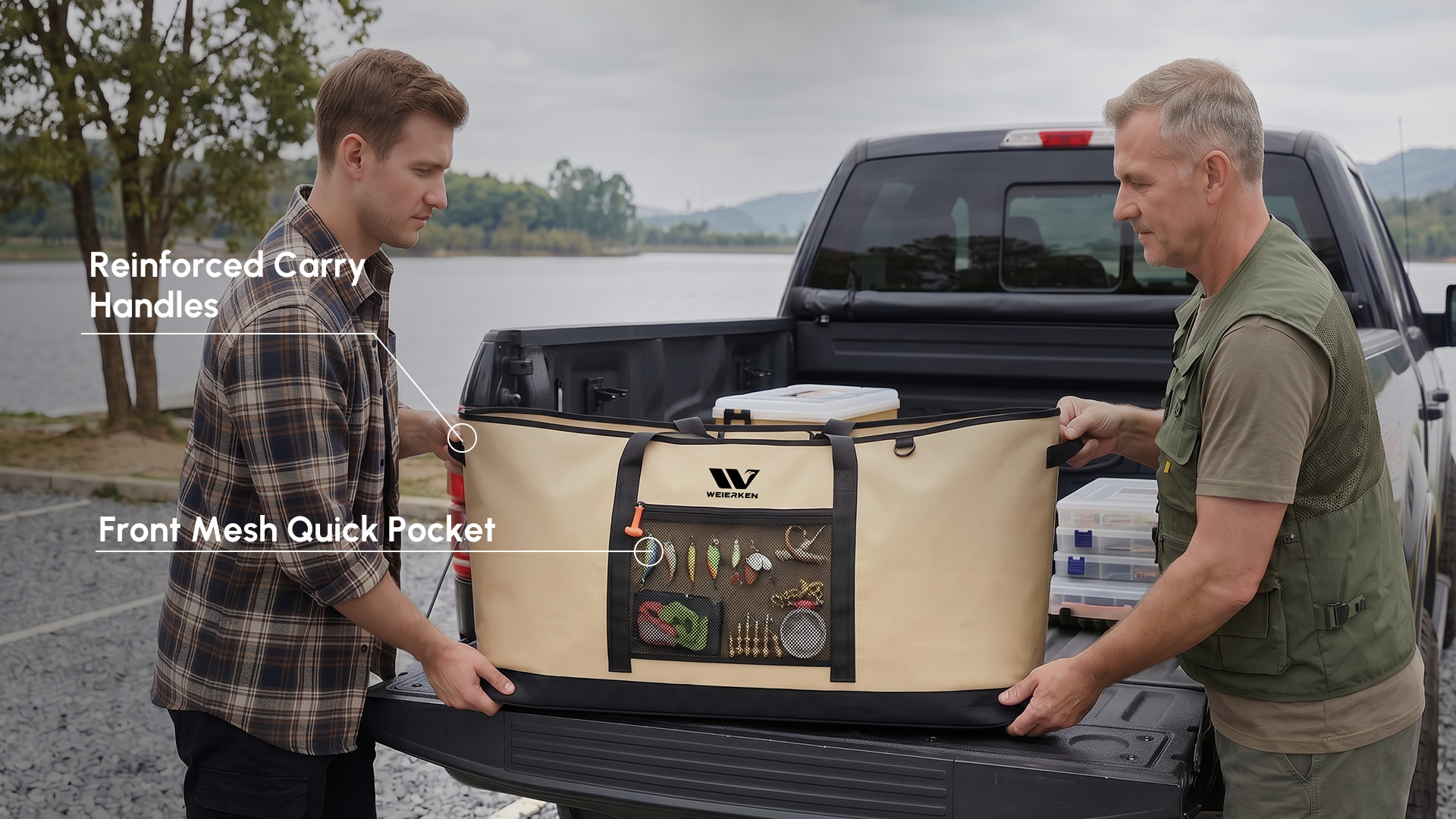
Reinforced Lift Handles: Box-stitched and RF-welded 2-inch heavy nylon webbing handles that support lifting by crane, gantry, or a multi-person crew.
Tie-Down D-Rings: Heavy-duty stainless steel or reinforced poly D-rings placed along the base to secure the bag to boat cleats during transit.
Center Backpack / Shoulder Straps: Removable padded straps for kayak anglers, spearfishermen, and surf casters carrying smaller pelagic bags.
How Sourcing Wholesale Directly from the Factory Boosts Your Margins
Working with a direct boat fishing gear bag manufacturer gives your business two critical financial advantages: lower unit costs and optimized international shipping.
Eliminate Trading Intermediaries
Domestic distributors and trading companies often mark up products by 30% to 50% without adding technical value. Buying custom tuna kill bags wholesale directly from an established factory lowers your Bill of Materials (BOM) cost. You retain full control over product specifications, material grades, and production timelines.
Flat-Packed Packaging for Lower Freight Costs
Rigid coolers carry significant "dead air" space inside shipping containers, driving up ocean freight costs per unit. Kill bags fold flat for export.
Compact Folding: We roll or fold insulated fish cooler bags flat, packing them into high-density master cartons.
CBM Optimization: A standard 40ft High Cube (HQ) container holds hundreds of commercial tuna bags, cutting your landed shipping cost per unit compared to rigid boxes.
Inventory Storage: Flat-packed bags take up 70% less warehouse space before distribution to your dealer network.
Quality Control: How We Test Our Tuna Bags
A single leak on an expensive yacht deck can destroy your brand's reputation. Commercial-grade bags must undergo strict quality assurance testing before leaving the factory.
24-Hour Hydrostatic Water-Fill Test: We fill finished production bags with colored water and suspend them for 24 hours. Seams, corners, and drain plugs must show zero drops of moisture.
Handle Tensile Load Testing: Bags undergo static and dynamic weight testing loaded up to 300+ lbs (136+ kg) to confirm that webbing straps and welded anchor points will not rip under heavy loads.
Salt-Spray Chamber Test (ASTM B117): All zippers, zipper pulls, and brass drain fittings face accelerated salt fog exposure for 72 hours to verify zero corrosion.
Cold-Crack Flexibility Test: Shell materials are chilled to 0°F (-18°C) to verify that PVC/TPU coatings will not crack when folded or stressed in cold climates.
Frequently Asked Questions (FAQ)
Q1: What is the minimum order quantity (MOQ) for custom tuna kill bags?
A1: For standard custom production runs with your logo and choice of standard colors, the MOQ generally starts at 200 to 500 units per size. Weierken supports lower MOQs for initial market testing and trial orders to help brands launch new product lines.
Q2: Can we customize our own dimensions and logo on the fish bags?
A2: Yes. We offer full OEM and ODM services. You can provide CAD drawings, tech packs, or target dimensions (such as 30"x60", 40"x80", or custom lengths). We support silk-screen printing, UV digital printing, and molded rubber logo badges.
Q3: How long can your insulated kill bags hold ice in hot weather?
A3: When built with 0.5-inch to 0.8-inch high-density closed-cell PE foam and welded seams, our bags maintain solid ice for 48 to 72+ hours in ambient temperatures exceeding 90°F (32°C), provided the zipper remains closed.
Q4: What is the difference between PVC and TPU tuna bags?
A4: Heavy-duty PVC (22oz-28oz) is the commercial industry standard—it offers high puncture resistance, is easy to clean, and provides a cost-effective price point. TPU is a premium alternative that is roughly 20% lighter, offers higher abrasion resistance, remains more flexible in sub-zero weather, and is fully recyclable.
Q5: How do the marine drain plugs work?
A5: The bags feature an RF-welded marine-grade screw drain plug located near the bottom corner. Anglers can unscrew the cap to release melted ice slurry directly out of the boat's scuppers without lifting the fish out of the bag.
Q6: How long does the sample and mass production process take?
A6: Prototyping and custom sampling typically take 7 to 10 working days after confirming your tech pack and artwork. Mass production typically takes 30 to 40 days, depending on order volume and custom fabric sourcing requirements.
Ready to Scale Your Brand? Partner with a Trusted Manufacturer
Expanding your offshore marine product catalog requires a reliable manufacturing partner who understands heavy-duty construction and rigorous saltwater performance standards.
Our OEM/ODM manufacturing workflow makes scaling your private label simple:
Submit Your Specs: Send us your required bag dimensions, fabric preference (PVC/TPU), foam thickness, and logo files.
Prototype Development: We engineer a working physical sample within 7 to 10 days for your field testing and approval.
Quality-Controlled Production: Following sample sign-off, we run mass production backed by full hydrostatic leak and tensile load testing.
Door-to-Door Delivery: We coordinate flat-pack shipping directly to your distribution center via air, FCL, or LCL ocean freight.
Whether you need a specialized 120-inch giant bluefin game bag or a complete range of tournament-ready fish cooler bags, Weierken delivers factory-direct engineering built to handle the toughest offshore conditions.
[Request a Wholesale Quote / Download Spec Sheet (PDF)]