
Direct-to-consumer meat processors and artisan butchers face intense pressure on operating margins. Freight carriers continue to revise dimensional weight formulas upward. At the same time, consumers expect premium ribeyes, briskets, and poultry to arrive cold and firm, regardless of summer heatwaves or courier delays.
Most butcher operations treat packaging as a recurring consumable cost. They buy generic foil mailers in small batches to save cash. However, this approach often hides severe costs: melted ice packs, blood-soaked cartons, customer refunds, and dead-weight shipping surcharges. Packaging specialists at manufacturers like Weierken observe that smart butcher brands view thermal packaging as capital allocation. When you purchase bulk insulated bags for butcher delivery, the real question is whether off-the-shelf standard bags or precision custom-engineered pouches yield a higher return on investment.
Thermal and Sanitary Standards for Meat Delivery Packaging
Raw meat leaves no room for thermal error. A delivery box caught in transit must resist heat transfer while complying with stringent food safety laws. Before weighing standard catalog options against custom manufacturing, you must define the engineering baseline required for shipping raw proteins.
Thermal Performance Windows
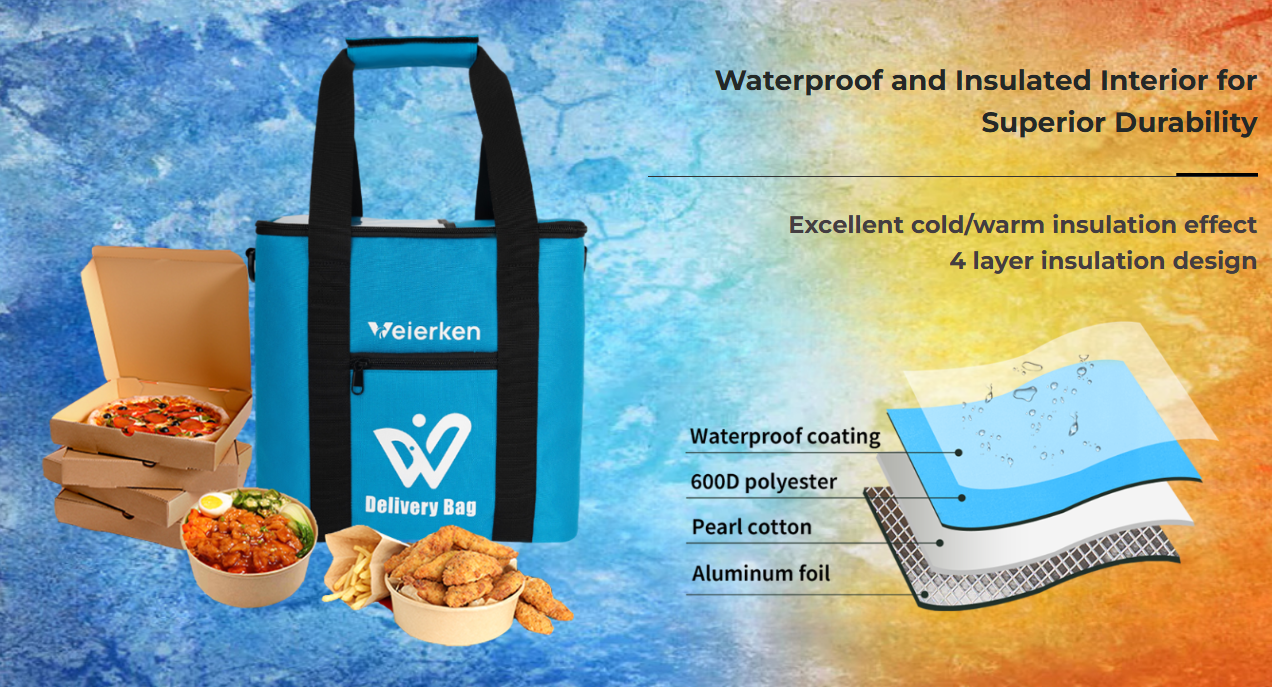
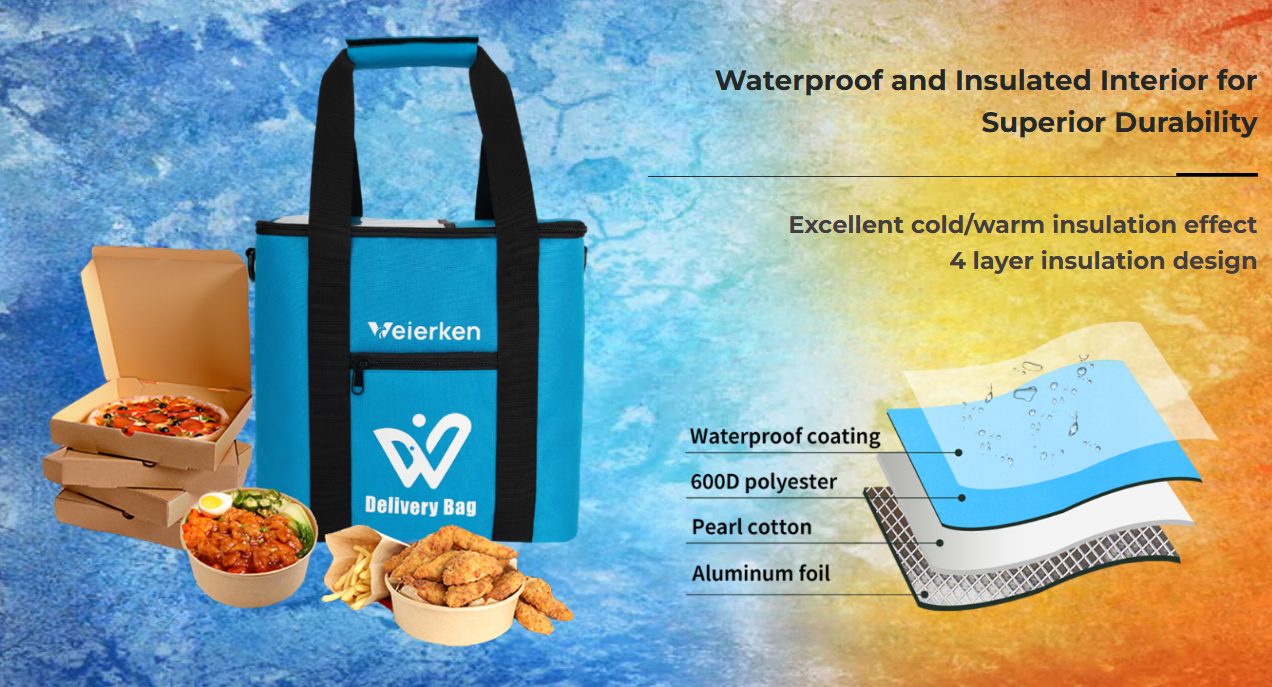
Fresh meat requires a constant internal temperature between 0°C and 4°C (32°F to 40°F). Frozen cuts must stay strictly below -18°C (0°F). Maintaining these bands across 24- to 72-hour transit windows requires multi-layered insulation:
Reflective Metalized Film (MPET): Reflects up to 97% of radiant heat away from the pouch interior.
Trapped-Air Bubble Barriers: Lowers conductive heat transfer, protecting against hot delivery van floors.
Recycled Cotton or Fiber Liners: Offers dense insulation for long-haul routes lasting 48 to 72 hours, matching traditional rigid foam without the bulky storage footprint.
Leak-Proofing and Blood Purge Control
Fresh meat releases liquid purge during transit. If purge escapes the inner pouch, the structural cardboard outer box softens, collapses under pallet weight, and prompts an immediate carrier discard. Wholesale thermal meat packaging must incorporate seamless bottoms produced via ultrasonic or continuous thermal welding. Folded, glued, or stitched bottom seams fail under hydraulic pressure when boxes are tossed onto sorting conveyors.
Food Contact and Regulatory Mandates
Inner surfaces of the bag must satisfy direct-contact criteria established by the FDA (21 CFR) and the European Food Safety Authority (EFSA). Even when meats are vacuum-sealed, packaging punctures occur. Liners must be non-toxic, chemical-free, and migration-resistant under acidic conditions.
Furthermore, Extended Producer Responsibility (EPR) programs and municipal single-use plastic fees penalize non-compliant cold chain materials. Buyers now demand recyclable curbside materials or certified post-consumer recycled (PCR) plastics that avoid regulatory fines.
Standard vs. Custom: Evaluating Total Cost of Ownership
Procuring off-the-shelf standard bags feels safe because the initial barrier to entry is minimal. In contrast, custom manufacturing demands higher minimum order quantities (MOQs) and lead time. To identify the true winner, we must examine the Total Cost of Ownership (TCO) across three operational pillars.
1. Initial Unit Price vs. Dimensional Weight Shipping Surcharges
Standard insulated mailers come in fixed sizes: 10x10 inches, 12x15 inches, or 16x18 inches. But meat cuts do not match standard increments. When a butcher packs a three-pound order into an oversized standard bag, two costly things happen:
Excess Air Space: Air acts as a heat sink. The packer must add more frozen gel packs or dry ice to keep that trapped ambient air cold. Coolant adds billable dead weight.
Dimensional Weight (DIM) Penalties: Shipping carriers bill whichever is greater: actual scale weight or dimensional weight (Length x Width x Height / Carrier Divisor). An extra inch of padding across three dimensions can bump a three-pound shipment into a five-pound billing bracket.
Custom meat delivery bags eliminate this empty space. Designing a pouch tailored to your specific box configurations, portion trays, or vacuum packs strips unnecessary air out of the system. The unit cost of the custom pouch might be slightly higher or lower depending on bulk volume, but the recurring savings on courier billing and refrigerant usage are immediate.
2. Brand Equity, Unboxing, and Customer Retention
Butcher products are premium, high-trust items. A consumer spending $180 on pasture-raised wagyu steaks expects an exceptional delivery experience. Opening a brown cardboard box to find a generic, unbranded silver bubble bag looks like a commodity transaction. It does not communicate craftsmanship.
Custom-printed mailers turn the unboxing process into a retention engine. High-definition flexographic printing allows you to display your logo, farm sourcing certifications, handling warnings, and custom QR codes linking directly to chef-curated cooking guides. Companies like Weierken assist brands in engineering custom-branded packaging that bridges the physical product to digital reorders, driving up lifetime customer value (LTV).
3. Spoilage, Ruptures, and Puncture Mitigation
Bone-in cuts—such as tomahawk ribeyes, frenched lamb racks, and bone-in short ribs—pose a mechanical threat to packaging. Sharp bone edges quickly slice through the thin 40-to-60-micron inner films found in budget commodity bags. Once the liner punctures, the insulation loses vacuum integrity, outside humidity rushes in, and condensation degrades cooling efficiency.
Custom engineering addresses this issue directly. You can specify high-tensile co-extruded nylon-polyethylene inner layers or reinforced puncture buffers specifically where bone-in cuts sit. Cutting your damage and spoilage claims from 2% down to 0.2% can save thousands of dollars every quarter.
Cold Chain Packaging ROI Model for Butchers
To determine if moving to customized bulk order insulated mailers makes financial sense, use this straightforward cold chain packaging ROI formula:
Net Annual Packaging ROI = (Annual Spoilage Reductions + Total Freight Savings + Coolant Cost Reductions + Gross Profit from Reorders) - (Incremental Packaging Tooling & Production Costs)
Case Scenario: The 5,000 Order-Per-Month Butcher
Consider an expanding direct-to-consumer butcher operation handling 5,000 monthly deliveries across Regional Zones 2 through 5. Their average order value is $130, containing premium dry-aged cuts.
Baseline Scenario: Off-the-Shelf Standard Mailers
Standard Bag Unit Cost: $0.95
Monthly Bag Spend: $4,750
Excess Gel Pack Coolant Required (due to air voids): 1 extra 16oz pack per box ($0.42 each) = $2,100/month
Carrier Dimensional Weight Waste: Average $0.85 excess freight per parcel = $4,250/month
Puncture & Thaw Spoilage Rate: 1.5% (75 spoiled orders per month @ $130 value) = $9,750/month
Total Monthly Packaging-Related Friction: $20,850
Optimized Scenario: Custom-Engineered Bulk Bags
Custom Tailored Bag Unit Cost (ordered in 30,000-unit production runs): $1.15
One-time Print Cylinder/Plate Setup Fee: $1,200 (amortized over 6 months = $200/month)
Monthly Bag Spend: $5,750 + $200 = $5,950
Coolant Reductions: Snug fit eliminates the extra gel pack = $0 savings spent
Carrier Freight Savings: Trimmed dimensions drop the parcel billing bracket, saving $0.85 per box = $0 excess freight spent
Puncture & Thaw Spoilage Rate Drops to 0.3% (15 claims per month @ $130 value) = $1,950/month
Total Monthly Packaging-Related Friction: $7,900
Financial Impact: By investing an additional $1,200 per month in superior, custom packaging material, the operation recaptures $12,950 per month in saved freight, reduced ice packs, and prevented refunds. That represents a net annual bottom-line recovery of $155,400. That is how packaging shifts from an overhead expense to a profit driver.
Decision Matrix: Standard vs. Custom Bulk Bags
Standard packaging still serves specific operational stages. Use this operational matrix to evaluate your next supply run.
Choose Standard Bulk Bags If:
Order Volumes Are Below 500 Per Month: You have not yet stabilized your order density, and the cash outlay for custom production runs ties up vital working capital.
You Are Testing a New Product Line: You are introducing a temporary holiday poultry package or limited-run charcuterie kit and need packaging within three business days.
You Use Multi-Sized Random Boxes: Your packing system varies wildly on every ticket, preventing standardized box sizing.
Transition to Custom Bulk Orders If:
Monthly Shipments Consistently Exceed 1,500 Units: At this volume, dimensional shipping surcharges easily outstrip any initial plate or setup fees.
You Ship High-Risk, Bone-In Proteins: Standard off-the-shelf liners rupture under transit vibration, triggering expensive customer refunds.
You Run a Subscription Meat Club: High retention rates rely on unboxing aesthetics, printed brand storytelling, and consistent delivery presentation.
You Must Satisfy 2026 Corporate ESG Mandates: You need certified, independently verified recycled insulation materials with custom curbside recycling instructions printed directly on the exterior.
Frequently Asked Questions
Q1: What thermal retention times can I realistically expect from bulk insulated bags for butcher delivery?
A1: Standard metallized bubble bags generally protect fresh meat for 24 to 36 hours when paired with appropriate cold packs. High-density bonded fiber liners, multi-layer foil-foam laminates, or custom-engineered insulated pouches can maintain frozen temperatures below -18°C for 48 to 72 hours, depending on regional ambient temperatures and coolant weight ratios.
Q2: How do custom dimensions lower dimensional (DIM) weight costs for raw meat delivery?
A2: Couriers charge based on parcel volume using dimensional divisors. Off-the-shelf bags force you into larger outer corrugated boxes packed with cheap fillers or surplus ice. Customizing your bag to the precise cubic volume of your meat cuts eliminates dead air space. Reducing just one inch from a box's profile can lower billable parcel weight by one to two pounds, saving significant money on every shipment.
Q3: Can insulated meat bags satisfy 2026 packaging sustainability regulations?
A3: Yes. Modern thermal bag designs move away from unrecyclable multi-material composites that end up in landfills. Options now include mono-material low-density polyethylenes (LDPE) suitable for existing recycling streams, alongside renewable post-consumer recycled cotton and paper-based honeycomb pads that consumers can discard in standard household recycling bins.
Q4: How do puncture-resistant linings protect bone-in meat cuts during transit?
A4: Bone-in meats like tomahawk steaks or pork chops exert pinpoint hydraulic stress during courier transport. Standard foil mailers use thin inner sealants that tear easily. Custom bulk packaging reinforces interior liners using co-extruded metallocene or linear low-density polyethylene (LLDPE) blends, preventing punctures and keeping insulation moisture-free.
Q5: What is the typical MOQ for custom meat delivery bags compared to wholesale standard inventory?
A5: Standard stock bags can usually be purchased by the carton with low minimums starting around 100 to 500 units. Custom manufacturing—which includes tailored dimensions, performance-rated material plies, and multi-color branding—typically requires minimum production runs between 3,000 and 10,000 units, depending on the physical size and complexity of the bag.
Secure Your Margins with Engineered Thermal Packaging
Every thawed shipment, ruptured bone puncture, and dimensional billing fee chips away at your operational margin. Standard bags offer short-term convenience, but expanding processors and direct-to-consumer butcher operations quickly outgrow generic solutions. Precision-engineered packaging protects meat texture, secures food safety compliance, and elevates brand equity from the sorting facility to the kitchen counter.
Weierken manufactures high-performance cold chain solutions designed specifically for meat processors, independent butcheries, and temperature-sensitive food shippers. Stop paying carriers to haul empty air, and stop refunding customers for damaged shipments.
Ready to calculate your potential savings? Contact the cold chain packaging engineers at Weierken today to review your current shipping dimensions, evaluate material samples, or request a complete custom quotation.