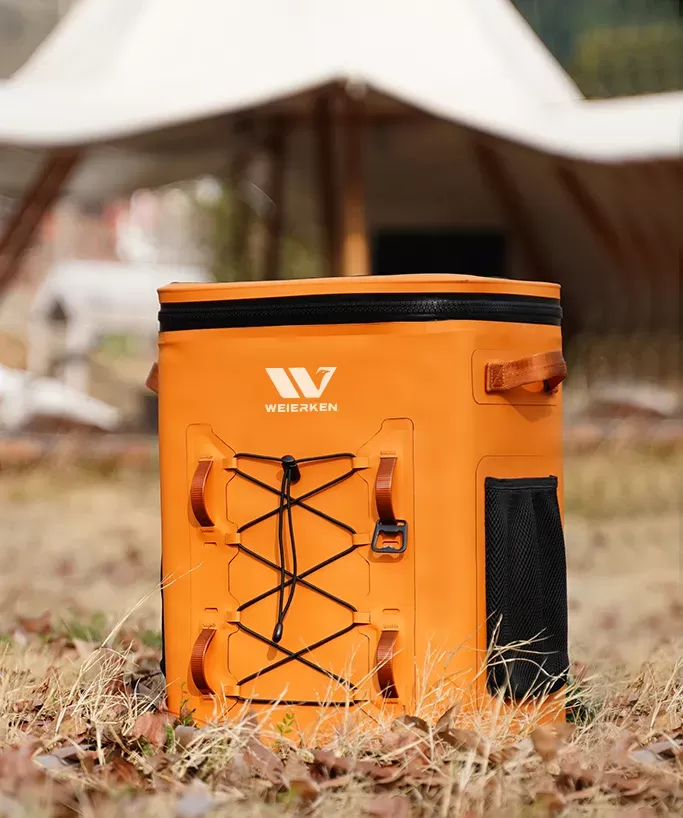

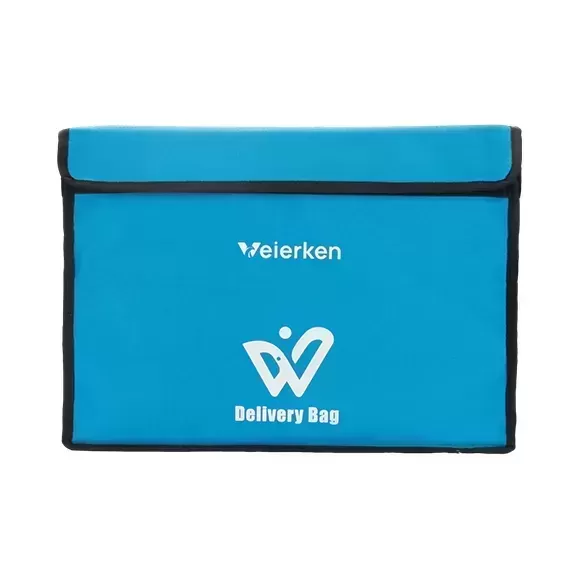
Transporting fresh and frozen seafood over the last mile allows no margin for error. A single thermal breach or torn lining can turn high-value oysters, salmon fillets, or live lobsters into unsellable waste. Air cargo handlers and ground couriers instantly reject leaking cartons to protect other cargo.
For cold chain logistics managers and seafood brands, sourcing packaging is not about finding cheap totes. It requires partnering with a specialized seafood delivery cooler bag manufacturer capable of engineering high-performance thermal barriers. Industry leaders like Weierken focus on closed-loop engineering to handle these exact perishability challenges.
As global cold chain rules tighten in 2026, packaging procurement teams must look past surface-level sales claims. Here are the seven essential engineering benchmarks you must inspect before selecting an OEM/ODM manufacturing partner.
1. Zero-Leakage Seam Engineering: Radio Frequency (RF) Welding Over Stitching
Traditional needle-and-thread stitching is completely unsuitable for liquid-rich seafood logistics. Every needle penetration creates a microscopic channel. When ice packs melt or fish lose purge water, liquid inevitably seeps through needle holes and contaminates transport vehicles.
A qualified heavy-duty cold chain cooler bags supplier uses high-frequency radio frequency (RF) or ultrasonic welding for all internal seams. This process uses electromagnetic energy to fuse polymer molecules together, creating a permanent, continuous physical seal.
Core Material: Demand seamless, food-grade Thermoplastic Polyurethane (TPU) or heavy-gauge PEVA linings. TPU offers far superior flex-fatigue resistance over PVC in freezing temperatures.
Factory Verification: Require the factory to provide hydrostatic pressure testing records. The welded liners must hold standing water under mechanical agitation for at least 72 hours with zero seepage.
2. Validated Thermal Insulation and Laboratory Testing (ISTA 7D / ASTM Standards)
Insulation performance is not simply a matter of foam thickness. A thin, dense core of high-grade insulation often outperforms thick, low-density materials that compress under the weight of wet ice and seafood.
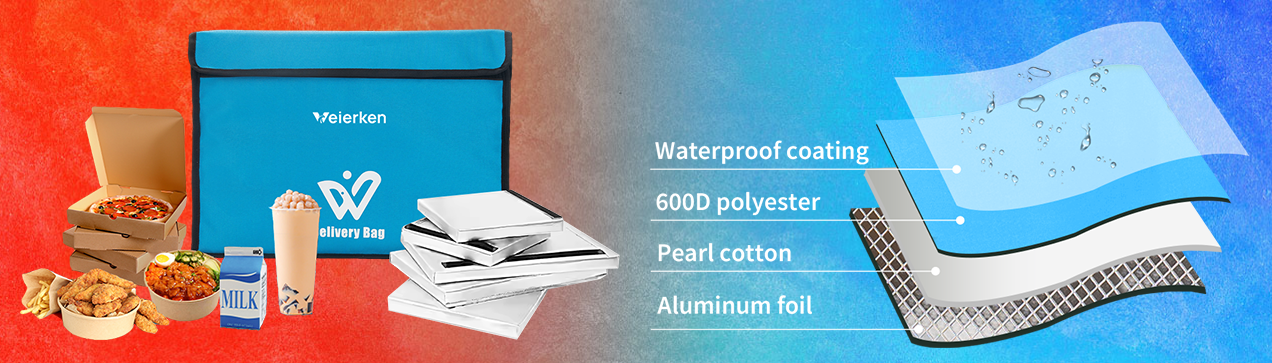
Qualified manufacturers avoid generic polyethylene foam. Instead, they engineer multi-layer barriers combining cross-linked polyethylene (XPE), dense closed-cell EPE, and reflective radiation films. Advanced cold-chain designs now even incorporate aerogel composite layers for maximum thermal hold.
Thermal Verification: Does the supplier have an in-house environmental test chamber? A dependable manufacturer conducts tests simulating ISTA 7D and ASTM D3103 profiles.
Thermal Goal: The packaging must maintain internal temperatures between 0°C and 4°C for 24 to 48 hours when exposed to external ambient temperatures of 35°C.
3. Puncture Resistance for Crustaceans, Spines, and Shells
Live lobsters, blue crabs, and spiny finfish can easily puncture standard cooler bag linings. Once the inner barrier is punctured, moisture enters the insulation layer, ruining its thermal resistance and harboring bacterial colonies.
When auditing a prospective leak-proof seafood shipping bags factory, check their raw material puncture and abrasion ratings. The interior lining must resist sharp points, repeated friction, and heavy mechanical agitation during rough transit.
Standard Compliance: Request ASTM F1306 test reports, which measure slow-rate penetration resistance of flexible barrier films.
Structural Reinforcement: Check the handle and strap attachment zones. Straps must run continuously under the base of the bag or feature reinforced box-X stitching with internal backing plates capable of withstanding dynamic loads over 30 kg.
4. Circular Materials and Global Food-Contact Compliance (FDA / LFGB / GRS)
By 2026, extended producer responsibility (EPR) laws and single-use plastic taxes across North America and Europe directly impact shipping packaging. Procurement teams must choose manufacturers that offer verified sustainable raw material pipelines.
A forward-thinking seafood delivery cooler bag manufacturer like Weierken helps brands adapt by building outer shells from GRS-certified (Global Recycled Standard) rPET, sourced from recycled plastic bottles. These fabrics offer the same tear strength and water-repellent performance as virgin nylon while lowering your carbon footprint.
Lining Safety: Direct and indirect contact with food means materials must be 100% BPA-free and formulated without toxic plasticizers.
Compliance Certificates: Demand third-party verification for FDA 21 CFR (USA), LFGB (Germany/EU), and REACH/RoHS compliance.
5. Dual-Scenario Form Factor: High-Turnover B2B vs. Flat-Pack B2C
A single bag design cannot solve every seafood distribution challenge. B2B restaurant distribution requires different structural qualities than direct-to-consumer (D2C) home delivery.
Review the manufacturer's pattern-making and industrial design capabilities across these two core operational scenarios:
B2B Closed-Loop Delivery: Needs rugged, rigid, easily sanitized totes. They must stack securely when loaded and fold down to a fraction of their volume to reduce empty return-freight costs.
B2C eCommerce Delivery: Demands lightweight, space-saving designs that ship flat to your processing plant to minimize inward warehouse storage costs.
6. Integration with Phase Change Materials and Cold Chain Monitoring
A seafood cooler bag works as part of an integrated thermal system. It must securely hold refrigerant materials like gel packs, wet ice, and dry ice while keeping them from damaging delicate seafood flesh.
Look for specialized custom compartment engineering within the factory's wholesale seafood packaging solutions. Direct contact with dry ice (-78.5°C) will crack cheap PVC liners and freeze-burn delicate fish fillets.
Thermal Buffers: Pockets designed specifically for phase-change materials (PCM) to balance interior temperatures without freezing live shellfish.
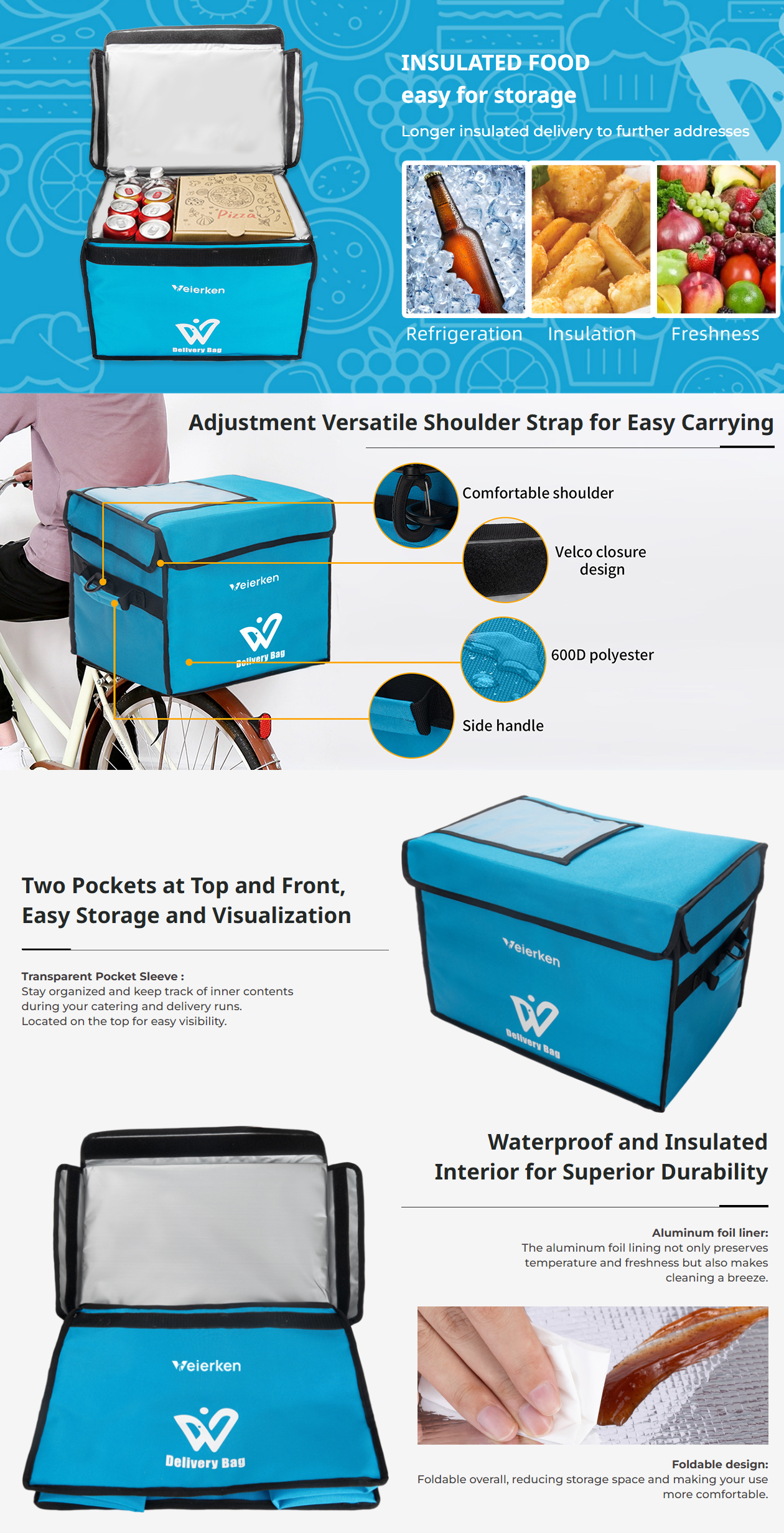
Digital Monitoring Pockets: Interior and exterior mesh compartments designed for temperature data loggers, Bluetooth beacons, or RFID tracking tags.
Condensation Resistance: Exterior materials and printed logos must use hydrophobic coatings to stop graphic peeling caused by exterior moisture sweating.
7. Factory Automation, Scalability, and Traceable Quality Audits
Seafood demand spikes sharply during holidays, regional harvest seasons, and promotional events. A boutique workshop cannot scale up output when your demand doubles overnight. Conversely, an undisciplined large factory may let defect rates climb under pressure.
Vet the manufacturer's physical infrastructure and quality management systems during an on-site or third-party video audit:
Equipment Fleet: Look for automated CAD fabric cutters, multi-head programmable sewing stations, and automated RF welding equipment that eliminate human error.
Quality Systems: Confirm active ISO 9001 certification, alongside ethical manufacturing audits such as BSCI or Sedex.
AQL Standards: Ensure incoming raw materials undergo strict IQC inspections. Finished goods should follow Acceptable Quality Limit (AQL) 2.5/4.0 standards, including drop tests, load-bearing tests, and seam stress tests.
Frequently Asked Questions
Q1: Why is RF welding better than stitched seams for seafood delivery packaging?
A1: Stitched seams use needles that leave thousands of tiny puncture holes along every seam. Melting ice and fish purge water seep through these holes, ruining the insulation and leaking outside the bag. Radio frequency (RF) welding fuses the thermoplastic layers together using heat and pressure, producing an airtight, watertight bond that cannot leak.
Q2: What is the optimal insulation thickness for a 48-hour seafood transit cycle?
A2: Thickness alone does not determine performance; material density and thermal conductivity (k-value) are critical. Generally, 15mm to 20mm of high-density closed-cell EPE or cross-linked XPE foam, combined with an interior reflective barrier and proper refrigerant ratios, can maintain safe 0-4°C temperatures for 48 hours in standard summer shipping environments.
Q3: What certifications should a reliable seafood delivery cooler bag manufacturer hold?
A3: Key certifications include ISO 9001 for quality management, alongside FDA or LFGB testing to verify the interior liner is food contact safe. For international supply chain ethics, look for BSCI or Sedex (SMETA) audits. If you require recycled materials, ensure the factory holds a certified GRS (Global Recycled Standard) chain of custody.
Q4: How do puncture-resistant linings withstand lobster claws and fish spines?
A4: Manufacturers use high-tensile, high-density materials like reinforced TPU (often 0.3mm to 0.8mm thick) or reinforced woven tarpaulin linings. These films possess high tear strength and puncture resistance ratings verified by ASTM F1306 laboratory testing, preventing sharp objects from puncturing the foam core.
Q5: How can seafood brands balance ESG sustainability goals with high thermal performance?
A5: You can specify outer shells made from post-consumer recycled fabrics like GRS-certified rPET, paired with non-toxic, recyclable TPU liners. Additionally, moving from single-use cardboard boxes to heavy-duty, reusable, collapsible cooler bags drastically cuts packaging waste and lifecycle carbon emissions over hundreds of transit loops.
Secure Your Cold Chain with Proven Manufacturing
High-value seafood logistics requires engineering precision. A failing cooler bag wastes expensive inventory, damages customer trust, and disrupts delivery operations. Choosing a manufacturer that verifies thermal retention, material safety, and seam durability protects your shipments from dock to doorstep.
Weierken works directly with seafood exporters, cold chain carriers, and fresh delivery platforms worldwide. Our engineering team designs and manufactures dependable, food-safe, and leak-proof thermal packaging built to your exact delivery timelines and operational conditions.
Ready to upgrade your seafood cold chain packaging?
Contact our technical engineering team today to discuss your project requirements, request a structural sample, or book an ISTA-standard thermal performance simulation for your custom delivery profiles.