
Rising dairy prices, labor shortages, and aggressive third-party delivery fees continue to squeeze commercial bakeries. While procurement teams fight to shave pennies off flour, butter, and logistics contracts, they frequently overlook their delivery packaging. For multi-unit bakery chains, branded transit carriers represent a steady, silent operational expense that drains profitability month after month.
Most hospitality chains buy their packaging through local paper distributors, food service brokers, or regional trading firms. That convenience comes at a steep price. Middlemen routinely mark up goods by 25% to 40% while adding zero structural value to the product. To cut packaging sourcing costs without sacrificing thermal performance, procurement leaders are shifting toward a direct model. Working directly with a verified cake carrier delivery bag supplier like Weierken strips out broker markups and turns packaging into a controlled, engineered profit protector.
Deconstructing the Distributor Markup: Where Does Your Packaging Budget Go?
Every hand that touches a product between the factory floor and your storefront takes a cut. The traditional distribution model burdens your operating budget with compounding markups:
The Traditional Chain: Raw Materials → Primary Manufacturer → Export Agent → Domestic Importer → Regional Distributor → End Bakery Brand.
The Direct Factory Model: Raw Materials → Direct Cake Carrier Delivery Bag Supplier → End Bakery Brand.
When you purchase wholesale insulated cake carrier units from a regional broker, you do not just pay for fabric and foam. You pay for the broker's warehouse rent, their sales commissions, secondary freight, and their financing spread. You also bear the hidden cost of slow communication. If a seam splits or a zipper jams on a batch of 5,000 bags, regional distributors rarely have the technical capability to fix the manufacturing process at the root.
Bill of Materials (BOM) Cost Transparency
A direct commercial bakery delivery bag supplier provides clear, unbundled pricing. You see the exact cost of the raw inputs:
Outer fabric yardage (600D polyester vs. ripstop nylon vs. RPET).
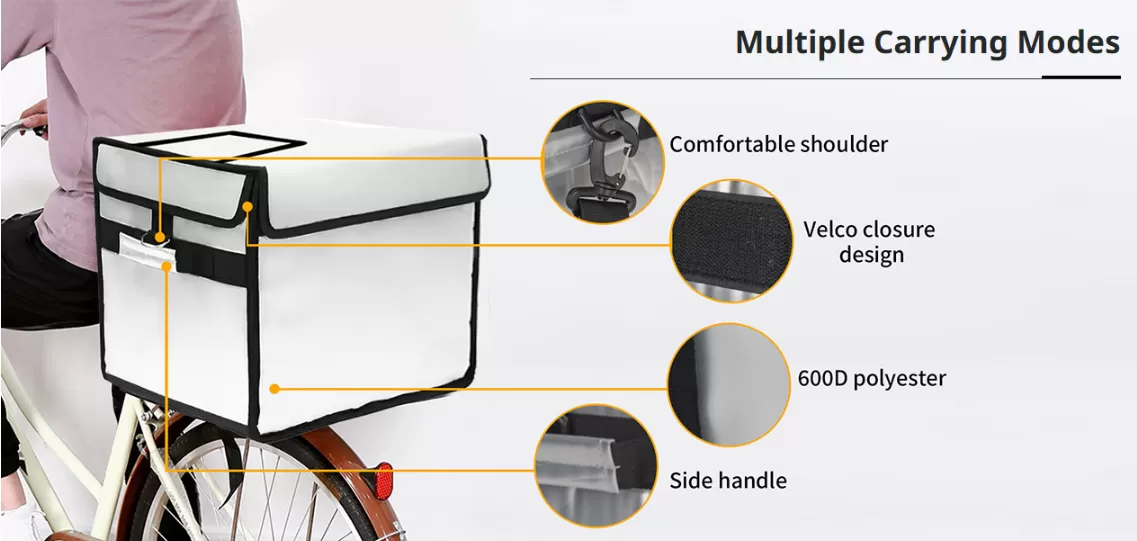
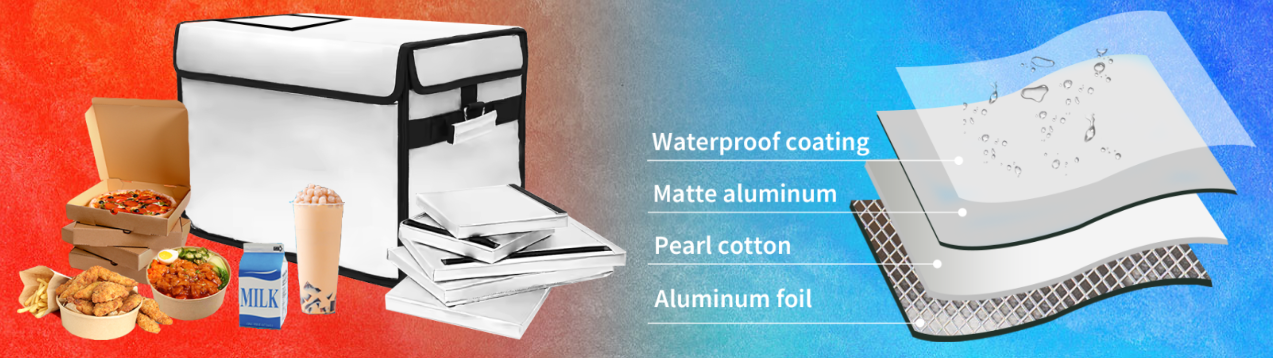
Core insulation grade (EPE pearl foam vs. high-density cross-linked XPE).
Reflective thermal barriers (aluminum foil vs. metallized film).
Hardware components (zippers, sliders, thread, and webbing).
Labor, printing techniques, and factory margin.
When you understand the true Bill of Materials, negotiations shift from arbitrary bargaining to collaborative engineering. You can adjust foam densities, modify webbing paths, and choose printing methods to hit your exact target unit price.
Engineering-Driven Cost Reduction: Beyond Factory Pricing
Slashing costs does not mean buying cheaper, flimsy materials. A broken bag that drops a three-tier wedding cake destroys any savings you made on the unit cost. Real cost reduction comes from industrial design and logistics engineering.
1. Flat-Pack Optimization to Slash Logistics CBM
International shipping rates penalize bulky, lightweight cargo. Standard insulated coolers hold air inside the box, which means you pay to ship empty space across oceans and highways. Freight costs can quickly make up 30% of your total landed cost.
A skilled bulk cake delivery bag manufacturer designs bags for flat-pack transport:
Engineered fold lines allow bags to collapse completely flat without creasing the insulation.
Removable structural baseplates pack separately in high-density flat cartons.
Compressible foam configurations cut container cubic meters (CBM) by 40% to 55%.
By fitting twice as many units into a single 40-foot high-cube (40HQ) container, you instantly cut inbound ocean and land freight costs per bag in half.
2. Right-Sizing and Avoiding Over-Engineering
Many bakeries overpay for thermal performance they do not need. If your operations focus entirely on point-to-point deliveries within a 35-minute radius, you do not need an expensive, 15mm-thick bag designed for 6-hour transit windows.
An experienced cake carrier delivery bag supplier helps you match your packaging directly to your service level agreements (SLAs):
Short-Haul Direct (Under 45 mins): 3mm to 5mm EPE foam with an aluminum barrier delivers adequate cold retention at a low unit cost.
Hub-and-Spoke Routes (2 to 4 hours): 8mm dense XPE foam with a food-grade PEVA liner ensures cold-chain compliance without adding excess weight.
Matching insulation to your real-world delivery radius prevents unnecessary material spend across hundreds of thousands of bags.
3. Extending Durability to Lower Cost-Per-Use
Thin, cheap takeaway bags tear after five to ten delivery trips. When a courier drops a bag because a handle gives out, your purchase price becomes irrelevant.
Investing in durable details from a professional factory price thermal cake carrier provider drops your cost-per-delivery over time:
Cross-box reinforced stitching on load-bearing handles spreads weight evenly across the entire bag.
Heat-welded inner linings stop melted ice from soaking into the foam, keeping it odor-free.
Industrial-grade nylon zippers resist teeth misalignment over thousands of open-and-close cycles.
A commercial carrier that costs $8.00 and lasts 60 trips costs just $0.13 per run. A flimsy $4.00 bag that breaks after 8 trips costs $0.50 per run. Durability saves money over the long term.
Stabilizing Peak Season Supply Chains
Bakery sales jump during major holidays: Valentine's Day, Mother's Day, and the winter holiday season. Relying on local distributors during these weeks is a massive risk. Third-party suppliers often face stockouts or hike spot prices when seasonal demand spikes.
Partnering directly with a direct factory bakery packaging specialist like Weierken gives you supply chain predictability:
Raw Material Reservations: Established manufacturers secure fabric and foam supplies well before holiday production runs, protecting you from seasonal price jumps.
Scheduled Delivery Frameworks: You can negotiate annual volume pricing and set up scheduled, staggered shipments to keep inventory levels lean.
Dedicated Production Slots: Direct factory partnerships lock in your production schedules months ahead of time, ensuring peak sales weeks run smoothly.
Supplier Verification: How to Spot a Real Factory
Many trading brokers market themselves as factories online. To protect your brand, run thorough checks to make sure you are dealing with a genuine custom cake carrier delivery bag supplier rather than a reseller marking up products from their desk.
| Verification Criteria | True Direct Factory | Sourcing Agent / Middleman |
|---|---|---|
| In-House Prototyping | Dedicated R&D sample room; delivers physical samples in 48–72 hours | Waits 2–3 weeks to source samples from third parties |
| Factory Certifications | Holds ISO9001, BSCI, Sedex audits directly under the factory name | Shows certificates belonging to unknown subcontractors |
| Manufacturing Machinery | Operates automated fabric cutting beds and ultrasonic heat-welders | Has no heavy equipment; operates out of a commercial office |
| Bill of Materials Flexibility | Willing to customize foam densities, fabrics, and hardware specs | Limits buyers to fixed, pre-made catalog options |
Reclaiming Your Operating Margins
Controlling packaging spend is not about cutting corners or downgrading quality. It is about removing supply chain waste. Buying through fragmented distribution channels adds unnecessary markups and increases operational risk. Working directly with an industrial cake carrier delivery bag supplier gives you complete control over your materials, logistics volume, and production schedules.
Leading international bakery brands rely on Weierken to streamline their thermal packaging supply chain. By engineering flatter packaging, standardizing custom box dimensions, and manufacturing direct, you cut product loss, elevate your brand profile on the street, and protect your margins across every store in your network.
Frequently Asked Questions
Q1: How does buying from a direct cake carrier delivery bag supplier reduce total unit costs?
A1: Buying directly cuts out the 25% to 40% margin typically added by import brokers and regional distributors. It also gives you transparent raw material pricing and lets you optimize packaging dimensions to cut international shipping costs per unit.
Q2: What is the typical Minimum Order Quantity (MOQ) for factory-direct custom production?
A2: Most true manufacturing facilities require an MOQ of 500 to 1,000 units for fully customized bags with unique dimensions, dyed fabrics, and custom zipper pulls. For designs using standard stock fabric colors with custom screen-printed branding, MOQs can be more flexible to support initial market trials.
Q3: How does collapsible bag design lower logistics and storage costs?
A3: Rigid or non-collapsible cooler bags take up huge amounts of space during transit. Collapsible, flat-packed bags with removable bottom boards fold flat, reducing total volume by over 50%. This cut in cubic volume lets you fit twice as many bags into a single freight container or warehouse rack.
Q4: How do you verify food safety compliance when sourcing bags from overseas?
A4: Ask your manufacturer for valid test reports from independent testing bodies like SGS, TV, or Intertek. Inner liners must meet FDA 21 CFR (United States) or LFGB (European Union) standards for direct or indirect food contact, ensuring the materials do not emit toxic plasticizers or chemical odors.
Q5: Can direct factories handle staggered delivery releases throughout the fiscal year?
A5: Yes. Commercial manufacturing partners frequently sign annual master service agreements (MSAs) with growing bakery chains. The factory produces your annual volume at preferred tiered pricing, then ships scheduled container loads to match your quarterly inventory forecasts.
Stop Paying Middleman Markups on Your Commercial Bakery Packaging
Send our engineering and sourcing team your current bag specifications, target dimensions, and projected annual volume. We will review your design, show you where you can save on materials and freight, and send you a free, factory-direct sample prototype.