

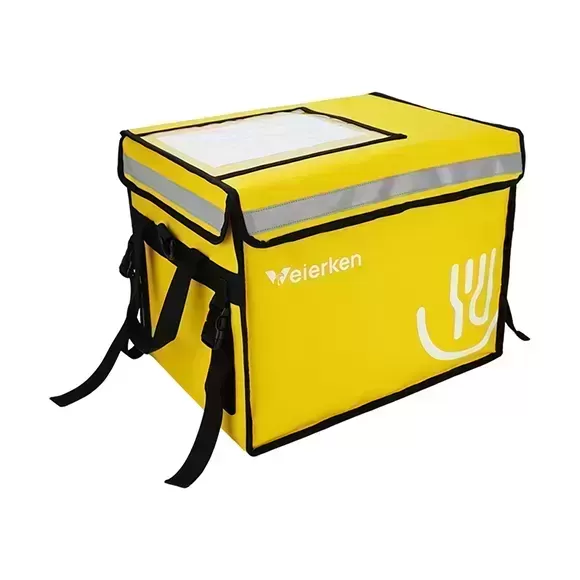
Jedes kommerzielle Kuriernetzwerk steht vor demselben operativen Kopfzerbrechen: eine brennend heiße Pizza zusammen mit einem eisgekühlten Boba-Tee oder einem knackigen Gartensalat zu liefern. Wenn Fahrer diese gegensätzlichen Temperaturen in eine einfache, einräumige Tasche packen, ist das Ergebnis vorhersehbar. Warmer Dampf macht knusprige Krusten matschig, schmelzendes Eis verwässert gekühlte Getränke, und die Kundenbeschwerden folgen sofort.
Moderne Verbraucher verlangen Perfektion an ihren Türen. Um diesen Maßstab zu erfüllen, sind spezialisierte Geräte erforderlich, anstatt einfacher Stoffsäcke. Essenslieferplattformen, Ghost Kitchens und Krankenhausernährungsgruppen wenden sich jetzt an kommerzielle Dual-Zone-Träger. Die Beschaffung einer zuverlässigen Mehrfachfach-Essenslieferungstasche OEM ist der direkteste Weg, dieses thermische Rätsel in großem Maßstab zu lösen. Bei Weierken entwickeln wir industrielle Liefergeräte, die extreme Temperaturen über längere Transportzeiten strikt voneinander trennen.
Entwicklung der Dual-Temp-Thermalbarriere
Das thermische Management wird durch grundlegende Physik bestimmt: Wärme wandert natürlich in kältere Räume durch Leitung, Konvektion und Strahlung. Diese Übertragung in einer kompakten Tasche zu verhindern, erfordert eine strenge Materialauswahl und präzise Montage.
Eliminierung der Wärmebrücke
In standardmäßigen weichen Taschen wird die Trennwand oft zu einem primären Schwachpunkt. Wenn eine OEM-Fabrik einen standardmäßigen Schaumstoffteiler direkt an die Außenwände näht, fließt die Wärme direkt durch die Fadenlöcher und dünnen Nylonkanten. Diese Wärmebrücke ruiniert schnell das interne Klima beider Sektionen.
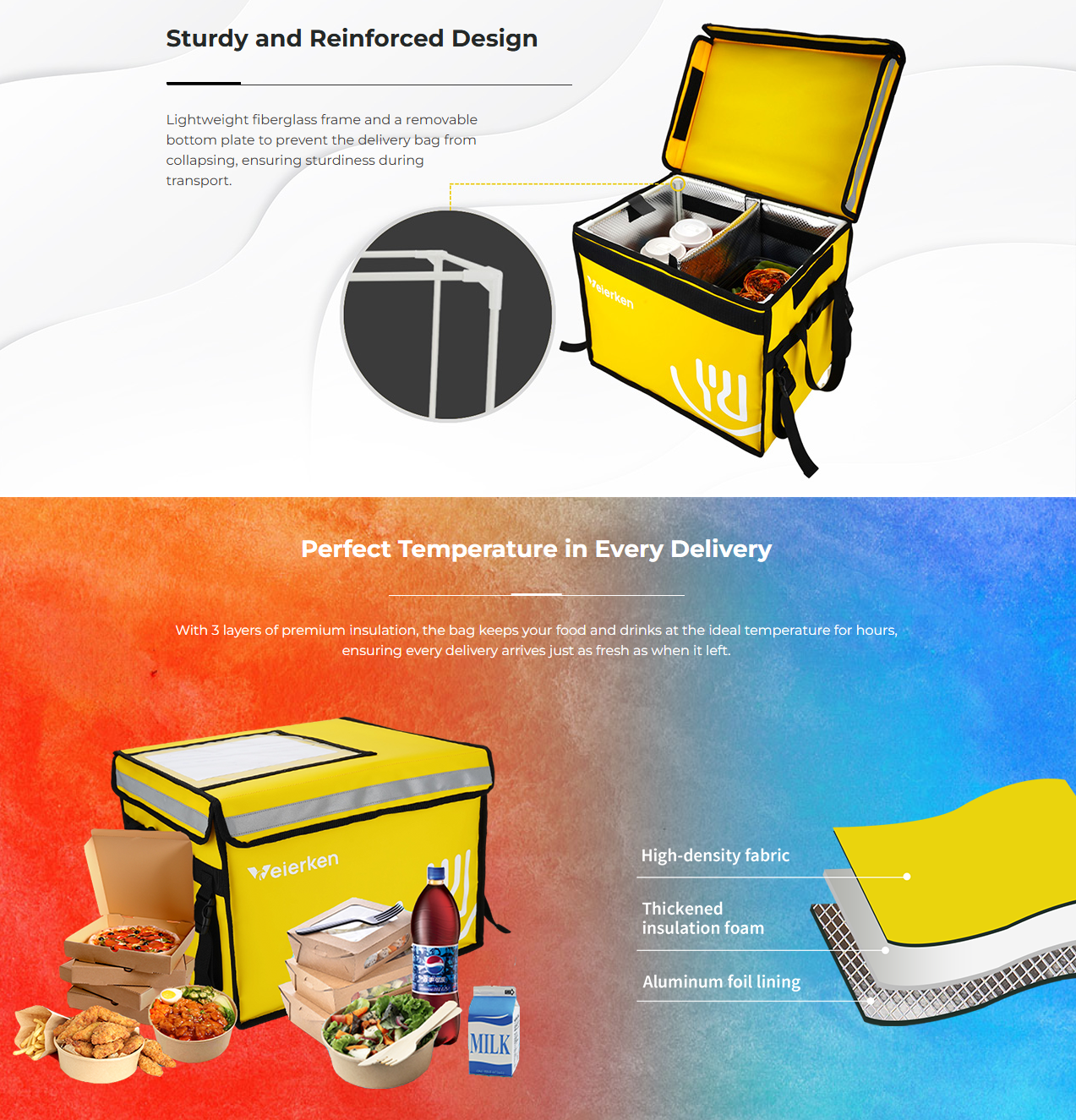
Industrielle Dual-Zone-Engineering basiert auf einer entkoppelten, mehrschichtigen thermischen Trennwand. Diese Verbundpartition integriert typischerweise:
Strahlungsabweiser: Hochreflektierende, lebensmittelechte Alufolie oder metallisierte Polyesterfolie, die die Strahlungswärme zurück in die heiße Zone lenkt.
Leitfähige Blocker: Hochdichtes, geschlossenporiges Polyethylen (PE) oder Polyurethan (PU) Schaum, das einen verschlungenen Weg für thermische Energie schafft.
Fortschrittliche Aerogel-Verbundstoffe: Ultradünne, ultraniedrig wärmeleitende Isolierdecken, die in hochspezifizierten kommerziellen Bauten verwendet werden, um die Dicke der Trennwand minimal zu halten und gleichzeitig das interne Volumen zu maximieren.
Materialspecifikationen: Heiße Zone vs. Kalte Zone
Jedes Fach bewältigt unterschiedliche physikalische Belastungen. Die Verwendung identischer Materialien für beide Zonen beeinträchtigt die Leistung.
Die heiße Zone (Hält 60°C bis 75°C): Die Innenauskleidung muss Verweichung, Ölmigration und Dampferosion widerstehen. Schwerlastgewebtes Glasfaser, laminiert mit hochtemperaturbeständigem Aluminium oder wärmestabilisiertem lebensmittelechtem PVC, hält kontinuierlichem Kontakt mit heißen Dampfschalen und fettigen Behältern stand, ohne sich abzulösen.
Die kalte Zone (Hält 0°C bis 4°C): Diese Kammer bekämpft relative Luftfeuchtigkeit und Kondensation. Das Innere benötigt nahtlose, auslaufsichere 0,3 mm bis 0,5 mm lebensmittelechte PEVA- oder TPU-Folien. Darüber hinaus benötigt der Boden integrierte Haltehülsen für Phasenwechselmaterial (PCM)-Pakete oder Eisblöcke, um zu verhindern, dass Kältepackungen verrutschen und empfindliches Obst zerdrücken.
Luftdichte Kantenversiegelung und thermische Baffles
Reißverschlüsse wirken als massive thermische Lecks, wenn sie ungeschützt bleiben. Warme Luft schlüpft durch die Zähne des Reißverschlusses durch konvektiven Austausch. Ein Hersteller von technischen Dual-Temperatur-Lieferbeuteln verhindert dies, indem er dicke, isolierte Perimeterklappen (thermische Baffles) hinter jeder Reißverschlusslinie näht. Wenn sie geschlossen sind, komprimieren sich diese schaumgefüllten Lippen und versiegeln die Kammer. Für Premium-Anwendungen eliminieren luftdichte wasserdichte Reißverschlüsse den Luftstrom vollständig zwischen den Kammern.
Strukturelle Anpassung und Kurierergonomie
Ein Mehrzonen-Lieferbeutel muss in der realen Welt funktionieren und 12-Stunden-Schichten auf Scootern, E-Bikes oder dem Rücken eines Kuriers überstehen. Strukturelle Steifigkeit und Flexibilität bestimmen die praktische Leistung.
Feste vs. modulare abnehmbare Trennwände
Fuhrparkmanager sehen sich im Laufe des Tages wechselnden Bestellprofilen gegenüber. Mittags können kalte Sandwich-Bestellungen anfallen, während die Abendspitzen stark auf heiße Hauptgerichte ausgerichtet sind.
Feste Wandarchitektur: Bietet die absolut beste thermische Isolation. Da die innere Wand direkt an die Perimeterhülle geschweißt ist, gibt es keine Luftlecks zwischen den Zonen. Diese Konfiguration eignet sich für Flotten, die standardisierte Catering-Lieferungen oder routinemäßige medizinische Ernährungsversendungen abwickeln.
Modulare Trennwandsysteme: Bieten betriebliche Vielseitigkeit. Mit industriellen Klettverschlüssen oder magnetischen Gleitschienen können Fahrer das Layout des Beutels von einer 50/50-Aufteilung auf ein 70/30-Layout anpassen oder die Wand ganz entfernen, um übergroße Blechpfannen unterzubringen.
Flüssigkeitsdammkonstruktion: Bei Verwendung modularer Trennwände muss der OEM eine erhöhte innere Bodenlippe integrieren. Dieser Damm verhindert, dass Flüssigkeitsverschüttungen in der kalten Kammer entlang des Bodens in das trockene, beheizte Fach laufen.
Flottenmontage und Gewichtsverteilung für Kuriere
Ein Multi-Komponenten-Mahlzeit-Lieferbeutel OEM muss den menschlichen Faktor berücksichtigen. Voll beladene kommerzielle Mehrzonenbeutel wiegen leicht zwischen 15 kg und 25 kg. Schlechte Ergonomie verursacht Ermüdung bei Fahrern und erhöht das Risiko von Stürzen.
Professionelle Liefer-Rucksäcke benötigen strukturelle Lastenhebergurte, breite gepolsterte Hüftgurte und kanalisierte Netzrückenpaneele, die die Wärme der Wirbelsäule ableiten. Für die Fahrzeugmontage muss das untere Paneel verstärkte Ankerplatten, industrielle D-Ringe und schwere Gurtkanäle integrieren, die getestet wurden, um über 50 kg plötzlicher Zugkraft bei einer Notbremsung standzuhalten.
B2B Beschaffung: Technische Packungs-Spezifikationen
Bei der Erstellung einer RFQ für einen maßgeschneiderten, unterteilten Mahlzeitbeutel führen vage Spezifikationen zu inkonsistenten Produktionsläufen. Beschaffungsteams sollten diese genauen technischen Grundlagen festlegen:
Geschweißte Innenräume gegenüber herkömmlichem Nähen
Standard-Nadelstiche führen zu Tausenden von Perforationen. Flüssigkeiten dringen in den darunter liegenden offenporigen Schaum ein, züchten Bakterien und verursachen unangenehme Gerüche, die den Beutel ruinieren. Geben Sie Hochfrequenz-Radiofrequenz (RF)-Schweißen oder Heißluftbandversiegelung für alle Innennähte an. RF-Schweißen verbindet thermoplastische Folien auf molekularer Ebene und schafft ein 100 % wasserdichtes, waschbares und desinfizierbares Innenvolumen.
Externe Schalenpanzerung
Lieferbeutel erleiden ständige Misshandlungen durch Beton, Bordsteine und Wetter. Übliche kommerzielle Spezifikationen umfassen:
1680D Ballistic Oxford Polyester: Mit einer schweren PU-Beschichtung versehen, bietet enorme Reißfestigkeit und ausgewogenes Gewicht.
0,55 mm bis 0,9 mm industrielle Plane (PVC/TPU): Vollständig wasserdicht, UV-stabilisiert, um ein Ausbleichen durch Sonnenlicht zu verhindern, und glatt genug, um in Sekunden von Straßenschmutz gereinigt zu werden.
Verstärkte Unterboden-Schutzplatten: Geformte Gummifüße oder abriebfeste Hypalon-Patches, die das strukturelle Gewebe schützen, wenn sie auf rauem Asphalt platziert werden.
Regulatorische Konformität und Hygiene
Lebensmittelkontaktmaterialien müssen internationale chemische und Migrationstandards erfüllen. Technische Unterlagen sollten eine schriftliche Zertifizierung für Folgendes verlangen:
FDA 21 CFR 177.1520 (Sicherheit von Polyolefinharzen für den direkten Lebensmittelkontakt).
EU LFGB und Verordnung (EG) Nr. 1935/2004 Konformität.
Reichweite SVHC-Screening, das null schädliche Weichmacher, Phthalate oder schwere Metalle in den Innenauskleidungen verifiziert.
Thermische Fallteststandards
Genehmigen Sie niemals die Massenproduktion ohne dokumentierte Testdaten aus Umweltsimulationskammern. Stellen Sie klare thermische Ziele basierend auf Umgebungsgrundlagen auf. Zum Beispiel: In einem Raum mit 30 °C darf die heiße Kammer (beladen mit 75 °C Testmasse) nicht mehr als 5 °C über 45 Minuten fallen, während die kalte Kammer (beladen mit 3 °C Testmasse) nicht mehr als 3 °C im gleichen Zeitraum steigen darf.
Warum Weierken Ihr OEM-Partner für Mehrfachfächer-Lieferbeutel ist
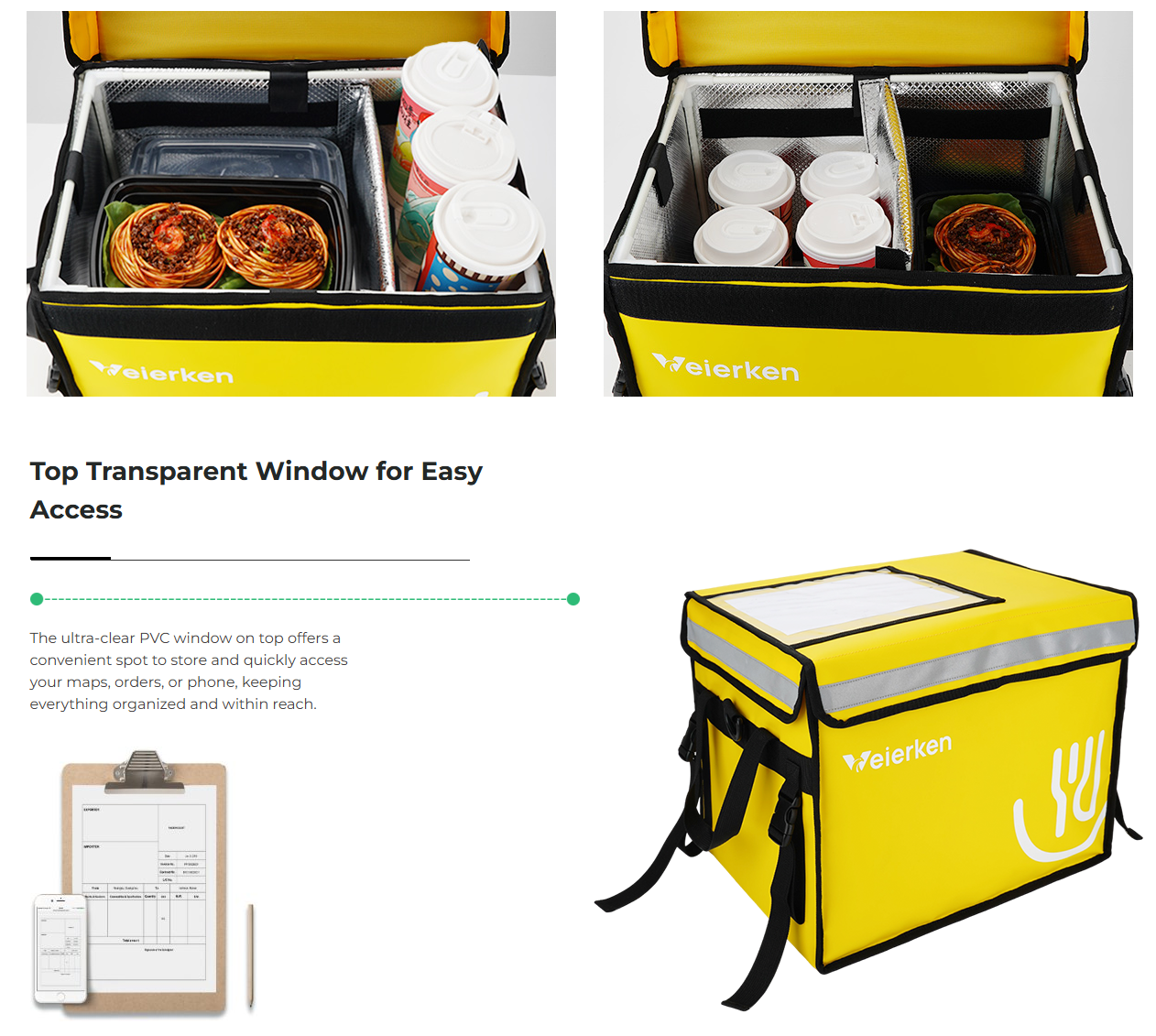
Die Auswahl eines Fertigungspartners erfordert ein Gleichgewicht zwischen technischer Ingenieurskunst und zuverlässiger Fertigungskapazität. Weierken liefert beides und fungiert als dedizierte Fabrik für thermisch isolierte Liefer-Rucksäcke für internationale Lieferführer.
Zwanzig Jahre Fertigungsheritage
Gegründet im Jahr 2006, hat Weierken fast zwei Jahrzehnte damit verbracht, Kühlkettengepäck, technische Industriebeutel und spezialisiertes Kurier-Equipment zu meistern. Wir verstehen, wie echte Fahrer diese Produkte nutzen, fallen lassen, beladen und waschen. Diese Praxiserfahrung fließt direkt in unsere Nahtverstärkungen, Reißverschlussauswahlen und thermischen Wanddesigns ein.
Produktion in mehreren Ländern: China und Kambodscha
Geopolitische Stabilität und Zollmanagement sind wichtige Anliegen für globale Flottenbetreiber. Weierken betreibt drei eigene Fertigungsstätten, die sich über mehr als 80.000 Quadratmeter in China und Kambodscha erstrecken. Mit mehr als 3.000 qualifizierten Näh- und RF-Schweißbetreibern bieten wir:
Zolloptimierung: Zollfreie oder reduzierte Zoll-Importrouten in wichtige nordamerikanische und europäische Märkte über unsere kambodschanischen Produktionsstätten.
Redundanz in der Lieferkette: Skalierbare Kapazität, die saisonale Volumenspitzen absorbiert, ohne Ihre Lieferpipeline zu verstopfen.
Rohmaterialbeschaffung in großen Mengen: Direkter Einkauf auf Mühlenebene für zertifizierte Stoffe, hochdichte Schäume und Markenhardware (wie YKK-Reißverschlüsse und ITW-Schnallen).
Thermische Testlabore und Rapid Prototyping
Wir raten nicht, wenn es um thermische Physik geht. Unser F&E-Zentrum verfügt über Umwelttestkammern, digitale Datenlogger und Infrarot-Thermografie-Kameras. Wir bewerten Prototypen unter realen Temperaturextremen, um zu verifizieren, dass kein Wärmebrücken zwischen Ihren maßgeschneiderten Kammern auftritt.
Unser Ingenieurteam bearbeitet 2D/3D CAD-Designänderungen innerhalb von 48 Stunden und produziert voll funktionsfähige Prototypen in 5 bis 7 Tagen. Jede Produktionscharge unterliegt strengen ISO9001-, BSCI- und AQL 2.5-Qualitätskontrollinspektionsregimen, um sicherzustellen, dass Beutel Nummer 50.000 Mahlzeiten ebenso effektiv schützt wie Einheit Nummer eins.
Häufig gestellte Fragen
Q1: Kann eine Mehrfach-Behälter-Mahlzeit-Liefertasche OEM aktive Heizelemente neben passiven Kältezonen integrieren?
Ja. Kommerzielle Modelle kombinieren häufig 12V/24V PTC-Kohlenstofffaser-Heizpads oder USB-betriebene Graphenelemente in der Heizzone, während die Kältezonen vollständig passiv mit Phasenwechselmaterialien gehalten werden. Die interne thermische Trennwand verhindert, dass erzeugte elektrische Wärme in den Kältespeicherbereich eindringt.
Q2: Wie verhindern Sie interne Gerüche und Kreuzkontamination zwischen den Zonen?
Wir verwenden nicht-poröse, antimikrobielle PEVA- oder TPU-Beschichtungen, die durch kontinuierliches RF-Hochfrequenzschweißen montiert werden. Da es keine Nähte oder Nadelöffnungen gibt, können Lebensmittelöle und Feuchtigkeit nicht in den Schaumkern eindringen. Die Beschichtungen lassen sich mit handelsüblichen, lebensmittelsicheren Desinfektionssprays reinigen, ohne die Kunststoffbarriere zu schädigen.
Q3: Was ist die optimale Schaumdichte für die interne Trennwand?
Für modulare, abnehmbare Trennwände empfehlen wir ein Dual-Density-Sandwich: einen starren Kern aus Polypropylen (PP) mit 2 mm bis 3 mm Dicke, umwickelt mit 35 kg/m³ hochdichtem, geschlossenen EPE- oder EVA-Schaum (8 mm bis 12 mm dick). Der Kunststoffkern bietet strukturelle Stabilität gegen Durchhängen, während der dichte Schaum den erforderlichen thermischen Widerstand (R-Wert) liefert.
Q4: Was ist die Mindestbestellmenge (MOQ) für vollständig maßgeschneiderte Dual-Temp-Liefertaschen?
Standardmäßige individuelle Produktionsläufe beginnen typischerweise bei 500 bis 1.000 Einheiten, abhängig von der Komplexität der strukturellen Werkzeuge, der individuellen Stofffärbung und spezifischen Markenanforderungen. Für Unternehmensflotten, die kontinuierliche Lieferverträge benötigen, werden geplante Lieferfreigaben über unsere Einrichtungen in China oder Kambodscha arrangiert.
Q5: Wie verifiziert Weierken, dass keine Wärme über die zentrale Barriere übertragen wird?
Während der Entwurfsphase platziert unser Labor den Prototyp in einer Umweltsimulationskammer. Wir laden die Heizzone mit kalibrierten Wärmeblöcken, die auf 75 °C erhitzt werden, und füllen die Kältezonen mit gekühlten Medien, die auf 2 °C stabilisiert sind. Mit Hilfe von Mehrkanal-Thermoelementsonden und FLIR-Wärmebildgebung messen wir Temperaturdifferenzen alle 60 Sekunden, um leitende Leckagen entlang der Nähte zu erkennen und zu beheben.
Sichern Sie sich Ihre maßgeschneiderte Flottenfertigungslösung
Hohe Lieferstandards erfordern speziell entwickelte Ausrüstung. Sich mit generischen, einräumigen Taschen zufrieden zu geben, beeinträchtigt die Lebensmittelqualität, senkt die Kundenbindung und schränkt Ihre operativen Möglichkeiten ein. Die Gestaltung einer kommerziellen Hot-and-Cold-Liefertasche mit speziellen thermischen Kammern sorgt dafür, dass die Menüs wie beabsichtigt schmecken, Bestellung für Bestellung.
Weierken bietet die erforderliche Fertigungsgröße, Materialtests und tariflich begünstigte Infrastruktur, um Ihre Lieferausrüstung aufzurüsten. Kontaktieren Sie noch heute das Ingenieurteam von Weierken, um Ihr Technikpaket zu überprüfen, Daten zur thermischen Leistung anzufordern und ein direktes Fabrikangebot für Ihr Mehrfach-Behälter-Mahlzeit-Liefertaschen-OEM-Programm zu erhalten.