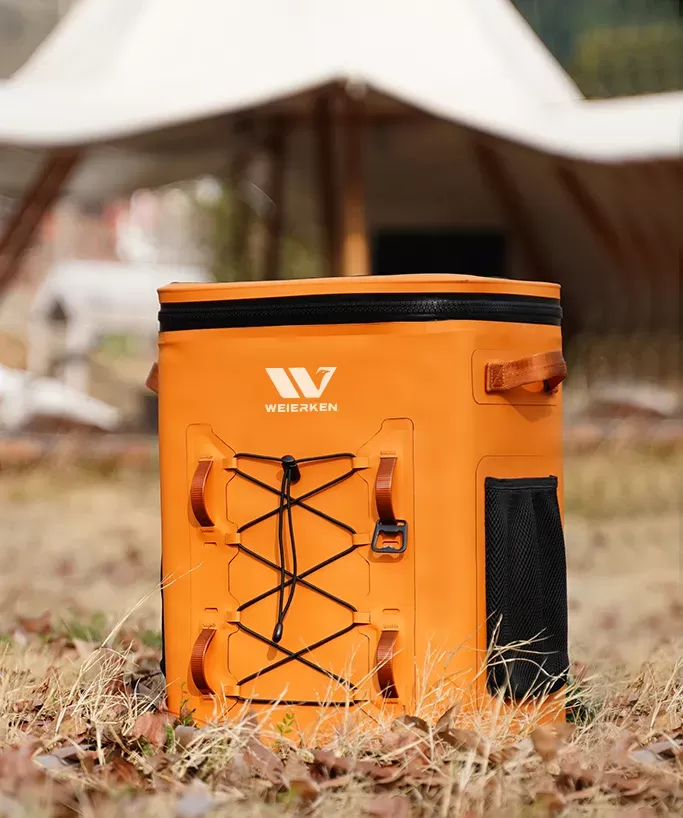

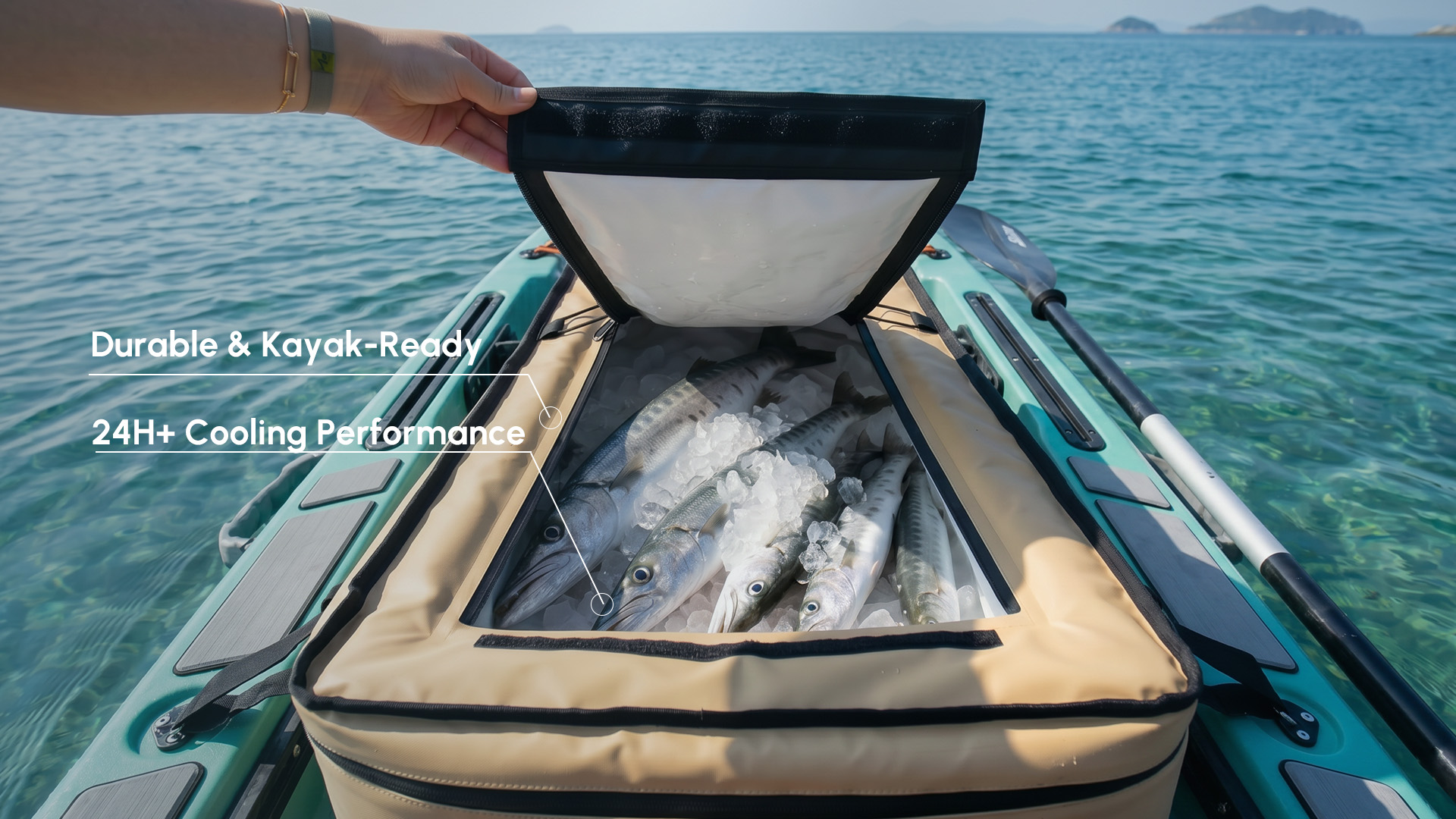
Modern kayak anglers demand integrated gear setups. Off-the-shelf tackle bags slide around wet decks, take on water through sewn seams, and corrode after exposure to saltwater. Because of these pain points, kayak manufacturers are shifting strategies. Developing dedicated, ecosystem-fitted gear gives boat builders a clear path to increase average order values and secure repeat business.
Engineering factory-grade accessories requires a deep understanding of marine durability and hydrodynamic deck space. As an OEM manufacturer with over 20 years of waterproof gear experience, Weierken works directly with product development teams to design, test, and mass-produce high-performance bags. This technical guide outlines how we engineer reliable custom fishing bags for kayak brands from raw polymer selection to high-volume assembly.
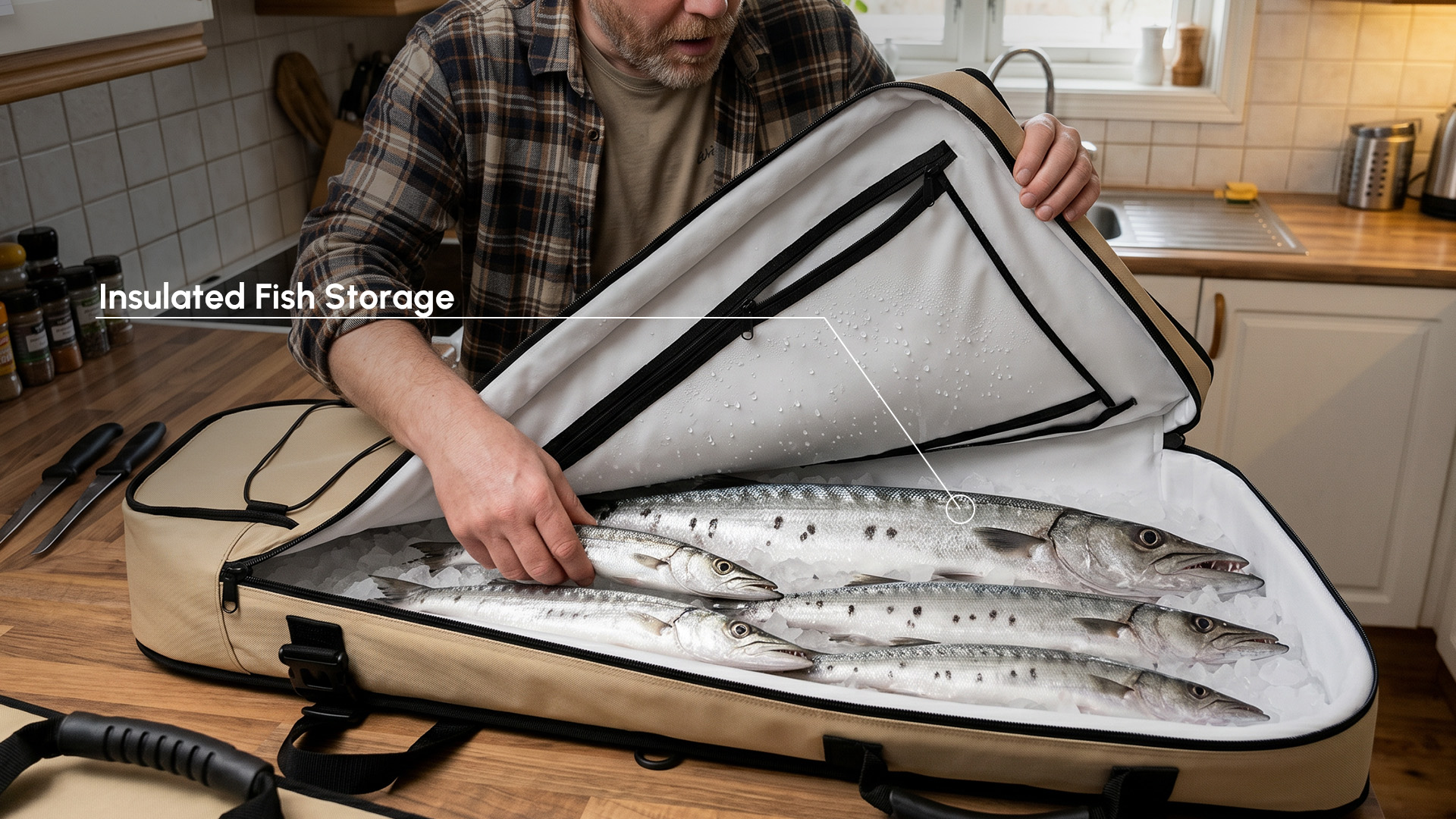
1. Waterproof Engineering and Marine-Grade Material Selection
A kayak tackle bag operates in a punishing environment. It sits in standing bilge water, bakes under UV rays, and takes direct hits from ocean spray. Traditional cut-and-sewn fabrics with stitched seams will leak under pressure. True marine-grade performance demands welded barrier textiles and corrosion-proof hardware.
Advanced Technical Fabrics
Material selection sets the baseline for durability, weight, and waterproof integrity:
TPU-Laminated Nylon (420D / 840D): Thermoplastic polyurethane (TPU) laminated onto high-tenacity nylon provides exceptional abrasion resistance and puncture defense. It remains flexible in cold conditions and does not crack after extended sun exposure.
GRS-Certified rPET with TPU Coating: Recycled polyethylene terephthalate (rPET) offers an eco-friendly option for brands targeting sustainability-minded paddlers without sacrificing tensile strength or waterproof performance.
Double-Sided TPU Coatings: Applied to critical high-wear sections, double-sided coatings block water penetration while creating a smooth surface that rinses clean of fish slime and saltwater residue.
Radio Frequency (RF) Welding Technology
Stitching punches thousands of microscopic needle holes through waterproof fabric. Even sealed tape can peel away over time due to humidity and heat. We eliminate this failure point through high-frequency and Radio Frequency (RF) welding.
RF welding directs electromagnetic energy through overlapping fabric edges. The process agitates the polymer molecules, fusing them together at the molecular level. This creates a solid, unified seam with structural strength equal to or greater than the original fabric. Bags built with this method consistently achieve IPX6 (heavy seas and powerful water jets) and IPX7 (temporary submersion up to 1 meter) waterproof ratings.
Salt-Fog Resistant Hardware
Standard metal zippers and cheap zinc sliders corrode quickly in saltwater. Marine gear requires rugged, non-corrosive hardware:
Airtight/Waterproof Zippers: Precision-molded teeth with vulcanized rubber seals that prevent water ingress during deck washouts.
316 Marine-Grade Stainless Steel: D-rings and anchor clips that pass 72-hour salt-spray testing without pitting or rusting.
Heavy-Duty POM (Polyoxymethylene) Buckles: UV-stabilized acetal clips that resist impact, retain tension under load, and hold up against saltwater degradation.
2. Kayak-Specific Ergonomics and Form-Fitting Architecture
A kayak deck offers limited space. Every cubic centimeter of storage must serve a clear purpose. When building custom fishing bags for kayak brands, our engineering team shapes each bag around the specific geometry of your kayak hulls, tankwells, and console hatches.
Form-Fitting Hull and Tankwell Integration
Generic rectangular bags slide across open rear decks. Purpose-built OEM bags match the exact contours of the boat:
Thermoformed EVA Molded Bases: A rigid, compression-molded EVA bottom keeps the bag upright, lowers the center of gravity, and prevents it from sitting in pooled deck water.
Standard Crate and Tankwell Dimensions: Bag footprints tailored to standard 13x13-inch milk crates or proprietary kayak cargo recessed areas ensure zero wasted space.
Low-Profile Deck Profiles: Sloped top covers shed water instantly and reduce wind resistance during open-water paddling.
Dynamic Deck Rigging and One-Handed Operation
Anglers manage a paddle or motor control with one hand while holding a rod with the other. Gear access must be fast, secure, and workable without looking directly at the bag.
Multi-Point Bungee and Cam-Lock Anchors: Quick-release tie-down loops align directly with factory gear tracks and eyelets, locking the bag in place through rough surf.
Magnetic Quick-Latch Lids: Fidlock or mechanical magnetic closures allow anglers to flip open the main tackle compartment with one hand and drop it shut securely.
Integrated Tool Stations: Molded external sheaths provide quick access to pliers, braid cutters, and lip grips, keeping sharp tools safely off the deck.
3. OEM Prototyping and Engineering Validation
Turning a 2D sketch into a production-ready marine bag requires rapid design iterations and thorough physical testing. Weierken runs an internal prototyping facility to support brand engineering teams through every development stage.
From 3D CAD to Production-Ready Patterns
We work directly from your industrial design files or deck scan data:
3D Pattern Flattening: Converting 3D surface files into flat cutting patterns optimized for automated laser cutting tables.
Tooling and Welding Die Fabrication: Custom aluminum welding dies built in-house guarantee clean RF weld lines along complex, curved edges.
Fast Sample Turnaround: While standard industry sample lead times take up to 60 days, our dedicated sample room delivers fully functional prototypes in 12 to 30 days.
Engineering Stress Analysis
High-stress points—such as shoulder strap anchors, grab handles, and lash tabs—receive reinforced structural backing. We apply high-frequency welding over internal reinforcement patches to distribute pull forces across a broader surface area. This eliminates tear-outs during heavy load transfers.
4. Dual-Hub Supply Chain and Tariff Optimization
Sourcing outdoor gear requires reliable lead times and cost-effective manufacturing. We balance technical development speed with low-tariff mass production through our dual-hub supply chain model.
China R&D Hub + Cambodia Mass Production
Our operational model gives outdoor brands a distinct commercial advantage:
China Facility (R&D & Rapid Iteration): Focuses on advanced tooling development, complex material sourcing, and quick-turn small-batch runs.
Cambodia Facility (High-Volume Assembly): Handles large-scale manufacturing runs, offering significant tariff exemptions and trade advantages for shipments bound for the United States, Europe, and Australia.
Cost Stabilization: This dual-footprint protects your product margins against shifting trade policies, shipping fluctuations, and labor cost increases.
Global Factory Compliance and Certifications
Supplying major outdoor retailers (such as Bass Pro Shops, Cabela's, and REI) demands strict supply chain transparency. Our manufacturing facilities maintain top-tier international certifications:
BSCI & SEDEX: Verified ethical labor practices, safe working conditions, and transparent workplace operations.
ISO 9001: Standardized quality management systems applied across every manufacturing stage.
REACH & RoHS: Raw materials tested and certified free from toxic phthalates, heavy metals, and restricted chemical compounds.
GRS (Global Recycled Standard): Fully traceable post-consumer recycled fabrics and polymers.
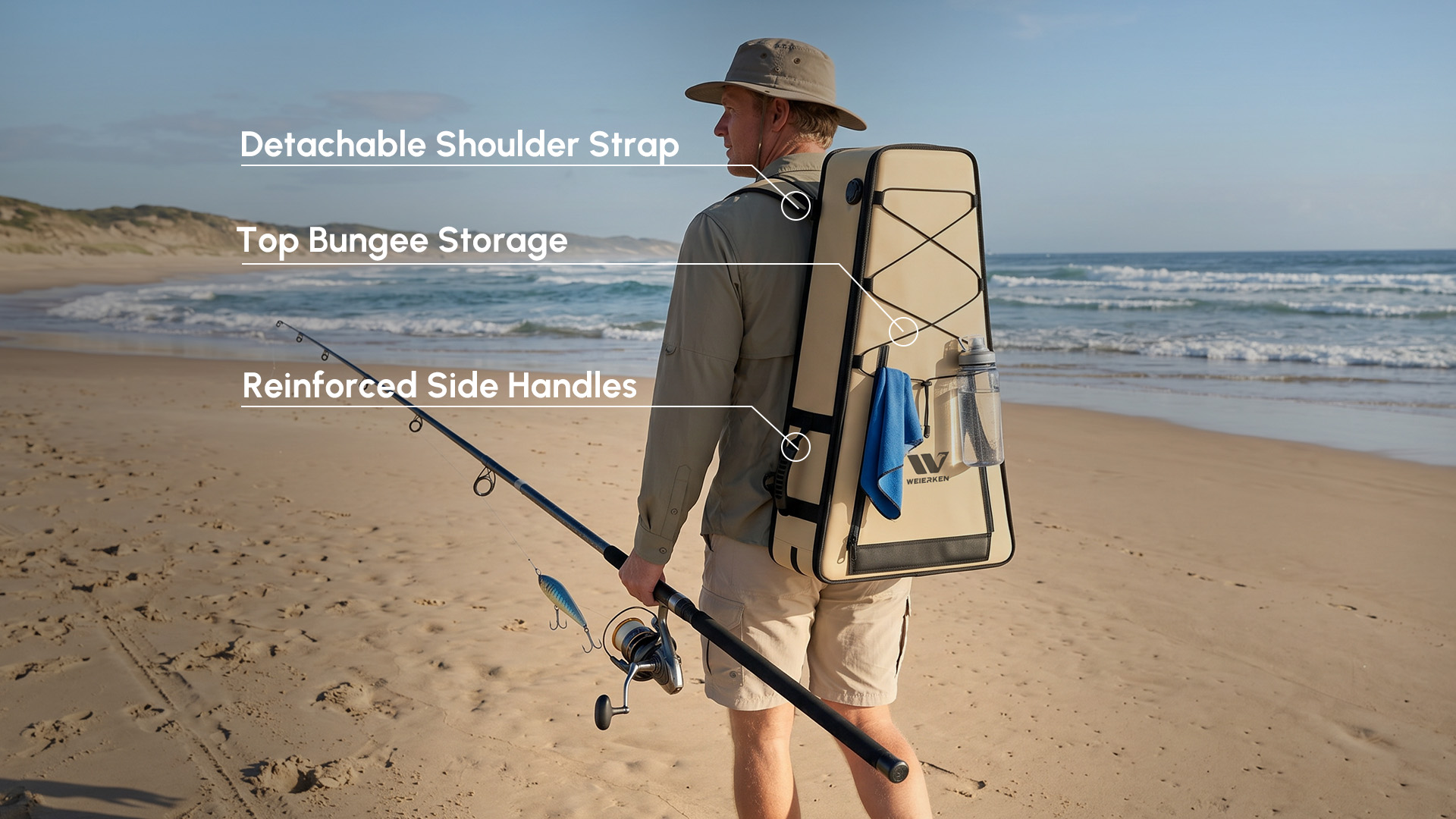
5. Quality Control Standards and Global DDP Delivery
Marine products cannot afford to fail on the water. A single leaking bag can ruin thousands of dollars in tackle and electronics, damaging your brand's reputation. We enforce strict quality control at every stage to ensure a 99.5% first-pass yield.
Rigorous Lab and Field Testing Protocols
Every production batch undergoes thorough testing before boxing:
Hydrostatic Submersion Testing: Fully assembled bags are submerged under a 1-meter water column to verify airtight and watertight seam seals.
Dynamic Handle Drop Tests: Loaded to 20kg, bags undergo repeated drop cycles on mechanical rigs to test handle and anchor-point strength.
Zipper Cycle Testing: Airtight zippers endure 5,000+ open-and-close cycles in high-humidity chambers without losing seal integrity.
72-Hour Salt-Fog Exposure: Metal clips, rings, and zipper pulls are tested in continuous salt spray to guarantee zero oxidation.
Turnkey Global DDP Logistics
We make overseas sourcing simple through full DDP (Delivered Duty Paid) shipping services. Weierken manages customs clearance, tariff payments, ocean freight, and final trucking directly to your 3PL facility, regional distribution center, or warehouse dock.
Frequently Asked Questions (FAQ)
Q1: What is the standard minimum order quantity (MOQ) for custom kayak fishing bags?
A1: Our standard MOQ for fully customized, RF-welded tackle bags is typically 500 to 1,000 units per design. This volume allows us to build custom high-frequency tooling dies and source custom-dyed technical fabrics while keeping unit costs low.
Q2: Why is RF welding preferred over sewn seams for kayak bags?
A2: Sewn seams puncture the waterproof membrane and rely on glue or seam tape that breaks down under direct sun, heat, and saltwater. RF welding fuses fabric coatings at a molecular level, creating a unified waterproof seam rated to IPX6 or IPX7 without any needle holes.
Q3: Can you match our brand's exact pantone colors and hull dimensions?
A3: Yes. We offer precise Pantone (PMS) color matching for TPU fabrics, zipper pulls, and molded logos. If you provide 3D CAD files or hull dimensions, our engineers will design a bag base that fits securely into your kayak's tankwell or cargo space.
Q4: How does manufacturing in Cambodia help lower import costs?
A4: Shipments originating from our Cambodia production plant benefit from favorable trade status and lower import duties into key markets like the United States and the European Union. This reduces your landed cost compared to standard China-only production routes.
Q5: What waterproof rating is recommended for kayak deck bags?
A5: We recommend IPX6 for splash-proof top deck storage bags exposed to waves and rain. For bags stored in open tankwells or low hull areas prone to standing water, we recommend IPX7 airtight construction to protect gear even during capsizes.
Q6: How long does the entire OEM development process take from concept to shipment?
A6: Concept design and initial CAD modeling typically take 7 to 10 days. Functional prototype creation takes 12 to 30 days. Once you approve the final sample, full-scale mass production takes roughly 45 to 60 days, followed by ocean transit to your destination warehouse.
Partner with Weierken for OEM Kayak Storage Solutions
Adding dedicated waterproof accessories to your kayak product line boosts brand value, enhances the on-water experience, and drives higher profit margins. Building high-performance marine gear requires experienced engineering, purpose-built tooling, and reliable factory production.
Weierken provides the technical expertise, rapid prototyping, and cost-efficient dual-hub supply chain needed to bring your concepts to market. Contact our engineering team today to review your project, evaluate 3D hull drawings, and request a detailed OEM quotation for your next generation of kayak fishing bags.