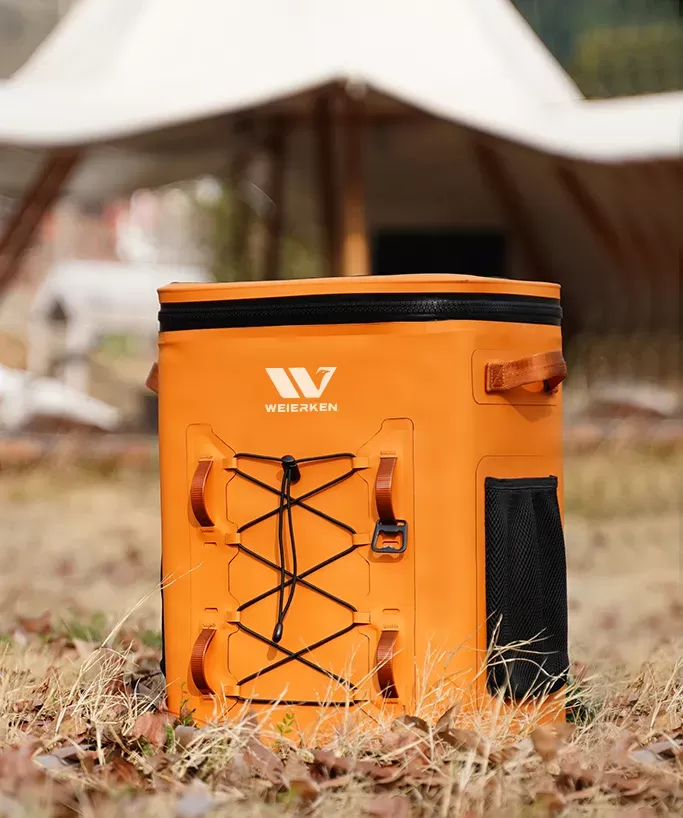

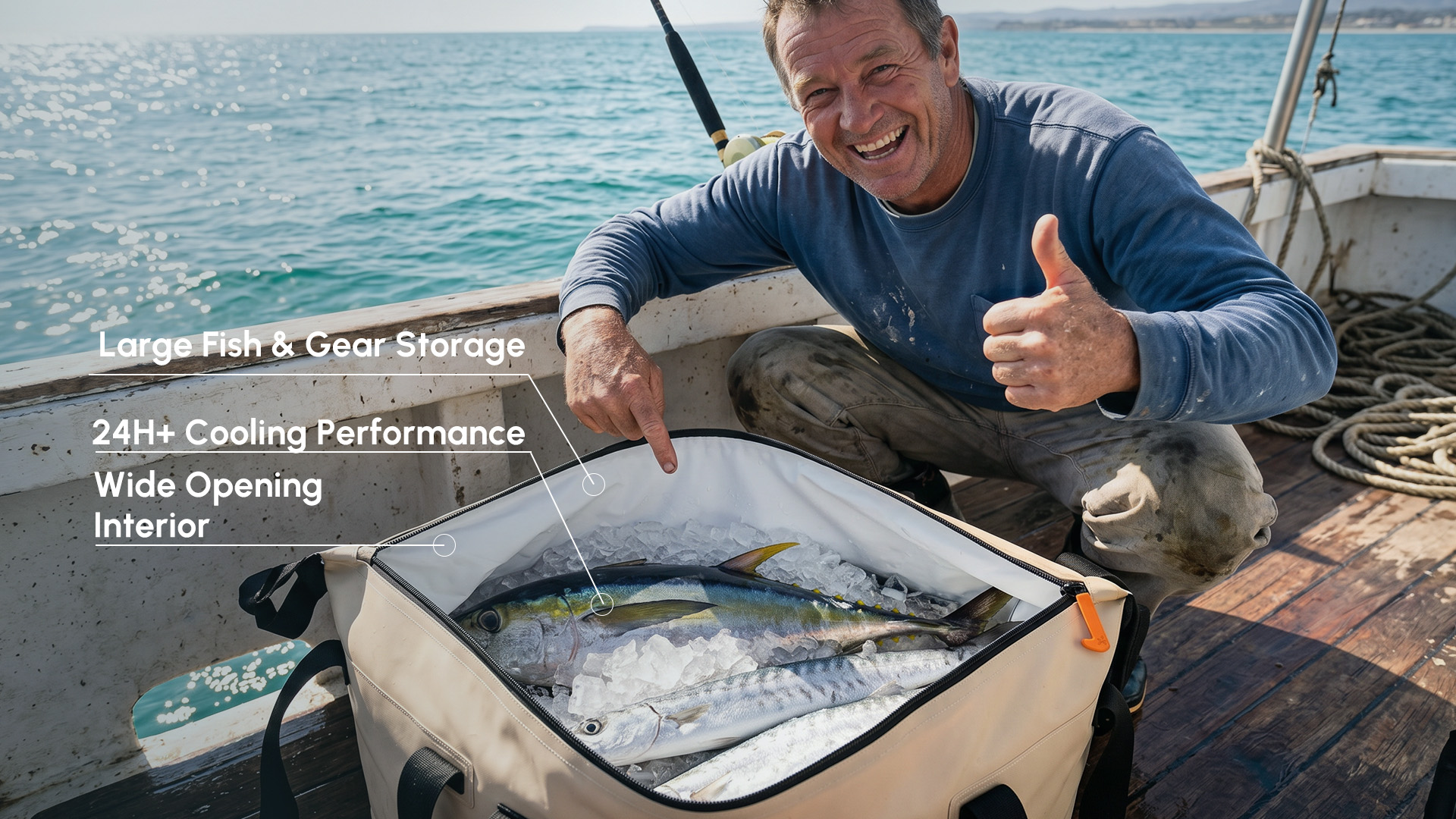
Offshore big game fishing pushes gear to its mechanical limits. When sport fishermen target pelagic species like bluefin tuna, wahoo, and billfish, deck space is at a premium. Bulky, traditional rotomolded ice boxes consume critical walkaround room on center consoles and express sportfishers. Because of this, marine brands and charter operations increasingly rely on flexible, heavy-duty kill bags.
However, commercial-scale fish storage bags face brutal operating environments. Saltwater, UV radiation, sharp dorsal fins, and massive deadweight loads cause low-grade gear to fail quickly. As a specialized offshore fish kill bag manufacturer with over two decades of technical waterproof gear expertise, Weierken designs and manufactures bags built for extreme marine duty. Below is an engineering overview of our OEM specifications, manufacturing methods, and global production capabilities.
The Technical Demands of Deep-Sea Catch Storage
A standard insulated cooler bag cannot withstand true blue-water angling. Offshore kill bags encounter unique mechanical stresses that standard consumer bags never face:
Puncture and Abrasion: Serrated fins, sharp teeth, and gaff hooks easily pierce standard PVC and tarpaulin liners.
Structural Hydrostatic Pressure: Holding hundreds of pounds of sloshing ice slurry, salt water, and trophy fish creates intense stress on bottom seams.
Thermal Shock and Sun Exposure: Bags sit on open fiberglass decks under scorching sunlight and 35°C+ ambient temperatures for days at a time.
Hygiene and Deck Cleanliness: Blood and slime leakage through stitching ruins yacht decks and creates strong odors that damage a brand's reputation.
Solving these issues requires precise material selection, specialized thermal engineering, and industrial assembly methods.
Marine-Grade Material Engineering and Thermal Specs
High-performance fish bags depend on the synergy between the inner liner, the core insulation, and the exterior shell. As an established custom marine kill bag factory, we build bags that survive tough conditions season after season.
Puncture-Resistant Outer Shell and Inner Liner
We build our interior liners using heavy-duty 0.8mm to 1.0mm marine-grade, fiber-reinforced PVC or eco-friendly TPU composite membranes. These surfaces resist punctures from sharp fins, gill plates, and ice picks. The non-porous surface prevents fish blood and odors from soaking into the material, making it easy to wash down with fresh water or deck cleaners.
For the exterior shell, we use 1000D+ UV-stabilized, abrasion-resistant polyester or heavy-duty coated tarpaulin. We treat the exterior with anti-fungal, anti-mildew, and UV-blocking agents to stop yellowing, hardening, or cracking during long days in open ocean conditions.
High-Density Closed-Cell Foam Core
Thermal stability depends entirely on the insulation material. We do not use cheap open-cell foams that absorb water over time. Instead, our OEM builds feature 0.5-inch to 1.0-inch high-density closed-cell NBR or EVA foam.
Zero Water Absorption: Closed-cell foam will not soak up melted ice or fish blood, even if the inner lining is scratched.
Structural Resilience: It maintains its shape under heavy loads and will not compress flat under the weight of a 200-pound tuna.
Long Ice Retention: Our multi-layer thermal design keeps ice solid for 48 to 72 hours in extreme deck heat.
Seamless Radio-Frequency (RF) Welded Seams
Stitched needle holes are the primary failure point in budget fish bags. Needle perforations allow bloody water to leak across the boat deck and ruin the bag's internal insulation core.
As a specialized RF welded fish cooler bag supplier, Weierken fuses the thermoplastic layers at a molecular level using high-frequency electromagnetic energy. This produces a continuous, 100% leakproof weld that handles high hydraulic pressures without splitting or weeping liquid.
Hardware, Drainage, and Load-Bearing Architecture
A full catch bag is extremely heavy. Moving 150 to 300+ pounds of fish, water, and ice requires reinforced structural engineering from the webbing to the drainage components.
Reinforced Webbing and Box-X Stitching
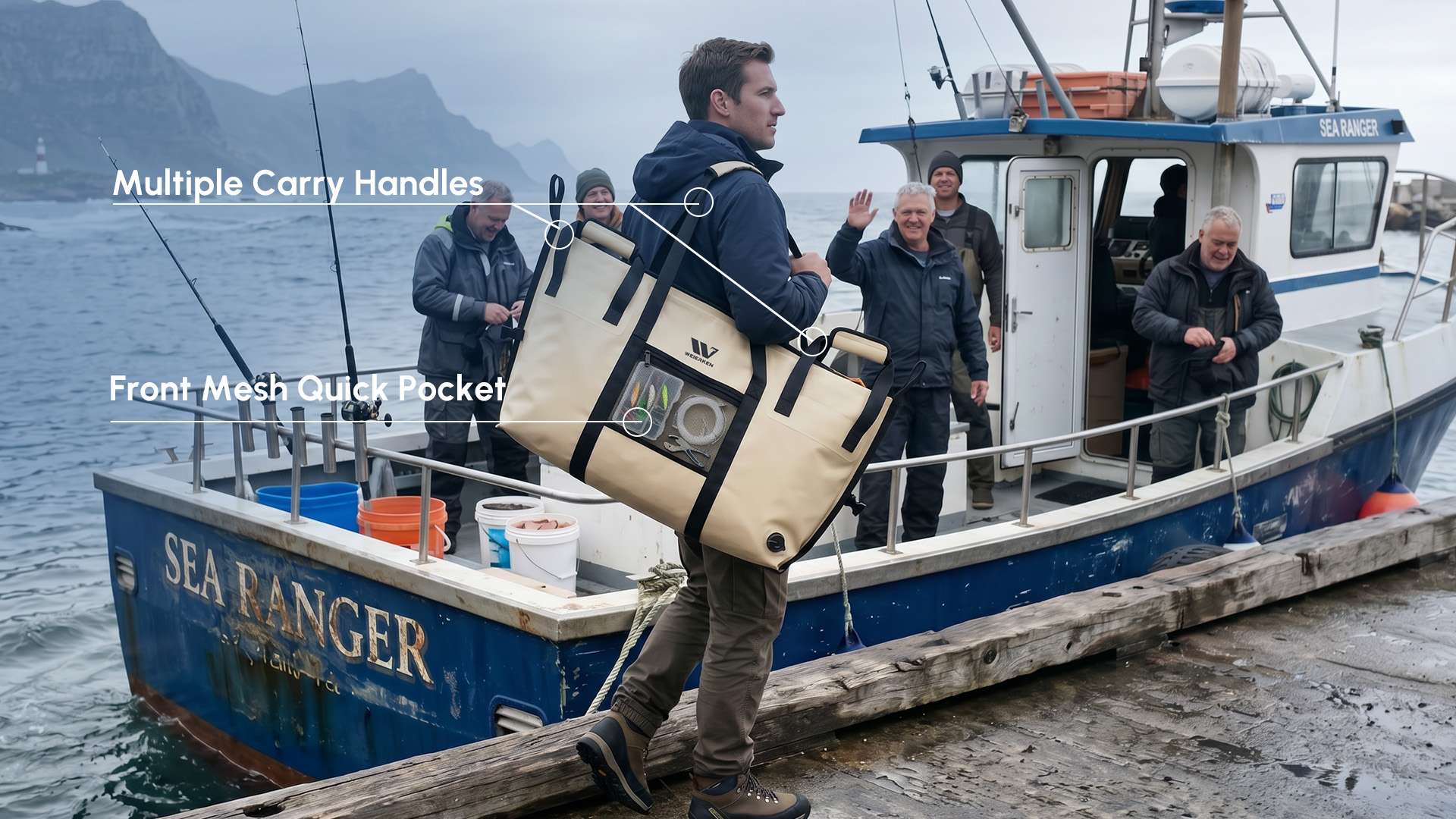
We integrate military-grade polyester or high-tenacity nylon webbing in continuous cradle systems that wrap completely around the bottom of the bag. This distributes the payload weight across the entire structure rather than pulling solely on top seams.
Every handle attachment, haul loop, and tie-down point receives industrial Box-X reinforced bar-tacking. This prevents tear-outs when lifting a loaded bag from the deck to the dock using davits or cranes.
Flush-Mounted Screw-in Marine Drain Valves
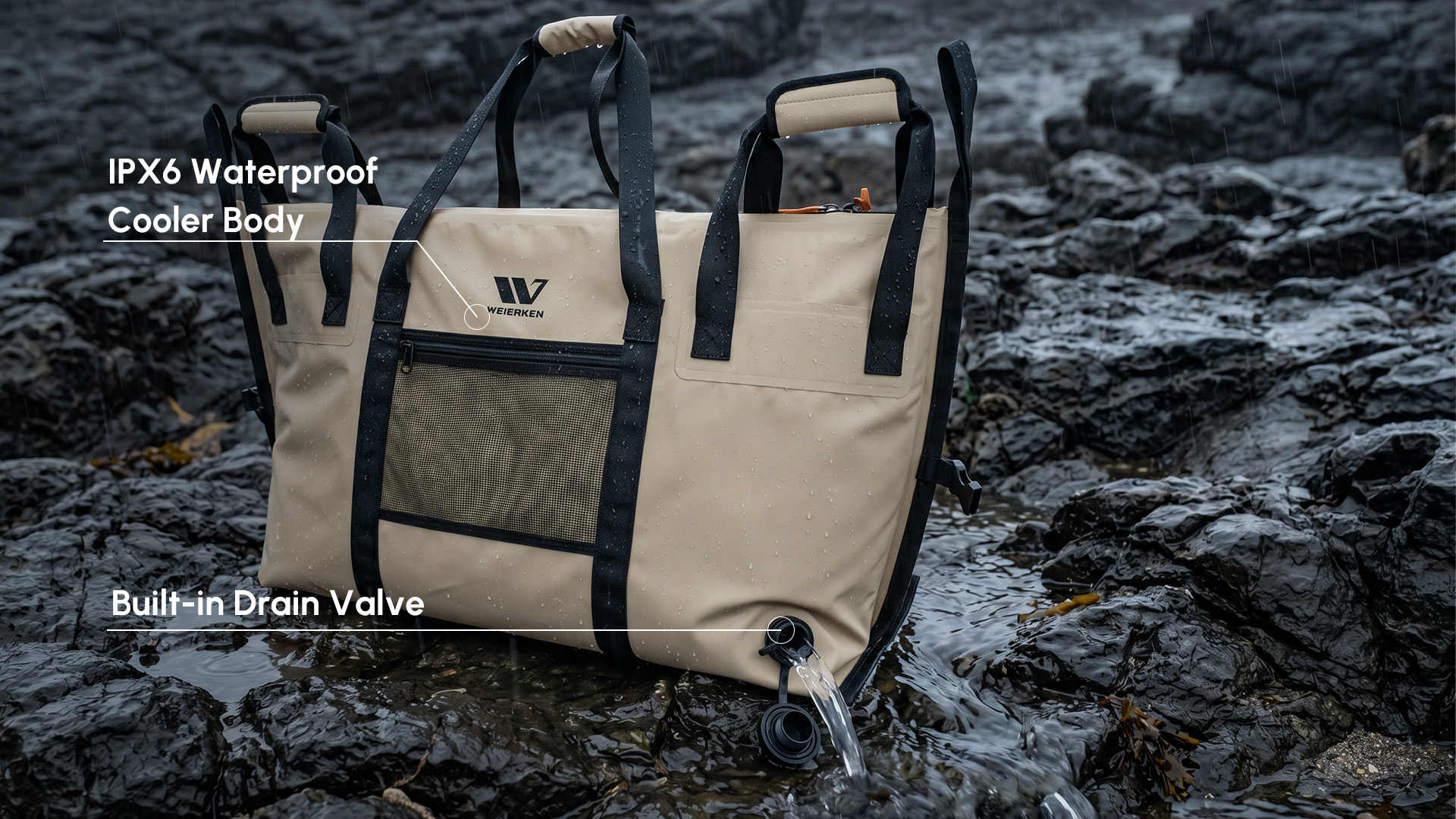
Emptying melted ice and blood from a heavy bag can be dangerous without proper hardware. We install low-profile, threaded screw-in drain plugs made from marine-grade, impact-resistant ABS or nylon.
Enables easy, controlled draining directly over scupper holes or boat transoms.
Gasket-sealed threaded caps prevent accidental leaks on the deck during transit.
Flush-mount design prevents snagging on fishing lines, nets, or deck gear.
Saltwater-Proof Airtight and Water-Resistant Zippers
Salt spray corrodes cheap metal zippers within weeks. We fit our bags with heavy-duty plastic-tooth zippers, airtight waterproof zippers, or marine-grade hook-and-loop storm flaps. These components resist saltwater corrosion, open smoothly, and seal in cold air.
OEM/ODM Structural Customization and Rapid R&D
Every vessel and fishing style requires specific dimensions. As a heavy-duty insulated fish bag OEM, Weierken supports full custom engineering to fit center console coffins, kayak wells, transom corners, and tournament decks.
Popular Bag Form Factors
Flat Bottom / Box Style: Maximizes internal volume, stands upright on deck without tipping, and simplifies ice packing.
Taco Style (Fold-Flat): Folds into a compact footprint when empty, saving precious locker and garage space.
Coffin / Tuna Long Bags: Extra-long profiles (up to 90+ inches) designed specifically for big-game pelagic species like wahoo, kingfish, and giant bluefin tuna.
Kayak and Transom Wedge Bags: Tapered profiles designed to fit snug against transoms or inside kayak cargo recesses.
Our dedicated sample workshop turns conceptual 3D files and tech packs into finished, field-ready physical samples in 12 to 30 days. This rapid turnaround helps your brand test, refine, and launch products ahead of fishing season deadlines.
Mitigating Tariff Risks: Dual-Factory Strategic Advantage
International trade policies, tariffs, and shipping bottlenecks create real business risks for outdoor gear brands. Weierken operates a coordinated dual-factory model across China and Cambodia to protect your profit margins and simplify supply chains.
China Innovation & Sample Hub: Manages complex tool design, high-precision technical sampling, hardware sourcing, and specialized material testing.
Cambodia Mass Production Base: Handles large-scale volume manufacturing. Shipments from Cambodia enjoy duty-free or significantly reduced tariff rates into the United States and European markets.
International Compliance: Our facilities maintain ISO 9001, BSCI, GRS, REACH, and SEDEX certifications, making factory audits seamless for major retail buyers and distributors.
Strict Quality Control and Global DDP Delivery
Marine-grade production demands tight quality controls. Every production batch follows a rigorous quality assurance protocol before it ever leaves our facility:
Hydrostatic Leak Testing: 100% water-fill and inflation-pressure tests to ensure zero seam weeping or puncture flaws.
Static and Dynamic Load Testing: Bags undergo pull-force and drop tests loaded to 1.5 times their rated capacity to verify handle and webbing strength.
Salt-Spray Hardware Testing: All zippers, D-rings, and valves sit in continuous salt-spray chambers to verify corrosion resistance.
To simplify international logistics, we offer full DDP (Delivered Duty Paid) shipping services. We manage export documentation, ocean freight, customs clearance, and inland trucking, delivering finished inventory directly to your domestic distribution center.
Frequently Asked Questions (FAQ)
Q1: What makes an RF welded fish kill bag better than a traditional stitched bag?
A: Radio-frequency (RF) welding fuses the thermoplastic layers using high-frequency electromagnetic energy, creating a seamless, leakproof molecular bond. Stitched bags use needles that puncture thousands of holes through the waterproof fabric. Over time, those needle holes leak fish blood and water across your boat deck and ruin the inner insulation core.
Q2: What is the typical ice retention performance of your marine kill bags?
A: When loaded with standard 2:1 or 1:1 ice-to-fish ratios, our bags hold ice for 48 to 72 hours in ambient deck temperatures above 35°C (95°F). We achieve this through 0.5-inch to 1.0-inch closed-cell foam cores and multi-layer thermal insulation walls.
Q3: What are the Minimum Order Quantities (MOQ) for custom OEM production?
A: Our standard production MOQ ranges from 300 to 500 units per model, depending on the custom dimensions, fabric specs, and hardware requirements. We also offer lower MOQs for initial market verification runs for qualified long-term brand partners.
Q4: Can you produce customized shapes to match specific boat deck models?
A: Yes. We regularly manufacture tailored catch bags for boat builders, charter fleets, and retail brands. Provide us with your CAD drawings, tech packs, or dimensions, and our engineering team will build samples to your exact specifications.
Q5: How does your Cambodia factory help reduce import tariffs?
A: Our Cambodia production facility qualifies for favorable trade terms and lower duty schedules when importing into the US and European markets. This lets brands avoid the high Section 301 tariffs on Chinese-origin sporting goods while maintaining strict quality control.
Q6: Are the interior liner materials resistant to fish spine punctures and odors?
A: Yes. We use heavy-duty 0.8mm to 1.0mm marine-grade PVC or TPU composites engineered with high puncture, tensile, and tear strengths. The smooth, non-porous surface stops fish blood from soaking into the material, making it easy to wash down with fresh water after use.
Partner with Weierken for Offshore Marine Gear
Whether you are expanding your marine product line, outfitting a commercial charter fleet, or looking for a dependable wholesale tuna kill bags manufacturer, Weierken provides the industrial capabilities your brand needs.
Contact our engineering and sales team today to request material swatches, review technical specifications, and receive a competitive quotation for your next production run.