

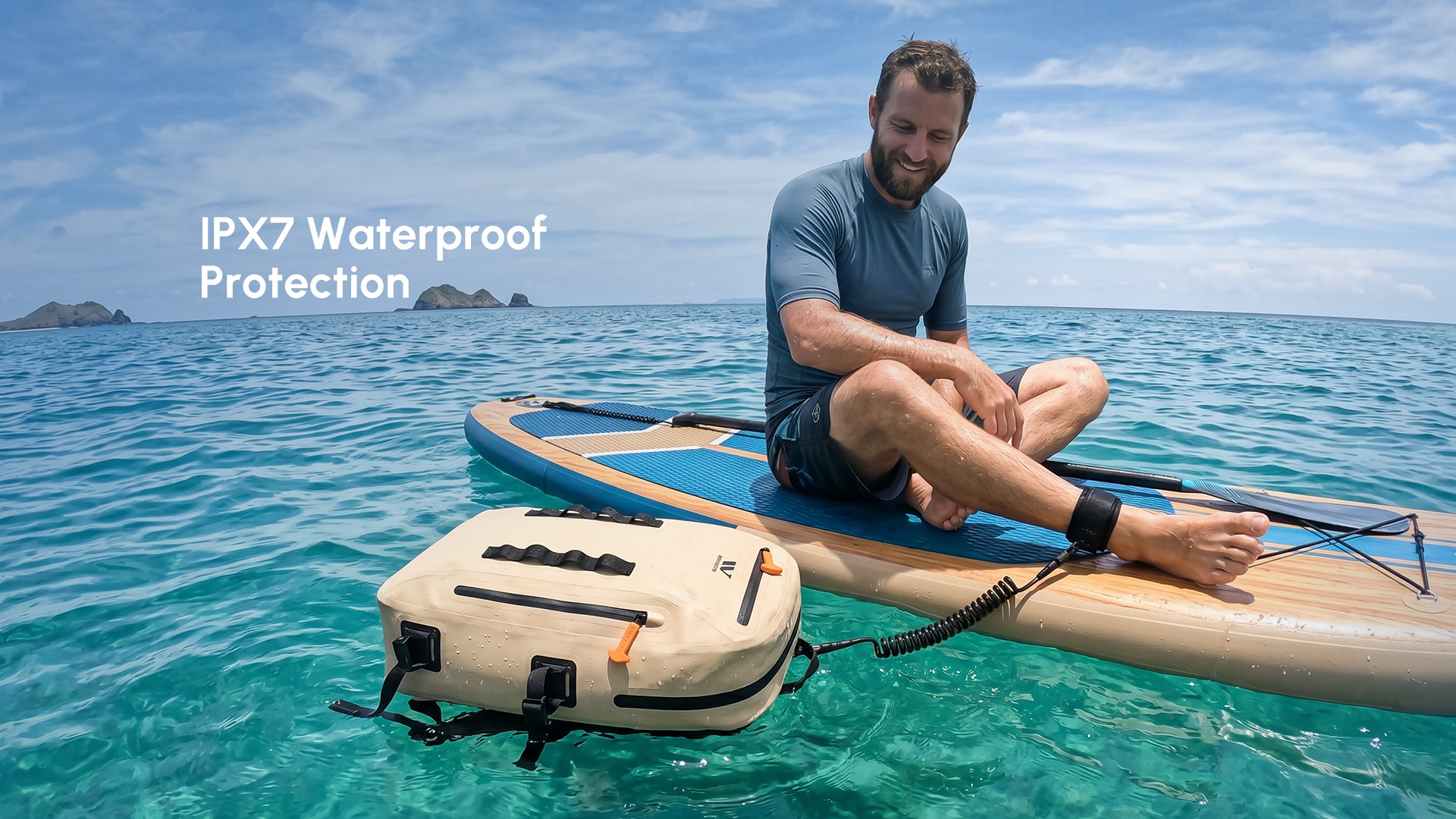
Kayak fishing has evolved from a niche hobby into a major segment of the global paddlesports market. Dedicated anglers no longer settle for generic fishing backpacks or standard tackle boxes. They demand specialized gear built specifically for narrow cockpits, open storage wells, and wet decks.
For outdoor brands, direct-to-consumer (DTC) businesses, and retail fishing distributors, this shift creates an exceptional opportunity. Launching a high-margin line of private label kayak tackle bags allows you to capture serious anglers who gladly pay a premium for functional, durable, and fully waterproof equipment.
However, bringing a technical outdoor product to market in 2026 requires more than slapping a logo onto a catalog item. It demands advanced materials, smart deck ergonomics, strict environmental compliance, and an agile supply chain. In this guide, Weierken shares 20 years of OEM and ODM outdoor gear manufacturing experience to show you how to launch a profitable, dependable kayak bag line from the ground up.
Step 1: Define Technical Features and Deck Ergonomics
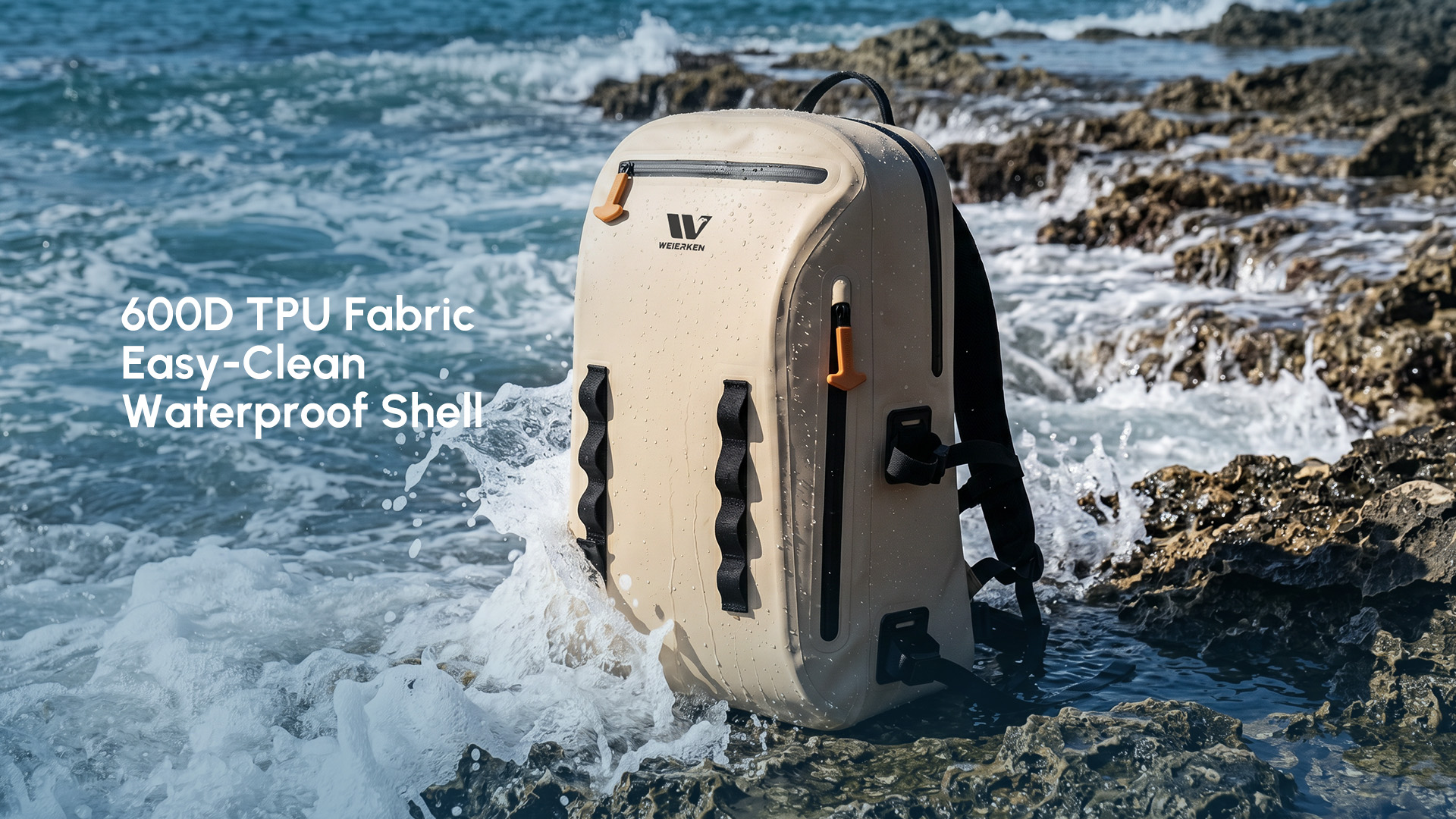
Kayak anglers operate in confined, wet, and often harsh environments. A successful tackle bag must withstand constant splash, direct saltwater contact, UV exposure, and rough handling. When planning your custom kayak fishing bags, focus on three core product criteria:
1. Advanced Waterproofing and Saltwater Defense
Standard nylon with basic PU coating will fail over time in marine environments. For true professional-grade performance, technical construction is necessary:
TPU-Laminated Fabrics: Thermoplastic polyurethane (TPU) laminated onto 420D to 840D nylon or polyester provides superior abrasion resistance and a 100% waterproof barrier.
Radio Frequency (RF) Seamless Welding: Traditional needle stitching creates thousands of micro-holes that leak under pressure. High-frequency RF welding fuses fabric panels at the molecular level, creating airtight, watertight seams.
Corrosion-Proof Hardware: Marine environments quickly ruin metal components. Use heavy-duty nylon-tooth zippers, water-resistant coated zippers, or airtight waterproof zippers with molded plastic or titanium-coated sliders.
2. Kayak-Specific Form Factors and Crate Systems
A standard tackle bag slides around or sits awkwardly on a sit-on-top kayak. Your private label kayak tackle bag should solve real on-water storage problems:
Kayak Crate Compatibility: Design dimensions to fit precisely inside or over standard 13x13 inch and 13x16 inch milk crates and kayak utility wells.
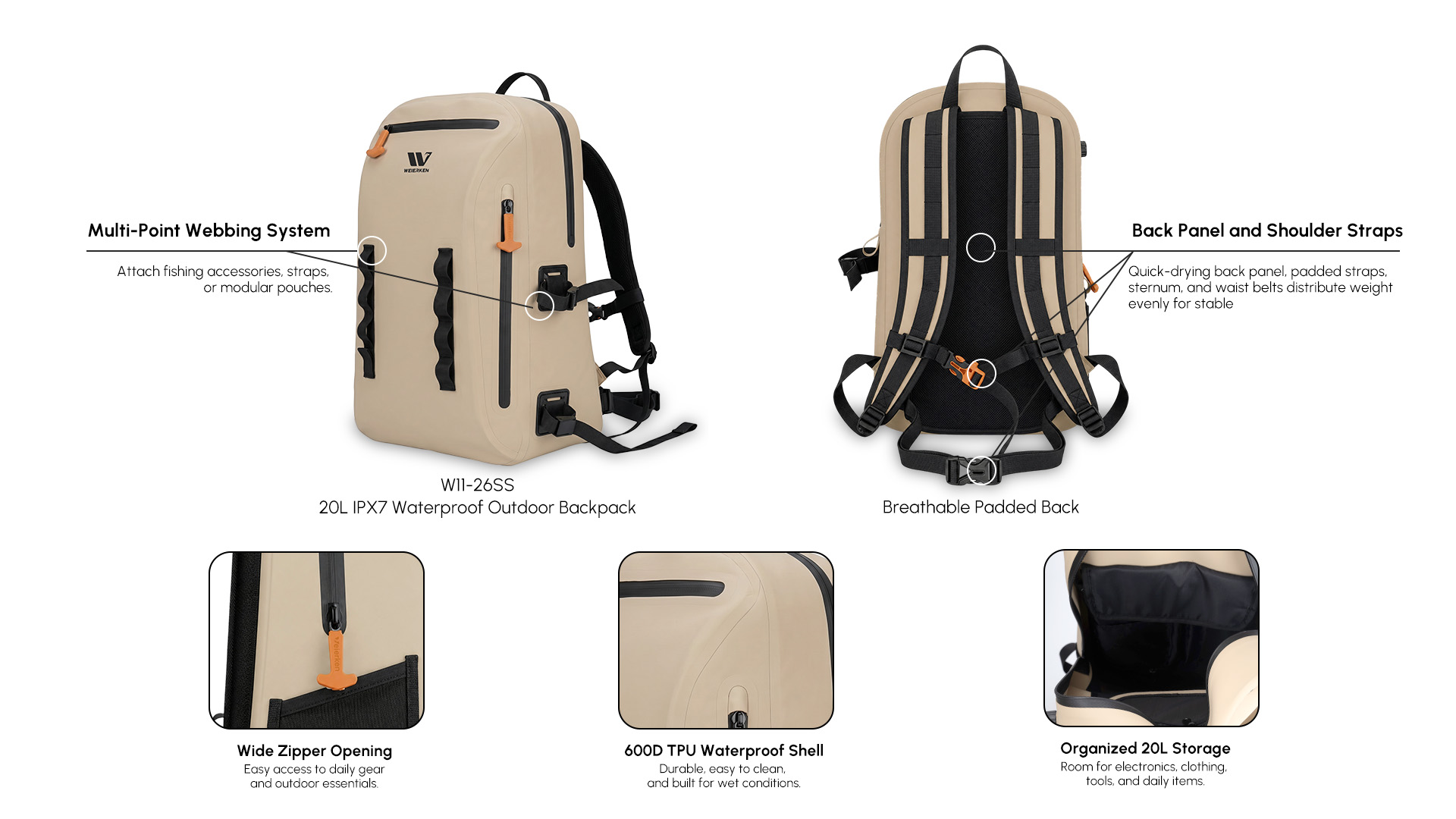
Quick-Release Attachment Points: Integrate marine-grade bungee loops, D-rings, and cam-buckle straps so anglers can anchor the bag to their deck tracks in seconds.
Blind-Reach Tool Access: Add exterior plier sheaths, lip-gripper holsters, and rod-holder cutouts that allow an angler to grab tools without shifting balance.
3. Sustainable Materials for 2026 Regulations
Environmental standards across North America and the European Union continue to tighten. Incorporating certified recycled fabrics—such as GRS-certified rPET (recycled polyethylene terephthalate)—ensures your brand meets modern retail sustainability demands while appealing to conservation-minded anglers.
At Weierken, our in-house R&D team works directly with your product managers to engineer these technical details before cutting the first roll of fabric, ensuring your product succeeds in real-world fishing conditions.
Step 2: Accelerate Prototyping and Performance Testing
Speed to market can determine whether you catch the seasonal buying surge or miss it completely. Traditional gear manufacturers often take 60 to 90 days just to deliver a functional sample. Long development cycles burn capital and delay product launches.
When selecting a kayak crate bag manufacturer, look for advanced prototyping capabilities. Weierken operates a dedicated, high-precision sample workshop that completes technical samples within 12 to 30 days. This accelerated development cycle follows a clear four-stage path:
3D Digital Modeling and Tech Packs: Converting your concept sketches or CAD drawings into production-ready pattern files.
Structural Master Sampling: Crafting physical mockups to evaluate volume, pocket layouts, internal tray dividers, and latch security.
Stress and Waterproof Lab Testing: Subjecting prototypes to hydrostatic head pressure testing, continuous salt-spray chambers (to test hardware corrosion), and tensile pull tests on webbing anchor points.
Pre-Production Sign-Off: Finalizing fabrics, branding elements (molded rubber patches, screen prints, or laser engraving), and packaging specs for mass manufacturing.
Rapid sampling gives your brand the agility to refine designs quickly, put real prototypes into field testing with pro anglers, and secure early retail pre-orders.
Step 3: Mitigate Supply Chain Risks and Cut Tariffs (Dual-Factory Advantage)
Tariffs, trade friction, and regional disruptions represent significant cost risks for outdoor brands today. Relying on a single manufacturing location can quickly erode your gross margins if duty rates spike unexpectedly.
To protect profitability, leading brands use a dual-hub manufacturing strategy that combines the strengths of China and Southeast Asia.
The China + Cambodia Manufacturing Synergy
China Innovation Hub: Ideal for rapid prototyping, complex tooling development, specialized RF-welding setups, and sourcing advanced performance textiles.
Cambodia Mass Production Base: Once the design is locked in, high-volume production shifts to an OEM outdoor gear factory in Cambodia.
Manufacturing in Cambodia allows brands exporting to the United States, Europe, and other primary markets to qualify for favorable duty treatment. This direct duty reduction saves brands between 10% and 25%+ on landed import costs compared to single-origin sourcing. Those savings directly strengthen your wholesale margins or allow for more aggressive retail pricing.
Additionally, brand integrity requires strict factory governance. Weierken maintains full international certifications across all facilities, including BSCI, GRS, REACH, SEDEX, and ISO 9001. This ensures your brand complies fully with global labor, safety, and environmental standards.
Step 4: Scale Production, Maintain 99.5% QC, and Simplify Logistics
Manufacturing a technical bag requires strict quality management during mass runs. A single leaking weld or failing zipper can lead to high return rates, bad Amazon reviews, and lost customer trust.
To safeguard your brand reputation, prioritize manufacturers that run multi-checkpoint quality assurance systems. Weierken enforces raw-material batch inspections, in-line process monitoring during high-frequency welding, and 100% finished-good leak and pull tests. This systematic oversight maintains a 99.5% first-pass yield rate, protecting your business from costly product recalls and inventory write-downs.
Eliminate Headaches with DDP Fulfillment
Managing freight forwarders, booking ocean containers, and clearing customs adds administrative overhead to your brand. Working with an experienced kayak fishing accessories supplier that offers complete Delivered Duty Paid (DDP) shipping simplifies the entire process.
Under a DDP arrangement, the manufacturer manages export declarations, international ocean or air freight, port customs clearance, duty payments, and final drayage directly to your central warehouse or 3PL facility. You receive your finished products at your doorstep with clear, predictable landed costs.
Step 5: Partner with an Extension-of-Team OEM/ODM Manufacturer
The most successful outdoor gear brands do not treat their factories as simple order-takers. They view them as an extension of their internal product development and engineering teams.
When launching private label kayak tackle bags, choose an OEM partner who brings practical engineering advice to the table. An experienced partner should tell you when a zipper placement will stress a weld, recommend the right denier fabric to reduce weight without sacrificing tear strength, and suggest modular features that increase your retail price point.
With over two decades of technical bag manufacturing, fluent English project management teams, and complete transparent documentation at every step, Weierken eliminates cross-border communication barriers and helps brands move from concept to retail shelves smoothly.
Frequently Asked Questions (FAQ)
Q1: What is the typical MOQ for custom private label kayak tackle bags?
A1: Minimum order quantities (MOQs) generally start between 500 and 1,000 units per style, depending on fabric customisation and colorways. For brands launching a multi-tiered lineup, shared base fabrics across different bag models can help optimize initial order volumes.
Q2: How does RF welding compare to traditional stitching for waterproof tackle storage OEM products?
A2: Traditional sewing punches needles through fabric, creating seam holes that require chemical seam tape to seal—a tape that can peel over time. High-frequency RF (Radio Frequency) welding melts thermoplastic layers together using electromagnetic energy. This creates a solid, permanent bond that is 100% waterproof and airtight under pressure.
Q3: What cost benefits come from manufacturing kayak bags in Cambodia vs. China?
A3: While China remains an excellent hub for fast prototyping and high-tech material sourcing, mass manufacturing in Cambodia offers lower labor costs and significant tariff exemptions under trade agreements with the US, EU, and UK. This dual-country structure often reduces landed product costs by 10% to 25%+.
Q4: Can we incorporate eco-friendly and GRS-certified materials into our private label bags?
A4: Yes. We can produce kayak bags using Global Recycled Standard (GRS) certified rPET exterior fabrics, recycled TPU coatings, and non-toxic, PVC-free materials. We supply full certification documentation so you can substantiate your eco-friendly marketing claims with confidence.
Q5: How does Weierken handle DDP shipments to Amazon FBA or regional 3PL warehouses?
A5: We coordinate the entire logistics chain from our factory floor to your designated receiving dock. We manage carton labeling, palletizing to Amazon FBA specifications, customs clearance, import documentation, and all tariff payments under comprehensive DDP terms.
Q6: What is the typical lead time from prototype approval to final production delivery?
A6: Once you approve the final pre-production sample, mass production typically takes 45 to 60 days, depending on order volume and material specifications. Ocean transit times vary by destination port, usually ranging from 18 to 30 days for North American and European routes.
Ready to Launch Your Kayak Tackle Bag Line?
The kayak fishing accessory market will reward brands that deliver genuine waterproof performance, smart deck compatibility, and reliable build quality. Whether you are expanding an existing fishing tackle brand or building an entirely new DTC product line for 2026, working with the right manufacturing partner makes all the difference.
Contact the engineering and OEM specialists at Weierken today. Request a factory-direct quote, review our material swatches, and discover how our Cambodia and China dual-factory network can optimize your product margins and supply security.