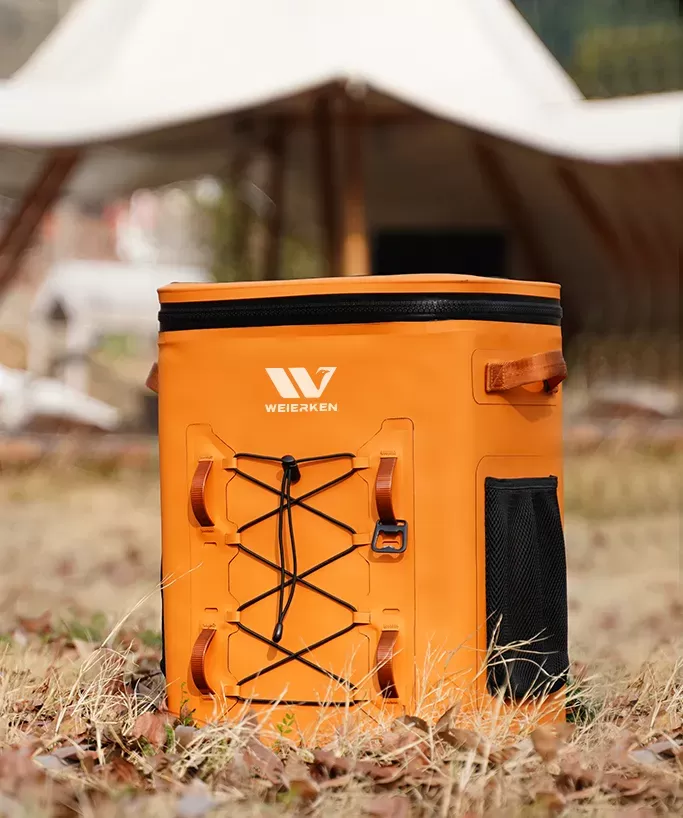


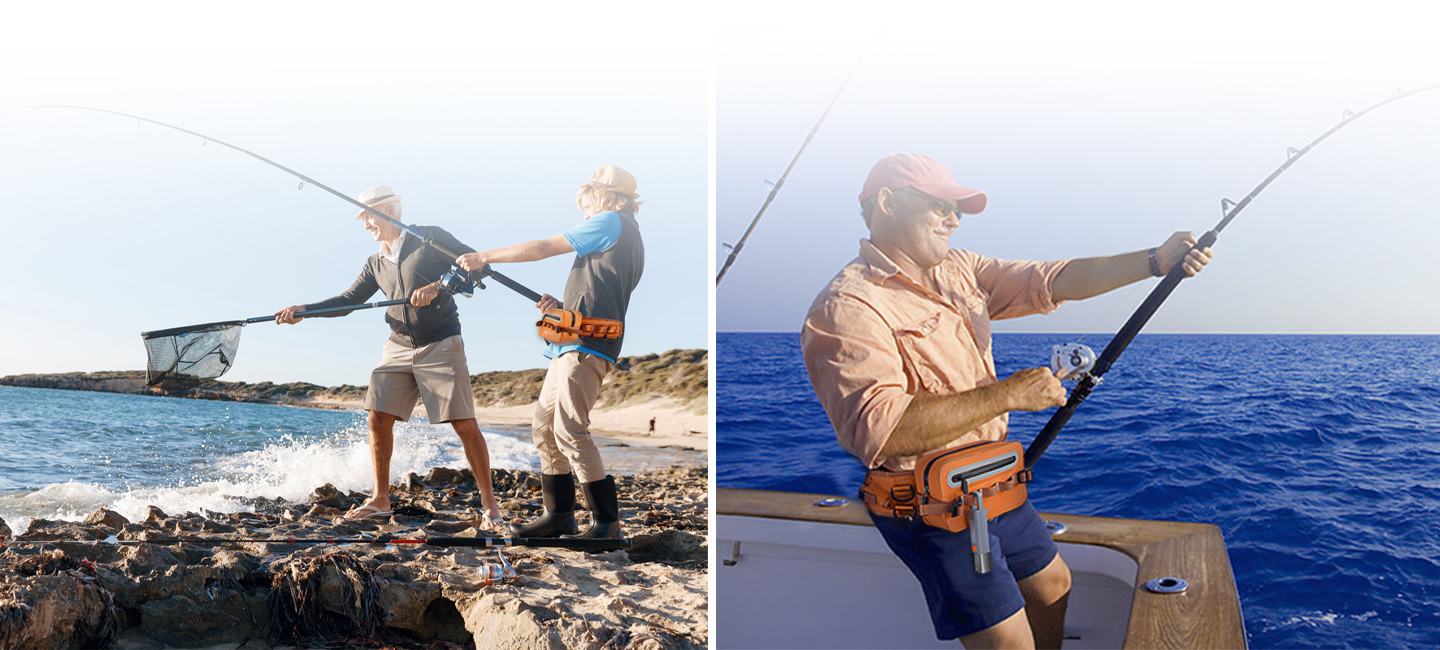
Wading waist packs, often called lumbar or hip packs, face brutal conditions on the water. Anglers wade deep into swift river currents, slip on mossy boulders, and fish through torrential downpours. In these moments, gear submersion is not a possibility; it is a certainty.
When developing gear with a waterproof wading waist pack OEM, choosing between Radio Frequency (RF) welding and stitched-and-taped seams is your most critical structural decision. This choice determines your bag's ingress protection (IPX) rating, aesthetic silhouette, mold costs, and retail price point.
Many brands struggle to balance absolute waterproofing against pocket complexity and upfront tooling investments. OEM specialists like Weierken help outdoor labels navigate these manufacturing trade-offs every day. This guide breaks down the engineering behind both assembly methods so you can specify the right process for your next tackle collection.
1. Under the Hood: Radio Frequency (RF) Welding
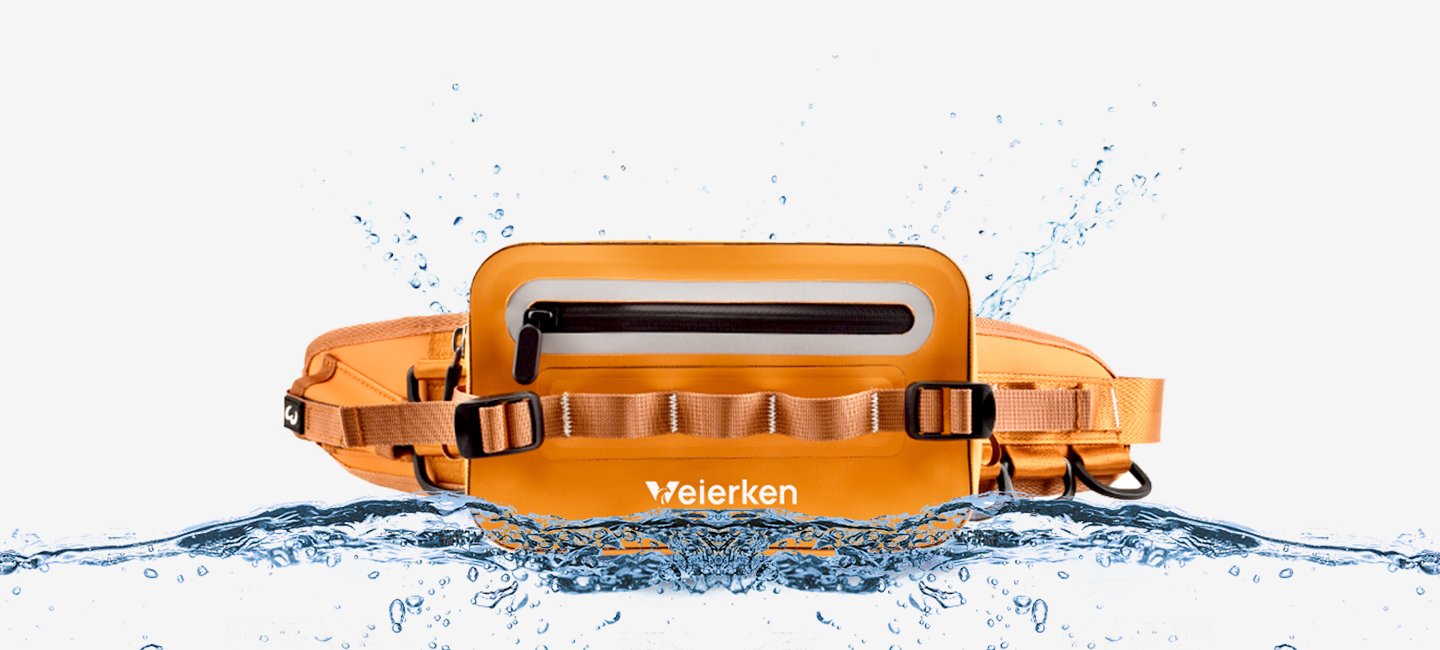
Radio frequency welding—also known as high-frequency (HF) dielectric sealing—does not rely on external heat to melt materials. Instead, it uses an electromagnetic field to agitate the polar molecules within thermoplastic textiles.
This molecular excitation generates friction from the inside out, fusing the synthetic layers into a single, permanent bond. When the energy shuts off and cooling pressure applies, the two pieces of fabric become one homogeneous material without a single stitch hole.
Core Compatible Materials
RF welding demands polar molecular structures. Non-polar fabrics simply cannot bond under high-frequency currents.
- Double-Sided TPU Nylon: 420D to 840D nylon coated on both faces with thermoplastic polyurethane (TPU) represents the gold standard for high-abrasion wading luggage.
- Ether-Based TPU Films: Superior to ester-based variants because they resist fungal growth and will not degrade under continuous contact with freshwater or saltwater.
- PVC Laminates: A cost-efficient, heavy-duty option often reserved for commercial work packs and budget tackle bags.
Key Advantages for Wading Packs
An RF welded fishing pack manufacturer can achieve genuine IPX7 or IPX8 submersible ratings. Anglers can dunk the pack completely underwater without a drop leaking into the main hold.
Because the seam has no thread to fray, rot, or absorb moisture, the weld boundary matches or exceeds the tensile strength of the base textile. When paired with a pressure-proof, toothless airtight zipper, an RF-welded lumbar pack traps air inside, transforming into a reliable personal buoyancy aid if an angler slips into deep water.
OEM Limitations and Tooling Overhead
Precision requires dedicated hardware. Every curve, corner, and pocket seam on an RF welded pack requires a custom-milled aluminum or copper electrode jig. These tooling costs can range from $2,500 to over $8,000 per bag silhouette, driving up initial development expenses.
Furthermore, RF welding limits internal organization. Creating multi-tiered organizer pockets, bellows dividers, and soft stretch-mesh sleeves inside an RF-welded chamber is difficult because the machine dies require flat, accessible surface contact to deliver uniform current.
2. Under the Hood: Stitched and Taped Seams
Taped seam construction relies on conventional industrial cut-and-sew operations. Factory technicians stitch fabric panels together using nylon or polyester threads. Afterward, an operator feeds the sewn seams through an automated hot-air sealing machine.
This hot-air unit applies a multi-layer waterproof seam tape directly over the needle penetrations, melting a heat-activated polyurethane adhesive into the yarn fibers to seal the holes.
Core Compatible Materials
This process handles a vast variety of outdoor textiles that cannot be RF-welded directly.
- PU-Coated Cordura® Nylon: Delivers exceptional tear strength, tactile hand feel, and traditional outdoor apparel aesthetics.
- Ripstop Polyester Laminates: Lightweight, cost-effective options ideal for casual wading and shallow flats fishing.
- X-Pac and Multi-Ply Sailcloth: Technical composite textiles that offer distinct structural rigidity and modern styling.
Key Advantages for Brand Lineups
Working with a taped seam waist pack supplier offers unmatched design freedom. Designers can build ergonomic lumbar back panels, complex 3D tool sheaths, zippered water bottle holsters, and layered external dividers with ease.
Because seam taping requires no custom high-frequency dies, tooling and mold costs are virtually zero. You pay only for sample patterning and sewing line setup, making this route ideal for early-stage tackle brands seeking to test new concepts with minimal capital risk.
Inherent Risks on the River
Taped seams reliably block falling rain and surface river spray, typically earning IPX4 to IPX6 ratings. However, they struggle under hydrostatic pressure. If an angler wades deep and submerges a taped lumbar pack for twenty minutes, water will eventually force its way through taped structural intersections, particularly where three or four sewn seams cross.
Additionally, seam tape adhesives are vulnerable to hydrolytic degradation over years of exposure to heat, humidity, and salt residue, eventually peeling away from high-stress curves.
3. Head-to-Head Comparison: RF Welding vs. Taped Seams
Review this side-by-side engineering breakdown to quickly evaluate which waterproof wading waist pack OEM process matches your operational profile.
| Performance & Sourcing Parameter | RF Welded Construction | Stitched & Taped Construction |
|---|---|---|
| Waterproof Ingress Protection | Submersible IPX7 to IPX8 (Airtight) | Weatherproof IPX4 to IPX6 (Non-Submersible) |
| Upfront Tooling & Mold Investment | High ($2,500 – $8,000+ for electrode dies) | Minimal (Standard patterning and jigs only) |
| Minimum Order Quantities (MOQ) | Higher (Typically 500 – 1,000 units/run) | Flexible (Often 200 – 500 units/run) |
| Structural / Ergonomic Complexity | Restricted to clean, minimalist planes | Virtually unlimited multi-pocket architecture |
| Saltwater & Hydrolysis Resistance | Exceptional (Zero adhesive glue layer) | Moderate (Tapes can peel over time) |
| Compatible Closures | Airtight / Submersible welded zippers | Water-repellent coated coil zippers |
| Production Cycle Predictability | High (Automated, machine-driven cycles) | Medium (Heavily dependent on seamstress skill) |
4. Choosing the Best Process for Your Brand Positioning
Your production path should reflect what your customers do on the river and what they are willing to pay for protection.
When to Build an RF-Welded Wading Pack
Specify RF welding if you are targeting technical fly anglers, flats fishermen, and coastal guides. In these fisheries, gear routinely gets dropped into deep runs or washed over by ocean swells.
- Your marketing emphasizes "100% Submersible Protection" for high-end fly boxes, mirrored camera lenses, key fobs, and smartphones.
- You want to build a halo product retailing above $180, where customers demand clean, technical finishes.
- Your brand has secured distribution channels capable of moving volume to absorb initial tooling and mold expenses.
When to Build a Stitched and Taped Pack
Choose stitched and taped construction if your brand caters to bank anglers, urban fly fishers, and wading enthusiasts who avoid deep channels.
- Your customers demand maximum organization: separate tippet docks, forceps sleeves, pliers holsters, and internal key clips.
- You want to launch rapidly, test seasonal colorways, and keep development investments conservative.
- Your target retail price sits below $100, where buyers value multi-pocket convenience over deep-water immersion.
The Hybrid Approach: The Modern 2026 Trend
Forward-thinking brands are no longer forcing an either-or compromise. A growing design trend blends both production worlds into a single hybrid chassis. Advanced factories, including Weierken, build packs with a fully RF-welded, airtight main pod to safeguard critical electronics, paired with an attached cut-and-sewn exterior apron that provides flexible, fast-drying mesh pockets and tool docks.
5. Factory Evaluation: How to Audit a Waterproof Bag Supplier
Building high-end waterproof gear requires specialized equipment and strict quality control. Never place a bulk order without auditing these three plant capabilities.
1. High-Frequency Machinery and Tooling Control
Confirm the factory manages an in-house tooling workshop. Factories that cut and adjust their own brass welding dies can tweak sample dimensions within 48 hours. Plants that outsource tooling often face two-week delays for minor seam adjustments.
2. Multi-Stage Pressure and Inflation Testing
A legitimate TPU waterproof hip pack factory tests finished goods using rigorous pneumatic and hydrostatic procedures:
- Inflation Tank Testing: Technicians fill the pack with 1.5 to 3.0 PSI of compressed air, submerge it in an illuminated water tank, and verify that no air bubbles escape from welded seams or zipper welds over a three-minute window.
- Hydrostatic Head Testing: A bench apparatus clamps against coated fabric panels to measure the precise water column height (typically 10,000mm to 20,000mm) the material withstands before moisture seeps through.
3. Certified Component Sourcing Channels
A welded bag is only as reliable as its weakest junction. Ensure your submersible lumbar pack OEM maintains certified procurement agreements with premier zipper suppliers like TRU® Zip, YKK, or TIZIP®. Installing counterfeit or unbranded airtight closures leads to catastrophic warranty failure rates in retail channels.
Frequently Asked Questions (FAQ)
Q1: Can an RF-welded wading pack be repaired if punctured by a hook?
A1: Yes. Anglers can patch field punctures using UV-curing adhesives (such as Aquaseal UV) or heat-activated TPU repair patches. However, a major seam delamination caused by poor factory calibration cannot be repaired in the field, which is why working with a skilled factory is essential.
Q2: Why are RF-welded packs generally more expensive than taped packs?
A2: RF welding requires custom-milled copper or aluminum tooling dies for every individual seam. It also utilizes heavier double-sided TPU fabrics and waterproof zippers, which cost significantly more than standard water-repellent zippers and PU-coated textiles.
Q3: What waterproof rating is needed for a pack that stays dry underwater?
A3: True submersible performance requires an IPX7 rating (survives immersion down to 1 meter for 30 minutes) or an IPX8 rating (survives continuous submersion beyond 1 meter under designated pressure). Taped seams typically achieve IPX4 to IPX6, which only resists rain, splashing, and brief rinses.
Q4: How long does seam tape last on a fishing lumbar pack?
A4: High-grade polyurethane seam tape applied with calibrated heat and roller pressure lasts between 3 and 7 years under typical fishing use. Exposure to high heat (such as a pack left inside a hot car trunk) or salt deposits can accelerate adhesive breakdown.
Q5: What is the typical sampling time for an OEM waterproof wading pack?
A5: Taped seam prototypes typically take 10 to 14 days since they require only standard pattern adjustments. RF-welded samples usually require 20 to 30 days because the factory must engineer, test, and polish temporary or production-grade welding dies first.
Build Your Next Submersible Tackle Line
Every dollar you invest in technical wading luggage should match your brand strategy. Choosing between RF welding and taped seams comes down to deciding whether your customers need complete submersible security or accessible everyday storage on the riverbank.
Engineering teams like Weierken help outdoor brands strike this balance, analyzing tech packs, optimizing structural tooling, and building rugged gear that stands up to deep water. Contact our engineering team today to request a comprehensive DFM (Design for Manufacturability) review and order a physical process sample kit for your next line.