

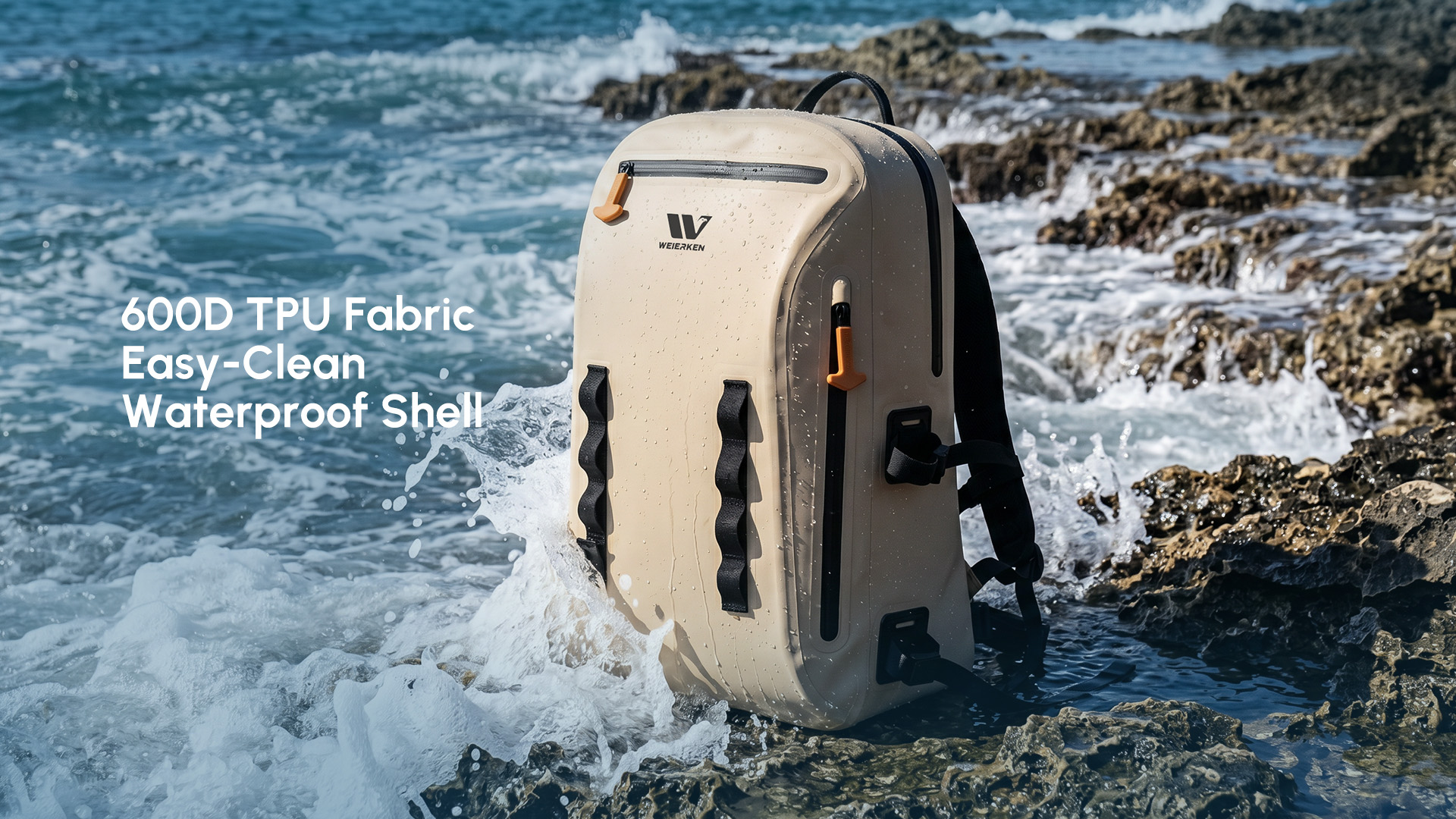
The marine and white-water gear market leaves zero room for product failure. When heavy waves crash over a river raft or rain hits a sailboat deck, gear must stay completely dry. Sourcing reliable dry sacks and deck bags requires specialized manufacturing techniques, strict quality control, and deep technical know-how.
Many outdoor brands still rely on trading companies and third-party agents to procure their watersports equipment. However, miscommunication over technical specs often leads to seam failures, leaking zippers, and costly product recalls. Working directly with a dedicated marine dry bag manufacturer solves these persistent operational headaches.
By partnering directly with an established custom rafting dry bag supplier like Weierken, brand owners gain direct control over material selection, structural engineering, and production timelines. Going direct does more than cut out extra fees. It secures your supply chain and protects your brand image in demanding marine conditions.
1. Strategic Cost Optimization and Tariff Mitigation
Middlemen and trading agencies usually add a 15% to 30% markup to factory quotes. They charge these fees simply for managing emails and handling logistics, without adding value to the actual product. Eliminating these intermediaries lets brands reinvest savings back into higher-grade materials, better airtight hardware, or direct marketing efforts.
Financial gains extend beyond basic factory price cuts. Global trade policies and import taxes impact profit margins heavily. Procurement teams in North America and Europe need proactive strategies to manage rising import duties on Chinese-manufactured textiles.
Working with a multi-base direct factory OEM dry bag partner solves these trade barriers effectively:
Exemption from Section 301 Tariffs: Shifting manufacturing orders to non-tariff countries substantially lowers landed costs for US buyers.
Raw Material Cost Control: High-capacity manufacturers buy TPU and heavy-duty PVC directly from top resin suppliers at bulk prices.
Transparent Costing Models: Direct factories provide itemized bills of materials (BOM), showing clear costs for fabric, welding, assembly, and packaging.
To provide clear economic advantages, Weierken operates three modern manufacturing facilities covering over 80,000 square meters across China and Cambodia. By leveraging our Cambodian production hub, international clients enjoy effective Cambodia bag supplier tariff mitigation, keeping their landing costs low and product margins healthy.
2. Direct Engineering Support and Advanced R&D Customization
Waterproof gear bags are highly engineered marine equipment. Unlike standard nylon backpacks, technical dry bags rely on advanced polymer bonding, air retention science, and stress-load distribution. Relying on a sales agent who lacks engineering knowledge often results in miscommunicated technical specs and failed prototypes.
Direct collaboration connects your product design team directly with factory engineers. This hands-on dialogue helps identify structural flaws early in the design phase, long before mass production begins.
An experienced direct factory engineering team offers critical technical capabilities:
Precision RF High-Frequency Welding: High-frequency electromagnetic energy melts polymer layers together at the molecular level, creating seamless, leak-proof joints.
Airtight and Hydrostatic Engineering: Engineers determine exact TPU coating weights and recommend IPX7 or IPX8 watertight zipper integrations based on water depth needs.
Stress-Point Reinforcement: Heavy load areas—like haul handles, D-ring attachment points, and shoulder strap anchors—receive targeted heat-welded patches.
Rapid Prototyping Capabilities: In-house tooling workshops create physical sample bags in days rather than months.
With 20 years of technical bag manufacturing experience, Weierken turns initial concepts into functional prototypes within 7 to 10 days. Our engineering team reviews your design files, recommends ideal fabric specs, and refines seam layouts to maximize durability under harsh marine conditions.
3. Source-Level Quality Assurance and Rigorous Pressure Testing
Offshore environments test gear relentlessly. A single faulty weld or pinhole tear on a rafting trip can destroy expensive electronics and ruin a consumer's trust. Trading agents rarely visit assembly lines to inspect inline thermal welding or seam tape application.
In contrast, a professional custom rafting dry bag supplier implements multi-stage Quality Assurance (QA) protocols right on the production floor. Quality control starts when raw fabrics arrive and continues until sealed cartons ship out.
A complete factory-level quality system includes these essential testing steps:
Incoming Material Inspection (IQC): Testing raw TPU and PVC rolls for tensile strength, tear resistance, coating adhesion, and cold-crack tolerance.
Inline RF Weld Verification (IPQC): Pull-testing seam samples continuously throughout production runs to ensure structural bonding integrity.
100% Air Inflation Retention Testing: Inflating dry bags with compressed air and monitoring pressure drop over 24 hours to spot microscopic leaks.
Hydrostatic Water Pressure Chambers: Submerging finished bags under calibrated pressure depths to verify IPX8 waterproof claims.
At Weierken, our team of over 3,000 skilled workers follows strict ISO-compliant quality procedures. Every custom sailing equipment bag and dry sack undergoes thorough inflation and pressure checks. This rigid quality focus ensures near-zero defect rates, protecting your brand from costly customer returns.
4. Elastic Capacity and Complete Supply Chain Transparency
Watersports and outdoor recreation follow clear seasonal purchasing cycles. Spring and early summer demand high delivery volumes, while autumn requires nimble inventory adjustments. Small contract sewing shops often miss delivery deadlines during peak seasonal rushes.
Direct partnerships with established mega-factories provide flexible production capacity. Large manufacturers adjust assembly lines dynamically to handle order surges without delaying existing production schedules.
Direct supply chain partnerships deliver key operational benefits:
Guaranteed Peak-Season Capacity: Dedicated assembly lines keep your inventory stocked during high-demand spring and summer sales windows.
Real-Time Production Tracking: Direct access to factory production schedules lets you monitor cutting, welding, assembly, and packing stages live.
Traceable Material Sourcing: Full visibility into raw material origin ensures compliance with environmental and trade standards.
Custom Packaging and Private Labeling: In-house hangtag printing, eco-friendly polybag packing, and retail-ready master carton styling.
Operating across 80,000+ square meters of factory space, Weierken delivers the physical scale required by growing global brands. We serve as a long-term manufacturing partner for more than 2,000 brands worldwide, balancing large-scale production speed with meticulous craftsmanship.
Sourcing Guide: How to Evaluate a Marine Gear Bag Supplier
Selecting the right factory partner dictates your product quality and market performance for years. Procurement managers should look beyond basic price quotes and assess a factory's true technical capabilities and compliance record.
Use this evaluation checklist when auditing potential manufacturing partners:
Examine Thermal & RF Welding Equipment: Verify the factory owns dedicated high-frequency welding machines and hot-air seam-sealing units rather than standard sewing equipment alone.
Review Environmental and Safety Certifications: Ensure fabrics comply with REACH, RoHS, CP65, and PFAS-free standards required in North America and Europe.
Inspect On-Site Testing Facilities: Confirm the supplier maintains an active testing lab equipped with hydrostatic testers, inflation racks, and tensile testers.
Evaluate Multi-Country Footprints: Determine if the manufacturer operates facilities outside China to mitigate trade risks and lower tariff costs.
Assess Proven Marine Industry Track Record: Ask for verifiable OEM/ODM case studies involving heavy-duty rafting bags, submersible backpacks, or sailing storage gear.
Partner with a Factory Direct Leader for Your Next Marine Line
Building high-performance marine dry bags requires dedicated engineering, specialized machinery, and strict quality control. Bypassing intermediaries to work directly with an experienced factory gives your brand full control over material quality, production costs, and delivery times.
Whether you need a heavy-duty custom rafting dry bag supplier, custom sailing equipment bags, or submersible gear sacks, choosing an established direct manufacturer ensures your products perform reliably on the water while maintaining strong profit margins.
Looking for a reliable, factory-direct marine gear bag supplier? Partner with Weierken. Backed by 20 years of OEM/ODM expertise, three self-owned factories across China and Cambodia, and trusted by over 2,000 global brands, we build heavy-duty dry bags engineered for extreme water environments. Contact our engineering team today to request a custom quote and sample!
Frequently Asked Questions (FAQ)
1. What is the difference between PVC and TPU materials for custom rafting dry bags?
PVC (Polyvinyl Chloride) offers excellent abrasion resistance, high durability, and lower material costs, making it a popular choice for commercial river rafting bags. TPU (Thermoplastic Polyurethane) is lighter, remains soft in freezing temperatures, is highly resistant to UV degradation, and offers superior environmental sustainability. TPU is generally preferred for premium outdoor and marine dry bags.
2. How does high-frequency (RF) welding ensure a bag is 100% waterproof?
High-frequency RF welding uses electromagnetic energy to generate heat from within polymer molecules. This process fuses the overlapping edges of TPU or PVC fabric together into a single, continuous bond. Unlike conventional sewing, RF welding eliminates needle holes, creating a fully seamless, airtight, and watertight joint capable of withstanding heavy water pressure.
3. What waterproof rating should custom sailing and rafting bags achieve?
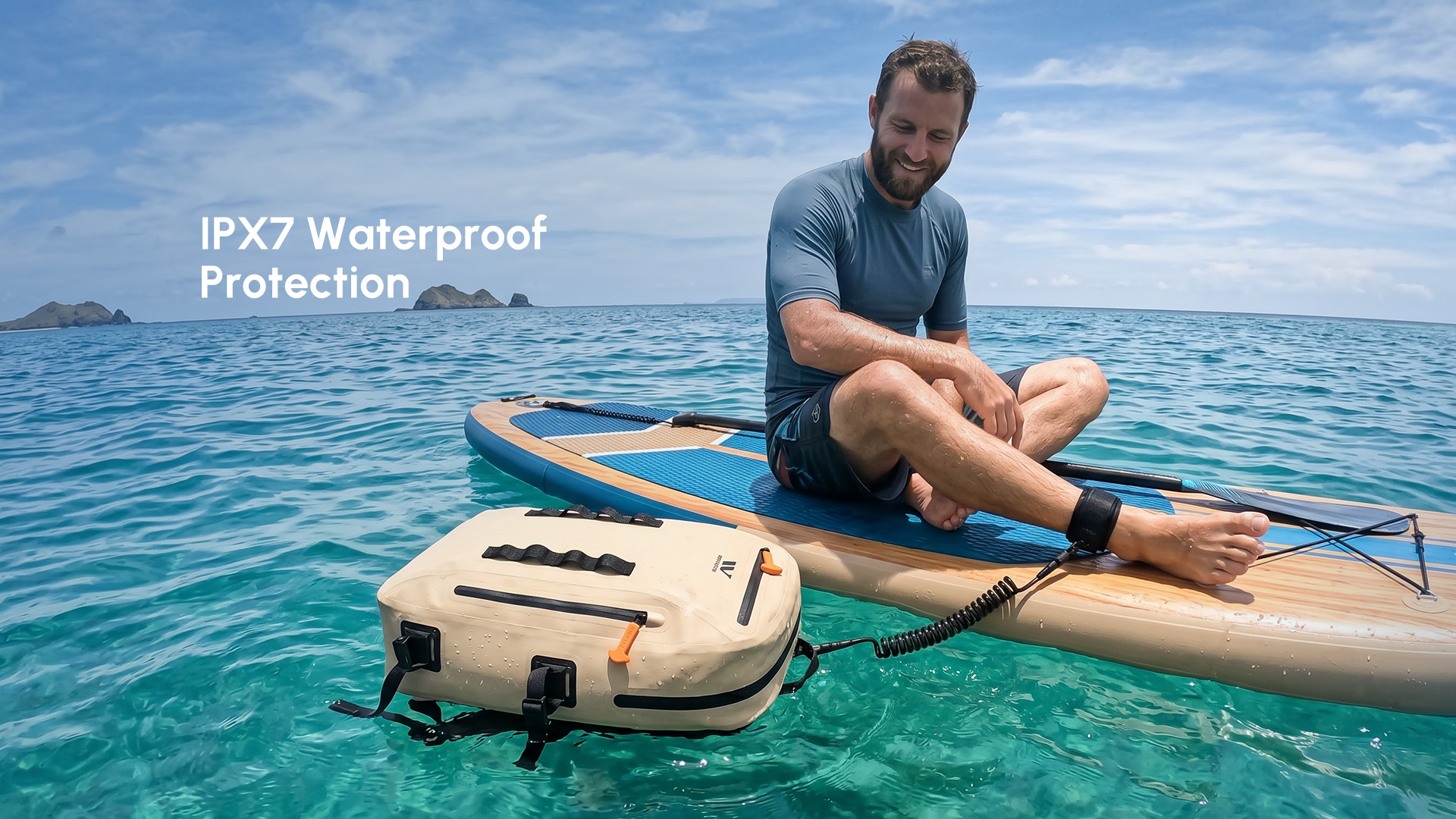
For quick water splashes and rain exposure, an IPX6 rating (resistant to powerful water jets) is usually sufficient. However, technical white-water rafting dry bags and deck sacks should meet IPX7 (survives temporary immersion down to 1 meter for 30 minutes) or IPX8 standards (survives continuous submersion under specified water depths) to protect contents during raft flips or heavy seas.
4. How does sourcing dry bags from Cambodia help mitigate tariff costs?
Shipments imported into the United States directly from China are subject to Section 301 tariffs, which add substantial import taxes on textile and rubberized outdoor gear. Producing custom dry bags in Cambodia allows brands to utilize Most Favored Nation (MFN) or generalized preference rules, bypassing Section 301 tariffs and significantly lowering total landed costs.
5. What is the typical lead time for custom OEM dry bag prototyping and mass production?
With an experienced direct supplier like Weierken, initial structural design and custom prototyping generally take 7 to 10 business days. Once prototypes, material colors, and technical specifications receive final approval, full-scale mass production typically takes 35 to 45 days, depending on overall order volume and material availability.
6. Can Weierken customize dry bags to meet specific color schemes and brand specs?
Yes. As a comprehensive OEM/ODM manufacturer, Weierken customizes every product aspect to match your brand specifications. We offer custom Pantone fabric dyeing, specialized logo screen printing, reflective accents, custom hardware colors, molded haul handles, tailored pocket layouts, and bespoke retail packaging.