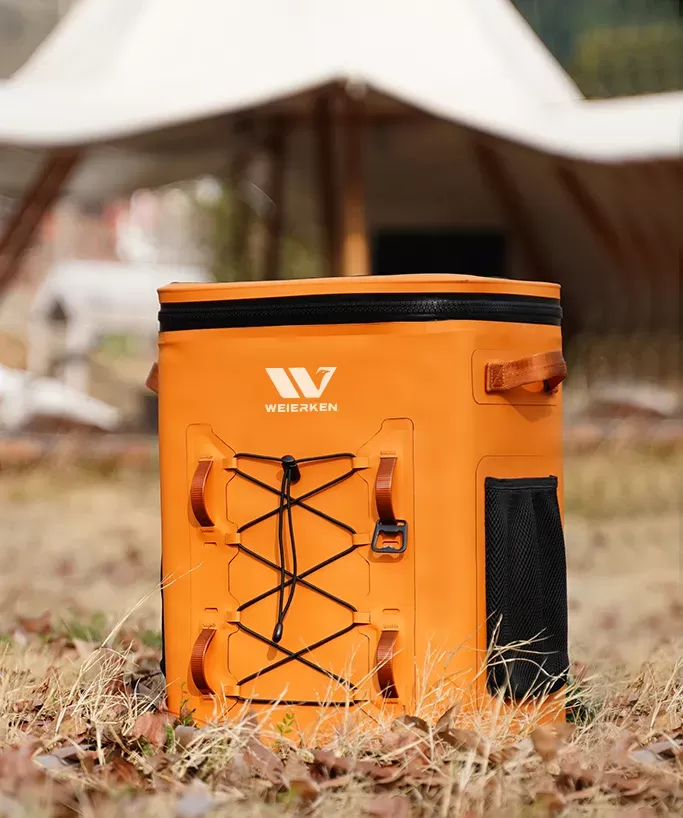

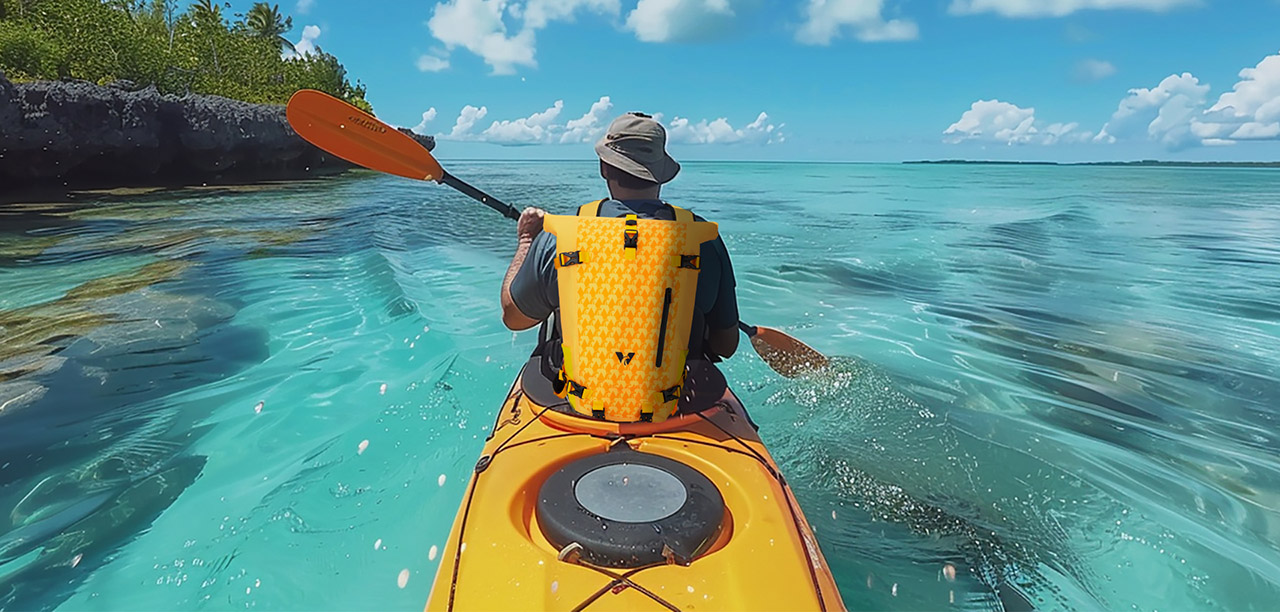
Water sports enthusiast expectations have shifted dramatically over the past few seasons. Casual paddlers and professional divers no longer accept simple splash-proof dry sacks. Today, consumers demand 100% submersible gear that stays fully buoyant when dropped into rough open water.
For outdoor brand managers and procurement directors, this shift brings strict manufacturing requirements. A minor seam defect or slow air leak turns a buoyant bag into a sunken liability. Furthermore, tightening global environmental regulations in 2026 require brands to move away from legacy materials like standard PVC.
Sourcing from qualified floatable bag manufacturers ensures your products meet international waterproof ratings, stay compliant with chemical bans, and protect your brand reputation. Direct OEM leaders like Weierken help global labels navigate these changing technical standards while keeping production scalable.
Deconstructing the Core Manufacturing Tech Behind Buoyant Dry Bags
Making a bag floatable requires more than sealing a piece of fabric. A buoyant bag must lock trapped air inside its main chamber under external hydrostatic pressure. Evaluating a factory's technical capabilities means looking closely at how they weld seams, integrate zippers, and engineer air retention.
1. Radio Frequency (RF) and High-Frequency Welding
Traditional needle stitching punches thousands of microscopic holes into fabric. Even with taped seams, glued joints break down after repeated exposure to saltwater, UV light, and flex stress. Professional floatable bag manufacturers rely almost entirely on High-Frequency (RF) welding.
Molecular Fusion: RF welders apply high-frequency electromagnetic energy to melt thermoplastic coatings together without burning the base fabric.
Zero-Leak Seams: The process creates a unified, molecular bond that handles continuous air pressure without peeling or cracking.
Structural Consistency: Precision welding dies ensure every seam edge maintains uniform width and strength across mass production runs.
2. Airtight Zippers vs. Heavy-Duty Roll-Top Seals
A floatable bag relies heavily on its closure mechanism to maintain internal air volume. Experienced factories help brands choose the right sealing system based on target end-use and budget.
Roll-Top Construction: Works well for light recreation. The factory must use rigid internal stiffeners (such as TPU or Hypalon bands) so the roll creates a firm, airtight seal when buckled down.
Airtight Zippers (IPX8 Submersion): Required for true submersible backpacks and duffels. Integrating high-performance airtight zippers requires custom welding jigs and specialized perimeter reinforcement so the zipper teeth do not pull apart under load.
3. Buoyancy Engineering and Trapped-Air Chambers
Adding thick foam panels creates buoyancy, but it adds bulk and increases shipping volume. Leading TPU waterproof bag manufacturer facilities design internal air pockets instead.
By engineering dedicated inflation valves and airtight internal dividers, the bag captures natural air during closing. The trapped air creates positive buoyancy, allowing heavy gear—like cameras, radio equipment, or dry clothes—to float easily if dropped overboard.
4 New Standards for Selecting OEM Factories in 2026
Procurement criteria that worked five years ago are no longer sufficient. Environmental laws, updated testing protocols, and specialized tooling capabilities now dictate supply chain success.
1. Material Compliance: Moving to PFAS-Free TPU Coatings
Import authorities across Europe and North America have placed strict bans on phthalates, heavy PVC formulations, and PFAS ("forever chemicals"). When evaluating floatable bag manufacturers, demand clear proof of eco-friendly material alternatives.
Thermoplastic Polyurethane (TPU): Replaces traditional PVC. TPU stays flexible in sub-zero temperatures, offers higher abrasion resistance, and recycles more efficiently.
PFAS-Free Water Repellency: Outer fabric layers must use C0 (fluorine-free) durable water repellent (DWR) coatings to clear 2026 customs checks without sacrificing water shedding.
2. In-House IPX Submersion Testing Infrastructure
Never rely on a factory that sends samples out for basic splash tests. A qualified IPX8 waterproof bag manufacturer maintains dedicated testing rooms equipped with motorized submersion pressure tanks.
These pressure chambers simulate deep-water immersion (such as 1.5 to 5 meters for 30 minutes or more). Testing during the sample development phase identifies micro-porosity issues in welded seams before mass assembly begins.
3. 100% Air Inflation QC Protocols
Standard AQL random sampling is not enough for inflatable or buoyant products. Premier factories run a complete floating bag leak testing protocol on every single finished unit.
Workers inflate each bag to a designated pressure level (e.g., 2.0 to 2.5 PSI) and store it on pressure-monitoring racks for 24 hours. Digital sensors or manual gauge checks verify zero pressure drop before the bag moves to final packing.
4. Custom Tooling and In-House Mold Fabrication
Custom floatable dry bags often require proprietary air valves, specialized lash points, or unique ergonomic handle mounts. Working with a custom floatable backpack factory that houses its own tooling shop cuts development timelines in half.
In-house mold development allows engineers to tweak high-frequency welding dies, test prototypes rapidly, and resolve fitment issues without waiting on third-party mold makers.
Factory Audit Checklist: How to Inspect Floatable Bag Suppliers
Whether you conduct an on-site visit or hire an independent audit firm, use this physical inspection checklist to verify a supplier's true production capacity.
1. Count High-Frequency Welding Machinery
Look beyond general sewing lines. A factory claiming high-volume output for welded dry bags must operate a robust fleet of high-frequency machines ranging from 5kW to 25kW capacity. Specialized automatic welding stations signal high production efficiency.
2. Review Mandatory Compliance Certificates
Request current, traceable test documentation from recognized third-party labs like SGS, TÜV, or Intertek. Essential compliance reports include:
REACH & RoHS: Confirms absence of restricted heavy metals and hazardous plasticizers.
California Proposition 65: Verifies phthalate-free material construction for US distribution.
IPX7 / IPX8 Water Ingress Reports: Validates official submersion depth ratings.
3. Evaluate Sample Workmanship Details
Inspect incoming prototypes under bright lighting. Look for these critical quality markers:
Uniform Weld Margins: Seam edges should show clean, flat compression without melted plastic overflow or air bubbles.
Valve Seam Pull Strength: Tug firmly on air valves and strap anchors. The surrounding fabric should show zero distortion or micro-tears.
Zipper Stop Reinforcements: Check the terminal ends of airtight zippers. They require heavy welded patches to handle high pull forces when opening under tension.
Established manufacturing partners like Weierken welcome thorough factory audits. They provide full visibility into raw material lot numbers, machine calibration logs, and final pressure-holding test records.
How to Structure Your OEM Order Workflow
To avoid delivery delays or quality disputes, follow a structured step-by-step sourcing protocol when contracting your next production run.
Phase 1: Spec Sheet and RFQ Submission
Provide your target factory with detailed tech packs specifying fabric denier (e.g., 420D or 840D TPU), desired IPX rating, zipper types, and exact dimensions. Request a detailed breakdown showing material costs, welding assembly time, and testing fees.
Phase 2: Golden Sample Approval & Destructive Testing
Once you receive the pre-production sample, run your own destructive tests. Submerge the inflated bag with heavy weights, freeze it to check seam flexibility, and perform tensile pulls on all shoulder strap attachments.
Phase 3: Production Monitoring and Quality Hold Clauses
Specify in your commercial contract that final balance payments depend on passing 24-hour inflation retention checks. Require the factory to provide inflation QC log sheets showing batch dates and operator sign-offs.
Frequently Asked Questions (FAQ)
1. What makes a bag floatable versus just waterproof?
A waterproof bag keeps contents dry from rain or surface splashes. A floatable bag is fully airtight. It captures and holds internal air volume under pressure, creating positive displacement so the bag remains on top of the water even when fully loaded with heavy gear.
2. Why is TPU preferred over PVC for floatable dry bags in 2026?
TPU (Thermoplastic Polyurethane) offers far superior abrasion resistance, better low-temperature flexibility, and longer seam life than PVC. More importantly, TPU contains no toxic plasticizers or phthalates, making it fully compliant with strict environmental laws in North America and Europe.
3. How do reliable floatable bag manufacturers test for air and water tightness?
Factories use two main methods: 24-hour static inflation retention tests and underwater pressure tank submersion tests. Static tests confirm zero air loss over time, while pressure tanks verify that seams and closures withstand external water pressure at specified depths (such as IPX8 ratings).
4. What is the difference between IPX7 and IPX8 waterproof ratings for floating bags?
IPX7 means the bag can withstand temporary submersion in water up to 1 meter deep for 30 minutes. IPX8 covers continuous submersion under deeper conditions specified by the manufacturer (for example, 3 to 5 meters for extended periods).
5. What are the typical lead times and MOQs for custom TPU floatable backpacks?
Standard minimum order quantities (MOQs) for custom-dyed TPU or specialized welded designs usually range between 500 and 1,000 units per colorway. Production lead times generally take 30 to 45 days after pre-production sample approval and material preparation.
Build Your Floatable Product Line with Confidence
Navigating the technical requirements of buoyant bag manufacturing requires a capable, experienced OEM partner. Choosing factories that specialize in high-frequency RF welding, strict air inflation testing, and eco-compliant TPU fabrics guarantees your products perform when water conditions turn rough.
Work directly with an industry leader to simplify your supply chain. Contact Weierken today to consult with our technical team, evaluate product samples, or request a complete price quote for your upcoming product launch.
Request an Immediate Quote: Submit your product specs or custom design drawings to our team now. We will deliver a comprehensive OEM manufacturing proposal within 24 hours.