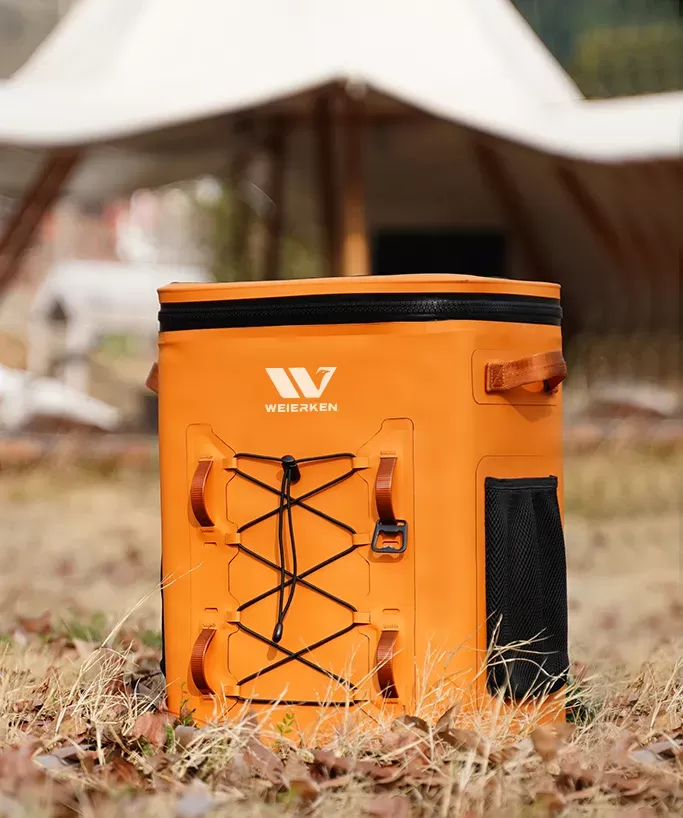

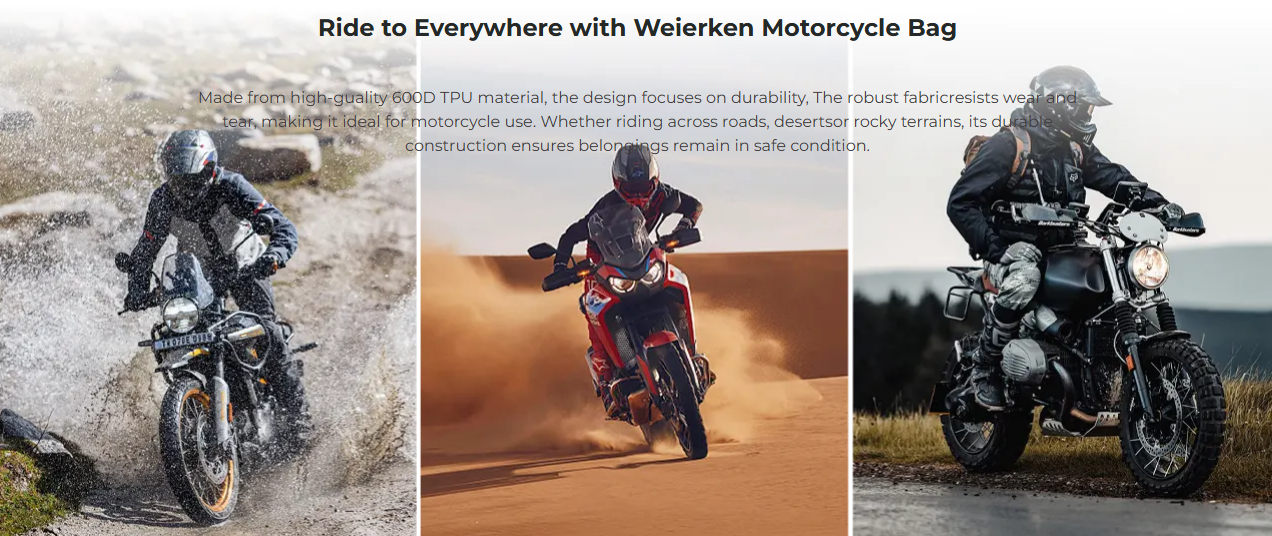
Procuring durable outdoor gear for high-speed travel requires a deep understanding of textile engineering and assembly processes. Buyers sourcing gear for two-wheeled transit face specific challenges, as the products must withstand constant vibration, varying weather conditions, and significant wind drag. Selecting capable motocycle bag manufacturers determines the physical integrity of the final retail product. A poorly constructed seam or a low-grade plastic buckle can result in luggage failure during a long-distance journey, immediately damaging a brand's reputation among consumers. Supply chain managers and brand developers must analyze a factory's material sourcing network, joining technologies, and quality control frameworks before initiating a mass production contract.
Evaluating Fabric Substrates for High-Speed Environments
The foundation of any heavy-duty luggage system rests entirely on its base fabric. The chosen textile dictates the product's abrasion resistance, weight, and overall longevity when exposed to ultraviolet light and road debris.
Polyvinyl Chloride (PVC) Tarpaulin
Industrial PVC tarpaulin serves as the industry standard for large-capacity tail bags and panniers. Factories typically specify 500D (Denier) or 1000D PVC for these applications. The high denier count provides a thick, rugged exterior that resists punctures from sharp branches or abrasive asphalt during accidental drops. The material is inherently waterproof, presenting a smooth, rubberized surface that sheds water instantly. Sourcing teams favor PVC for its excellent cost-to-durability ratio, making it the primary choice for producing heavy-duty adventure gear that demands massive storage volume without structural tearing.
Thermoplastic Polyurethane (TPU)
When buyers require a lighter weight profile combined with superior flexibility in cold climates, TPU emerges as the preferred substrate. TPU offers higher elasticity than PVC, meaning it will not stiffen or crack when exposed to freezing temperatures. This characteristic proves vital for gear intended for high-altitude or winter travel. While the raw material cost of TPU sits higher than PVC, the resulting product yields a premium, matte finish and exceptional environmental resistance. The structural flexibility allows for easier rolling of dry-bag closures, improving the user experience during daily packing and unpacking routines.
High-Denier Oxford Fabrics
Not all luggage requires complete immersion protection. Tank bags and urban commuter packs often utilize high-denier Oxford cloth, typically ranging from 600D to 1680D nylon or polyester. These textiles provide a highly textured, traditional fabric appearance while maintaining severe abrasion resistance. To achieve water resistance, the factory applies a Polyurethane (PU) coating to the interior face of the fabric. Oxford cloth allows for more complex geometric bag designs, as it folds and holds stitched shapes more readily than heavy PVC sheets.
Structural Engineering and Waterproofing Processes
Selecting a robust fabric represents only the first phase of product development. The methodology used to join these textile panels together determines the actual performance of the gear under severe weather conditions. Professional motocycle bag manufacturers utilize specialized machinery to ensure environmental isolation.
Radio Frequency (RF) Welding
Achieving a 100% waterproof rating (such as IPX7) requires the complete elimination of needle holes in the primary compartment. RF welding, also known as high-frequency welding, directs electromagnetic energy through the seams of overlapping PVC or TPU panels. This energy agitates the molecules within the plastic, generating localized heat that melts the two distinct layers into a single, seamless piece of material. The resulting bond possesses the exact same tensile strength and water resistance as the solid fabric itself. Buyers evaluating factories must verify the facility operates modern RF welding presses, as this machinery requires precise calibration to prevent material burning or weak bonding.
Traditional Stitching and Seam Taping
For products constructed from Oxford fabrics, factories employ heavy-duty industrial sewing machines utilizing bonded nylon or polyester thread. Because a needle physically punctures the fabric, the raw seam represents a vulnerability for water intrusion. To mitigate this, factories apply thermoplastic seam tape over the interior stitching. A specialized machine feeds the tape over the seam while applying hot air and pressure, melting the adhesive backing to seal the needle holes. This process provides excellent rain resistance for touring luggage, though it falls short of the total submersion capabilities offered by RF welded dry bags.
Hardware Integration and Mounting Systems
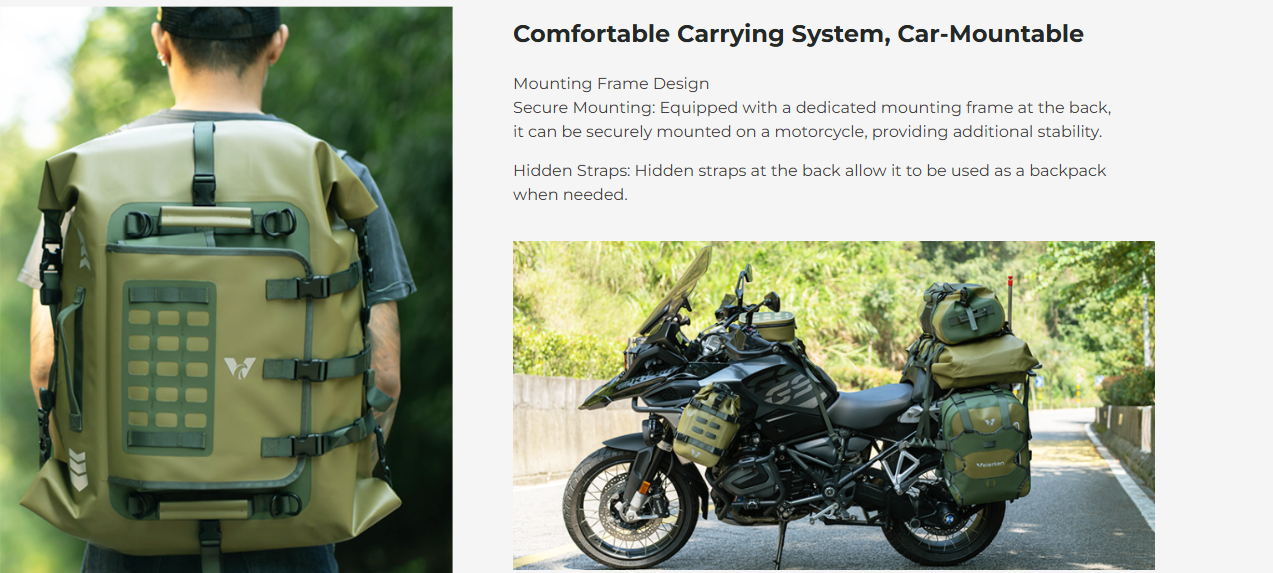
The functional utility of travel luggage depends entirely on how securely it anchors to the vehicle framework. High speeds and uneven terrain place massive kinetic stress on every mounting point, buckle, and strap.
Load-Bearing Fasteners and Webbing
The nylon webbing used for mounting straps must exhibit high tensile strength and low stretch properties to prevent the luggage from shifting during transit. Top-tier motocycle bag manufacturers source acetal hardware—such as side-release buckles, D-rings, and tension locks—from proven suppliers capable of demonstrating load-bearing certifications. Acetal plastics maintain their structural rigidity under heavy tension and resist becoming brittle in sub-zero temperatures. Cam buckles and specialized metal hooks are frequently integrated into the webbing systems to provide non-slip anchor points that attach directly to tubular metal racks or passenger pegs.
Zippers and Closure Mechanisms
The main entry points of the luggage demand careful engineering. For soft-sided panniers and duffels, the roll-top closure remains the most effective waterproof seal. The user aligns the top edges, folds the material downward tightly three or four times, and secures the ends with buckles. This creates a mechanical barrier that water cannot bypass. When zippers are necessary—such as for external quick-access pockets or expanding gussets—factories specify water-resistant coil zippers. These zippers feature a reverse-coil design encased in a polyurethane film, causing water droplets to roll off the track before they can penetrate the teeth.
The OEM and ODM Production Cycle
Bringing a custom luggage concept to the retail market requires a structured collaboration between the buying brand and the factory floor. Understanding the prototyping and scaling phases ensures a smooth supply chain transition.
Prototyping and Pattern Making
The development cycle begins with a Tech Pack provided by the buyer, detailing dimensions, material requests, and hardware specifications. The factory's internal R&D team translates these two-dimensional drawings into digital patterns. Experienced facilities like Weierken operate dedicated sample rooms where pattern makers cut the initial fabrics and assemble the first physical prototype. This prototype serves as the baseline for evaluating volume capacity, mounting geometry, and aesthetic alignment. Buyers typically test this sample in real-world conditions, providing feedback for minor dimensional adjustments or hardware swaps before signing off on mass production.
Mass Production Scaling
Upon sample approval, the factory initiates material procurement. Ordering custom-dyed fabrics or branded webbing often dictates the longest lead times in the production cycle. Once the raw materials arrive, the facility moves into the bulk cutting phase, utilizing laser cutters or heavy hydraulic die presses to ensure exact dimensional uniformity across thousands of panels. Assembly lines are organized into specific modules, with technicians handling dedicated tasks such as strap bartacking, RF welding, or final buckle attachment, ensuring maximum efficiency and consistency across the entire order.
Quality Assurance Protocols in Luggage Assembly
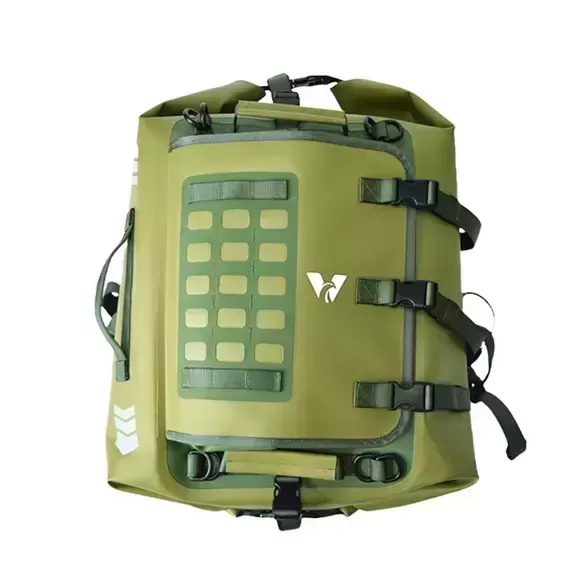
Consistent manufacturing quality separates reputable factories from unreliable vendors. Rigorous inspection protocols must be integrated at every stage of the assembly process to prevent defective goods from reaching the shipping container.
Raw Material and In-Process Testing
Incoming Quality Control (IQC) verifies that the bulk fabric rolls match the approved sample in weight, color fastness, and coating thickness. During the assembly phase, In-Process Quality Control (IPQC) inspectors monitor the welding machines and sewing lines. They perform pull tests on load-bearing straps, ensuring the bartack stitching can withstand sudden jerks without tearing the base fabric. Reputable motocycle bag manufacturers also conduct hydrostatic pressure tests on random batches of waterproof bags, inflating them with air and submerging them in water tanks to visually confirm the absence of escaping air bubbles along the welded seams.
Final Inspection and Packaging
Before the goods are packed into export cartons, the Final Quality Control (FQC) team examines every individual bag. They check for loose threads, verify the smooth operation of all zippers, and confirm that all specified hardware is present and functioning. Weierken integrates these comprehensive inspection layers to guarantee that the final delivered products meet the exact specifications demanded by international retail brands.
Frequently Asked Questions
Q1: What defines the difference between OEM and ODM manufacturing services?
A1: OEM (Original Equipment Manufacturing) involves the factory producing a bag based entirely on your custom designs and blueprints. ODM (Original Design Manufacturing) allows you to select a pre-designed, fully developed bag from the factory's catalog and apply your own brand logo, significantly reducing research and development lead times.
Q2: How do factories measure the volume capacity of large luggage systems?
A2: Volume is calculated based on the internal dimensional geometry (Length x Width x Height) of the fully expanded main compartment, typically expressed in liters. Roll-top designs feature a variable capacity, often listed with a minimum (fully rolled) and maximum (partially rolled) liter rating.
Q3: Can a factory match my brand's exact corporate colors on the bag fabric?
A3: Yes, factories can custom-dye fabrics to match specific Pantone (PMS) color codes. This process requires the buyer to meet a specific Minimum Order Quantity (MOQ) for the raw fabric roll, which is generally higher than ordering standard stock colors like black or olive drab.
Q4: Why do some heavy-duty bags use plastic buckles instead of metal?
A4: High-grade acetal plastics offer exceptional impact resistance and flexibility. Metal hardware, while strong, adds significant weight to the luggage, can scratch the vehicle's paintwork during installation, and may corrode over time if exposed to harsh weather and road salt.
Q5: What is a bartack stitch and why is it necessary?
A5: A bartack is a closely spaced series of zigzag stitches used to reinforce high-stress areas, such as the point where a mounting strap attaches to the main bag body. It distributes the mechanical load across a wider area of the fabric, preventing the strap from ripping out under heavy tension.
Corporate Inquiry and Wholesale Quotations
Developing a reliable supply chain for high-capacity travel gear requires a manufacturing partner with proven expertise in heavy-duty textile assembly. Weierken provides comprehensive OEM and ODM production solutions, specializing in high-frequency welding, precise pattern making, and strict quality assurance protocols. Whether you require a custom production run based on detailed tech packs or wish to brand our existing catalog of large-capacity designs, our engineering team is prepared to support your procurement goals. Submit your project requirements, material specifications, and target volumes to our wholesale department today to initiate the prototyping process and receive a detailed production quotation.