

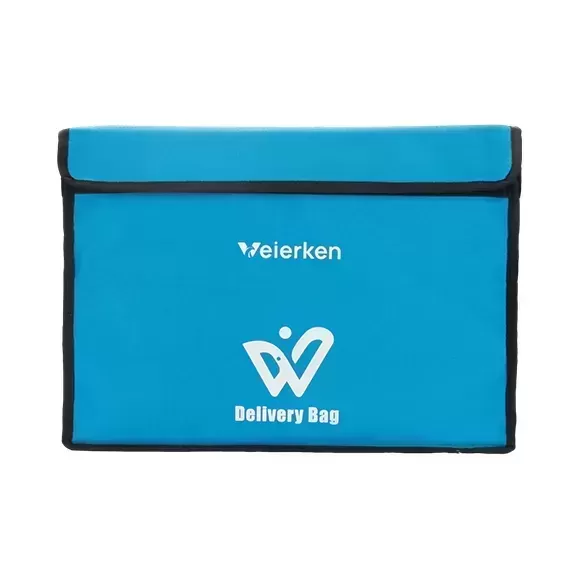
Every commercial delivery fleet runs on its gear. For restaurant chains, ghost kitchens, and third-party delivery platforms, food transport bags are not simple promo items. They are industrial delivery assets that face constant abuse on the road.
Most standard bag factories treat food carriers like ordinary backpacks. That is where supply chains break down. When a zipper snaps mid-shift, food spills inside a porous liner, or condensation turns fried chicken soggy, the customer blames the restaurant brand, not the bag manufacturer.
Choosing the wrong partner brings operational headaches. You face food safety complaints, late deliveries, customs bottlenecks, and unexpected tariff penalties. Professional supply chain teams evaluate a commercial food transport bag supplier on thermal engineering, plant capacity, and global trade compliance.
Whether you manage annual procurement for a regional chain or coordinate high-volume procurement across global hubs, use this checklist to score and vet your manufacturing partners, including proven manufacturers like Weierken.
1. Supply Chain Resilience and Geopolitical Compliance
In high-volume B2B sourcing, purchase price per unit means nothing if your shipment is held at customs or crippled by punitive tariffs. Modern procurement teams evaluate geographic footprint before looking at fabric swatches.
Dual-Hub Manufacturing Footprints
Relying on a single manufacturing facility creates vulnerability. Local labor disputes, port congestions, or power quotas can halt shipments overnight. Top-tier suppliers run coordinated production hubs, combining rapid material sourcing in China with large-scale cut-and-sew operations in Southeast Asia.
China Hub: Houses R&D, rapid tooling, technical fabric sourcing, and complex prototyping.
Southeast Asia Hub (e.g., Cambodia): Handles continuous bulk production runs with lower labor overhead and reduced trade friction.
Contingency Allocation: The supplier can shift volume between facilities if regional disruptions arise.
Tariff Mitigation and Rules of Origin
For US and European buyers, import duties heavily impact landed cost margins. Shipments directly from China face heavy Section 301 tariffs in the United States. A qualified manufacturer operating in Cambodia should provide legitimate, verifiable Certificates of Origin (COO).
Make sure your supplier executes substantial transformation locally. They must meet origin criteria to clear customs without legal risk. A 15% to 25% tariff savings drops directly to your bottom line, giving you an edge in competitive markets.
True Door-to-Door DDP Fulfillment
Managing spot-rate ocean freight, customs clearance, and inland drayage diverts focus from your core business. High-performance suppliers handle delivery end-to-end under Delivered Duty Paid (DDP) terms.
Fixed, transparent landed costs with zero hidden port demurrage fees.
Direct delivery coordination to your regional 3PL distribution centers.
Customs clearance handled by licensed in-house brokers.
2. Industrial Product Engineering and Material Science
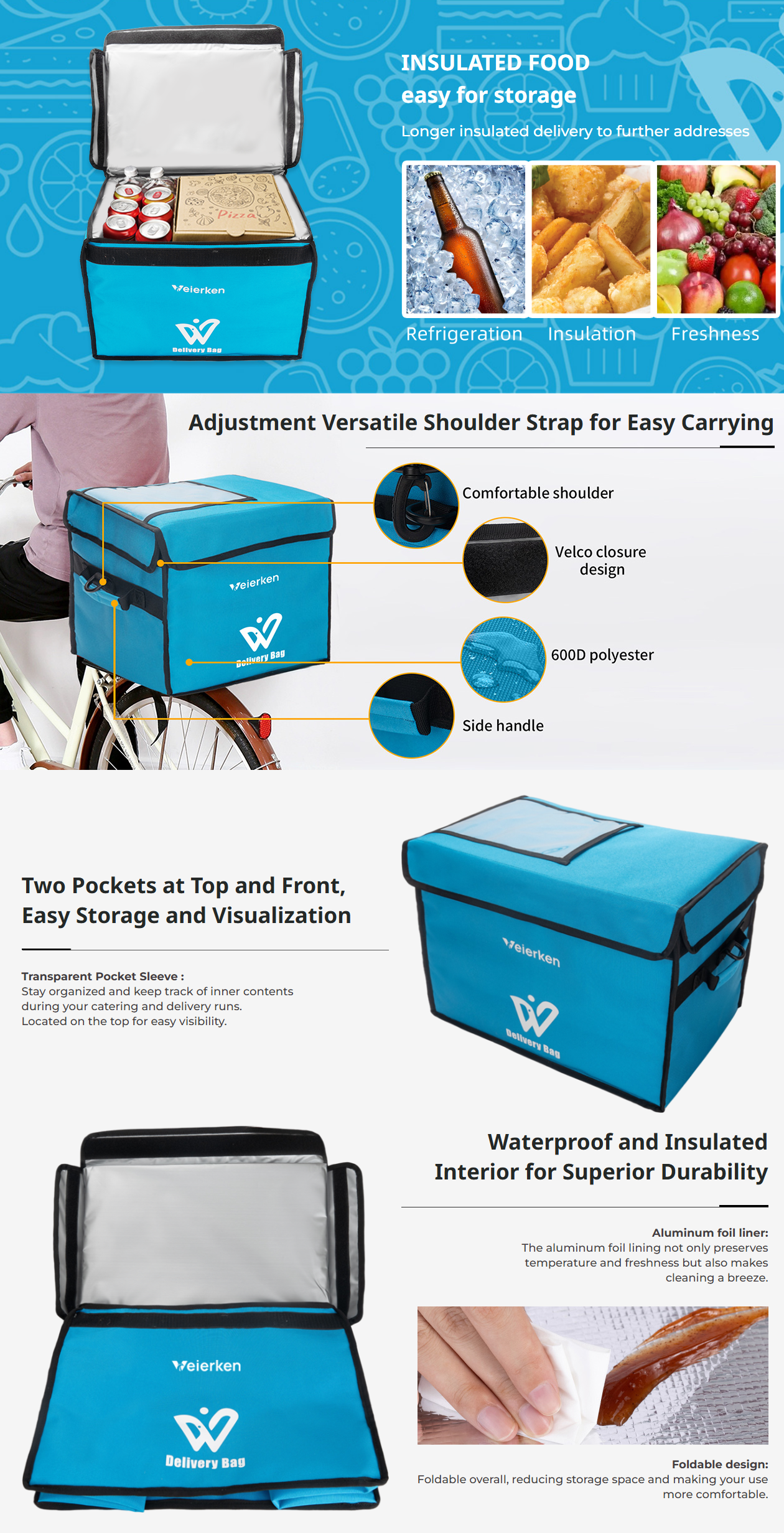
Commercial transport bags function as portable, passive refrigeration units. They require rigorous mechanical engineering to handle 10 to 14 hours of daily road vibrations, steam exposure, and heavy loads.
Thermal Core Structure
Budget soft coolers use cheap open-cell recycled foam that crushes flat within weeks, ruining insulation. Demand industrial insulation setups tailored to your holding-time targets.
High-Density Closed-Cell EPE/EVA: Retains its wall structure under vertical compression and repeated drops.
Rigid Polyurethane (PU) Panels: Used when holding food temperatures above 60°C (140°F) or below 4°C (40°F) for beyond 45 minutes.
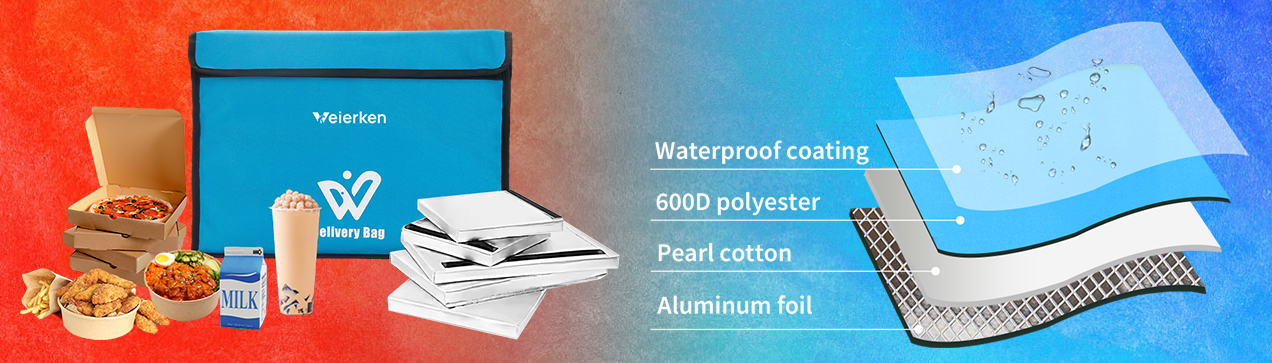
Radiant Heat Barriers: Food-grade aluminum composite layers that reflect radiant heat back toward containers instead of absorbing it.
Leakproof Liners and Hygienic Welds
Stitched interior seams are unacceptable for commercial food transport. Soups, sauces, and grease seep through needle holes into the interior foam. Bacteria grows inside the walls, generating permanent odors and health hazards.
Your supplier must use high-frequency (HF) hot-pressing or ultrasonic seamless welding for internal liners. A heavy-gauge TPU or food-safe PVC liner forms an impenetrable tub. Drivers can wipe it down with industrial sanitizers or rinse it clean without soaking the internal insulation.
Reinforced Fabrics and Hardware
Inspect wear points where bags fail in the field:
Outer Shell: 500D to 1680D tear-resistant, PVC-backed Oxford nylon or 500gsm water-repellent tarpaulin.
Industrial Zippers: Genuine YKK zippers, sealed waterproof reverse-coil tracks, or ultra-durable #10 resin teeth with double-stitched pull tabs.
Load Distribution: Bar-tack stitching and cross-box reinforcement on all handle mounts, tested to withstand 25kg to 30kg static pull tests.
First-Pass Yield (FPY) and In-Line Quality Control
Ask prospective vendors for their documented First-Pass Yield (FPY) rates. Reputable contract manufacturers maintain a finished goods pass rate of 99.5% or higher. Quality control teams must run incoming material checks, in-line assembly monitoring, and finished-product drop testing under load.
3. R&D Agility and Technical Problem Solving
Off-the-shelf catalog products rarely match customized corporate needs. Delivery containers, modular drink caddies, and vehicle rack-mount systems vary across operations. Your supplier must function as an active design partner.
Companies like Weierken bridge this gap with dedicated technical design departments. If your prototypes take six weeks to iterate, you will miss rollouts for new menu launches.
Rapid Prototyping Timelines
A specialized commercial bag manufacturer should convert 2D technical drawings or reference samples into physical, functional samples within 3 to 7 business days. Fast prototyping proves the factory runs an independent sample room with dedicated pattern makers, rather than interrupting mass production lines for small sample runs.
Solving Structural Trade-offs
Every commercial delivery bag faces competing physical requirements. Good suppliers provide smart design adjustments:
Moisture vs. Heat: They place one-way breathable exhaust valves to release steam while trapping hot air, keeping fried goods crispy.
Weight vs. Rigidity: They use lightweight PP honeycomb or corrugated hollow-board inserts to stop multi-tier bags from sagging onto bottom food orders.
Foldability vs. Insulation: They design folding crease-lines into rigid panels so empty carriers fold flat for compact scooter or warehouse storage.
4. Enterprise Compliance, Social Audits, and ESG
Procuring for multinational restaurant groups or venture-backed delivery platforms puts your supply chain under the microscope. Sourcing from non-compliant sweatshops or unverified operations creates major regulatory and brand risks.
Third-Party Social and Ethical Audits
Insist on current audit reports from recognized international bodies before requesting production quotes. Reject suppliers that cannot provide recent documentation.
BSCI (Business Social Compliance Initiative): Verifies fair wages, workplace safety, and humane working hours.
SEDEX SMETA: Audits labor standards, health and safety, environmental practices, and business ethics.
ISO 9001: Validates standardized factory quality management systems across all assembly lines.
Recycled Materials and Food Safety Certifications
Corporate sustainability mandates now carry legal weight. Many global markets require traceable post-consumer recycled fabrics.
Verify whether your commercial food transport bag supplier provides authentic Global Recycled Standard (GRS) transaction certificates for rPET fabrics. For food-contact areas, demand certified test reports proving liners are BPA-free, phthalate-free, and compliant with FDA 21 CFR or EU 1935/2004 standards.
5. Account Management and Cross-Border Collaboration
Miscommunications over dimension tolerances, print locations, or packaging specs lead to costly scrap runs. Cross-border purchasing demands professional project governance.
Dedicated English-Speaking PMs: Direct access to technically trained project managers who understand industrial specs, avoiding middlemen markups.
Gantt Chart Milestone Tracking: Structured schedules from tooling opening and fabric dye-lot approval down to final pre-shipment inspections.
High-Resolution Digital Assets: Top suppliers offer white-background photography, exploded-view diagrams, and specification sheets to help you launch products internally.
Commercial Food Transport Bag Supplier Scorecard
Use this balanced scorecard to audit and rank candidates during your next sourcing tender. Eliminate any supplier that scores below 85 points overall or fails the compliance section.
| Evaluation Category | Key Verification Criteria | Max Score |
|---|---|---|
| Supply Chain & Logistics | Dual manufacturing hubs (China/Cambodia), valid COO execution, transparent DDP terms. | 25 |
| Technical Engineering | High-density insulation, seamless HF hot-pressed liners, 99.5%+ First-Pass Yield. | 25 |
| R&D & Speed | 3 to 7 day prototyping turnaround, internal pattern-making team, custom CAD support. | 20 |
| Compliance & ESG | Active BSCI/SEDEX audits, food-grade liner tests (FDA/REACH), certified GRS rPET options. | 20 |
| Project Management | Bilingual engineering support, clear milestone tracking, transparent replacement warranties. | 10 |
| Total Achievable Points | Target passing grade: 85+ points | 100 |
Frequently Asked Questions
Q1: What separates a commercial food transport bag supplier from a standard backpack factory?
A1: Standard bag factories focus on exterior looks, light materials, and decorative sewing. A dedicated commercial food transport bag manufacturer engineers products like mobile thermal equipment. They use high-frequency welded waterproof liners, high-density insulating foam cores, steam-release valves, and structural reinforcements rated for 20kg to 30kg working payloads.
Q2: How does sourcing thermal bags from Cambodia mitigate US import tariffs?
A2: Goods exported directly from China to the United States often face steep Section 301 tariffs on top of base duty rates. A supplier with a genuine, operational manufacturing facility in Cambodia can build and ship your orders under clear rules of origin. A legally compliant Certificate of Origin (COO) bypasses these tariffs, frequently saving enterprise buyers 10% to 25% on total landed costs.
Q3: Which insulation works best for holding hot meals above 60°C (140°F) for 45 minutes?
A3: Avoid lightweight open-cell foams. Instead, choose a composite layering system: an outer high-denier water-resistant shell, a dense 8mm to 10mm closed-cell EPE or continuous PU foam core, and an inner food-safe reflective radiant liner. For long routes, adding integrated heating elements powered by 12V vehicle chargers or power banks keeps temperatures stable.
Q4: Can we order OEM thermal catering bags with food-grade leakproof certifications?
A4: Yes. Reputable manufacturers use heat-sealed TPU or thick PVC inner liners assembled without needle punctures, preventing liquids from reaching the insulation. These liners must carry FDA 21 CFR or EU 1935/2004 compliance test reports, confirming they do not leach plasticizers, odors, or chemicals into food containers.
Q5: What is the typical lead time for custom bulk food delivery bag sourcing?
A5: From design sign-off, specialized manufacturers complete prototypes within 3 to 7 business days. Once you approve the pre-production golden sample, bulk production runs typically take 30 to 45 days, depending on material customizations. Sea freight under DDP terms adds roughly 20 to 35 days depending on your destination port.
Secure Your Cold Chain Delivery Fleet with Weierken
Procuring industrial-grade delivery gear is an investment in brand reputation and supply chain stability. The right manufacturing partner stops bag failures, keeps food at proper serving temperatures, and shields your margins from sudden tariff shocks.
Weierken supplies high-performance solutions for the global food service industry. Through integrated dual-hub facilities in China and Cambodia, Weierken delivers clear advantages to commercial buyers:
Duty-optimized export paths via our compliant Cambodian production base.
Fast 3 to 7 day prototyping backed by an in-house engineering team.
Certified leakproof builds using high-frequency welded, food-safe liners.
Audited factory floors carrying full BSCI, ISO 9001, and GRS accreditations.
Reliable, stress-free DDP logistics delivered directly to your logistics hubs.
Stop settling for off-the-shelf bags that fall apart under daily delivery demands. Protect your operations, safeguard your margins, and upgrade your delivery fleet.
Contact the Weierken engineering team today to review your technical specifications, request a custom sample, and receive a competitive DDP manufacturing quote.