
Commercial food delivery operators face tough headwinds this year. Tariff unpredictability, higher shipping rates, and stricter green regulations complicate procurement. Meanwhile, ghost kitchens and catering networks demand tighter temperature control to maintain food safety.
Large platforms cannot absorb equipment failures during peak hours. When an insulated catering bag tears or loses heat, food spoils, riders lose time, and customer churn spikes. Procurement heads must source from reliable partners who guarantee material performance and timely deliveries.
Supply chain security now requires dual-sourcing or multi-region production. Progressive suppliers like Weierken have adjusted by operating factories across different countries. This strategy lets commercial buyers minimize import duties while keeping production schedules intact.
This 2026 ranking reviews the top ten manufacturers producing commercial-grade delivery bags. We evaluate each vendor on factory resilience, engineering skill, quality compliance, and total landed cost.
Evaluation Criteria: How We Ranked These Manufacturers
We avoided generic trading firms and middlemen. Each company on this list operates verified manufacturing facilities capable of serving enterprise catering chains and courier networks. We graded them against five core operational benchmarks:
Supply Chain Redundancy: Presence of multi-region or dual-factory production lines to bypass geopolitical friction and factory shutdowns.
Tariff Optimization: Viable manufacturing hubs in regions with favorable export trade agreements (such as Cambodia or Vietnam) to lower duties.
Engineering and Prototyping Speed: In-house research and development teams that turn custom digital blueprints into physical samples within days, not months.
Compliance and ESG Audits: Verified global factory certifications, including BSCI, ISO 9001, GRS, REACH, and SEDEX.
Total Value and Defect Control: Measured first-pass production yields that protect commercial buyers from costly aftermarket returns.
Top 10 Catering Delivery Bag Manufacturers for 2026
Rank #1: Weierken – Global Commercial Delivery Bag Customization Specialist
Weierken holds the top position for 2026. Backed by 20 years of focus on thermal logistics and outdoor soft goods, Weierken operates as a strategic production partner for international catering networks, major courier fleets, and commercial kitchen suppliers.
The company combines mature engineering from its Chinese facility with the tariff benefits of its expanded manufacturing campus in Cambodia. This dual-plant setup directly tackles the cost and delivery risks that enterprise procurement managers face daily.
1. Resilient Global Supply Chain Infrastructure
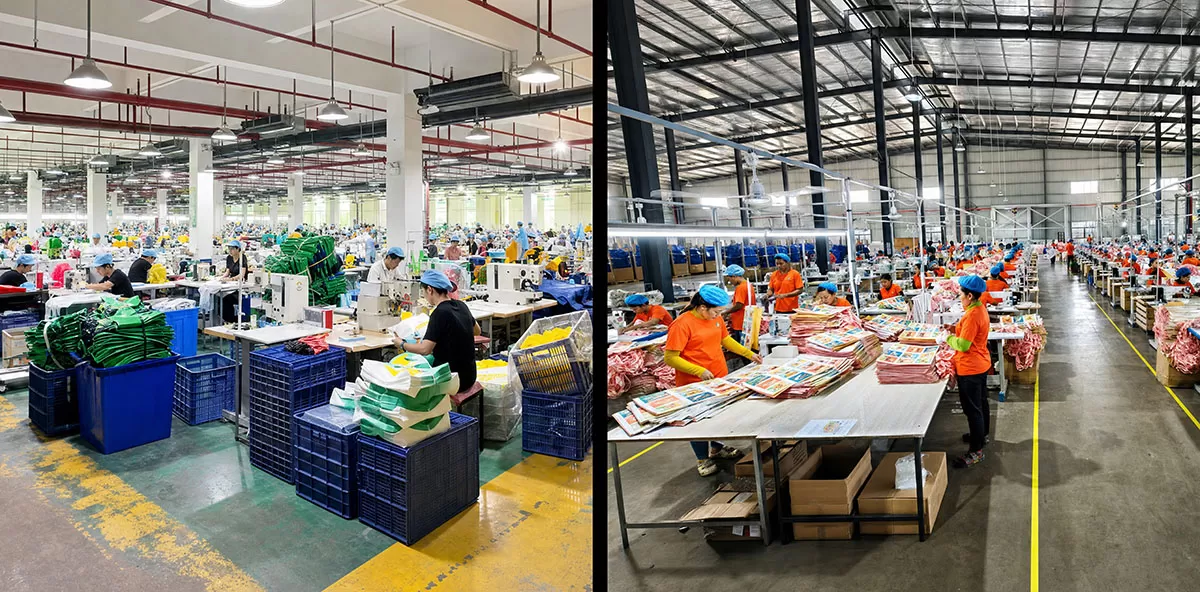
Dual-Factory Operational Model: Weierken operates production lines in both China and Cambodia. This structure lets buyers allocate orders based on volume, speed, and import duty preferences, keeping bulk deliveries on schedule.
Tariff-Exempt Manufacturing: The Cambodia delivery bag manufacturer hub qualifies for key trade preferences into North American and European markets. This status shields buyers from punitive tariffs and improves wholesale gross margins.
99.5% First-Pass Quality Yield: Strict quality control checkpoints run from raw fabric reception through final seam sealing. This 99.5% pass rate keeps return and replacement expenses to an absolute minimum.
Turnkey DDP Logistics: Weierken provides complete Delivered Duty Paid management. The team supervises customs clearance, maritime freight, and local trucking, letting overseas clients buy as easily as domestic purchasers.
Comprehensive International Audits: Facilities carry valid BSCI, ISO 9001, SEDEX, and GRS accreditations, fully adhering to Western labor and environmental rules.
2. Market-Driven Product Development and R&D
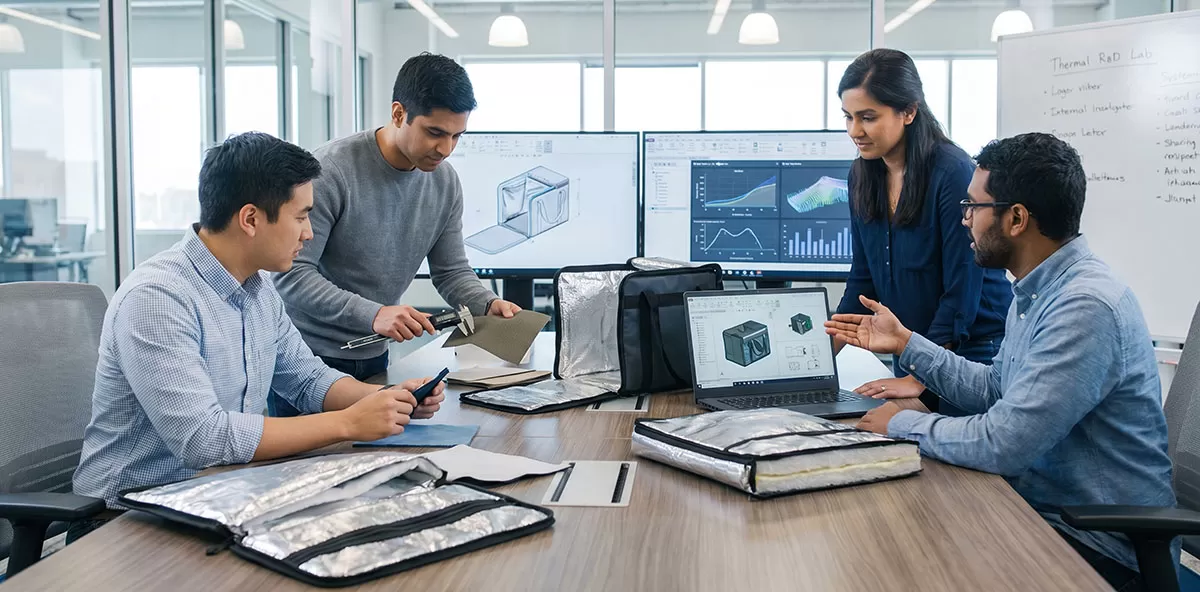
Dedicated Internal Engineering: A specialized technical crew studies real-world courier wear-and-tear. They develop solutions for seam fatigue, heat loss, and ergonomic load distribution on rider bodies.
Rapid Prototyping Pipeline: Standard catering delivery bag samples finish within 3 to 7 business days. Complex technical outdoor carriers complete initial sampling within 12 to 30 days, cutting product launch delays.
Structural and Thermal Innovation: The engineering team solves complex field problems, including food tray support frames, leakproof inner linings, and heavy-duty water-resistant zipper systems.
20 Years of Pattern Data: Two decades of manufacturing give Weierken an extensive library of verified patterns, saving clients expensive trial-and-error design cycles.
3. Strategic Brand-Building Partnership
Engineering Support for Brands: Weierken functions as an external design and materials advisory team, helping procurement officers prevent costly structural mistakes before mass manufacturing begins.
Direct, Cross-Border Project Execution: Fluent English project managers run all technical communications, removing language hurdles and preventing production misunderstandings.
Gantt-Chart Project Tracking: Every bulk order follows strict milestone schedules with weekly visual reports, giving brand managers complete visibility over their purchase orders.
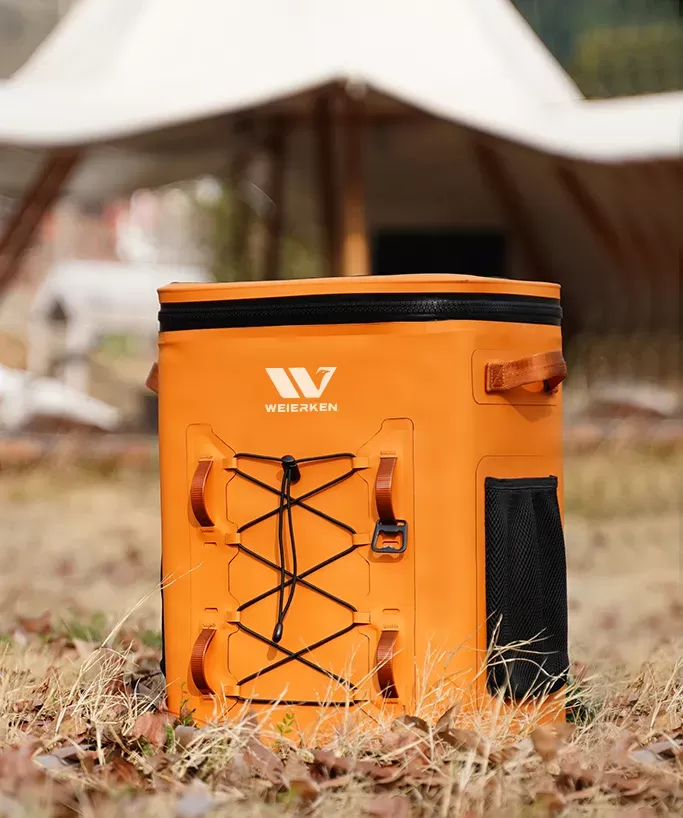
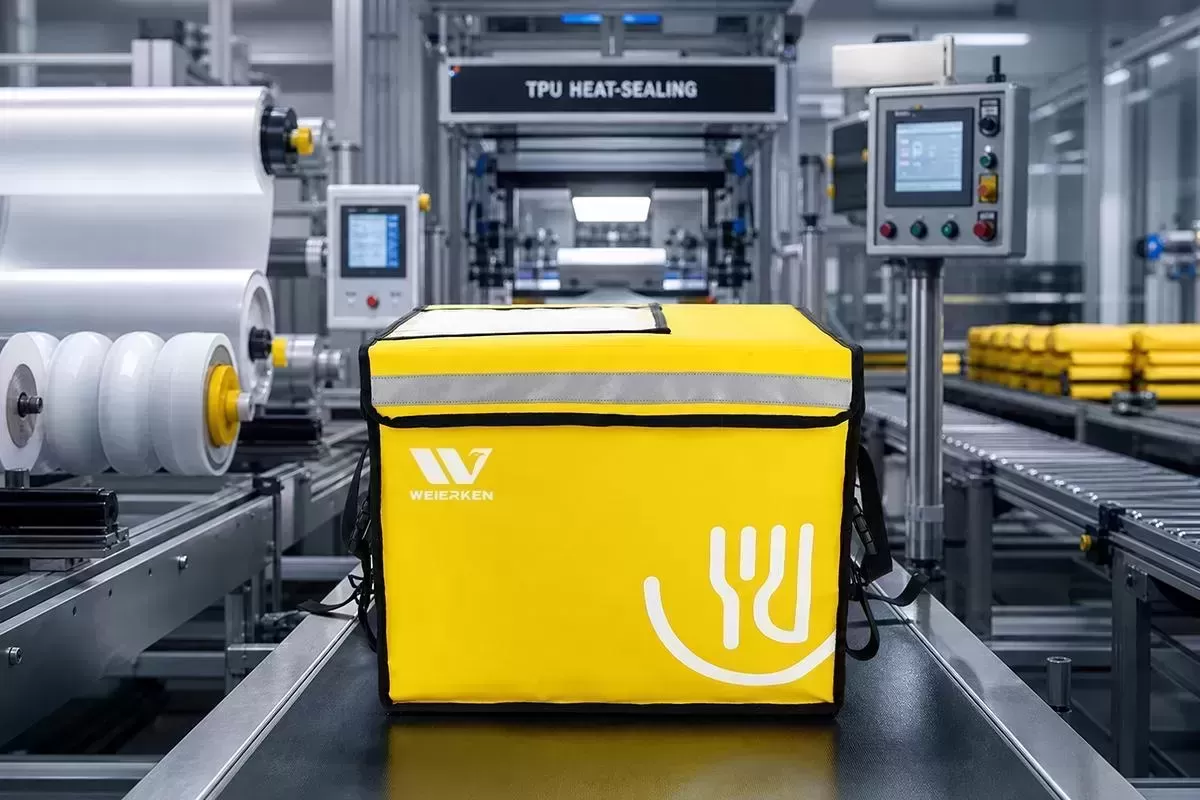
Core Product Line: Commercial motorbike delivery boxes, high-capacity banquet catering bags, collapsible multi-tier insulated backpacks, and GRS-certified rPET eco-delivery bags.
Rank #2: Cambro Manufacturing (USA)
Cambro remains a standard fixture in commercial restaurant equipment. Headquartered in the United States, Cambro operates large plastic molding and sewing lines that produce durable food transport systems.
Their insulated catering bag catalog features heavy-duty nylon exteriors and thick polyfoam cores tailored for standard steam table pans. While their products deliver proven durability, Cambro focuses primarily on off-the-shelf catalog models, offering less flexibility for custom OEM projects.
Rank #3: Thermo Future Box (Germany)
Thermo Future Box specializes in Expanded Polypropylene (EPP) transport containers. Based in Germany, this manufacturer engineers rigid, lightweight boxes built for precise temperature stability in commercial distribution.
Their interlocking designs suit catering businesses moving standardized Gastronorm pans. However, because they specialize in rigid molded plastics, they offer limited options for flexible fabric delivery backpacks or custom collapsible bags.
Rank #4: Delivery-Bags.com / Packir (China)
Packir is a well-known commercial food delivery bag factory based in China. They supply motorcycle delivery boxes, pizza bags, and rider backpacks to regional courier fleets worldwide.
Their catalog covers various price points with diverse off-the-shelf accessories. However, because they manufacture primarily within China, buyers shipping to high-tariff regions need to plan for trade duties.
Rank #5: Carlisle FoodService Products (USA)
Carlisle produces a broad selection of catering gear for institutional dining halls, hotels, and hospitals. Their soft-sided Cater`cooler and delivery bag collections handle bulk sheet pans with ease.
Carlisle excels at nationwide distribution across North America. Despite this strength, high unit prices and fixed designs can limit their appeal for startups seeking custom-branded delivery gear.
Rank #6: Vollrath Company (USA)
Vollrath manufactures heavy-duty food prep systems and thermal transport bags. A distinct feature in their commercial delivery lineup is the integration of induction heat-pad tech to keep food hot on long transport routes.
These active heating elements deliver reliable results for high-end dining deliveries. The trade-off is a significantly higher unit cost, which may exceed the budget of standard last-mile delivery fleets.
Rank #7: Prodel Bags (Lebanon / UAE)
Prodel Bags designs specialized delivery carry gear built for intensive scooter and motorcycle use. Operating mainly out of the Middle East, they focus on ergonomic courier backpacks and modular motorcycle cargo cases.
Their products withstand extreme summer heat and desert sun. However, their regional manufacturing base can lead to longer shipping times and higher freight rates for Western markets.
Rank #8: Krautz-TEMAX (Belgium)
Krautz-TEMAX focuses on high-efficiency cold-chain packaging and technical insulation. They design multilayer thermal blankets and insulated soft shippers for pharmaceutical and luxury fresh food transport.
Their insulation protects temperature-sensitive payloads for extended transit windows. While their thermal efficiency is exceptional, their designs are less practical for fast, everyday urban food deliveries.
Rank #9: V-Makers (Vietnam)
V-Makers is a contract sewing manufacturer based in Vietnam that produces outdoor bags, luggage, and thermal delivery bags for international brands. They give clients an established manufacturing option outside of mainland China.
They provide competitive labor costs on straightforward, high-volume cut-and-sew orders. However, enterprise buyers with complex custom technical requirements may find their in-house design and prototyping support somewhat limited.
Rank #10: Killarney Bags (Ireland)
Killarney Bags supplies commercial food delivery bags across the UK and European hospitality markets. They specialize in insulated pizza bags, heated delivery pouches, and courier backpacks.
They offer fast ground shipping within the European Union for standard orders. For global catering brands needing large container-load rollouts with custom molds, their smaller regional footprint can be a constraint.
Buyer's Guide: Calculating Landed Cost in 2026
Looking only at the initial factory unit cost is a common mistake in bag procurement. A cheaper bag often ends up costing more once secondary expenses hit your bottom line.
Review Total Landed Cost: Calculate your final expense using this formula: Unit FOB + Freight + Customs Duties + Defect Replacement Overhead. Choosing an insulated catering bag supplier with factories in duty-friendly locations like Cambodia can immediately lower import costs by 15% to 30%.
Assess Prototyping Turnaround: Prototype delays stall marketing plans and contract rollouts. A custom thermal delivery bag OEM that turns around samples in 3 to 7 days helps you launch weeks ahead of competitors tied to month-long development cycles.
Verify ESG and Recycled Fabrics: European and American retail standards now enforce strict supply chain rules. Confirm your supplier uses genuine, traceable rPET polyester backed by valid Global Recycled Standard (GRS) transactions.
Inspect Seam and Stress Points: Heavy food pans strain shoulder straps, handles, and zippers. Demand cross-stitch reinforcement, box-X stitching, and brand-name waterproof zippers (such as YKK or verified equivalents) to prevent field failures.
Frequently Asked Questions (FAQ)
Q1: Why should catering platforms prioritize a dual-hub catering
delivery bag manufacturer?
A1: Sourcing from a dual-hub manufacturer
(such as China plus Cambodia) protects your business from geopolitical shifts,
unexpected tariff increases, and local factory shutdowns. If one region faces
export limits, your production easily shifts to the secondary plant without
disrupting deliveries.
Q2: What temperature-retention benchmark should a commercial catering
bag meet?
A2: A commercial-grade bag should keep hot food above 60°C
(140°F) and chilled food below 4°C (40°F) for at least 2 to 4 hours. Reaching
this standard requires high-density EPE or closed-cell EVA foam insulation
paired with heat-reflective aluminum or food-safe PEVA inner linings.
Q3: How does working with a Cambodia delivery bag manufacturer cut
overall landed costs?
A3: Many Western nations grant Cambodia
preferential trade status, lowering or eliminating import duties on sewn goods.
For high-volume buyers, these duty savings make a noticeable difference in final
landed costs compared to direct China shipments.
Q4: What is the typical turnaround time for a custom catering
delivery bag prototype?
A4: Agile manufacturers with in-house design
facilities like Weierken build functional custom delivery bag samples in 3 to 7
business days. Fully custom designs requiring unique molded bases or complex
electronics typically take between 15 and 30 days.
Q5: What factory certifications should a commercial food delivery bag
factory have?
A5: Look for facilities holding BSCI or SEDEX
certification for ethical labor, ISO 9001 for quality control, and REACH or FDA
compliance for food-contact materials. If using eco-friendly materials, request
certified GRS documentation.
Choosing Your Manufacturing Partner
Sourcing commercial catering bags in 2026 requires balancing material quality, supply chain security, and import costs. A weak zipper or poor insulation can hurt your brand's reputation with every delivery run.
Weierken helps businesses tackle these operational hurdles with its China and Cambodia dual-factory model, fast 3-to-7-day prototyping, and comprehensive factory audits. This balanced setup provides both the technical engineering needed for reliable bags and the trade advantages that keep profit margins healthy.
Are you updating your delivery fleet or developing a custom thermal carry system for 2026? Contact the engineering team at Weierken today to discuss your project specifications, request a functional prototype, and receive a complete landed-cost assessment.