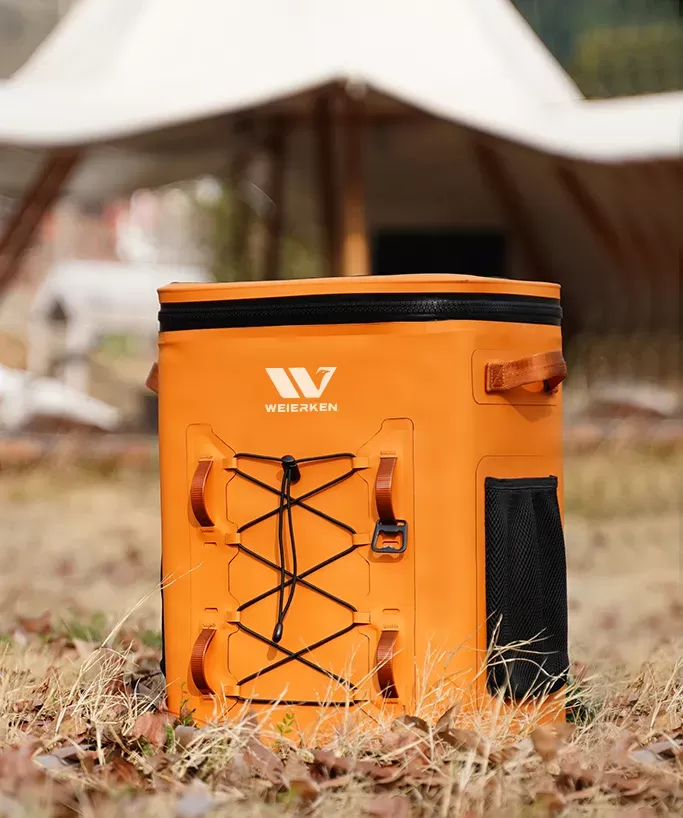

Kayak fishing has shifted from a niche hobby into a massive segment of the global paddlesports market. Anglers now venture miles offshore or deep into shallow marshes, bringing back prized catches. This growth creates high demand for specialized gear, especially heavy-duty insulated kill bags designed specifically for kayak decks.
However, sourcing a dependable kayak fish cooler bag OEM presents real challenges for outdoor brands. Standard stitched soft coolers fail quickly under marine conditions. They leak bloody ice water, absorb foul odors, and tear against sharp fish fins. At the same time, brands face fluctuating tariffs, inconsistent factory audits, and delayed production timelines.
For over two decades, Weierken has tackled these exact manufacturing bottlenecks. By combining precision high-frequency welding with a resilient dual-factory footprint across China and Cambodia, modern brands can build high-grade, compliant, and cost-effective gear without supply chain friction.
Core Technical Engineering: Manufacturing High-Performance Fish Bags
Building a marine-grade fish bag requires completely different engineering than producing standard retail cooler bags. Kayak cockpits offer limited space, direct exposure to saltwater, and intense UV radiation. A reliable custom insulated fish kill bag must survive rough handling while keeping the catch fresh for days.
1. Airtight RF Welding and Leakproof Construction
Traditional needle-and-thread stitching punctures fabric, creating thousands of micro-holes. Blood, saltwater, and melting ice inevitably seep into the insulation core, breeding bacteria and causing permanent odors.
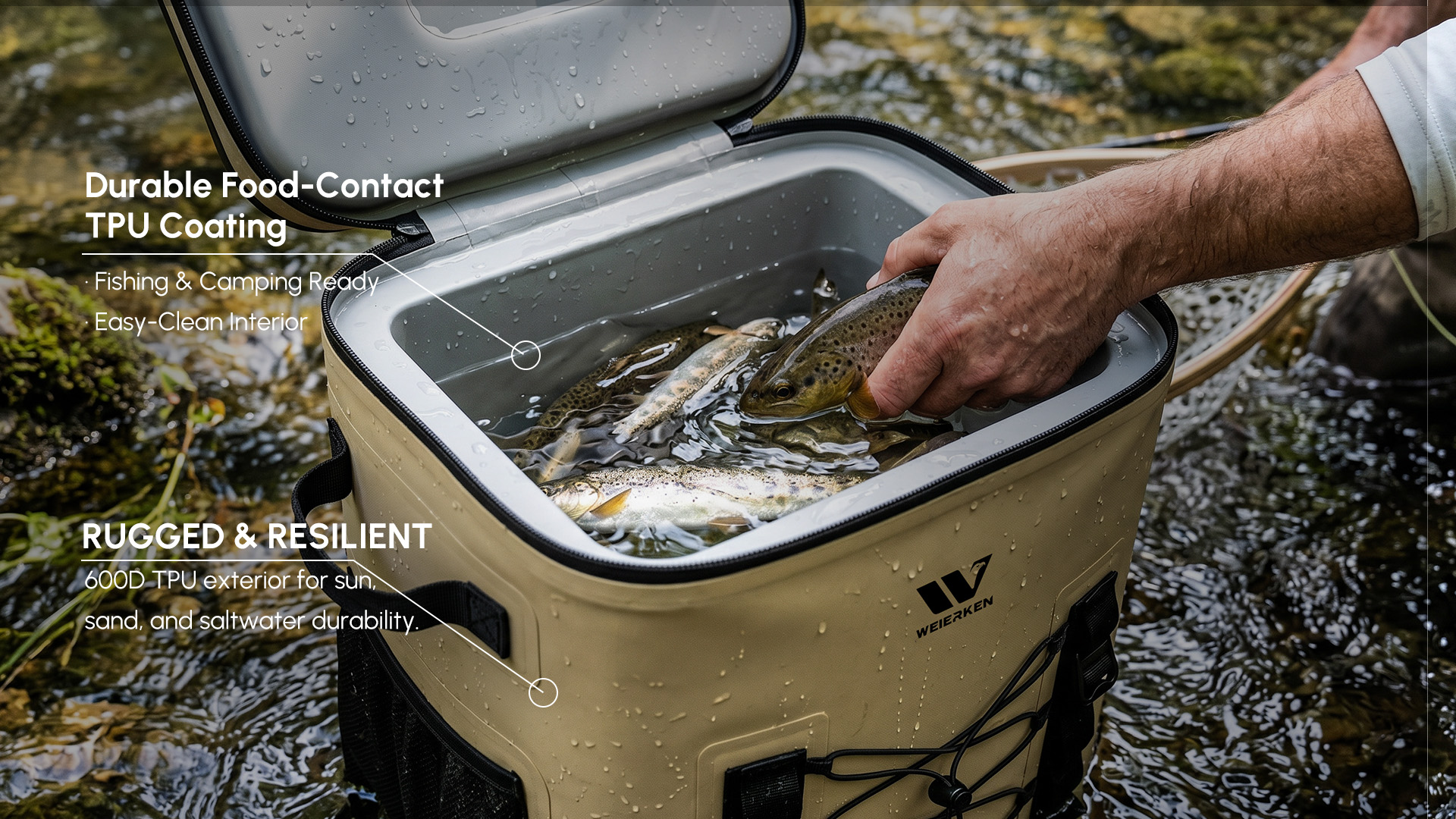
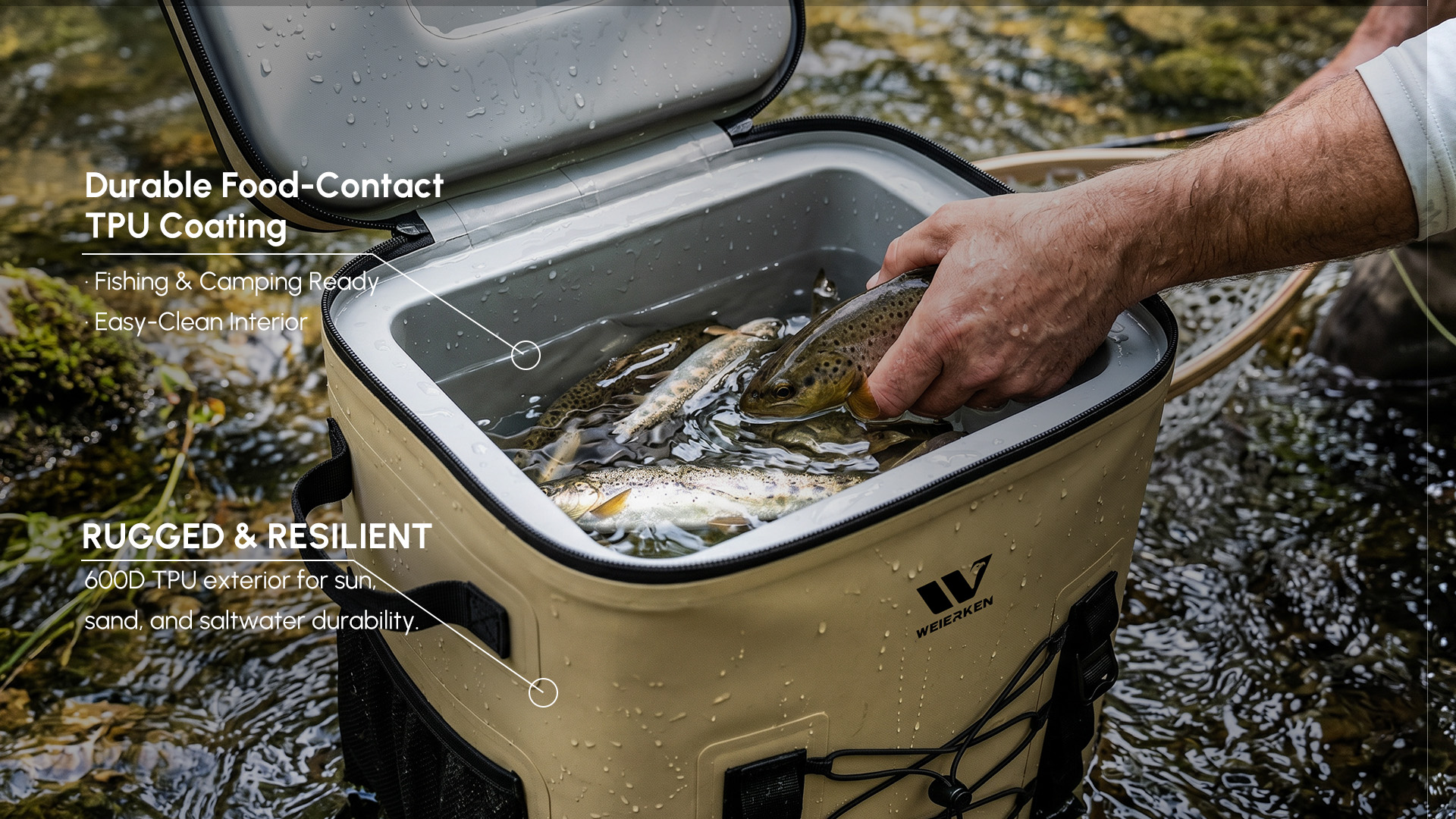
A professional RF welded cooler bag factory solves this using Radio Frequency (RF) and Thermal Polyurethane (TPU) heat-sealing technology. High-frequency electromagnetic energy fuses the molecular structure of the TPU-coated fabrics under pressure, creating a continuous, seamless bond.
Hermetic Seal: Fused seams completely eliminate needle holes, achieving an IPX7 water-submersion rating.
Airtight Zipper Integration: Heavy-duty, leakproof zippers with welded terminal stops prevent water escape, even when the bag is inverted or compressed on deck.
Puncture Resistance: Reinforced corner welds prevent splits when large, spiny gamefish thrash inside the compartment.
2. Thermal Retention and Material Layering
Ice retention defines product quality in the field. An effective kayak fish bag relies on a balanced, three-tier composite structure engineered for demanding marine environments:
Outer Shell (840D to 1000D TPU-Laminated Nylon/Polyester): Offers superior abrasion resistance against rough kayak hulls, sand, and sharp hooks. It features high UV resistance to prevent cracking under sun exposure.
Insulation Core (15mm–25mm Closed-Cell Foam): Unlike cheap open-cell foam that absorbs moisture like a sponge, closed-cell NBR or EVA foam maintains structural rigidity and will not absorb water if punctured. It locks in cold temperatures for 48 to 72 hours.
Inner Liner (Food-Grade TPU/PEVA): Smooth, puncture-resistant, and non-toxic. It resists fish blood stains, prevents mold growth, and allows users to wipe down the interior easily after a fishing trip.
3. Kayak-Specific Ergonomics and Deck Integration
General-purpose coolers fit poorly on modern fishing kayaks. Deck profiles vary greatly between paddle and pedal-driven vessels. A specialized kayak fish catch cooler manufacturer must tailor structural dimensions to matching deck areas:
Contoured Bow & Stern Shapes: Wedge-shaped and tapered designs follow the natural lines of the kayak deck, reducing wind drag and freeing up footwell space.
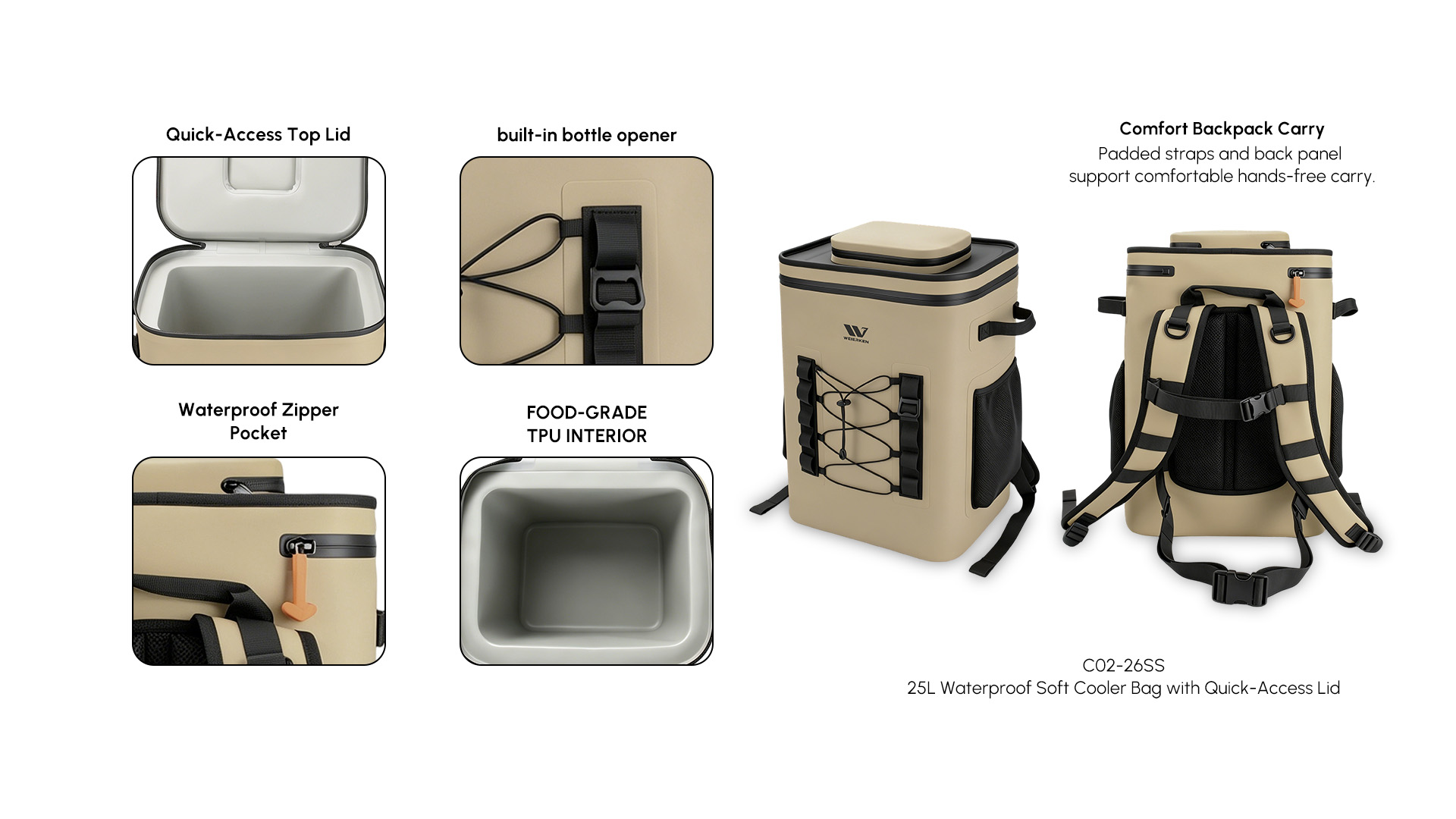
Heavy-Duty Tie-Down Points: Multiple reinforced D-rings and side webbing loops keep the cooler secured during heavy surf or high-speed pedaling.
Integrated Drain Valves: Low-profile twist or push-pull drain plugs allow anglers to drain melted ice and blood without unstrapping the cooler from the kayak.
Fish Ruler Markings: Laser-printed or screen-printed measurement scales along the top lid let anglers measure their catch instantly for regulatory compliance.
Factory Auditing and Quality Compliance for Global Brands
Technical drawings mean nothing without consistent factory execution. When selecting an OEM partner, overseas brands must evaluate real production control, labor standards, and material compliance. A systematic kayak cooler factory audit ensures your brand avoids costly recalls, import rejections, or reputational damage.
International Certification Matrix
Mainstream outdoor retailers and global distributors require verified third-party audits before placing purchase orders. A qualified production facility should maintain:
Social Compliance: BSCI and SEDEX audits ensuring ethical working conditions, fair pay, and safe factory operations.
Quality Management: ISO 9001 certification guaranteeing standard operating procedures across every production stage.
Material Safety: Full REACH and RoHS compliance for European markets, ensuring all plastics, coatings, and TPU films remain free from hazardous phthalates and heavy metals.
Sustainability Standards: Global Recycled Standard (GRS) certification, allowing the use of certified rPET shell materials for eco-conscious product lines.
Rigorous Quality Control: Achieving a 99.5% Pass Rate
High-end waterproof soft goods demand strict inspection routines throughout production:
Incoming Quality Control (IQC): Raw fabric rolls undergo tensile strength, hydrostatic head, and abrasion testing. TPU adhesion is verified before any cutting begins.
In-Process Quality Control (IPQC): Every welded hull undergoes an airtight inflation test. Technicians submerge pressurized bags in water tanks to check for micro-bubbles along welded seams and zippers.
Outgoing Quality Control (OQC): Final inspections follow strict AQL 2.5/4.0 standards. Bags are checked for cosmetic cleanlines, zipper smoothness, strap load bearing, and packaging accuracy before container loading.
Supply Chain Resilience: Tariff Optimization via Dual-Facility Manufacturing
Geopolitical shifts and tariff barriers directly hit bottom-line margins for outdoor equipment brands. Relying on a single manufacturing origin creates operational risks. Weierken eliminates these vulnerabilities through an integrated China + Cambodia dual-facility strategy.
This dual-hub model gives sourcing managers both technical speed and long-term cost advantages:
China Facility (R&D and High-Precision Engineering): Serves as the innovation center. It handles advanced rapid prototyping, raw material sourcing, mold fabrication, and complex low-to-mid-volume production runs.
Cambodia Facility (Tariff-Advantaged Mass Production): Focuses on large-volume, high-efficiency manufacturing. Goods produced in Cambodia benefit from favorable tariff treatments (such as GSP and preferential trade agreements) for the United States and European markets.
This structure helps international brands reduce overall landed costs by 15% to 30%. In addition, full DDP (Delivered Duty Paid) logistics services remove international customs complexities, letting you receive goods directly at your domestic warehouse.
Market-Driven R&D and Agile Sampling Timelines
Speed to market is essential in the competitive paddlesports market. If a design revision takes months, you miss the peak retail season. Working directly with a technical waterproof kayak cooler supplier accelerates every development phase.
An experienced engineering department translates hand sketches, CAD files, or reference samples into functional prototypes efficiently:
Standard Waterproof Soft Bags: Prototypes completed in 3 to 7 business days.
Complex Technical Fish Bags: Structural engineering, tooling development, and sample builds completed in 12 to 30 business days.
Fast iterations let your design team test prototypes on the water, refine strap placements, verify thermal curves, and lock in production schedules before seasonal demand surges.
Strategic Co-Development: Acting as an Extension of Your Team
The best OEM partnerships function as seamless extensions of your in-house product team. Manufacturing technical soft goods requires active collaboration at every stage:
CMF Engineering: Practical guidance on Color, Material, and Finish selection to balance durability, weight, and price points.
Design for Manufacturability (DFM): Identifying potential stress points, unnecessary weld lines, or costly assembly steps before cutting steel molds.
Clear Project Management: Milestone tracking, transparent production schedules, and bilingual project managers prevent miscommunications and delays.
Frequently Asked Questions (FAQ)
Q1: Why is RF welding necessary for kayak fish cooler bags instead of
traditional stitching?
A1: Traditional stitching creates thousands
of needle punctures that leak water, fish blood, and moisture into the
insulation. High-frequency RF welding fuses the TPU fabric layers together at
the molecular level, creating a 100% waterproof, airtight, and leakproof bond
that prevents odor absorption and interior rot.
Q2: What is the typical Minimum Order Quantity (MOQ) for custom kayak
fish cooler bags?
A2: Standard production runs usually start at 500
to 1,000 units per colorway or design. However, flexible pilot run volumes are
available for custom development projects to support testing and market
validation.
Q3: How does your dual-facility model reduce import tariffs for North
American and European buyers?
A3: We develop initial prototypes and
technical tooling in our China innovation facility, then transition volume
manufacturing to our Cambodia factory. Products exported from Cambodia qualify
for preferential trade programs, significantly lowering customs duties compared
to direct exports from China.
Q4: How long can a professionally manufactured kill bag keep ice
frozen?
A4: Using a premium 840D TPU shell paired with 15mm–25mm
high-density closed-cell foam and an airtight zipper, our cooler bags maintain
ice retention for 48 to 72 hours, even when exposed to direct sunlight on a
kayak deck.
Q5: Can our third-party auditing team visit and inspect your
production facilities?
A5: Yes. We maintain an open-door policy for
all scheduled third-party factory audits, including BSCI, SEDEX, and ISO
verifications, as well as on-site pre-shipment inspections (PSI) conducted by
agencies such as SGS, Intertek, or your internal QC staff.
Scale Your Marine Gear Line with Weierken
Delivering high-performance, durable kayak fish cooler bags requires precision tooling, airtight welding techniques, and dependable international compliance. Choosing the right kayak fish cooler bag OEM partner safeguards your product quality, protects your profit margins, and strengthens customer trust.
Ready to upgrade your outdoor marine product catalog? Contact the engineering team at Weierken today to discuss your technical specifications, request a custom sample, and explore tariff-optimized manufacturing options for your brand.