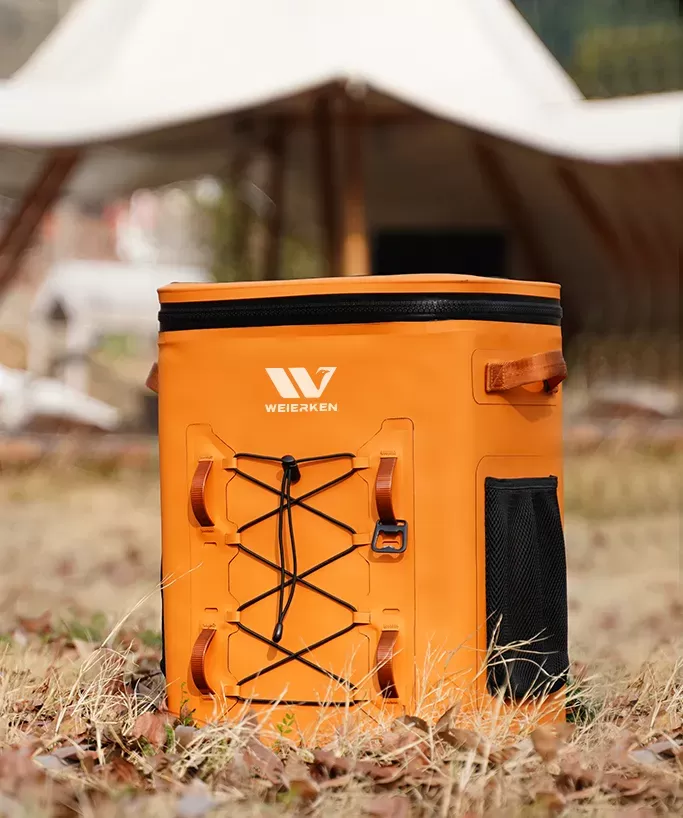

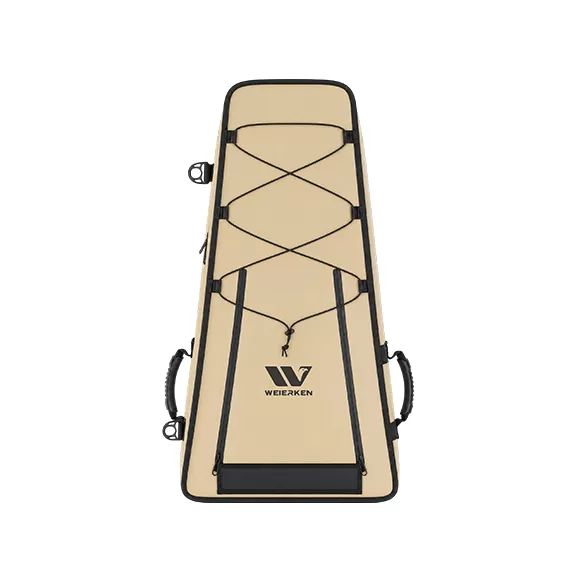
Offshore and coastal fishing gear takes a severe beating. Salt spray, relentless UV radiation, deck washdowns, and heavy loads will quickly destroy poorly constructed bags. For outdoor brands and tackle distributors, sourcing bags that survive these conditions is critical to protecting brand reputation and profit margins.
As fishing brands expand their product lines for 2026, customer demand points directly toward technical durability and smarter storage. Sourcing managers cannot afford product failures caused by split seams or corroded zippers. Partnering with an experienced boat fishing gear bag manufacturer ensures your designs translate into durable, seaworthy products.
Specialized original equipment manufacturers (OEMs), such as Weierken, provide the technical engineering and production capacity required to build professional-grade marine tackle systems. This guide breaks down how to assess factory capabilities, evaluate marine-grade materials, and manage an OEM partnership from initial prototype to final shipment.
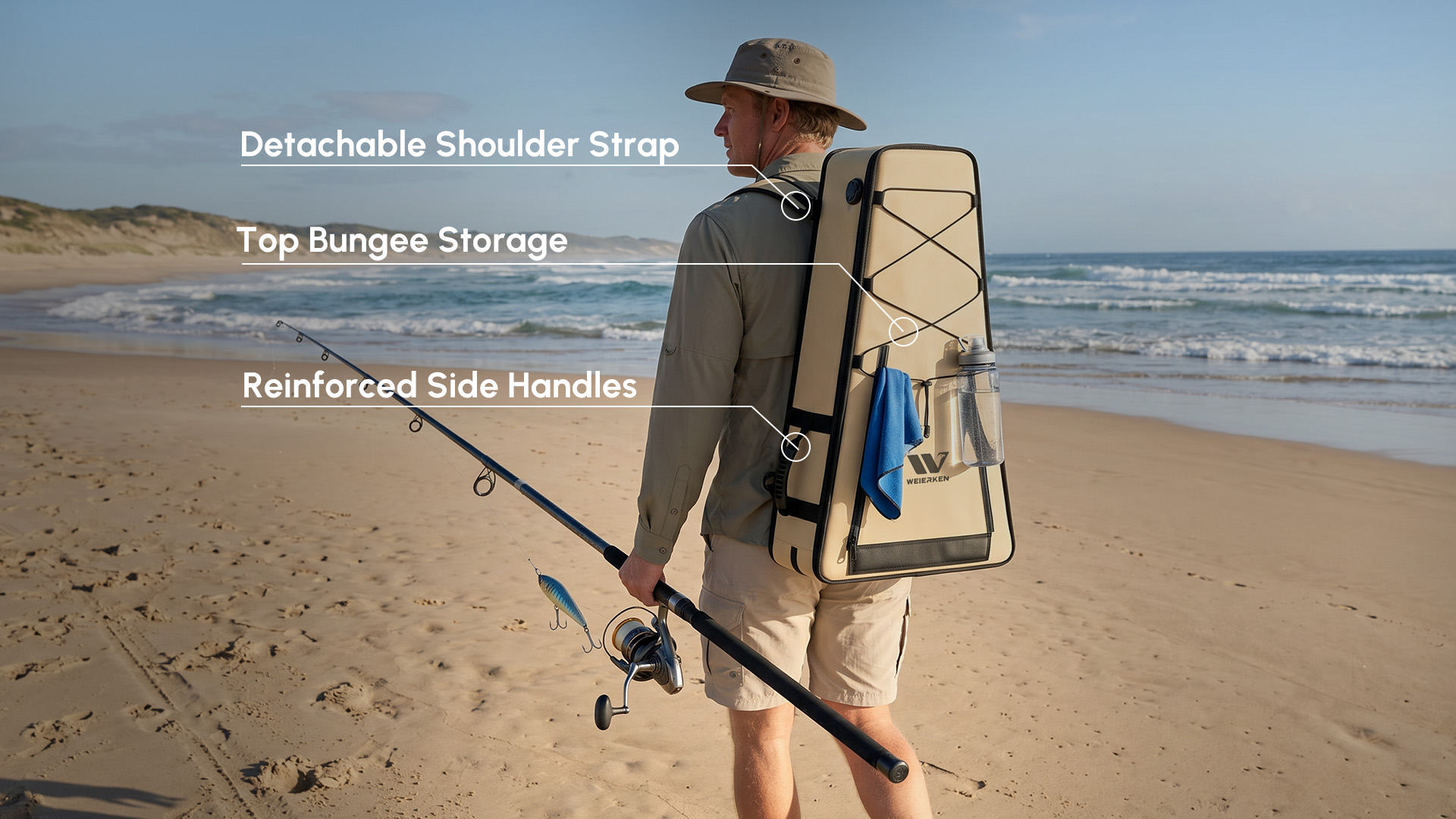
Why Marine Environments Demand Specialized Manufacturing Expertise
Building a standard backpack is entirely different from manufacturing a heavy-duty boat tackle bag. Boat decks are wet, abrasive, and chemically aggressive environments. If an OEM factory lacks marine manufacturing experience, their bags will fail in the field.
A capable custom waterproof fishing bag supplier designs products to withstand specific coastal stressors:
- Saltwater Corrosion: Salt crystals destroy standard coil zippers and corrode metal sliders within weeks. An experienced manufacturer specifies heavy-duty nylon tooth zippers, plastic molded hardware, or specialized airtight, salt-resistant closures.
- Submersion and Spray Protection: Traditional stitching creates needle punctures that invite water seepage. Reliable manufacturers use Radio Frequency (RF) or High-Frequency (HF) welding to fuse TPU or heavy PVC fabrics together, achieving IPX6 to IPX8 waterproof ratings.
- Deck Abrasion and UV Degradation: Sun exposure weakens untreated nylon and causes low-grade plastics to crack. Marine-grade bags require 500D to 1000D PVC tarpaulin or double-sided TPU-coated nylon treated with UV inhibitors.
- Structural Rigidity and Moisture Barriers: Sitting in pooled water on a center-console deck ruins tackle boxes. Quality bags utilize thick compression-molded EVA bases that elevate the fabric, resist punctures from dropped hooks, and prevent sliding on wet gelcoat.
Auditing an OEM Marine Tackle Bag Factory: Core Competencies to Verify
Not every sewing factory can handle heavy technical fabrics or waterproof welding. When evaluating a prospective OEM marine tackle bag factory, focus your audit on their engineering infrastructure, equipment, and compliance records.
1. Production Machinery and Assembly Capabilities
Walk the factory floor—either in person or through an exhaustive video audit. Check whether the facility houses specialized production machinery suited for marine gear.
- High-Frequency/Hot-Air Welding Stations: Seamless waterproof bags require calibrated RF welding presses to bond panels without needle holes.
- Heavy-Duty Automated Stitching: Reinforced box-stitching on load-bearing handles requires programmable sewing machines capable of penetrating high-denier fabrics and structural webbing.
- Molding Presses: Compression-molding machinery for customized EVA bases, rigid lids, and ergonomic shoulder harnesses.
2. Quality Management and Factory Certifications
International compliance protects your supply chain from legal, environmental, and reputational risks. Ensure your manufacturer operates under verified quality management protocols:
- ISO 9001 Certification: Confirms standardized quality management across all operational steps.
- BSCI or Sedex Audits: Guarantees ethical labor practices, safe working conditions, and statutory environmental compliance.
- Internal Testing Laboratories: Professional manufacturers, including Weierken, test materials internally using salt spray test chambers, fabric tensile strength testers, zipper cycle testers, and hydrostatic water pressure instruments.
3. Technical Translation and Design Support
A dependable factory does more than follow instructions; they solve engineering challenges. Your manufacturing partner should review your technical specifications (Tech Packs) to optimize material yields, improve water resistance, and reduce assembly bottlenecks before cutting fabric.
Sustainable Materials and Agile Manufacturing for 2026
The outdoor equipment industry is shifting rapidly toward circular manufacturing and reduced environmental footprints. Anglers are passionate conservationists who scrutinize how brands source materials. Your OEM partner must support modern environmental compliance without compromising ocean-grade durability.
When sourcing private label fishing gear bags in 2026, review the factory's access to sustainable component pipelines:
- Recycled Synthetics (GRS Certified): Post-consumer recycled PET (RPET) and recycled nylon woven into heavy-denier fabrics, significantly lowering virgin plastic usage.
- Non-Toxic Coatings: Phthalate-free PVC and solvent-free TPU coatings that eliminate hazardous volatile organic compounds (VOCs) during production.
- PFAS-Free Water Repellents: C0 durable water repellent (DWR) surface treatments that meet strict global chemical regulations while repelling spray and dirt.
Additionally, ask your supplier about flexible production configurations. Navigating shipping volatility requires a factory that manages raw-material buffers efficiently and offers scalable Minimum Order Quantities (MOQs) across custom colorways and seasonal runs.
Step-by-Step Partnership Process: From Tech Pack to Bulk Delivery
Developing a commercial boat bag demands a methodical process. Rushing through sampling leads to costly mistakes during mass production. Follow these four operational phases to ensure seamless execution.
Step 1: Drafting the Technical Specification Package (Tech Pack)
Your Tech Pack serves as your commercial contract. To receive accurate cost estimations from a boat fishing gear bag manufacturer, clearly define every detail:
- Dimensioned 2D/3D technical drawings showing all interior and exterior compartments.
- Bill of Materials (BOM) detailing base fabrics, denier, coating thickness, hardware brands, and zipper specs.
- Specific waterproof criteria (e.g., splash-proof, IPX6 water-jet safe, or IPX7 submersible).
- Tolerances, stitching reinforcement zones, and placement of logos or branding patches.
Step 2: Prototyping and Real-World Field Validation
Expect a qualified OEM factory to deliver a first-run counter-sample within 7 to 14 working days. Once the prototype arrives, conduct rigorous testing instead of merely checking its appearance on a desk.
Load the bag with heavy lead sinkers, utility boxes, and tools to test structural balance. Soak it with a high-pressure hose to check zipper seams and welded junctions. Mount it on a boat deck during real fishing runs to observe non-skid traction and ease of one-handed zipper operation.
Step 3: Tooling Investment, IP Protection, and Commercial Terms
Custom features often require dedicated tooling, especially compression molds for EVA bases, custom zipper pulls, or injection-molded plier holsters.
- Mold Ownership Agreements: Clarify in writing that your company retains sole ownership of custom molds, tooling, and intellectual property.
- Non-Disclosure Agreements (NDAs): Execute a binding, bilateral NDA before sending final design files to prevent design leakage.
- Tiered Pricing Agreements: Secure price breaks tied to volume expansion as your wholesale boat tackle storage program scales.
Step 4: Mass Production and AQL Quality Control
Never rely on verbal assurances during bulk runs. Demand that the factory follows international quality inspection criteria, such as ISO 2859-1 (AQL 2.5/4.0 standard).
Professional quality control inspectors will assess seam tensile limits, zipper fluidness, logo alignment, clean finishing, and packaging moisture control. Retain a signed "Golden Sample" from the approved pre-production run; this serves as the definitive quality benchmark for incoming quality control audits.
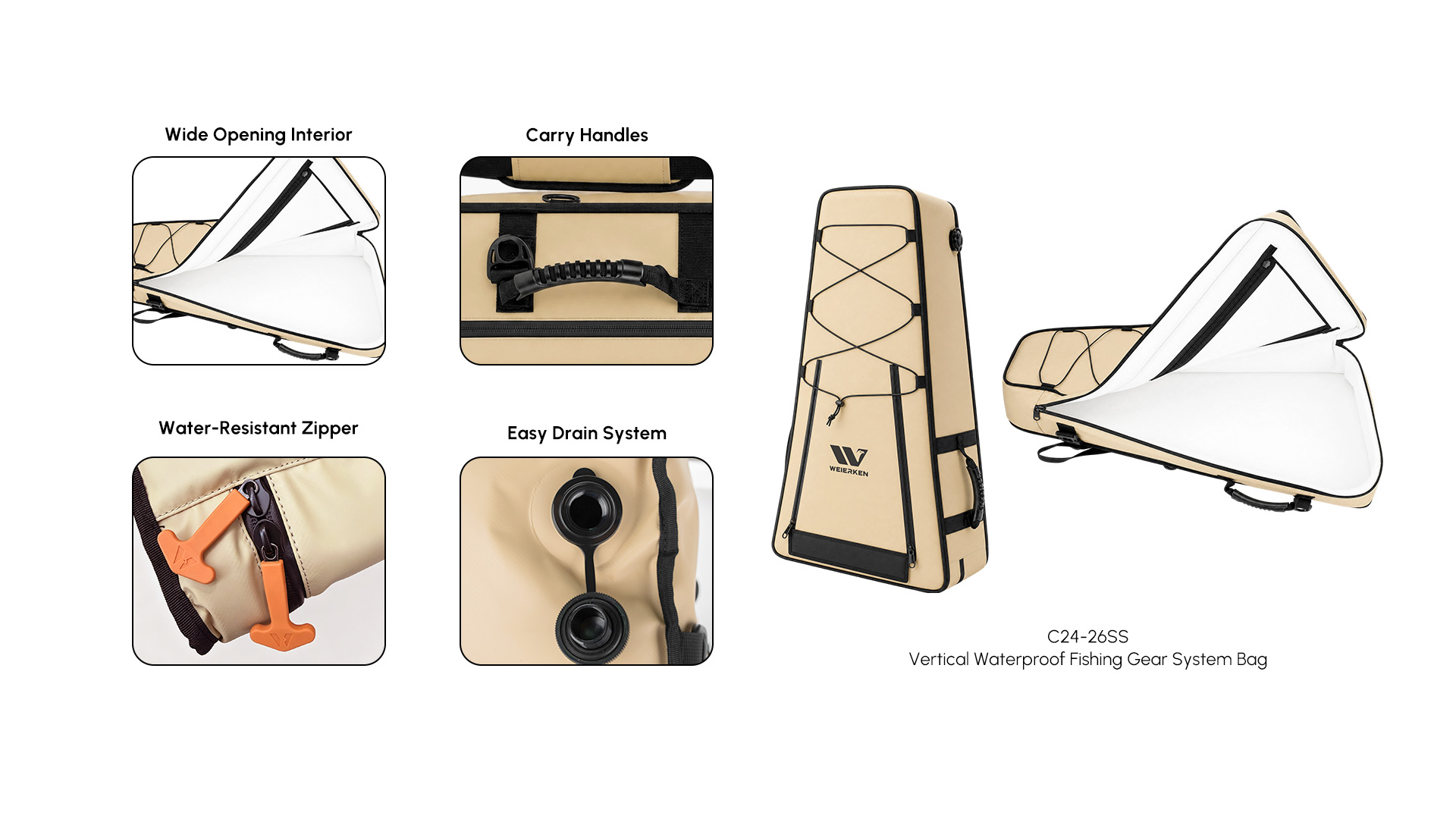
Critical Red Flags When Sourcing Private Label Fishing Gear Bags
Sourcing overseas or domestically comes with operational risks. Watch out for these warning signs when vetting potential manufacturing partners:
- Trading Companies Posing as Direct Factories: Middlemen often lack deep technical knowledge, introduce communication delays, and mark up production costs. Verify direct ownership of machinery and ask for unedited factory floor videos showing tackle bags on the lines.
- Unrealistically Low Quotes: If an initial quote is dramatically cheaper than market averages, the supplier is likely cutting corners. They may substitute marine-grade TPU with cheap PVC, switch from bonded nylon thread to cotton thread, or use non-branded zippers that corrode quickly.
- Reluctance to Sign Quality Contracts: If a factory resists written defect tolerance thresholds or disputes defect replacement liabilities, walk away. Reliable manufacturers stand behind their build quality.
- Lack of In-House Testing Equipment: Marine bags require proof of durability. A factory that cannot demonstrate salt-spray results or weld-burst testing lacks the controls needed for high-end tackle systems.
Frequently Asked Questions (FAQ)
Q1: What is the typical MOQ for custom boat tackle bags?
A1: Minimum Order Quantities vary based on customization depth. For completely custom designs requiring custom-dyed fabrics and dedicated EVA molds, factory MOQs usually range between 500 and 1,000 units per style. Some manufacturers accommodate lower volumes (300 to 500 units) if you use standard stock fabrics and existing base molds.
Q2: What is the difference between water-resistant and 100% waterproof construction?
A2: Water-resistant bags rely on sewn seams paired with a DWR coating on the fabric. They shed rain showers but will leak at needle holes if submerged or exposed to heavy waves. Fully waterproof bags rely on high-frequency welding to fuse TPU or PVC panels, paired with airtight, waterproof zippers, making them capable of handling direct washdowns and temporary submersion.
Q3: How long does the sample development cycle take?
A3: If your Tech Pack is complete and uses standard materials, a prototype typically takes 7 to 14 days. If your design requires custom injection-molded components, specialized hardware, or bespoke EVA bases, tooling and sampling can take 30 to 45 days.
Q4: How should our brand handle mold fees for custom components?
A4: Mold costs for EVA bottoms, handles, or logo badges are typically paid upfront by the brand as a one-time tooling expense. Ensure your supply agreement states that the factory cannot use these proprietary molds for any other client's production runs.
Q5: Can an experienced OEM factory help reduce our production costs?
A5: Yes. Capable manufacturers practice design-for-manufacturing (DFM). They can suggest adjustments to panel layouts to minimize fabric waste, recommend equivalent high-performance materials, and optimize stitch patterns to shorten assembly times without degrading structural strength.
Secure Your Marine Gear Supply Chain
Succeeding in the outdoor fishing sector requires gear that never quits when conditions turn rough. Selecting the right boat fishing gear bag manufacturer bridges the gap between smart concept design and market-leading field performance. A reliable factory safeguards your operational budget, maintains inventory schedules, and builds equipment that wins customer loyalty season after season.
Weierken provides custom OEM and private label manufacturing for high-performance outdoor and marine gear. Our facility combines automated high-frequency welding lines, precision cutting systems, and strict AQL inspection standards to deliver rugged tackle storage systems tailored to your market requirements.
Ready to expand your marine tackle line for 2026? Contact our technical development team today to discuss your project specifications, review material swatches, and request a detailed OEM quotation.