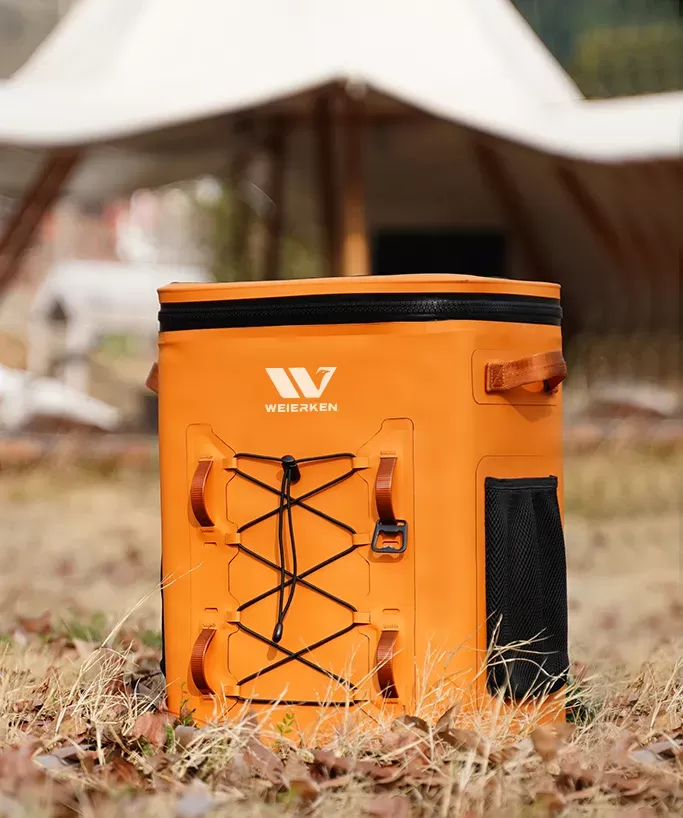

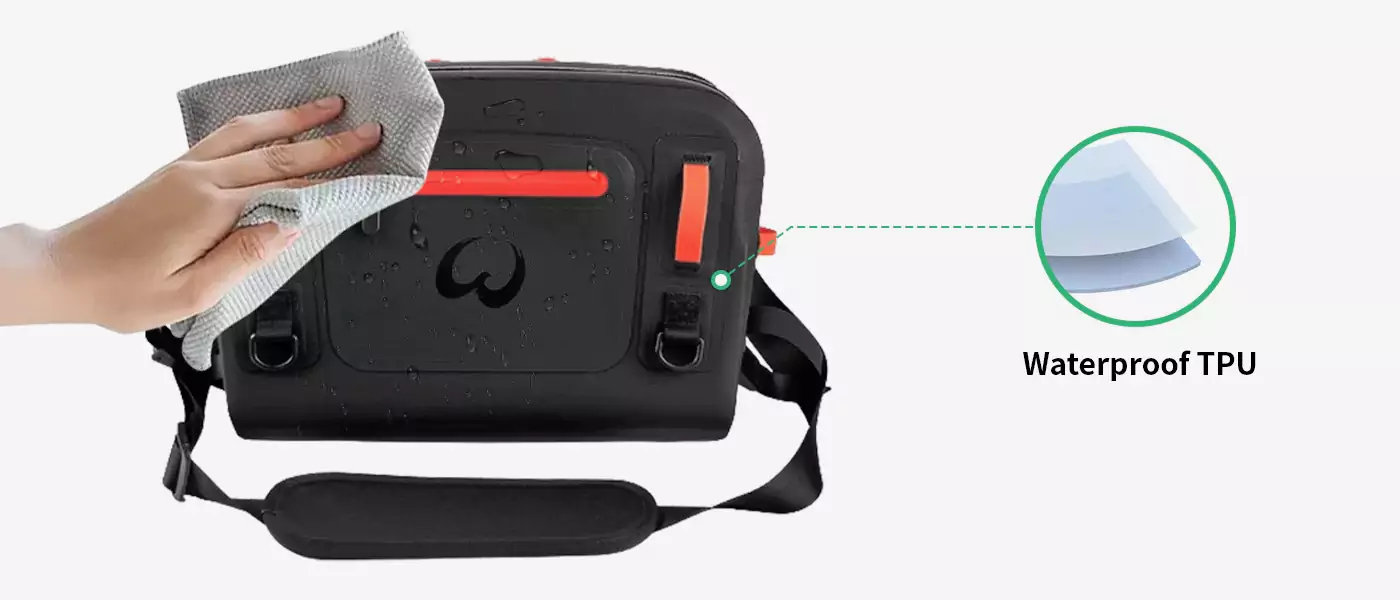
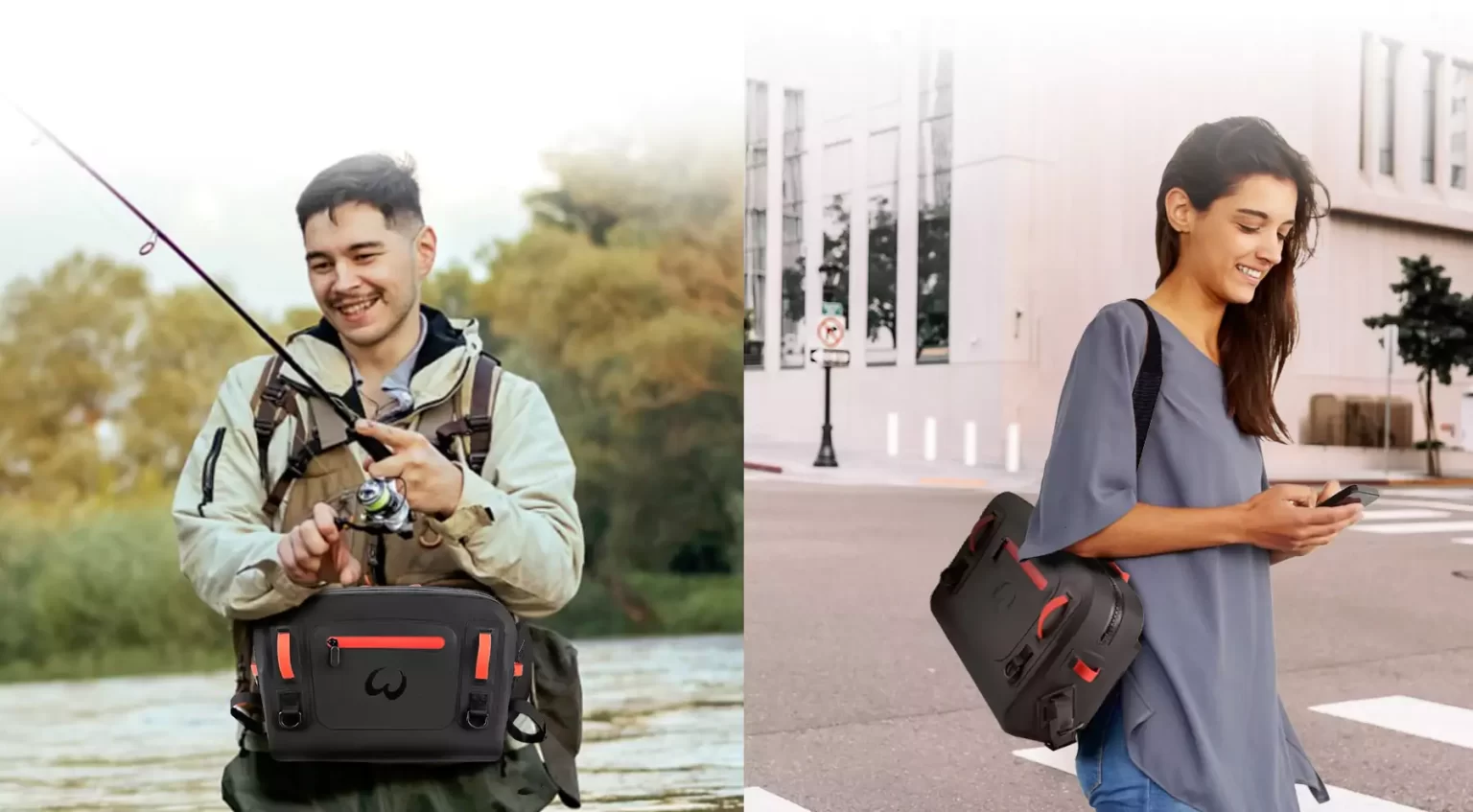
Fly fishing and lure angling place gear in severe conditions. Anglers regularly cross deep runs, face sudden downpours, and wade into chest-high currents. Inside their packs, they carry expensive items: electronic key fobs, smartphones, and specialty fly boxes. In this sector, moisture management is not a bonus feature. It is a critical requirement.
A single seam leak or zipper failure destroys consumer trust and triggers costly returns. Sourcing teams often encounter vendors who claim to manufacture waterproof products, only to deliver standard stitched bags with water-repellent coatings. High-performance angling requires a dedicated waterproof wading waist pack OEM with true airtight assembly lines and strict testing protocols.
At Weierken, engineering teams build technical packs to survive prolonged submersion. Sourcing directors and quality assurance managers can use these seven industrial benchmarks to evaluate potential contract manufacturing partners.
1. Submersible Waterproof and Airtight Testing Standards
True wading gear must meet submersible standards rather than splash-proof metrics. An industrial-grade pack must achieve IPX7 or IPX8 ratings. IPX7 demands zero water ingress when submerged at a depth of 1 meter for 30 minutes. IPX8 requires continuous underwater protection under specific deep-water pressures.
A competent submersible waist bag manufacturer does not rely on random visual spot-checks. Reliable factories enforce a rigorous inspection workflow on the production line:
Air-Decay Leak Testing: The factory injects compressed air (typically 2 to 3 PSI) into the finished waist bag and monitors pressure drops over a set interval. Any micro-fissure triggers an immediate digital alert.
Hydrostatic Water Submersion Tank: Workers place inflated packs into illuminated water chambers to detect escaping air bubbles.
100% Inline Inspection: Finished airtight packs must pass 100% pressure tests before final packing, rather than standard statistical AQL sampling.
2. High-Frequency / RF Welding and Seam Peel Strength
Traditional needle stitching penetrates fabric, creating thousands of entry points for water. A qualified OEM wading gear supplier eliminates needle holes across all critical waterproof chambers. Instead, they utilize High-Frequency (HF) welding, Radio-Frequency (RF) welding, or ultrasonic hot-air taping.
RF welding fuses polyurethane coatings at a molecular level, turning two fabric panels into a single uniform sheet. Sourcing teams should require specific mechanical shear parameters:
Seam Peel Strength: The welded bond must resist a minimum peel force of ≥ 150 N/5cm under ASTM D903 test conditions.
Shear Resistance: The weld must withstand lateral shear stresses without delamination when an angler loads the waist pack to maximum capacity.
Thermal Stability: Welded joints must retain structural integrity across temperature extremes from -20°C in winter steelhead fisheries up to 60°C inside hot car trunks.
3. Airtight Zipper Integration and Cycle Longevity
The main compartment zipper is often the most vulnerable component of a wading pack. Modern waterproof packs utilize toothless pressure-seal designs (such as TRU-Zip) or mechanical tooth-locking waterproof zippers (such as TIZIP MasterSeal). Integrating these components requires specialized bonding expertise.
A reliable airtight tackle pack manufacturing facility monitors three critical zipper failure points:
Welded Zipper Garage: The junction where the zipper tape meets the pack body must be fully RF-welded with zero adhesive voids.
End-Stop Docking: The final docking seal requires precise alignment so the slider seals completely without manual over-straining.
Cycle and Tensile Durability: The zipper assembly must endure 5,000+ open-close cycles and resist lateral pull forces of ≥ 300 N without tooth separation or tape tearing.
4. Fabric Hydrostatic Head and Abrasion Resistance
Wading packs continuously brush against sharp river rocks, driftwood, and thorn bushes. The exterior substrate must balance high tear resistance with reliable TPU coating adhesion. Sourcing managers should select 420D to 840D high-tenacity Nylon 66 with double-sided thermoplastic polyurethane (TPU) lamination.
Engineering teams at Weierken benchmark high-performance technical fabrics using standardized laboratory parameters:
Hydrostatic Head Rating: The laminated fabric must withstand ≥ 20,000 mm H2O pressure under ISO 811 testing.
Martindale Abrasion Resistance: The outer surface must endure ≥ 20,000 rubbing cycles (ISO 12947-2) without exposing the base woven scrim.
Low-Temperature Flex Resistance: The TPU membrane must survive repeated bending at sub-zero temperatures without micro-cracking or peeling away from the nylon base.
5. Wet-Load Ergonomics and Hardware Pull Strength
A wading pack behaves differently when soaked. Wet nylon webbings can stretch, and poor lumbar padding absorbs water, adding dead weight and pulling away from the angler's body. A professional waterproof lumbar pack factory designs load-bearing points specifically for wet conditions.
Key structural benchmarks include:
Closed-Cell EVA Foam: Back panels and waist wings must use hydrophobic closed-cell EVA foam or molded mesh that sheds water instantly and prevents water-weight gain.
Hardware Tensile Ratings: Waist belt buckles, D-rings, and strap adjusters must use acetal hardware from established suppliers (such as Duraflex or Woojin). Critical load joints must withstand ≥ 500 N static pull force.
Dynamic Weight Distribution: Wide hip support panels distribute tackle weight over the pelvic bone, preventing the pack from sliding down when wading in heavy currents.
6. Saltwater and UV Resistance (ASTM B117)
Many anglers utilize wading packs in saltwater flats and brackish estuaries. Salt crystals corrode low-grade metal sliders, rust internal springs, and degrade plastic polymers. Strong sunlight also causes untreated TPU to yellow, harden, and crack.
A dependable custom fishing hip pack supplier applies comprehensive environmental testing:
Salt Spray Testing: All exposed metallic hardware, zipper sliders, and magnetic tool holders must complete 96+ hours of continuous neutral salt spray testing (ASTM B117) with zero corrosion.
UV400 Stabilization: Exterior TPU coatings and molded Hypalon tool attachments must pass accelerated weathering tests (ISO 4892-3) to prevent discoloration, chalking, and loss of tensile strength.
Self-Draining Exterior Construction: Tool sheaths, tippet holders, and exterior net slots must include laser-cut drainage ports to evacuate trapped water rapidly.
7. PFAS-Free Chemistry and Global Environmental Compliance
Environmental regulations across North America and the European Union increasingly restrict harmful chemical treatments in outdoor equipment. Technical wading brands must comply with strict non-fluorinated standards to protect both aquatic ecosystems and brand reputation.
Responsible manufacturing facilities implement transparent compliance verifications:
100% PFAS-Free DWR: Exterior coatings must utilize C0 water-repellent finishes without perfluorinated compounds.
Traceable Material Certifications: Factories must provide documentation for OEKO-TEX Standard 100, EU REACH compliance, and Global Recycled Standard (GRS) for recycled nylon and TPU substrates.
Clean VOC Bonding: Modern RF welding plants reduce or eliminate toxic solvent-based primers, ensuring clean working conditions and safer end products.
Evaluating an OEM's In-House Testing Laboratory
During an on-site factory audit, review the manufacturer's testing facility. A premier waterproof wading waist pack OEM maintains dedicated testing equipment within the plant, rather than relying solely on external vendor data sheets.
Look for these core testing machines on the factory floor:
Submersible Air-Pressure Chambers: Dedicated testing tanks that verify seal integrity on finished packs under controlled pressure.
Universal Tensile Testing Machines: Equipment that measures the peel and shear strength of RF-welded seams and webbing joints.
Hydrostatic Pressure Testers: High-pressure gauges that verify base fabric waterproof thresholds.
Environmental Salt Spray Cabinets: Testing chambers that monitor metal and coating resistance to long-term marine corrosion.
Frequently Asked Questions
Q1: What is the primary difference between a water-repellent fishing pack and a true submersible wading hip pack?
A1: Water-repellent packs use standard stitched seams with DWR-treated fabrics to shed light rain, but water enters quickly if the pack drops into a river. A true submersible wading pack uses airtight RF-welded seams, heavy-duty TPU-laminated fabrics, and specialized pressure-rated zippers to keep gear dry even during deep, prolonged submersion.
Q2: Why is double-sided TPU preferred over PVC for high-end wading packs?
A2: Double-sided TPU (Thermoplastic Polyurethane) provides higher abrasion resistance, superior tear strength, and flexible performance in freezing temperatures. TPU is also lighter, more environmentally sound, and does not leach toxic plasticizers over time, unlike traditional PVC coatings.
Q3: How does a factory ensure that airtight zippers do not leak at the welded junction?
A3: Factories use custom-machined RF welding dies that match the precise contour of the zipper terminal. After bonding, the entire bag is inflated with compressed air and submerged in a testing tank. This process exposes any micro-gap around the zipper dock before the item leaves the production line.
Q4: What is the typical production lead time and minimum order quantity (MOQ)?
A4: For custom technical wading packs with custom tooling, initial sample prototyping typically requires 3 to 5 weeks. Mass production generally takes 45 to 60 days following sample approval. Custom RF tooling and technical fabric dye lots usually require an MOQ of 500 to 1,000 units per design.
Q5: Can our brand source recycled fabrics without compromising IPX8 waterproof performance?
A5: Yes. High-grade GRS-certified recycled Nylon 66 substrates can be laminated with virgin or post-industrial recycled TPU films. When paired with calibrated high-frequency welding parameters, recycled materials deliver identical weld strength, tensile durability, and IPX8 water protection.
Partner with Weierken for Technical Wading Gear
Producing reliable submersible fishing bags requires precision tooling, advanced lamination knowledge, and comprehensive testing infrastructure. Brand reputation in the fly fishing and technical angling market depends directly on quality control in the factory.
Weierken specializes in manufacturing airtight, submersible outdoor gear. Our team supports technical brands from initial CAD engineering and RF tooling development through full-scale production and 100% inline airtight testing.