

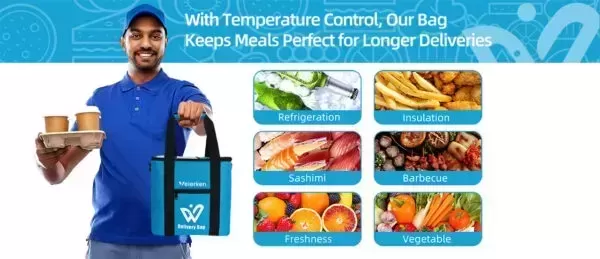
Cheese delivery is a demanding logistics challenge. Unlike dried goods or standard fast food, artisanal and fresh cheeses are highly sensitive to environmental shifts. Small temperature spikes can cause fat separation, ruin the delicate texture, or encourage unwanted bacterial growth.
To preserve the quality of gourmet dairy during transit, standard courier bags are rarely sufficient. High-performance, specialized cold chain packaging is necessary. Partnering with a dedicated cheese delivery bag factory makes all the difference in protecting your product's integrity.
At the Weierken manufacturing facility, we do not just produce ordinary insulated carrier bags. We build robust transport tools. We design our product testing protocols to verify that every bag can withstand the harsh realities of last-mile logistics. Here is a look at the four durability tests we run at our cheese delivery bag factory.
1. Thermal Insulation and Temperature Stability Test
The core purpose of a delivery bag is to keep cold air inside and hot air out. Soft cheeses like Brie, Mozzarella, and Ricotta must remain within a strict temperature range during transit. If the bag fails, the product spoils quickly.
Our cheese delivery bag factory uses thermal environmental chambers to simulate hot summer conditions. We test how our materials perform when exposed to external heat for long periods.
We place the insulated bag inside a climate chamber set to a steady 35°C (95°F) or higher.
We load the bag with simulated cheese samples and standard ice packs.
We insert digital temperature sensors inside the bag to log data over 8 to 12 hours.
The Passing Criteria:
The internal temperature must stay
within the critical 2°C to 8°C (35.6°F to 46.4°F) range for the entire duration
specified by the buyer. This test confirms that our three-layer
construction—waterproof outer shell, high-density EPE foam insulation, and
food-grade interior lining—functions as a cohesive thermal barrier.
2. Load-Bearing and Handle Tensile Strength Test
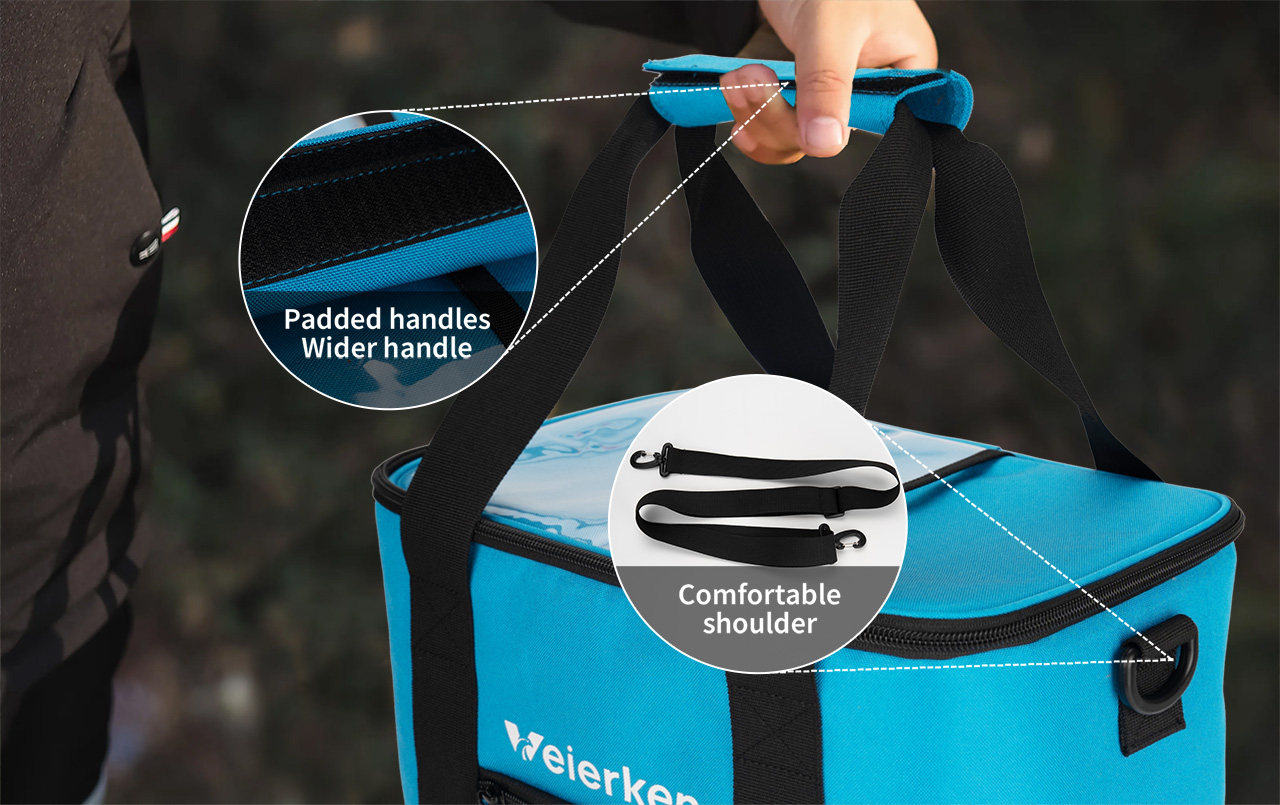
Cheese is heavy. When you pack multiple wheels of hard cheese, glass jars of preserves, and heavy gel ice packs into one bag, the weight adds up quickly. Delivery couriers carry these bags up flights of stairs, hang them on scooter handlebars, and lift them hundreds of times a day.
As a quality-driven cheese delivery bag factory, we run simulation tests to prevent catastrophic handle failures during transit. A broken handle means damaged goods and lost revenue for your business.
How We Run This Test:
We load the bag with heavy steel weights that equal 1.5 times its rated capacity.
We mount the loaded bag by its handles or shoulder straps onto an industrial reciprocating drop tester.
The machine lifts and drops the bag repeatedly for 3,000 to 5,000 cycles, simulating continuous walking and bouncing motion.
The Passing Criteria:
The handle attachment points must
show no signs of tearing or fabric stress. The heavy-duty plastic buckles on the
shoulder straps must not crack or bend under the strain. We use reinforced
cross-stitching and metal rivets at key stress points to ensure our bags survive
these demanding physical forces.
3. Inner Lining Waterproof and Abrasion Test
Condensation is inevitable in cold chain logistics. When warm air meets a cold interior, moisture forms on the inner walls. Additionally, ice packs can sometimes rupture, releasing water inside the bag.
Moisture control is another area where a top-tier cheese delivery bag factory sets itself apart. The inner lining must be completely leakproof and resistant to friction from sharp box corners or wooden cheese crates.
At the Weierken production facility, we perform strict liquid retention and surface wear tests on our inner liners.
How We Run This Test:
The Water Leak Test: We fill the bag's interior cavity with water and let it stand for 24 hours. We inspect the base and heat-sealed seams for any dampness on the exterior.
The Abrasion Test: We mount a sample of the lining material (such as food-grade PEVA or TPU) onto a rub testing machine. A textured metal head rubs the surface under pressure for hundreds of cycles.
The Passing Criteria:
The bag must not leak a single drop
of water. The heat-sealed seams must remain fully fused. The lining material
must not show any punctures or peeling. This guarantees that your delivery
personnel can easily wipe the bag clean, preventing mold, mildew, and foul odors
from developing over time.
4. Zipper and Closure Cycle Test
The zipper is the most frequently used component on a delivery bag. It is also the most common point of failure. A broken zipper renders an entire thermal bag useless because it can no longer seal in the cold air.
Continuous mechanical testing is standard practice at any reputable cheese delivery bag factory. We must ensure that our zippers perform reliably even when pulled quickly or at awkward angles by busy delivery drivers.
We clamp the finished bag onto a zipper fatigue testing machine.
The machine automatically pulls the zipper open and closed at a steady speed.
We run this test for a minimum of 5,000 to 10,000 continuous cycles.
The Passing Criteria:
The zipper teeth must remain
perfectly aligned, without jamming, splitting, or slipping. The pull tab must
not break off, and the surrounding fabric must not fray. We typically use
heavy-duty nylon zippers or specialized waterproof zippers with polyurethane
coatings to ensure smooth operation and a tight thermal seal.
How to Evaluate a Supplier's Qualifications
Running a successful food delivery service requires reliable equipment. When you evaluate a cheese delivery bag factory, look beyond the price tag. Focus on the factory’s technical compliance and manufacturing capabilities.
Key Verification Checklist:
Quality Certifications: Ensure the factory operates under an audited ISO 9001 quality management system.
Food Safety Standards: Verify that all lining materials hold valid FDA or LFGB certificates.
Customization Options: A reliable cheese delivery bag factory should provide tailored solutions, including custom dimensions, divider systems, and logo printing.
Ask potential suppliers to provide their internal testing laboratory reports. A trustworthy manufacturer will gladly share their data and explain how they construct their thermal barriers.
Frequently Asked Questions
1. What makes a delivery bag from a specialized cheese delivery bag factory different from a standard cooler bag?
Specialized factories design bags specifically for food transport. They use food-grade inner linings, heavy-duty insulated foam (EPE), and high-frequency welding to create seamless, leakproof structures. Standard cooler bags often use thinner materials and simple stitched seams that easily leak and tear.
2. How long can these bags maintain the ideal temperature for cheese?
Depending on the ambient temperature and the number of gel ice packs used, a high-quality bag can maintain temperatures between 2°C and 8°C for 4 to 8 hours. Some of our advanced heavy-duty designs can keep products cold for up to 12 hours.
3. How does a cheese delivery bag factory test waterproof seals?
We use high-frequency welding machines to melt the inner lining pieces together, rather than sewing them. To test the seal, we fill the bag with water and leave it for 24 hours to ensure no moisture penetrates the seams.
4. Are the materials used safe for food contact?
Yes. We use materials like PEVA, TPU, and aluminum foil that comply with international food safety standards such as FDA and LFGB. These materials do not release toxic chemicals or strong synthetic odors that could alter the flavor of the cheese.
5. Can a cheese delivery bag factory customize sizes for specific delivery vehicles?
Yes. We can design bags to fit perfectly on motorcycle racks, inside bicycle baskets, or as backpacks for walking couriers. We can also add internal compartments to hold ice packs securely in place.
Partner with a Quality Manufacturer
High-quality delivery bags protect your products, reduce food waste, and keep your customers satisfied. By running rigorous durability tests, a professional manufacturer ensures that your investment pays off over thousands of delivery cycles.
As an established cheese delivery bag factory, Weierken focuses on practical engineering and strict quality standards. We design our thermal bags to keep your dairy products fresh, safe, and cold from our warehouse to your customer's doorstep.
If you need custom sizes, specialized branding, or detailed material test reports, our technical team is ready to help. Contact us today to discuss your project requirements or to request a quote for your delivery fleet.