


The global catering industry faces growing pressure to reduce its environmental footprint. Government bans on single-use plastic packaging are expanding rapidly. Consequently, catering businesses must find reliable, reusable, and recyclable thermal transport systems to keep food safe during transit.
Choosing the right catering thermal tote factory is a major step toward meeting these environmental goals. However, true sustainability should not compromise product performance. Reusable delivery bags must still keep food hot and protect against leakage.
At Weierken, our experience as a catering thermal tote factory has shown us that eco-friendly packaging can also be high-performing. This article explains how we balance ecological responsibility with thermal performance during the manufacturing process.
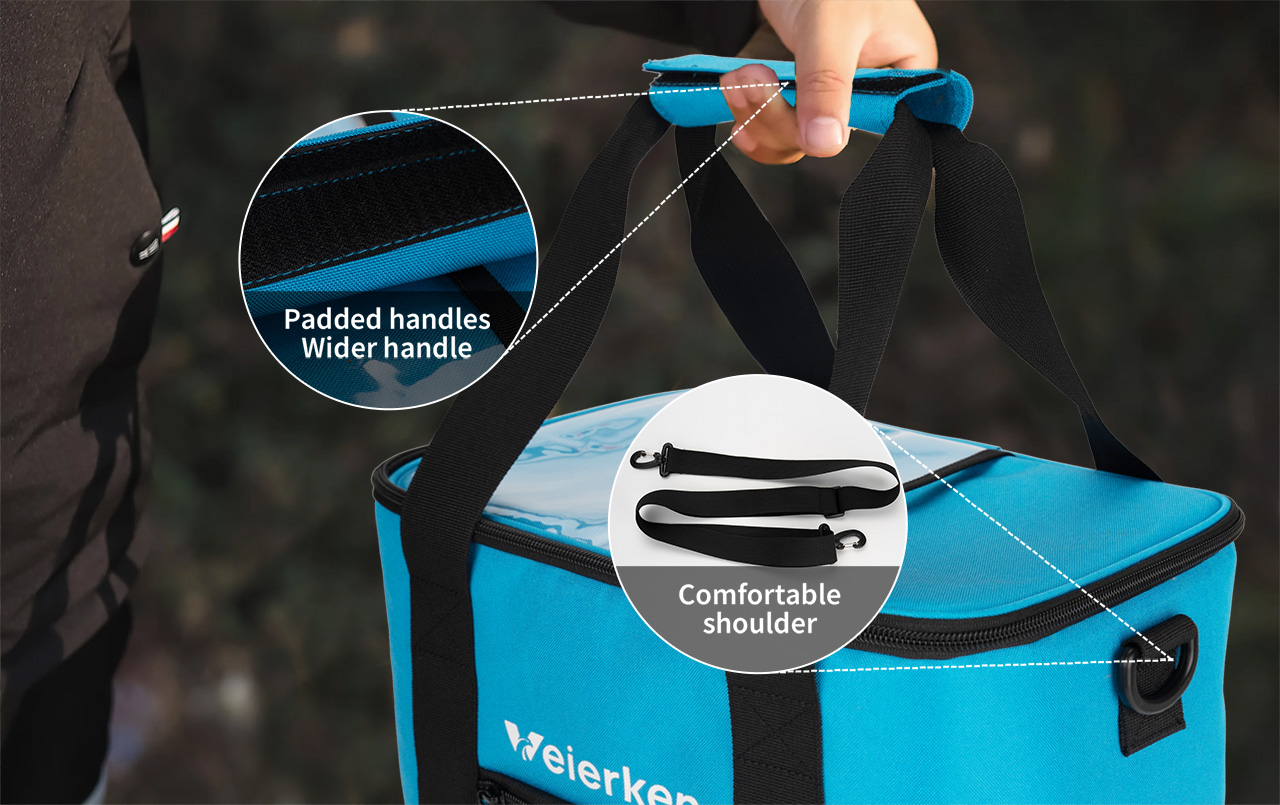
1. Green Material Alternatives: From Recycled Plastics to Safe Linings
The first step in green manufacturing is choosing the right raw materials. Traditional catering bags often use virgin polyester and PVC linings. These materials require significant fossil fuels to produce and are difficult to recycle safely.
As a responsible catering thermal tote factory, we offer alternative materials that reduce environmental impact without losing structural strength.
Eco-Friendly Material Choices:
RPET (Recycled Polyethylene Terephthalate): We weave this durable fabric from recycled plastic water bottles. Using RPET diverts plastic waste from landfills and oceans.
PEVA Linings: We use food-grade PEVA to replace traditional PVC. PEVA is chlorine-free, contains no phthalates, and does not emit toxic gases if incinerated.
Organic Natural Fibers: For premium or organic catering brands, we offer outer shells made from heavy-duty organic cotton or flax linen.
Our raw materials carry international certifications like the Global Recycled Standard (GRS) and OEKO-TEX. These credentials help B2B buyers pass environmental audits and build trust with their eco-conscious customers.
2. Extending Product Life: Why Durability is the Ultimate Sustainability
A reusable bag that fails after a few uses is not truly sustainable. Frequent replacements waste resources and increase overall procurement costs for catering companies. For any catering thermal tote factory, the most basic way to reduce waste is to build products that last.
We focus on physical endurance. Our design process aims to double or triple the average lifecycle of a standard catering bag.
Engineering for Longevity:
Reinforced Stitching: We use double-needle lockstitching and heavy nylon thread at handle joints and corners to prevent tearing.
Removable Liners: We design inner liners that users can remove, wash, or replace. This means a dirty or torn liner does not ruin the entire bag.
Heavy-Duty Hardware: We use corrosion-resistant metal zippers and high-density polymer buckles that handle thousands of open-and-close cycles.
By extending the product lifecycle, we help catering companies lower their cost per delivery. Long-lasting products reduce the frequency of repeat purchases, which naturally conserves energy and raw materials.
3. Clean Production and Waste Reduction (Lean and Green Manufacturing)
Manufacturing efficiency plays a significant role in reducing a product's carbon footprint. Reducing material waste and energy use on the factory floor is just as important as the materials themselves.
At the Weierken catering thermal tote factory, we implement lean manufacturing methods to minimize our environmental footprint during production.
Green Manufacturing Practices:
Digital Nesting Software: Our computerized cutting machines arrange patterns automatically. This process reduces fabric scrap waste by up to 15% compared to manual cutting.
Scrap Recycling: We collect fabric offcuts and send them to recycling facilities to be pelletized into raw materials for other industries.
Eco-Friendly Printing: We use water-based inks for logos and custom designs. These inks drastically reduce Volatile Organic Compound (VOC) emissions compared to traditional solvent-based inks.
Modern B2B buyers look beyond the finished product. They want to know how the product was made, and this is a primary focus for our catering thermal tote factory.
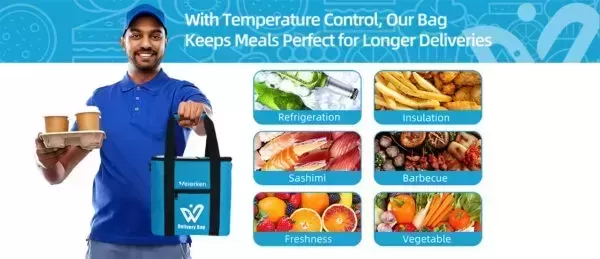
4. Modular Design and Easy Recycling (Circular Economy Ready)
Traditional catering bags are difficult to recycle at the end of their life. Manufacturers often sew fabrics, foam insulation, and metal zippers together permanently. Separating these mixed materials is labor-intensive and expensive.
A forward-thinking catering thermal tote factory designs products for easy disassembly. This makes recycling simpler when the bag eventually reaches the end of its useful life.
Design for Disassembly (DfD):
Modular Assembly: We use snaps, heavy-duty Velcro, or zippers to join different parts of the bag instead of permanent stitching.
Mono-Material Exploration: We are researching ways to construct bags entirely from polyester derivatives. This includes the outer shell, insulation, and lining, allowing the entire bag to be recycled together.
Detachable Metal Hardware: We use buckle designs that allow users to slip off metal rings easily before throwing the fabric parts into recycling bins.
These modular designs help large catering chains set up their own closed-loop recycling systems. Old, worn-out bags can be returned to us to be disassembled and remade into new logistics tools.
Balancing Cost and Durability: B2B Sourcing Advice
When working with a catering thermal tote factory, you must balance cost, durability, and environmental impact. We advise buyers to avoid chasing 100% biodegradable materials if those materials wear out too quickly.
Instead, match the materials to your specific business model. The table below outlines how to choose the right materials based on your delivery frequency.
| Catering Model | Primary Need | Recommended Material Blend |
|---|---|---|
| High-Frequency Corporate Catering | Extreme durability, easy cleaning, daily heavy loads. | Recycled RPET outer, thick EPE foam insulation, and removable PEVA liners. |
| Gourmet / Organic Meal Kits | Premium brand image, natural aesthetics. | Organic cotton canvas outer, recycled felt insulation, and food-safe TPU lining. |
| Single-Use Event Deliveries | Low cost, lightweight, short transit times. | Non-woven polypropylene (PP) fabric with thin aluminum foil lining. |
Our team at the catering thermal tote factory can help you choose the best combination of materials for your operational budget and environmental goals.
Frequently Asked Questions
1. What sustainable certifications are offered by a modern catering thermal tote factory?
Reputable factories should offer Global Recycled Standard (GRS) certification for recycled polyester (RPET). They should also provide OEKO-TEX Standard 100 certificates for fabric safety, and FDA or LFGB compliance reports for food-contact inner linings.
2. Does using recycled fabrics like RPET make the catering bags more expensive?
RPET can have a slightly higher material cost (around 5% to 10% more) than virgin polyester. However, the long-term branding benefits and compliance with environmental regulations usually outweigh this minor difference. Large production runs also help lower the unit cost.
3. How does a catering thermal tote factory verify recycled content?
We trace the raw materials through a transaction certificate (TC) system. Each batch of GRS-certified fabric comes with documentation showing the source of the recycled plastics. This ensures complete transparency from the raw material stage to the finished bag.
4. Are PEVA linings as waterproof and durable as standard PVC linings?
Yes. Modern PEVA formulations provide excellent waterproof and cold-retention performance. By using high-frequency seam welding instead of stitching, we ensure the lining is fully leakproof and highly resistant to tearing under normal catering conditions.
5. Can I order customized eco-friendly catering bags, or will a catering thermal tote factory require high minimums?
Customization is widely available. However, specialized eco-friendly fabrics like RPET or custom-dyed organic canvas do have higher Minimum Order Quantities (MOQs) because yarn suppliers have their own production minimums. We work with clients to find flexible solutions for their first order.
Inquire About Our Sustainable Solutions
Transitioning to eco-friendly food packaging is a gradual process. Working with a specialized catering thermal tote factory like Weierken ensures you get the right materials, durable construction, and compliant manufacturing methods for your business.
We are continuously developing new ways to reduce waste and improve energy efficiency. Our catering thermal tote factory remains dedicated to helping your business meet its sustainability goals without sacrificing the temperature safety of your food.
If you want to review our material certificates, request physical samples, or discuss custom designs for your catering fleet, please contact our sales team. Request a quote or send us your questions today.