

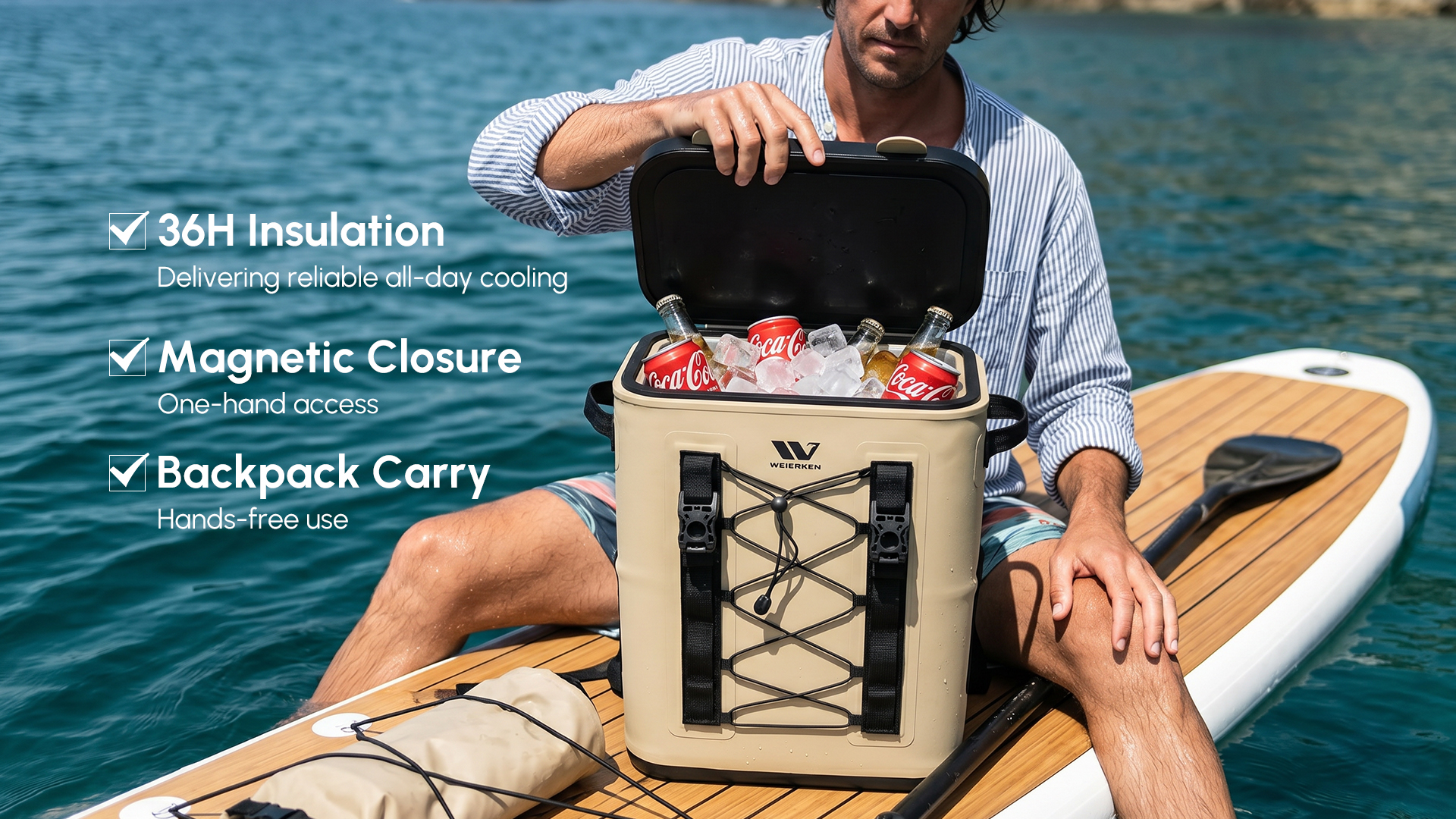
Hands-free cold storage is booming across the outdoor retail market. Outdoor enthusiasts now expect their gear to keep drinks ice-cold during hiking, fishing, and beach trips without leaking water down their backs.
For outdoor brands and retail buyers, product leakage is an absolute nightmare. A single batch of leaking bags can ruin your Amazon rating, surge return rates, and permanently damage brand trust.
At weierken, we know that building a successful outdoor line comes down to factory-level engineering. This guide breaks down the essential leakproof technology you must evaluate when selecting reliable cooler backpack manufacturers.
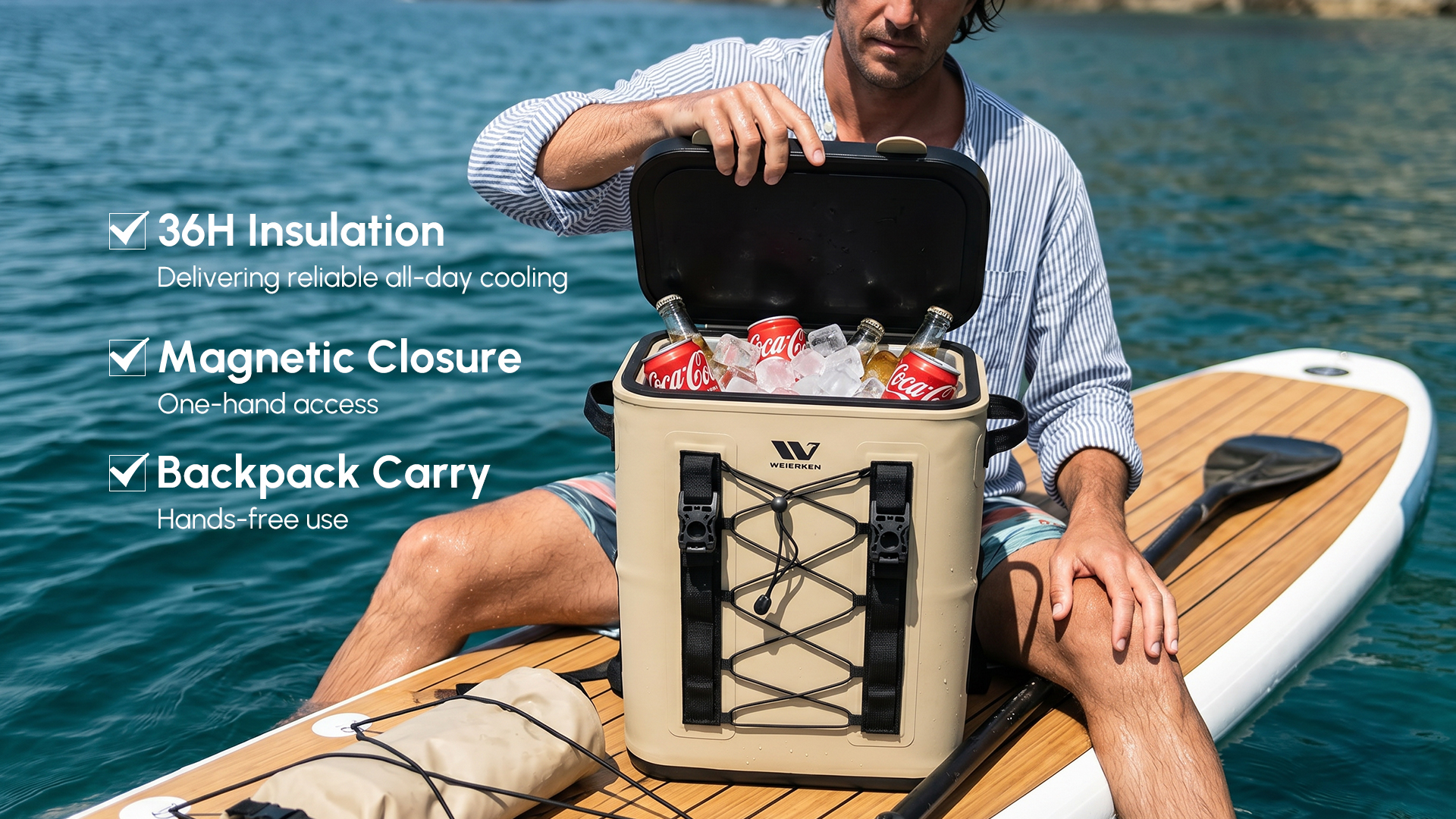
The Science of Leakproof Tech: Stitching vs. RF Welding
Understanding how a bag is put together is the first step in avoiding product failure. The manufacturing technique determines whether a bag can hold raw ice or only dry gel packs.
The Limitations of Traditional Sewing
Standard stitching uses needles that punch thousands of tiny holes directly through fabric layers. Even if a factory tapes over these seams, heavy water pressure eventually finds a way out.
Traditional sewn construction works adequately for simple lunch totes or dry food bags. However, it fails quickly when filled with melting ice blocks under real-world outdoor conditions.
Needle punctures create permanent weak spots along stress seams.
Internal PEVA heat-sealed liners crack under heavy weight loads.
Stitching absorbs moisture, creating lingering mildew odors inside the bag walls.
Seamless High-Frequency RF Welding
To build a truly leakproof soft cooler, leading cooler backpack manufacturers use Radio Frequency (RF) high-frequency welding machines. This technique completely eliminates the need for sewing needles.
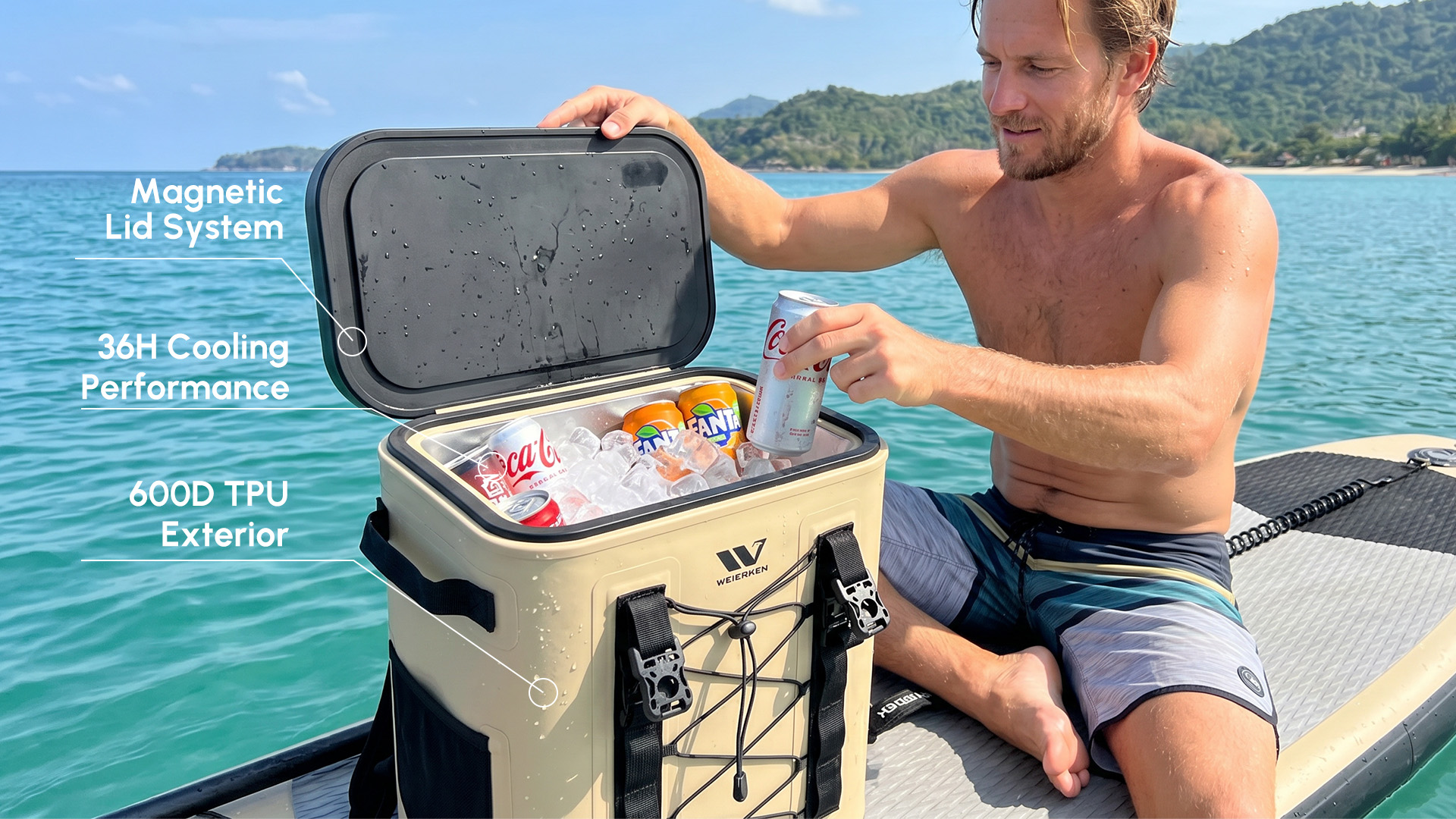
RF welding sends high-frequency electromagnetic energy through double-coated TPU (Thermoplastic Polyurethane) fabrics. The process melts the fabric edges and fuses them together at a molecular level.
100% Seamless Outer Shell: Fused fabric seams create a solid, continuous barrier against liquid.
Superior Tensile Strength: Welded joints often prove stronger than the base fabric itself under pull tests.
Heavy-Duty TPU Fabrics: Premium designs use 840D or 420D TPU-coated nylon for maximum tear resistance.
Closed-Cell Foam Insulation: Dense NBR rubber foam absorbs zero water while locking in internal temperatures.
Zipper Tech: Water-Resistant vs. True IPX7 Airtight Zippers
Even the best welded seams will fail if your closure system leaks. Sourcing teams must distinguish between basic splash-proof zippers and true airtight seals.
Water-resistant zippers only repel light rain showers. Premium cooler backpacks require specialized rubberized airtight zippers rated to IPX7 waterproof standards. These zippers lock air inside, keeping the bag floating in water even when fully loaded.
How to Vet Manufacturers' Technical Capabilities
Not every soft bag factory has the capital or expertise to manufacture welded TPU products. Evaluating physical machinery and supply chain partnerships prevents costly sourcing mistakes.
1. Machinery and Hardware Inspection
Building high-end soft coolers requires heavy industrial equipment. Ask suppliers to show their actual workshop floor during factory audits.
A capable factory must operate automatic laser cutting tables for precise panel sizing. They also need automated RF welding stations and dedicated pneumatic air-testing rigs.
Established producers like weierken maintain dedicated dust-free heat-sealing workshops to prevent environmental debris from weakening welded TPU seams during assembly.
2. Material Supply Chain Relationships
Top-tier manufacturing requires premium raw components. Confirm that your prospective supplier maintains strong tier-one vendor contracts for key materials:
Food-grade, toxin-free TPU film that complies with REACH and FDA standards.
Proven waterproof zipper brands such as TIZIP, YKK, or certified custom alternatives.
High-density closed-cell NBR or EVA insulation foam panels.
3. Structural Ergonomics and Weight Distribution
A soft cooler filled with 20 pounds of ice and beverages places heavy stress on the user's body. Great cooler backpack manufacturers excel at load-bearing structural design.
Look for ergonomically curved shoulder straps padded with thick EVA foam. The back panel should feature molded airflow channels and breathable mesh to clear body heat during long hikes.
QC and Leakproof Testing Standards You Must Demand
Quality control should never rely on visual checks alone. Professional factories subject production samples to aggressive physical stress tests before final packing.
1. Inversion and Submersion Leak Testing
Inspectors fill finished bags with colored water and air, lock the watertight zipper, and invert the bag on paper sheets for 24 to 48 hours.
In advanced submersion testing, workers submerge inflated bags underwater in sealed pressure tanks to check for escaping air bubbles along seam lines.
2. Pneumatic Air Inflation Testing
To verify zipper seals and welded seams without wetting the inside of every bag, factories pump low-pressure air into finished cooler backpacks.
Sensors measure internal air pressure over fixed time intervals. Any pressure drop indicates a microscopic leak in the TPU shell or zipper teeth.
3. Dynamic Strap Tear and Load Testing
Cold beverages are heavy. Quality assurance teams place static test weights (typically 20kg to 30kg) inside the bag and mount it onto a mechanical drop arm.
The machine shakes and drops the loaded backpack thousands of times. This test confirms that shoulder straps and top haul handles will not tear away under sudden impacts.
Cost vs. Performance: Budget Planning for OEM Projects
Product features must align with your target retail sales price (MSRP). Understanding the cost breakdown helps you pick the right production technology for your audience.
Entry-Level: Stitched Construction with PEVA Liner
This design fits budget-conscious promotional markets or casual day-use grocery totes retailing under $35.
Target Uses: Short trips, dry ice pack storage, budget gift promotions.
Key Features: Sewn 600D polyester exterior, low-density EPE foam, heat-sealed PEVA drop liner.
Pros & Cons: Low unit cost, accessible MOQs, but prone to leakage under direct ice contact.
Professional-Grade: Welded TPU Shell with Airtight Zipper
Designed for premium outdoor brands competing alongside top international names at retail prices from $120 to $300+.
Target Uses: Extended camping trips, marine boating, kayak fishing, extreme wilderness sports.
Key Features: Double-coated 840D TPU shell, 100% RF welded seams, IPX7 watertight zipper, 20mm thick closed-cell NBR foam.
Pros & Cons: 100% leakproof, floats on water, keeps ice for days, higher unit costs and tooling investments.
Selecting a Strategic Supply Chain Partner
Evaluating potential cooler backpack manufacturers is an investment in your brand's long-term market stability. Selecting a factory based purely on cheap unit quotes often leads to quality failures and high return rates.
Look for engineering-focused partners who provide custom Tech Pack development, transparent material traceability, and standardized AQL quality checks. True manufacturing partners work with you to solve design issues before production begins.
At weierken, our skilled development team helps brands transition rough design concepts into durable, leakproof soft coolers engineered to excel in rugged outdoor conditions.
Start Your Next OEM Cooler Backpack Project
Are you planning to launch a high-performance soft cooler line or upgrade your existing products with welded TPU technology?
Our experienced engineering team is ready to support your sourcing process with precise technical advice, material swatches, and physical sample production.
Take the next step in product development. Request a custom quote or order a leakproof test sample today to evaluate our advanced manufacturing capabilities firsthand!
Frequently Asked Questions (FAQ)
1. What makes a cooler backpack completely leakproof?
A bag becomes completely leakproof when built using high-frequency RF welded TPU fabrics combined with an IPX7-rated airtight zipper system. This construction eliminates needle holes and seals liquid inside the main compartment.
2. What is the difference between PEVA and TPU inner liners?
PEVA is an affordable, food-safe plastic film suitable for light heat-sealing in sewn bags. TPU offers much higher puncture resistance, superior elasticity, better UV resistance, and fuses stronger under RF welding processes for extreme durability.
3. How long can a high-end welded cooler backpack retain ice?
Ice retention depends on insulation thickness and density. Bags built with 15mm to 20mm thick closed-cell NBR foam and airtight zipper systems can hold ice for 48 to 72 hours under standard room temperatures.
4. What is the standard minimum order quantity (MOQ) for custom TPU soft coolers?
Due to raw fabric manufacturing runs and machine setup times, MOQ for custom TPU soft coolers usually ranges from 500 to 1,000 units per colorway. Standard sewn cooler bags often start at lower MOQs.
5. Can cooler backpack manufacturers customize back support systems?
Yes. Experienced suppliers can mold custom EVA back panels, add adjustable chest sternum straps, design padded hip belts, and integrate breathable air-mesh padding tailored to your specific ergonomic target specifications.
6. How do I verify a factory's leakproof test claims before placing a bulk order?
Always request a pre-production sample and conduct an independent inversion test. Fill the sample with water and ice, seal the airtight zipper completely, store it upside down on dry paper for 48 hours, and monitor for any liquid seepage.